The Architecture of Resilience: Why the Global North Must Look South for the Future of Philanthropy
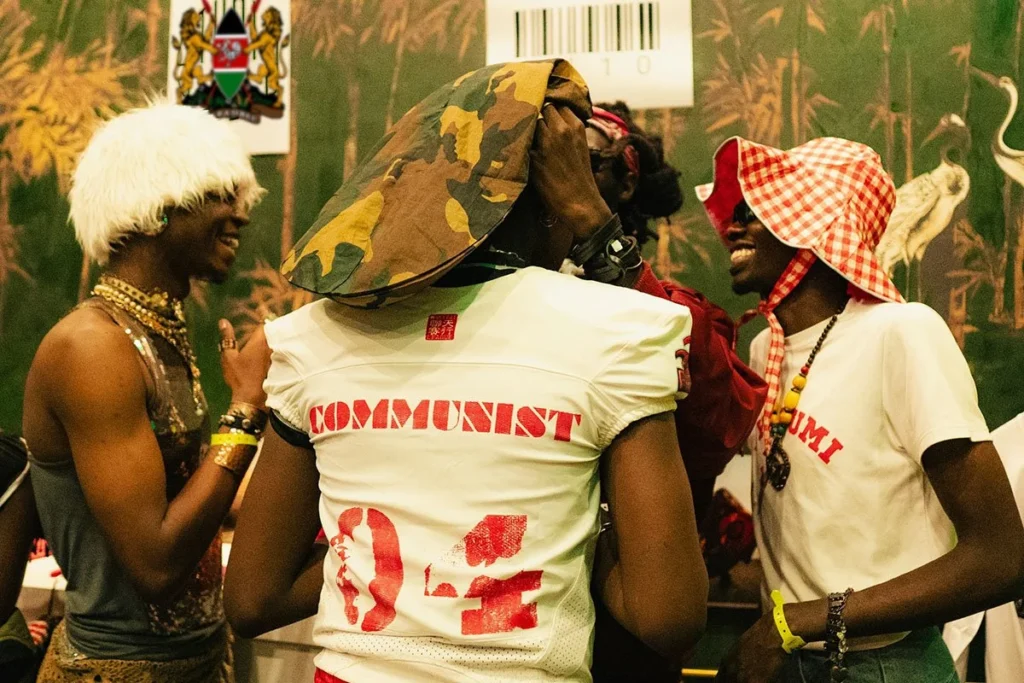
For over a decade, professional fundraisers have traversed the globe, gathering in sterile conference halls to discuss the future of the nonprofit sector. Yet, the most profound insights have rarely been uttered from the stage. They are found in the periphery—the hotel lobbies and hallway conversations that occur after the panels have concluded. It was in these spaces, away from the scripted keynotes, that a different reality emerged: stories of Ugandan organizations building membership bases of thousands without a single CRM system, and digital rights groups in India raising emergency funds from communities that understood the stakes of their work better than any external donor ever could.
While the Global North has spent years and billions of dollars attempting to engineer "trust-based" philanthropy and recurring donor models, these efforts have often yielded outcomes that are overly complex, prohibitively expensive, and fundamentally fragile. Meanwhile, practitioners across the Global South have quietly perfected a different model—one rooted in necessity, local ownership, and, most importantly, extreme resilience.
The 2025 Inflection Point: When Fragility Met Reality
The year 2025 served as a brutal awakening for the United States nonprofit sector. Following the sudden clawback of nearly nine billion dollars in funding by the U.S. administration, the domestic philanthropic landscape faced a crisis of stability. The institutional architecture that many NGOs relied upon—a model built on the assumption of indefinite, large-scale funding—began to collapse.
This financial instability occurred against a backdrop of global democratic erosion. The CIVICUS Monitor: People Power Under Attack 2025 report highlighted a harrowing reality: civil society is under severe pressure in 122 of 198 countries, with only seven percent of the global population living under truly open civic conditions. For the first time in its history, the United States was downgraded in these rankings, signaling that the "stable" conditions of the Global North were no longer a given. The operating environment that had long forced Global South organizations to innovate—one of limited institutional support and high political risk—had suddenly become the new reality for the West.
Chronology of a Shift: From Dependency to Autonomy
The dependency model of the Global North was predicated on the belief that institutional funding was a permanent bedrock. When that assumption evaporated in early 2025 with the termination of over 5,000 USAID projects, the sector was left without a contingency plan.
Conversely, the history of successful community-based models in the Global South tells a story of proactive autonomy.
- 1948: Abdul Sattar Edhi begins moving injured individuals in Karachi, Pakistan, using a single converted van and community donations. By 2016, the Edhi Foundation had evolved into the world’s largest volunteer ambulance network, entirely independent of government or foreign aid.
- 1997: TECHO begins its work in Latin America, eventually mobilizing over a million volunteers across 19 countries to address informal housing, operating on the principle of community participation rather than institutional grants.
- 2013: India’s Companies Act mandates corporate social responsibility (CSR) spending. However, the funds flow toward "safe" causes, forcing human rights and digital rights organizations to pivot toward individual, community-led funding to maintain their political independence.
- 2021: The Reserve Bank of India introduces new recurring digital mandate regulations, causing a temporary dip in memberships for organizations like the Internet Freedom Foundation (IFF). The IFF’s ability to raise $25,000 in three weeks from its members proved that their community-funded model was more resilient than any institutional grant could have provided.
Supporting Data: The Power of Collective Pooling
The discrepancy between the North and South is not merely a matter of ideology; it is backed by hard data. According to the Charities Aid Foundation’s 2025 World Giving Report, 86 percent of Kenyans engaged in charitable giving in 2024. This participation rate far exceeds the global average, driven by the Kenyan principle of harambee—the collective pooling of resources for shared needs.
In these contexts, individual giving is the primary engine of civil society, dwarfing government and foundation grants. Unlike the "faceless" fundraising often practiced in the North, this giving is relational. As Ugandan civil society practitioner Sarah Pacutho notes, "It has a face, people know who each other are. Someone of their own is speaking for them and the work."
The efficiency of these models is striking. When a health center was needed in Eastern Uganda, the community did not wait for a grant proposal to be approved. They contributed a room, a fridge, and the time of a local nurse. By owning the infrastructure, they gained the leverage to hold the government accountable, essentially saying: "This is what we have done; now you do better."
Official Perspectives and Expert Analysis
The sector’s historical failure to adopt these models stems from a systemic bias in how knowledge is categorized. Research by Kamal Munir and Clare Woodcraft at Cambridge University suggests that while Global South philanthropy is often acknowledged, it is rarely treated as a source of transferable expertise. Instead, it is labeled as "local adaptation."
"Knowledge produced under constraint gets read as local adaptation," explains a veteran fundraiser. "Knowledge produced in well-resourced environments travels as expertise. Changing that distinction is the work that remains."
The "expertise" imported from the Global North often involves complex CRM systems and over-engineered donor journeys. Yet, as the GivingTuesday 2025 GivingPulse report found, the problem in the North is not a lack of interest, but a failure of engagement: half of Americans were not even asked to give in 2025. The organizations that thrive in the South succeed because they prioritize understanding before fundraising. They articulate the cost of their work in the language of daily life, making the necessity of the contribution visceral rather than abstract.
Implications: The New Global Standard
The implications for the future of the nonprofit sector are clear: the era of "fragility dressed as stability" is over. Organizations that rely exclusively on institutional grants are increasingly vulnerable to the whims of political shifts and budgetary cycles.
To achieve true resilience, the sector must undergo a fundamental redesign:
- Prioritize Communication over Mechanics: Organizations must first help their communities understand the "why" behind the work. If a cause is abstract, the community cannot be expected to defend it.
- Redesign for Pressure: Organizations should stress-test their models by asking, "What would survive if 50 percent of our funding disappeared tomorrow?"
- Build Independent Streams: Every organization should maintain at least one funding stream that exists entirely outside of institutional approval, relying instead on direct, small-dollar support from the people who are most impacted by the work.
As the 2025 crisis demonstrated, when the institutional rug is pulled out from under an organization, it is the community that provides the floor. The models that will survive the next decade are not those that chase the largest grants, but those that have successfully converted public understanding into sustained, recurring participation.
The practitioners in the Global South have spent decades proving that the most resilient systems are those that are built from the bottom up, owned by the people they serve, and sustained by the shared recognition of a common threat. The sector no longer needs to scramble for new solutions; the architecture of resilience has been waiting in the hallways for years, ready to be recognized as the global standard for a more turbulent world.