The Architecture of Belonging: How Ballroom Culture Redefined Democracy and Philanthropy
In 1776, the Declaration of Independence articulated a vision of equality that was, by design and execution, exclusionary. For Black people, people of color, and women—and specifically for those whose identities would later be criminalized—the promises of American democracy were not written with them in mind. Yet, in the absence of institutional inclusion, these marginalized communities forged their own systems of governance, mentorship, and mutual aid.
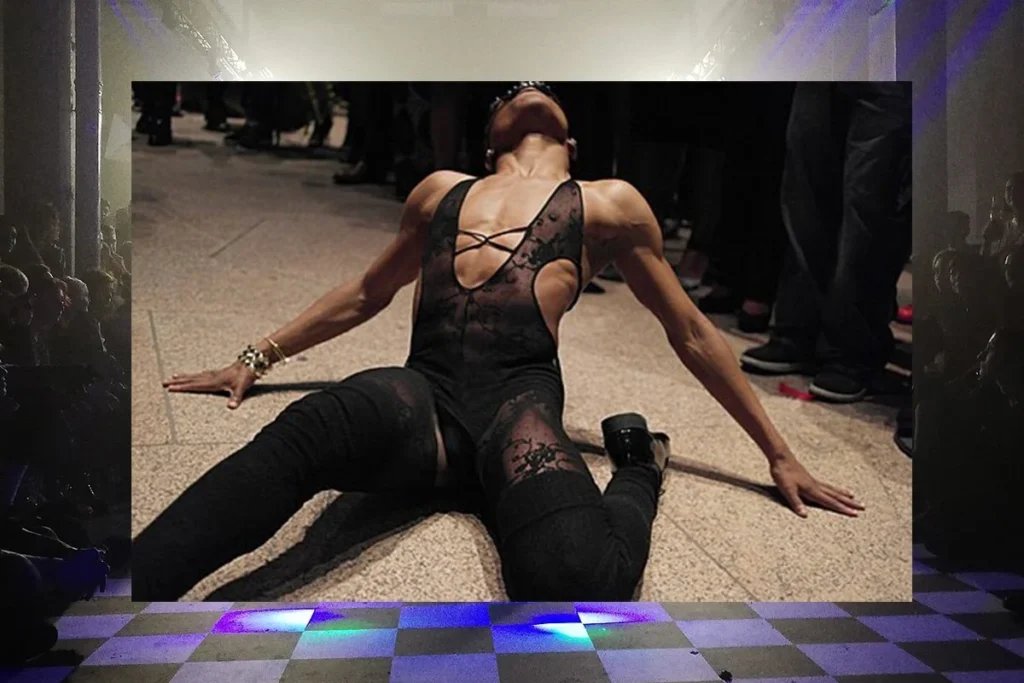
Today, this legacy is most visible on the ballroom floors, in club basements, and at warehouse raves. These are not merely sites of recreation; they are the "third spaces" where a radical, grassroots democracy has been practiced for generations. As trans communities face an unprecedented wave of legislative erasure across the United States, the ballroom community offers a blueprint for survival and resistance—a theory of change rooted in "belonging" that predates modern policy advocacy and demands a fundamental shift in how philanthropy invests in social justice.
A History of Chosen Kinship: The Origins of the House System
To understand the current movement for trans justice, one must trace its lineage back to the late 19th-century Harlem ballroom scene. What began as a subculture blossomed in the 1970s and 80s into a sophisticated network of "houses." These houses served as chosen family structures, led by "house mothers" and "house fathers"—often the most experienced trans women, drag queens, and gay men—who provided the infrastructure for survival that the state refused to offer.
In these spaces, queer and trans individuals fleeing family rejection, homelessness, and state-sanctioned violence found shelter. The houses acted as decentralized social service agencies, providing housing, emotional support, and mentorship. By creating these internal economies, ballroom culture developed a vocabulary of self-determination and gender identity that would eventually inform the mainstream trans advocacy movement.
Crucially, the houses recognized early on that trans justice is inseparable from racial and economic justice. Long before policy circles began discussing intersectionality, the ballroom community was living it, ensuring that the most vulnerable members had access to food, housing, and protection.
The Geography of Resilience: From Chicago to New Orleans
The lineage of this movement is a map of underground resistance. From the Chicago warehouses where Frankie Knuckles pioneered house music, creating a sanctuary for Black and Brown queer crowds, to the modern-day raves hosted by collectives like Papi Juice and DJs like Armana Khan, the "floor" has remained a consistent site of political and cultural mobilization.
These spaces have functioned as ad-hoc community centers. Throughout the decades, the work performed on these floors has been as diverse as it is vital:
- Direct Action: Passing the hat at Brooklyn raves to pay bail for incarcerated community members.
- Legal Support: Posting bond from the dance floors of New Orleans.
- Healthcare Access: Distributing gender-affirming resources and information at balls in Atlanta.
- Civic Engagement: Organizing voter registration drives between sets in Philadelphia, Texas, and Alabama.
Even as these nightlife spaces sometimes grapple with internal issues—such as racism, transmisogyny, or the barriers created by door charges—they remain the most consistent, self-defined civic infrastructure for QTBIPOC (Queer, Trans, Black, Indigenous, and People of Color) populations. They are the frontline of a movement that has learned to build the world it needs while the state remains hostile to its existence.
The Philanthropic Gap: Why "The Floor" Remains Underfunded
Despite the immense cultural and social output of these communities, there remains a staggering disconnect between the needs of trans-led organizations and the realities of modern philanthropy. Currently, only about 3.5 cents of every $100 in grant funding reaches trans communities.
The traditional nonprofit industrial complex, which prioritizes organizations that fit neatly into 501(c)(3) categories and rigorous, sterile grant reporting, often misses the point of grassroots work. Funders frequently demand "clean" metrics, while the most effective work—the "unglamorous" labor of community care—happens in spaces that operate outside of formal, state-recognized structures.
When donors ignore the "floor," they ignore the most effective engine of social change. The ballroom community has never waited for policy conditions to improve before building structures of dignity. By ignoring this, philanthropy risks funding only the symptoms of systemic inequality rather than investing in the actual infrastructure of survival that marginalized communities have already built.
Shifting the Paradigm: Lessons for Modern Funders
For institutions like Borealis Philanthropy’s Fund for Trans Generations (FTG), the challenge is to align capital with the kinship principles of the ballroom. This requires a departure from traditional "charity" models toward a model of radical trust and investment.
Shifting Power
True investment means shifting power to those closest to the work. At the FTG, funding decisions are not made by remote boards, but by an advisory committee of BIPOC trans community organizers. Their lived experience provides an expertise that no academic or policy analyst can replicate.
Rapid Response and Long-Term Stability
The current climate of "transantagonism" requires agility. Since 2016, the FTG has moved over $3 million in rapid response grants to meet security and legal threats in real-time. However, crisis response is only half the battle. The fund has committed to multi-year general operating grants, paired with coaching and mentorship, recognizing that movement building is a marathon, not a sprint.
Funding "The Extra": Land, Rest, and Joy
Philanthropy often views anything beyond direct legal or health services as "extra." The ballroom community knows better. The Flower Crown Project, a $1.4 million, two-year investment in ten Black trans femme-led organizations, centered four pillars: Compassionate Care, Cultivation of Self, Cultural Perpetuity, and Unbridled Joy.
Investing in "unbridled joy" is a strategic necessity. A movement built solely on grief and survival is unsustainable. By funding spaces like the House of gg—the legacy of the late Miss Major Griffin-Gracy—philanthropy is finally beginning to recognize that "rest" is a vital component of activism. When activists are given the space to step out of constant crisis, they return to their work with a renewed capacity for leadership.
Implications for the Future of Democracy
As the United States approaches its 250th anniversary, the question of what democracy looks like and who it serves is more urgent than ever. The history of ballroom culture provides a clear, if often ignored, answer: democracy is not something handed down by government institutions; it is something that is built from the bottom up.
The implications for funders and policymakers are clear. If the goal is to build a more equitable society, we must look to those who have been most excluded. We must fund the infrastructure of belonging—the raves, the houses, the land trusts, and the community collectives—that has kept people alive when no one else would.
The work of trans justice is the work of expanding the definition of who belongs. Ballroom culture has been doing this for over a century, constantly updating societal norms and holding people close through systemic exclusion. As we move forward, the strategy is simple: we must "fund the floor." Not because it is an act of charity, but because it is the only way to achieve a democracy that is truly, and finally, for everyone.
The ballroom was not just a place to dance; it was a laboratory for a new kind of humanity. By investing in that laboratory, we don’t just protect a subculture—we protect the future of democratic potential itself. As the history of the movement proves: we built it before they let us in, and we will continue to build it, regardless of whether they ever do.