Navigating the Storm: Global Economic Resilience, Geopolitical Shocks, and the Path to 2027
NEW YORK — Over the past two years, the global economic architecture has been subjected to a relentless battery of stress tests. From sweeping trade protectionism and geopolitical realignments to military conflict in the Middle East resulting in historic energy disruptions, the international monetary and financial system has faced shocks that many economists feared would trigger a deep, synchronized worldwide recession.
Yet, against prevailing pessimistic forecasts, the global economy has displayed a remarkable degree of structural resilience. Equity markets have largely absorbed the turbulence, labor markets have recalibrated without catastrophic unemployment spikes, and supply chains have adapted to new geopolitical realities.
Looking forward from the vantage point of late 2026, prominent macroeconomic perspectives—such as those outlined by leading economists including Nouriel Roubini—suggest that the worst of the acute volatility may be subsiding. While a dense fog of political and policy-driven uncertainties continues to cloud the horizon, the baseline economic scenario for 2027 points toward stabilizing growth and a sustained descent in global inflation.
Main Facts
- Resilience Amid Shocks: Despite bearing the weight of severe trade protectionism introduced in 2025 and a massive energy crisis in 2026, global financial markets and output have held up significantly better than historical precedents suggested they would.
- The 2027 Economic Outlook: Consensus and baseline macroeconomic models project that global economic growth will improve through 2027, accompanied by a steady cooling of consumer price inflation worldwide.
- Recent Historical Catalysts: The global economy’s fortitude has been tested primarily by two major macroeconomic events: the implementation of aggressive U.S. tariffs in April 2025 (colloquially dubbed "Liberation Day" tariffs) and the 2026 Iran War, which triggered the most severe energy market disruption since the oil shocks of the 1970s.
- Risk Asymmetry: While tail risks—ranging from escalatory geopolitical conflicts to sudden shifts in monetary policy—remain elevated, institutional forecasters view these negative scenarios as less probable than the baseline trajectory of modest recovery and disinflation.
Chronology of Recent Economic and Geopolitical Shocks
To understand the current resilience of the global economy and the optimism surrounding 2027, it is necessary to trace the sequence of systemic disruptions that have shaken international markets since the beginning of 2025.
Early 2025: The "Liberation Day" Tariffs and Trade Realignment
The first major structural jolt to the post-pandemic global economy arrived on April 2, 2025. Following political transitions and policy shifts in Washington, the U.S. administration enacted a sweeping suite of import duties—marketed domestically under the banner of "Liberation Day" tariffs.
These measures caught international supply chains off guard. Tariffs were not merely targeted at strategic competitors; they encompassed broad-spectrum levies on industrial inputs, consumer goods, and critical technology components. Economists initially warned of a severe "stagflationary impulse"—a scenario where imported inflation would surge while global trade volumes contracted sharply.
However, rather than collapsing, multinational corporations accelerated "friend-shoring" and "near-shoring" strategies that had been quietly developing since the early 2020s. Emerging economies in Southeast Asia, Latin America, and parts of Eastern Europe absorbed redirected trade flows, cushioning the blow to global aggregate demand.
Late 2025 to Early 2026: The Accumulation of Policy Uncertainty
As markets digested the new tariff architecture, central banks found themselves trapped in a delicate balancing act. The Federal Reserve, the European Central Bank (ECB), and other major monetary authorities had to navigate sticky domestic service inflation exacerbated by trade barriers, even as manufacturing sectors slowed down. Financial market volatility spiked intermittently, but asset prices were propped up by robust corporate balance sheets and stronger-than-expected consumer spending in developed economies.
2026: The Iran War and the Seventies Redux
Just as global trade channels began to adapt to the post-2025 tariff regime, a far more dangerous shock materialized: the outbreak of the Iran War in 2026.
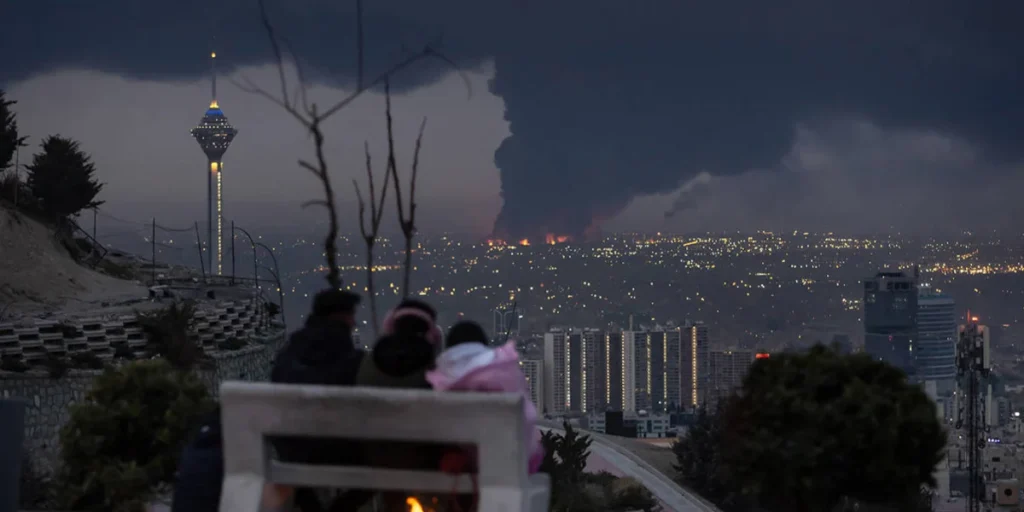
The conflict rapidly transformed into a systemic crisis for global energy security. With vital maritime transit chokepoints—most notably the Strait of Hormuz—experiencing severe security threats and operational disruptions, flows of crude oil and liquefied natural gas (LNG) from the Persian Gulf were drastically curtailed.
The resulting energy shock was the largest since the landmark oil crises of the 1970s. Crude prices spiked past historic thresholds within weeks, threatening to ignite a renewed wave of global inflation and crush consumer purchasing power across energy-importing nations in Europe and Asia. Governments scrambled to release strategic petroleum reserves, while heavy industries initiated emergency energy-rationing protocols.
Supporting Data and Economic Indicators
The magnitude of the 2025–2026 shocks makes the stability observed in global financial and macroeconomic data all the more striking.
- Energy Market Volatility: During the peak of the 2026 energy crisis, Brent crude prices experienced intraday swings reminiscent of the 1973 and 1979 oil shocks. Yet, unlike the stagflationary spirals of the 1970s, modern economies proved significantly more energy-efficient, aided by a decade of aggressive investments in renewable energy infrastructure and grid modernization.
- Inflation Trajectory: Headline inflation figures in the G7 economies spiked temporarily following the 2025 trade restrictions and the 2026 energy shock. However, aggressive quantitative tightening by central banks—retained or cautiously recalibrated—helped anchor long-term inflation expectations. Current models indicate global inflation is on track to converge near central bank targets by mid-2027.
- Equity Market Performance: Despite severe geopolitical flashpoints, major equity indices (such as the S&P 500, Euro Stoxx 50, and Nikkei 225) demonstrated unexpected durability. Corporate earnings proved robust, driven by productivity gains in artificial intelligence, automation, and optimized supply chain logistics, which offset rising input costs.
- Trade Adaptation: Global trade volume growth slowed significantly in the immediate wake of the April 2025 tariffs but avoided an outright contraction. Bilateral trade deficits shifted geography rather than disappearing, proving that globalization was not dying, but rather fragmenting and re-routing.
Official Responses and Policy Interventions
Governments, central banks, and multilateral institutions have deployed a diverse toolkit to manage the compounding crises of the past two years.
Monetary Policy and Central Banking
Throughout the tariff shocks of 2025 and the energy crisis of 2026, central banks maintained a pragmatic, data-dependent stance. Recognizing that the shocks were fundamentally supply-side disruptions rather than excess-demand bubbles, monetary authorities resisted the urge to prematurely slash interest rates, which could have unmoored inflation expectations. At the same time, they avoided excessively draconian tightening that might have broken commercial banking sectors.
By mid-2026, as the immediate energy panic subsided through coordinated diplomatic and strategic reserve releases, central banks began signaling a measured pivot toward monetary normalization, laying the groundwork for lower borrowing costs heading into 2027.
Fiscal and Industrial Policy
Governments in the United States, Europe, and Asia leaned heavily into industrial policy. In the wake of the 2025 trade restrictions, public-private partnerships were accelerated to secure domestic manufacturing capacity for semiconductors, green tech, and critical minerals.
In response to the 2026 energy crisis, European capitals fast-tracked structural reforms in energy procurement, accelerating the green transition while temporarily subsidizing vulnerable households to prevent social unrest. These aggressive fiscal buffers successfully prevented the energy shock from cascading into a systemic consumer debt crisis.
Implications for 2027 and Beyond
As the global economy looks past the turbulence of 2025 and 2026, the implications for the medium-term economic outlook are profound.
1. A Maturing Baseline of Resilience
The primary takeaway from the past two years is that the global economy has developed a high tolerance for structural shocks. The diversification of supply chains, the digitalization of commerce, and the structural shift toward renewable energy have created shock-absorbers that did not exist during past geopolitical crises. Assuming no catastrophic escalation in ongoing military conflicts, 2027 is poised to be a year of healing, characterized by synchronized GDP growth expansion and declining price pressures.
2. Tail Risks Remain on the Horizon
Despite the optimistic baseline scenario, policymakers cannot afford complacency. Several key risks continue to lurk beneath the surface:
- Geopolitical Spillover: The aftermath of the Iran War leaves the Middle East in a fragile peace. Any secondary flare-up could once again threaten energy corridors.
- Sovereign Debt Burdens: The extensive fiscal interventions deployed to cushion the 2025 tariffs and 2026 energy shocks have left many developing and developed nations with elevated public debt-to-GDP ratios, limiting fiscal space for future crises.
- Protectionist Momentum: The normalization of aggressive tariff regimes risks institutionalizing economic fragmentation, permanently raising transaction costs and lowering global long-term growth potential compared to the hyper-globalized era of the 1990s and 2000s.
Conclusion
The global economy has proven its detractors wrong. Having navigated the protectionist tremors of 2025 and the severe energy hurricanes of 2026, international markets have demonstrated an impressive capacity to adapt, absorb, and recover. While the shadows of geopolitical instability and policy risk have not vanished, the overarching trajectory for 2027 remains constructive: a return to steady growth, easing inflation, and a renewed testament to the durability of modern global capitalism.