JPMorgan Chase Announces Major Leadership Transition: Mark O’Donovan to Lead Human Resources

By Financial News Desk
Published: September 30, 2026
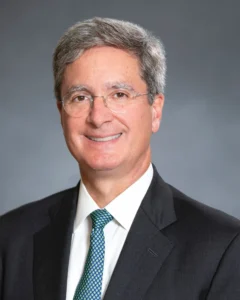
In a significant leadership shuffle that signals a focus on both institutional stability and operational evolution, JPMorgan Chase has announced that Mark O’Donovan, the firm’s current CEO of international consumer banking, will succeed Robin Leopold as the head of human resources. The transition, slated for January 2027, marks the conclusion of a storied career for Leopold, who has steered the banking giant’s workforce through some of the most volatile periods in modern financial history.
The Strategic Shift: O’Donovan’s Path to HR
The appointment of O’Donovan to the firm’s top HR post is a notable move for the world’s largest bank by market capitalization. As part of this transition, O’Donovan will relocate from London to JPMorgan’s headquarters in New York City, where he will also secure a seat on the bank’s prestigious operating committee.
For a career banker with 30 years of tenure at the firm, the shift from line-of-business management to human capital management highlights a trend among global financial institutions: prioritizing leaders who possess deep institutional knowledge and experience in large-scale organizational integration. O’Donovan’s career trajectory at JPMorgan has been defined by his versatility, having occupied key roles including global controller, CEO of Chase Auto, and head of the bank’s home lending business.
A Legacy of Resilience: Robin Leopold’s Four-Decade Impact
Robin Leopold’s departure marks the end of a remarkable era. Having joined JPMorgan Chase in 2010 and assuming the role of human resources head in 2018, Leopold was responsible for overseeing the firm’s workforce during a period of unprecedented global upheaval.

Her tenure was defined by the dual challenge of rapid technological transformation and global crises. From navigating the complexities of the COVID-19 pandemic—which required a radical shift in how the world’s largest bank managed remote work and employee safety—to managing the human element of massive acquisition integrations, Leopold became a cornerstone of CEO Jamie Dimon’s leadership team. Colleagues and industry observers have long described her as a “steady hand,” a reputation cemented by her ability to maintain organizational culture while the firm grew significantly in both assets and headcount.
Chronology of a Career: The Transition Timeline
The transition process has been designed for continuity. According to internal communications released by the bank:
- September 30, 2026: The official announcement of the succession plan is made to stakeholders and employees.
- October 2026 – December 2026: A period of strategic planning and organizational briefing as O’Donovan prepares to wrap up his duties in international consumer banking.
- January 2027: Mark O’Donovan officially assumes the role of head of human resources and joins the operating committee.
- Q1 2027: Leopold and O’Donovan will engage in a formal, collaborative transition period to ensure the stability of the firm’s HR infrastructure and ongoing global personnel initiatives.
The Architect of Integration: O’Donovan’s Proven Track Record
O’Donovan’s appointment is widely viewed as a reward for his high-stakes performance during the bank’s most challenging growth phases. Most notably, as CFO of the commercial and investment bank, O’Donovan played an integral role in the 2023 acquisition and integration of First Republic Bank. The task of absorbing the failed lender was one of the most complex operational maneuvers in recent banking history, requiring not only financial precision but the complex task of merging disparate corporate cultures and retention strategies.
This experience in “change management” is precisely what the firm appears to be banking on as it faces the next decade of workplace transformation, driven by the rapid integration of artificial intelligence and the shifting expectations of the global workforce.
Official Responses and Internal Sentiment
In a statement released on Tuesday, CEO Jamie Dimon offered a glowing assessment of Leopold’s contribution to the firm.

“Robin has been instrumental in transforming how we manage our company and how we develop, recruit, counsel and interact with our employees—and she has done so during a remarkable period of growth,” Dimon said. He highlighted the unique pressures faced during her tenure, noting, “No matter the challenge, Robin has brought integrity, wisdom and exceptional judgment to every matter she tackles.”
Dimon’s praise underscored the difficulty of the transition, adding, “While I’m sad we are losing such a valuable partner and friend, I’m so happy for Robin and her family.”
The sentiment reflects a broader culture at JPMorgan that prizes long-term loyalty and internal talent development. By elevating a 30-year veteran like O’Donovan to such a critical role, the bank reinforces its commitment to its internal promotion pipeline.
Broader Implications for JPMorgan and the Banking Sector
The appointment of a seasoned operator like O’Donovan to lead HR suggests that the firm views human resources not merely as an administrative function, but as a strategic arm essential to the bank’s future performance. Several factors contribute to the complexity of this new role:
1. The AI Paradigm Shift
As financial institutions aggressively implement generative AI to streamline operations, the role of HR is becoming increasingly technical. O’Donovan will likely be tasked with managing the workforce transition—upskilling current employees while integrating new AI-centric roles, a process that requires a delicate balance of human intuition and technical oversight.

2. Geopolitical and Macroeconomic Navigating
Leopold’s tenure was marked by “geopolitical hostilities,” a trend that shows no sign of abating. As a global bank, JPMorgan must ensure its workforce remains resilient against the backdrop of shifting international regulations and regional instability. O’Donovan’s experience as CEO of international consumer banking provides him with a unique, firsthand perspective on these global pressures.
3. Culture in a Hybrid World
The banking industry continues to grapple with the tension between traditional office culture and the flexibility demanded by the modern workforce. O’Donovan, moving from the London international hub to the New York headquarters, will be at the center of the firm’s policy decisions regarding workplace environment, retention, and corporate identity.
Looking Ahead: The Future of the Operating Committee
The ripple effects of this change extend beyond the HR department. With O’Donovan joining the operating committee, the balance of power within the bank’s top leadership shifts slightly. Simultaneously, the bank continues to adjust its broader leadership structure, as evidenced by the recent naming of new co-presidents earlier in 2026.
As O’Donovan prepares to step into the shoes of a widely respected veteran, the eyes of the financial world will be on how he navigates the intersection of legacy banking culture and the future of work. For JPMorgan Chase, the hope is that O’Donovan’s reputation for “clear-headed” and “results-oriented” management will ensure that the firm’s most valuable asset—its people—remains its most competitive advantage in an increasingly digitized and unstable global economy.
As for Robin Leopold, she leaves behind a firm that is not only significantly larger than the one she joined in 2010 but also one that is demonstrably more resilient, having survived the crises of the last decade with its leadership and institutional reputation intact. Her departure marks the end of an era, but for the bank, the transition is a calculated step toward the next chapter of its evolution.