Navigating Market Turbulence: Retail Investors Chase Falling Long-Term Bonds Amid Consumer Financial Strain
October 7, 2026
By Ben Carlson
Main Facts
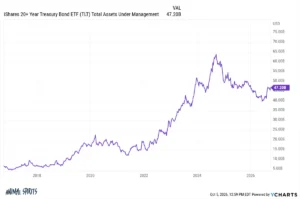
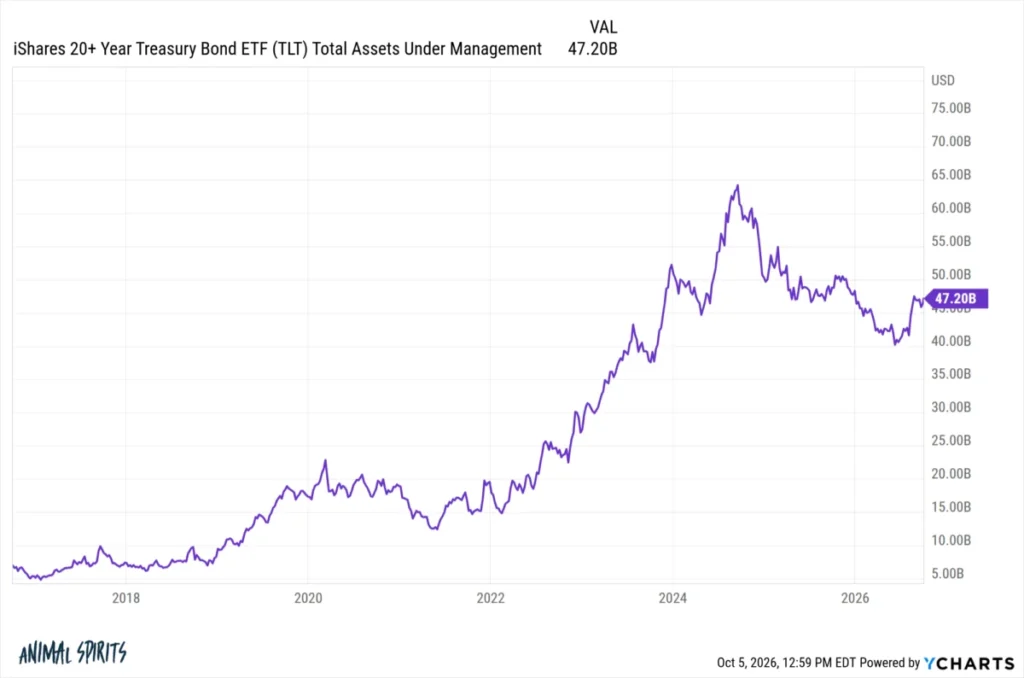
As global financial markets navigate a complex macroeconomic landscape marked by shifting monetary policies, resilient yet strained consumer behavior, and fluctuating Treasury yields, retail investor sentiment has taken center stage. According to recent data from JPMorgan highlighted in market commentary, September 2026 witnessed the largest rotation into long-end Treasury Exchange-Traded Funds (ETFs) on record. This historic influx was predominantly driven by massive retail allocations into funds like the iShares 20+ Year Treasury Bond ETF ($TLT) even as bond yields continued to drift higher—a phenomenon where falling asset prices draw aggressive, counter-trend buying from everyday investors seeking long-term value.

Concurrently, fresh economic indicators underscore a growing divergence between American consumer spending habits and income growth. August personal spending outpaced personal income growth by a wide margin (+0.9% compared to +0.2%), signaling that households are increasingly relying on savings depletion and credit to maintain their lifestyles. Against this backdrop of heightened financial friction, portfolio managers and financial commentators are evaluating the durability of these trends, weighing the psychological allure of catching a falling asset class against historical risk management principles.

Chronology of Events
The late-summer and early-autumn financial window of 2026 has been defined by a rapid sequence of macroeconomic data releases and shifting investor positioning:
- Late August to September 30, 2026: Macroeconomic reports reveal persistent pressure on American consumers. Data released at the end of September highlights that while personal spending rose sharply by 0.9% in August, personal income rose by a modest 0.2%, accentuating the strain on household balance sheets.
- October 1, 2026: Market intelligence from JPMorgan surfaces, revealing that September marked the largest rotation into long-end Treasury ETFs in recorded history. Analysts note that this movement was fueled heavily by retail investors pouring capital into $TLT amid rising yields and falling underlying bond prices.
- October 2, 2026: Prominent market observers and commentators draw attention to the psychological appeal of this trade. Observers liken the relentless buying of falling long-term bonds to "sweet temptation"—describing how lower prices make the asset increasingly attractive to retail buyers, despite historical warnings against fighting prevailing market momentum.
- October 7, 2026: Financial analysts compile a comprehensive array of market charts, sentiment metrics, and cross-asset performance indicators to dissect the broader implications of retail investor behavior, international portfolio diversification, and income-seeking strategies.
Supporting Data and Market Metrics
The financial narrative of late 2026 is vividly illustrated by quantitative shifts across consumer metrics and fixed-income products:
- Consumer Disconnect: The August personal income and spending report showed a 0.7 percentage point gap—spending grew at +0.9%, while income rose just +0.2%. This structural gap indicates that everyday consumers are leaning heavily on debt and legacy savings to sustain economic activity.
- Historic Treasury Inflows: JPMorgan’s September retail flow analysis documented record-breaking buying in long-end Treasury ETFs, specifically targeting $TLT. This occurred despite an inverse relationship where bond prices fell as yields drifted upward.
- Yield and Volatility Management: Yield curves and international volatility metrics—such as those tracked by specialized exchange-traded products targeting low-volatility, high-dividend international equities (e.g., Franklin Templeton’s LVHI)—highlight an overarching investor desire to smooth out portfolio returns during turbulent market cycles.
- Visualizing the Market Landscape: Comprehensive charting data from early October captures wide-ranging asset class movements, covering equity market breadth, fixed-income sentiment extremes, and shifting liquidity flows across retail brokerage platforms.
Official Responses and Expert Commentary
Financial market authorities and market analysts have offered varied perspectives on the unprecedented retail appetite for long-duration fixed income and the underlying health of the consumer base:
- Retail Psychology and Momentum: Market commentators have openly debated the wisdom of the record inflows into $TLT. Analysts have warned that buying an asset purely because its price keeps dropping can be akin to a trap. As one market observer colorfully noted, the temptation to buy a depreciating asset grows with every percentage point drop, comparing the behavior to a starving person indulging in unhealthy cravings despite historical evidence suggesting patience is a safer virtue.
- The Consumer Strain Narrative: Economic writers tracking household metrics have emphasized that while aggregate spending figures initially paint a picture of economic health, the underlying mechanics reveal structural vulnerabilities. The widening chasm between income and expenditure indicates that consumer resilience may be approaching a finite threshold.
- Institutional Frameworks and Platforms: Major financial institutions, including Fidelity Investments and Federated Hermes, continue to supply advanced analytical and trading infrastructure—such as high-powered trader platforms—to help retail and professional investors navigate these complex, fast-moving market dynamics.
Implications for Investors and the Broader Economy
The intersection of record-setting bond accumulation by retail traders and underlying consumer financial strain carries several critical implications for the macroeconomic outlook and individual portfolio strategy:
1. Interest Rate Sensitivity and Duration Risk
The aggressive accumulation of long-duration assets like $TLT during a rising-yield environment demonstrates a strong conviction among retail investors that interest rates are near a cyclical peak. If monetary policy pivots or inflation cools faster than anticipated, these long-term bond holders stand to capture significant capital appreciation alongside steady coupon payments. However, if inflation proves sticky and yields climb further, near-term capital losses will test the patience and staying power of retail portfolios.
2. Consumer-Driven Economic Vulnerability
Because consumer spending accounts for the lion’s share of economic growth, the reliance on savings drawdowns and credit card debt to bridge the income-spending gap cannot persist indefinitely. A potential cooling in consumer expenditures in the upcoming quarters could slow broader economic momentum, forcing businesses to adjust revenue expectations and impacting cyclical equities.
3. The Shift Toward Defensive and Income-Generating Assets
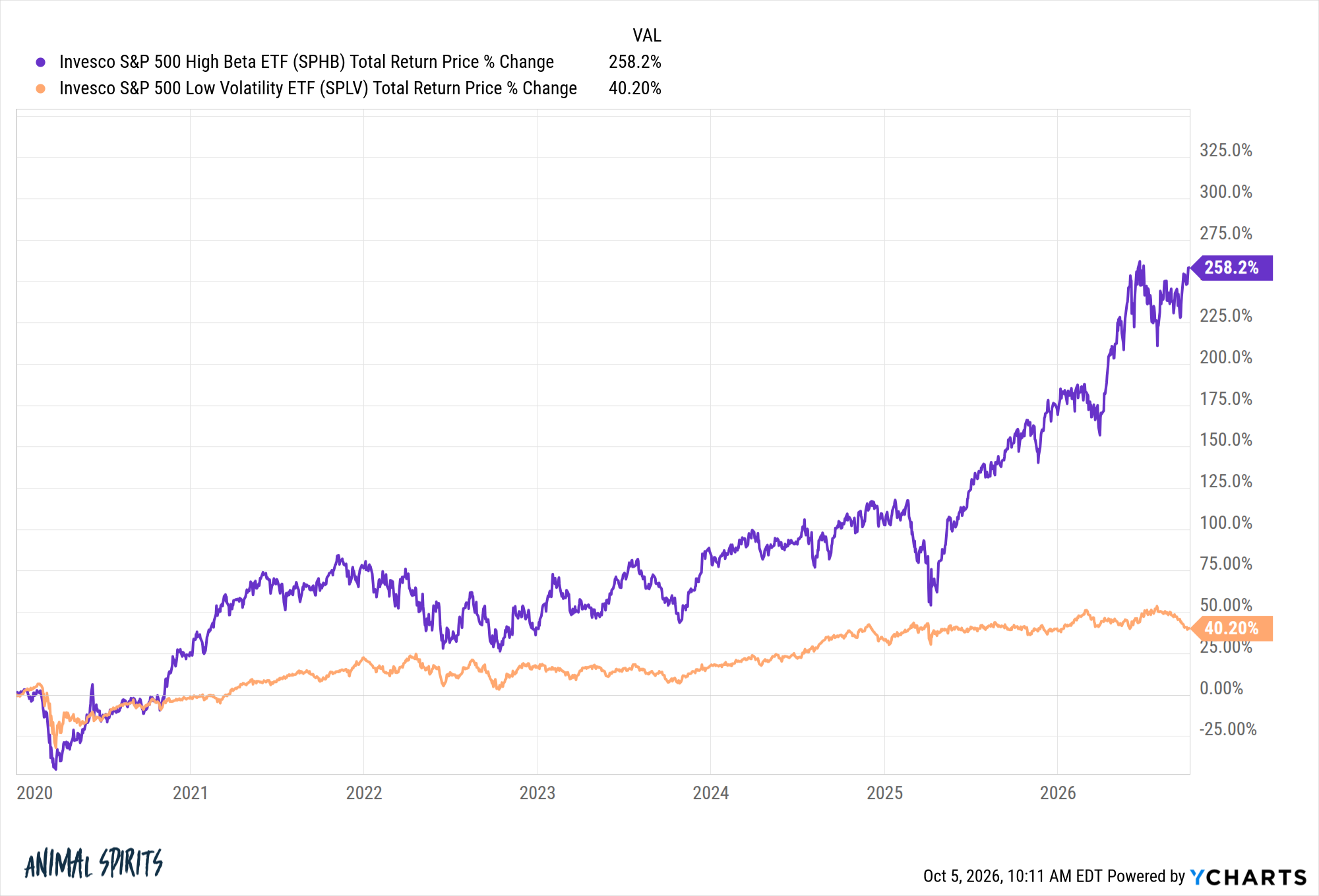
Heightened cross-asset volatility has prompted investors to search aggressively for stability. Whether through low-volatility international dividend ETFs or domestic fixed-income strategies, market participants are increasingly prioritizing capital preservation and cash flow generation over speculative growth. This defensive rotation reflects a mature phase in the market cycle where risk management takes precedence.
Disclaimer: Nothing in this article constitutes investment advice, performance data, or any recommendation that any particular security, portfolio of securities, transaction, or investment strategy is suitable for any specific person. Investing in speculative securities involves the risk of loss.