The Wealth Paradox: How Ultra-High Net Worth Surges Coexist with Broad-Based American Prosperity
By Ben Carlson
Published October 6, 2026
Main Facts: The Bifurcated Peak of American Prosperity
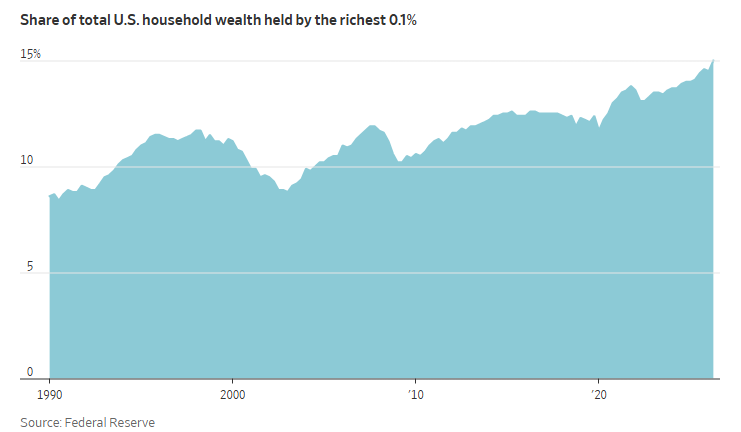
At the apex of the United States economy, a remarkably small cohort commands an unprecedented share of capital. According to data highlighted by The Wall Street Journal, a mere 137,000 households—representing the top 0.1% of the American populace—currently control 15% of all household wealth. For this elite tier, average net worth hovers around $200 million. In this decade alone, the collective fortunes of this ultra-wealthy demographic have expanded by nearly $15 trillion.
Yet, focusing exclusively on the stratosphere of the super-rich obscures a broader, more resilient economic narrative unfolding across Main Street. While the apex grows steeper, the base of the mountain is rising, too. Groundbreaking new research reveals that millions of Americans are quietly building substantial fortunes, younger generations are outpacing their historical predecessors in wealth accumulation, and overall economic indicators point to an unprecedented accumulation of American capital.
Chronology: The Evolution of the "Everywhere Millionaire"
To understand how modern wealth distribution has transformed, financial economists Owen Zidar and Eric Zwick trace the evolution of high-net-worth households far beyond the traditional boundaries of the Forbes 400. In their newly released book, The Everywhere Millionaire, Zidar and Zwick redefine the affluent class by examining households commanding at least $5 million in total net worth.
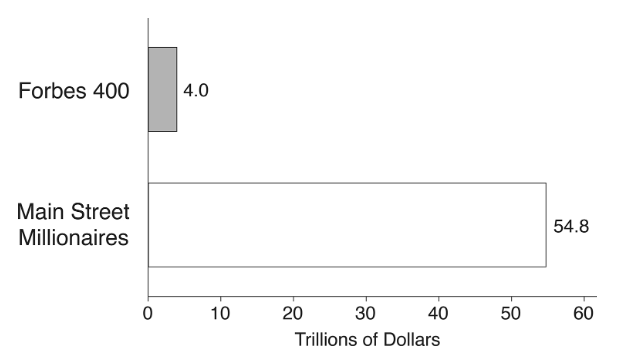
- The 2022 Baseline: By 2022, approximately five million American households—roughly 4% of the population—had crossed the $5 million threshold. This definition accounts for both liquid assets (such as equities and bank accounts) and illiquid holdings (including real estate and private enterprises), minus outstanding liabilities like mortgages and student debt.
- The Decamillionaire and Centimillionaire Tiers: Within this group of five million households, over two million qualify as decamillionaires (possessing at least $10 million), while approximately 65,000 households hold centimillionaire status (at least $100 million).
- The Rise of Main Street Business Owners: Crucially, Zidar and Zwick identify a subgroup they term "Main Street Millionaires"—private business owners numbering roughly three million people, whose average net worth sits at $25 million. Nearly all centimillionaires and three-quarters of decamillionaires maintain equity stakes in private businesses, demonstrating that modern wealth is not exclusively minted in Wall Street boardrooms or Silicon Valley tech hubs.
Supporting Data: Beyond Wall Street and Silicon Valley
The engine driving America’s broader wealth isn’t confined to venture capital or high-frequency trading. It is anchored in local commerce, corporate equity participation, and a structural shift in how everyday citizens interact with financial markets.
The Anatomy of Main Street Wealth
The individuals driving this lower-tier millionaire boom are not tech titans or hedge fund managers; they are local auto dealers, practicing physicians and dentists, independent contractors, certified public accountants, attorneys, and regional beverage distributors. These entrepreneurs hold vital equity in their own operating companies while simultaneously participating in the broader corporate economy through the stock market.
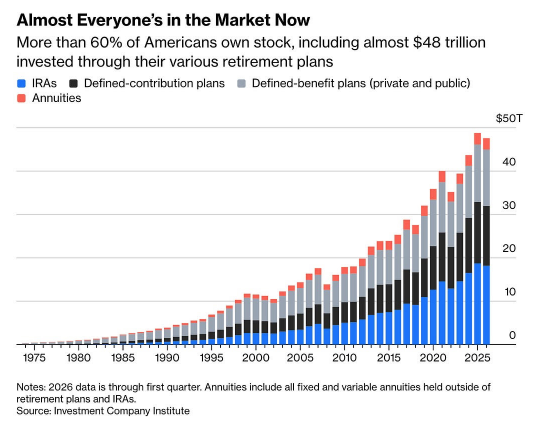
Data compiled by Bloomberg illustrates a steady, multi-decade expansion in direct and indirect stock market ownership across American households. While capital concentration remains high at the top, equity participation has democratized significantly.
Generational Wealth Dynamics: The Millennial Surge
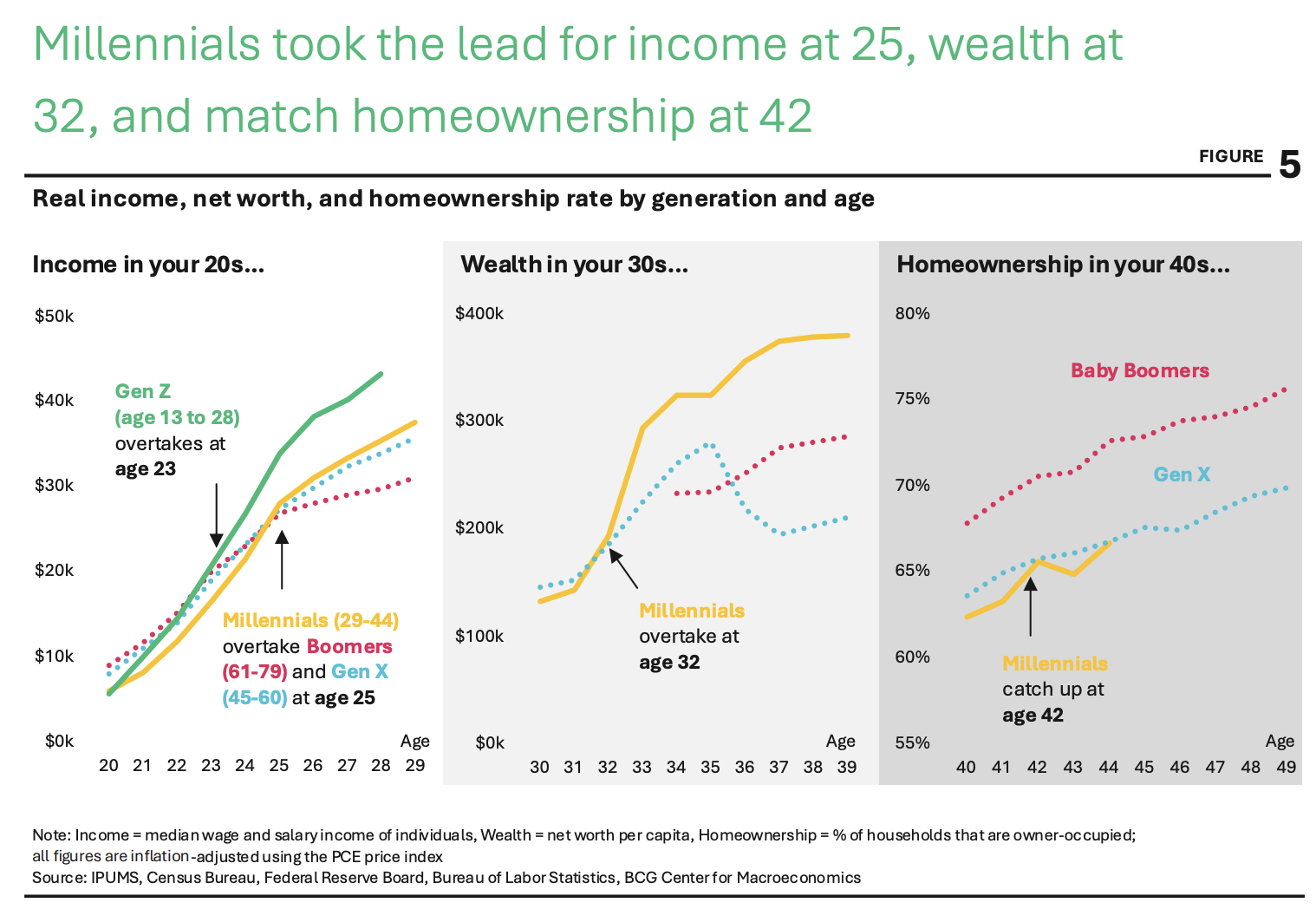
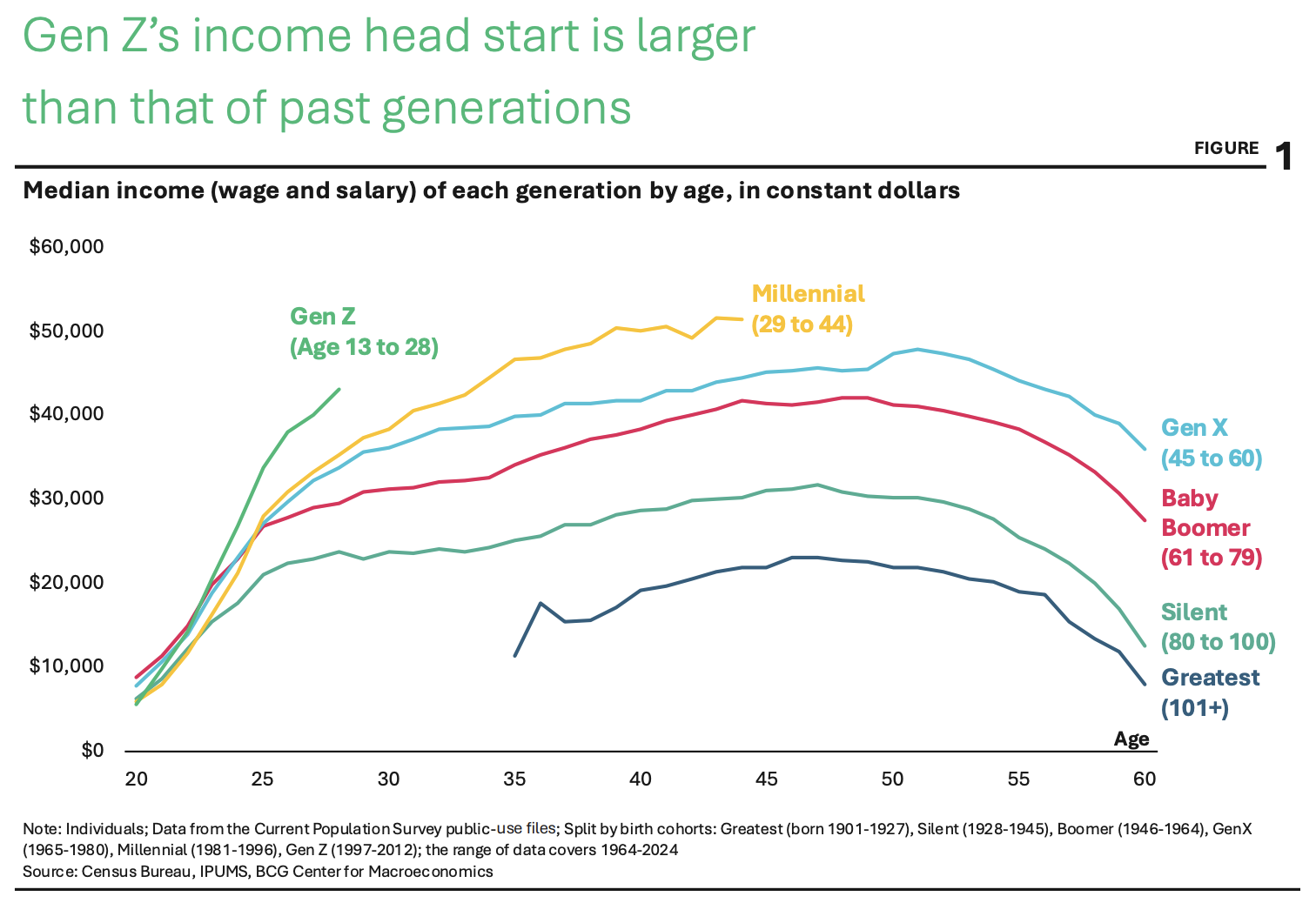
Conventional wisdom often paints younger generations as economically disenfranchised, crushed by housing costs and student loan debt. However, comprehensive data from the Boston Consulting Group (BCG) and economic analysts like Jeremy Horpedahl challenge this gloomy consensus.
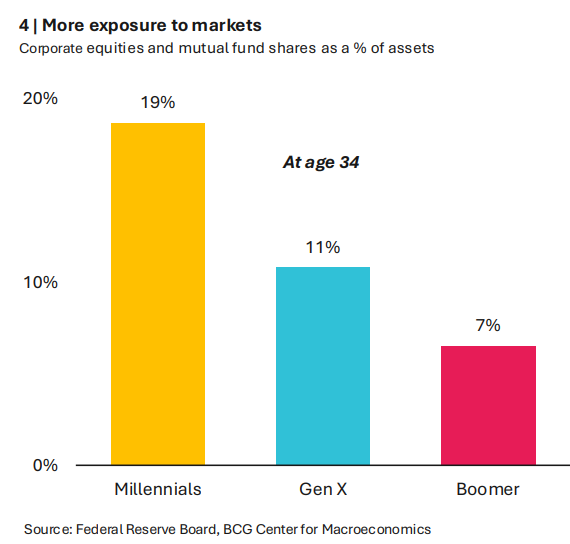
- Early Investing: Millennials are allocating capital to the stock market at significantly higher rates than Gen X or Baby Boomers did at comparable ages. By starting earlier, younger investors are benefiting more robustly from the mechanics of compound interest.
- Income Growth: Inflation-adjusted incomes for successive generations have risen steadily. Workers under the age of 45 currently demonstrate higher baseline wealth accumulation and earning power than previous generations did at the exact same stage of life.
- All-Time Highs in Working-Age Wealth: Updated figures through the first half of 2026 show that average inflation-adjusted net worth for working-age populations—both younger and older workers—stands at historic all-time highs.
The Macroeconomic Indicator of Overflowing Capital
Perhaps the most visceral proof of America’s aggregate wealth is not found in brokerage statements, but in square footage. According to analysis published in The New Yorker, the United States currently accounts for an astonishing 90% of global self-storage capacity.
The scale of physical accumulation is staggering:
- There are more self-storage facilities in the U.S. than Starbucks, McDonald’s, Walmart, Home Depot, Domino’s, Dunkin’, and Costco locations combined.
- A 2022 survey by Stanley Black & Decker’s Craftsman tool division revealed that over one-third of American residential garages are so packed with overflow possessions that owners cannot park their cars inside them.
- The nation supports 4,800 dedicated recreational vehicle and boat storage facilities alongside more than 28,000 hybrid storage properties.
This phenomenon underscores an undeniable economic reality: Americans possess so much disposable income and capital assets that they routinely pay external businesses simply to house their excess consumer goods.
Official Responses and Expert Perspectives
Economic sentiment remains a frequent battleground in public discourse. Critics point out that persistent inflation, elevated interest rates, and housing affordability crises mean that prosperity is far from universally felt. Consumer confidence metrics often fluctuate independently of hard macroeconomic data, reflecting the painful reality that not every household is thriving.

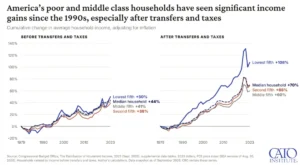
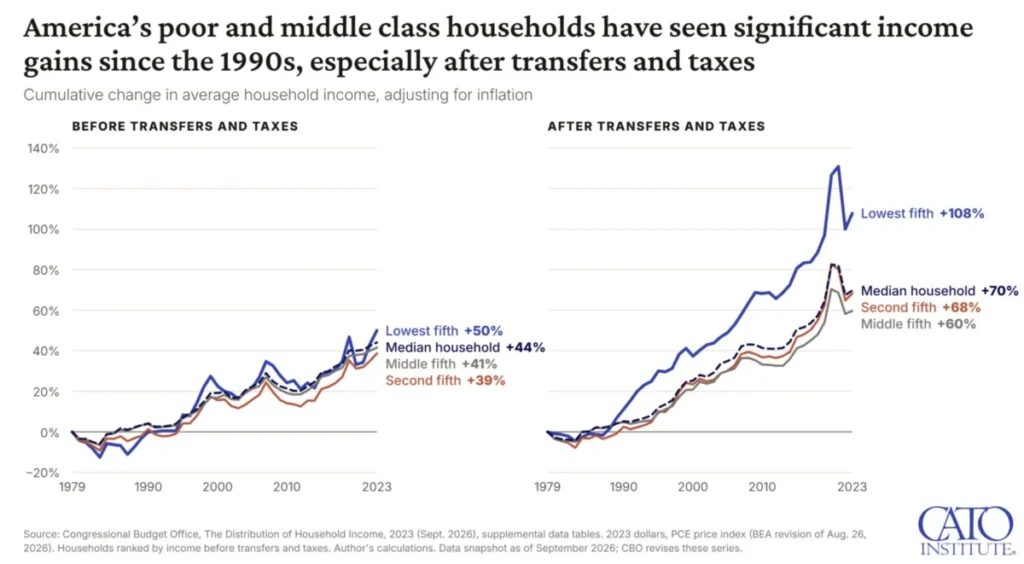
However, institutional researchers and policy institutes emphasize long-term structural progress. Data from the Cato Institute highlights that the share of Americans earning high incomes has quintupled over the past 60 years. This upward mobility extends well beyond a privileged upper-middle class; lower- and middle-income households have likewise captured measurable, albeit smaller, financial gains over recent decades.
Economists argue that while inequality persists—and the wealth gap between the median worker and the top 0.1% remains wide—the prevailing economic tide has lifted ships across multiple economic strata.
Implications: The Wealth Effect and Future Outlook
The historic accumulation of private wealth carries profound implications for the trajectory of the American economy.
- Recession Resilience: The massive cushion of household wealth is widely regarded as a primary catalyst behind the economy’s ability to stave off prolonged recessions in recent years. Accumulated savings, equity gains, and rising home values have insulated consumers against short-term economic shocks.
- The "Wealth Effect" Vulnerability: Conversely, this heavy reliance on asset values introduces systemic risk. If macroeconomic conditions deteriorate sharply or asset markets experience a severe correction, the wealth effect—where consumers spend less as their net worth declines—could accelerate a downturn.
- The Compounding Future: Because younger demographics are entering the investment landscape earlier and earning higher inflation-adjusted starting incomes, the structural foundation for future millionaires is stronger than ever.
As Zidar and Zwick’s work demonstrates, the face of American wealth is shifting away from exclusive coastal enclaves toward a decentralized landscape of business owners, diligent young investors, and Main Street entrepreneurs. While the gap between the rich and the ultra-rich continues to widen, the broader story of the American economy remains one of historic, compounding abundance.