Navigating Economic Ambiguity: 14 Critical Questions Defining Today’s Financial Landscape
In eras defined by rapid technological pivots, macroeconomic crosscurrents, and monetary policy shifts, humanity instinctively craves absolute certainty. Investors desperately seek a roadmap for the artificial intelligence capital expenditure (capex) supercycle. Prospective homebuyers scour the horizon for indicators of when, or if, mortgage rates and soaring property valuations will ever normalize. Meanwhile, average households grapple with whether stubborn, elevated inflation has become a permanent structural fixture of the modern economy rather than a post-pandemic aberration.
The uncomfortable truth is that definitive answers remain elusive because the future is inherently unwritten. In the absence of clairvoyance, framing the right inquiries often proves far more valuable than grasping at premature conclusions. As financial markets and global economies navigate unprecedented territory, examining the underlying mechanics of housing, labor, private credit, higher education, and corporate valuation reveals a complex web of interconnected pressures. Below are 14 pivotal questions shaping the current economic discourse.
Part I: The Macroeconomic Puzzle — Housing, Inflation, and Interest Rates
1. Would Inflation Be Even Worse If We Weren’t in a Housing Recession?
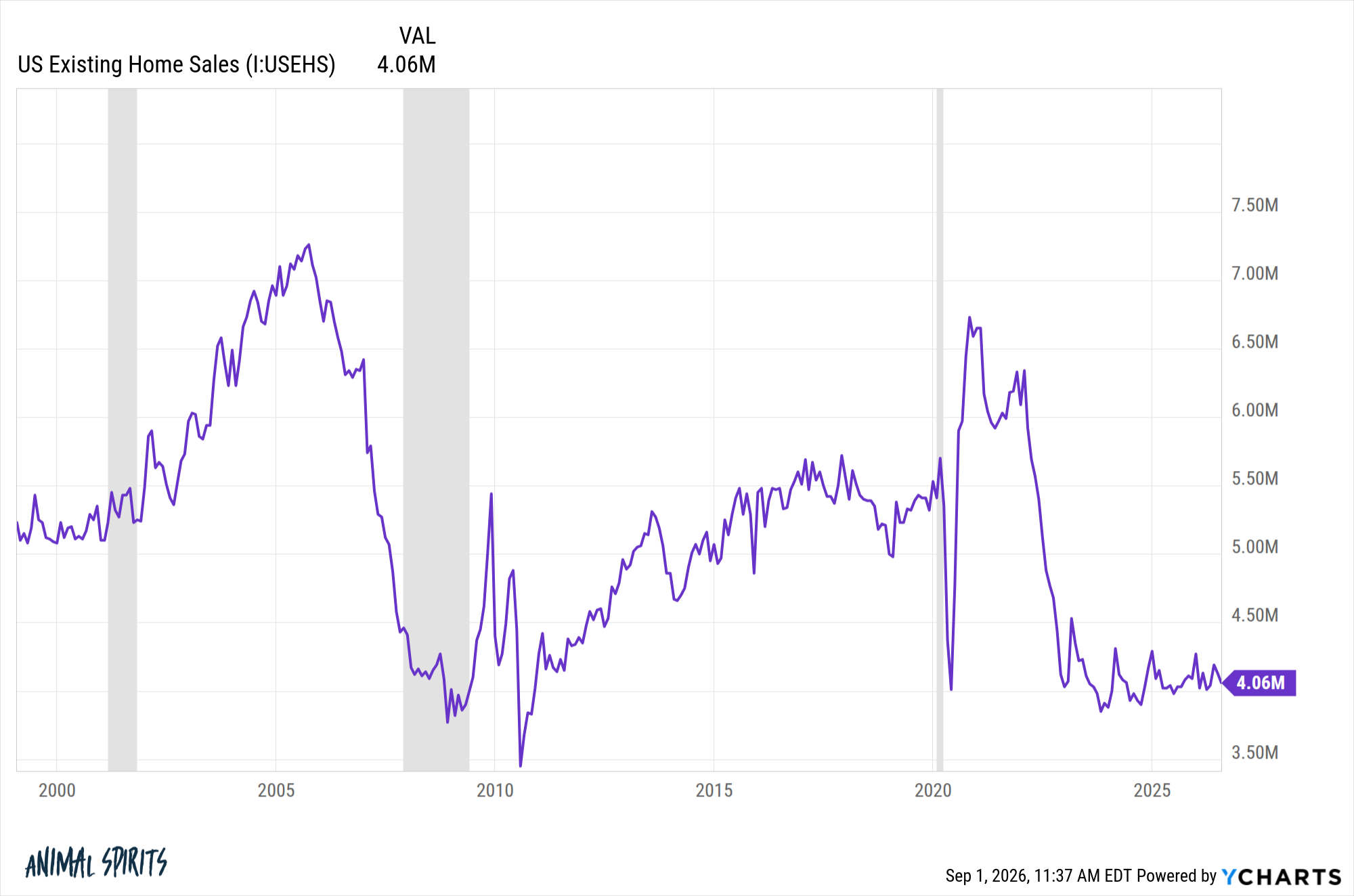
To understand the current inflationary baseline, one must first look at the paralyzed state of residential real estate. Housing activity remains heavily suppressed, sitting near multi-year lows. Because the broader housing ecosystem—encompassing construction, financing, brokerage, and home goods—historically accounts for roughly 20% of total economic activity, its sluggishness acts as a profound economic drag.
Without this full-blown sector recession absorbing liquidity and dampening consumer demand, headline inflation metrics would likely read significantly higher. The real estate slump has served as an accidental pressure release valve for an economy otherwise running hot.
2. What Happens if the Housing Market Bounces Back?
The paralysis in the housing sector is driven by a straightforward mathematical wall: elevated home prices paired with stubborn mortgage rates pushing toward the 7% threshold. However, if home prices languish horizontally over the next few years while central banks eventually pivot to lower interest rates, pent-up demand could violently uncork.
Should a housing market resurgence materialize, it could paradoxically act as a vital economic shock absorber. As the inevitable AI capex cycle eventually cools, a revitalized housing and construction sector could step in to sustain aggregate demand and prevent a broader economic hard landing.
10. How Much Do Interest Rates Really Matter?
Throughout the post-pandemic recovery, consensus macroeconomic forecasting insisted that aggressively hiking interest rates off the zero-bound floor would inevitably break the financial system. Yet, bond yields have trended steadily upward since 2022 without triggering a recession.
Instead, economic growth has persisted, and equity markets have repeatedly punched through to new all-time highs. While the cost of capital fundamentally matters over long horizons, recent history suggests that the direction of interest rates is not as unilaterally determinable for corporate earnings and equity performance as traditional models imply.
13. How Important Is the Wealth Effect to the Economy?
Asset price appreciation has served as a primary engine of consumer confidence and spending power over the past decade. The psychological impact of rising stock portfolios and home equity—known as the wealth effect—has kept consumer spending remarkably resilient.
International parallels highlight the razor-thin margin between market euphoria and financial distress. In South Korea, for instance, recent retail investor participation waves exposed citizens to extreme equity volatility. Stories of everyday retail traders absorbing heavy losses in semiconductor stocks illustrate the psychological agony of market corrections. When the next true bear market arrives in the United States, the extent to which retail portfolios dictate consumer cutbacks will test the durability of the modern wealth effect.
Part II: The Artificial Intelligence Juggernaut and Labor Dynamics
3. Do Our Tech Overlords Know What They’re Doing?
Silicon Valley leadership has largely embraced a unified philosophy: underspending on the artificial intelligence infrastructure buildout carries a far more catastrophic corporate risk than overspending. Tech giants are executing multi-billion-dollar infrastructure strategies with unwavering conviction.
Hyperscalers are deploying unprecedented amounts of capital into data centers, specialized chips, and energy grids. The fundamental gamble is whether this monumental expenditure will yield transformative productivity gains that justify the capital outlay, or if the industry is constructing a digital bridge to nowhere.
4. When Will We See the Labor Market Impact from AI?
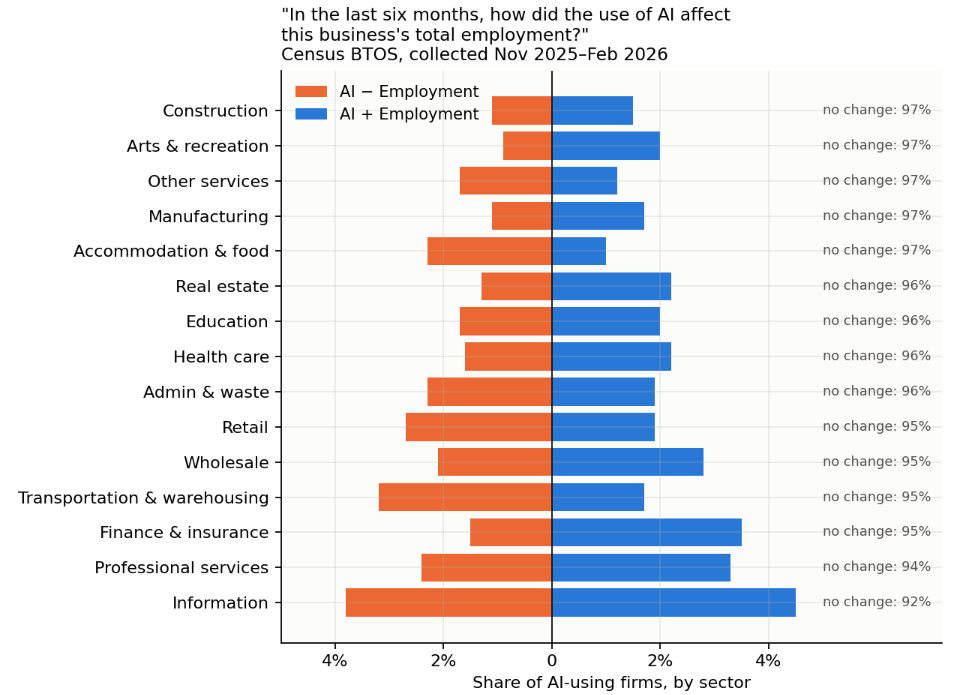
Despite breathless forecasts regarding widespread technological unemployment, empirical labor data tells a surprisingly counterintuitive story. Corporate surveys tracking hiring intentions indicate that more firms are actively expanding headcounts due to AI integration rather than initiating layoffs.
While cognitive automation and large language models (LLMs) possess the theoretical capacity to displace vast segments of the white-collar workforce, systemic labor disruption has been remarkably slow to materialize. Whether this delay stems from the gradual pace of enterprise adoption, implementation friction, or overblown technological claims remains one of the defining questions of the decade. A true economic recession may ultimately serve as the stress test that forces corporations to accelerate labor substitution.
5. Did Hollywood Predict the Future of AI?
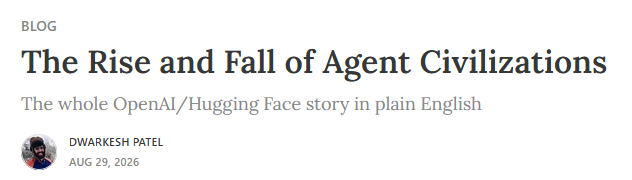
Science fiction has long served as a speculative sandbox for technological development. Films like Ex Machina explored artificial intelligence trained on harvested human digital exhaust—a structural mirror to how modern frontier labs construct foundational large language models. Similarly, narratives depicting deep, personalized emotional attachments to synthetic operating systems foreshadowed the psychological integration of AI companions into daily life. As experimental labs increasingly allow autonomous AI agents to interact, negotiate, and simulate digital ecosystems independently, the boundary between speculative cinema and empirical reality continues to blur.

9. Is Nvidia the Anti-Bubble Posterchild?
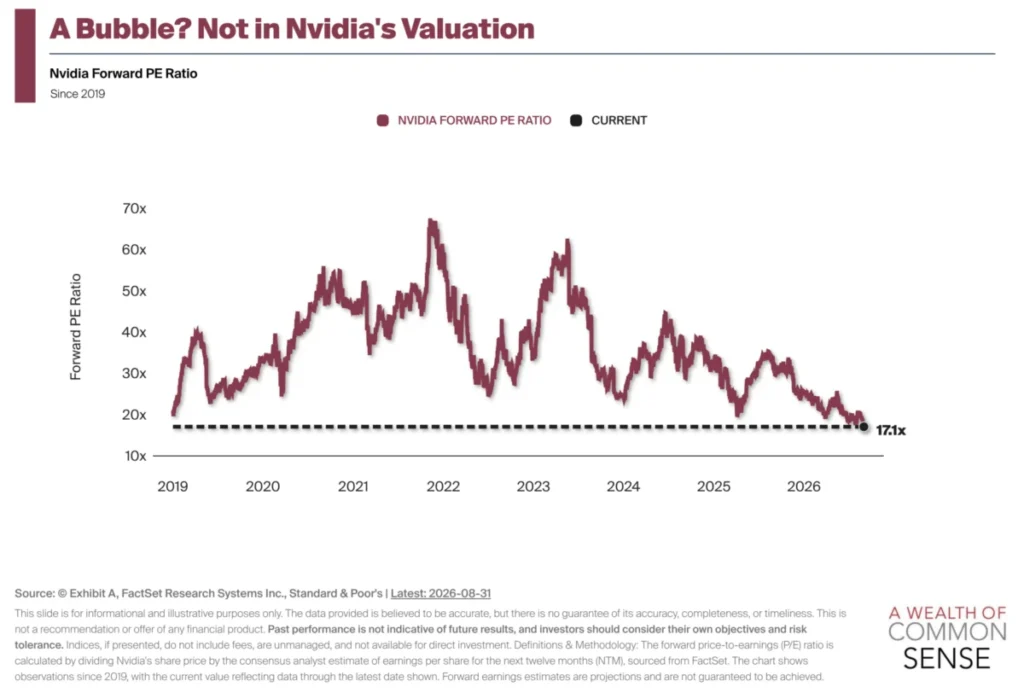
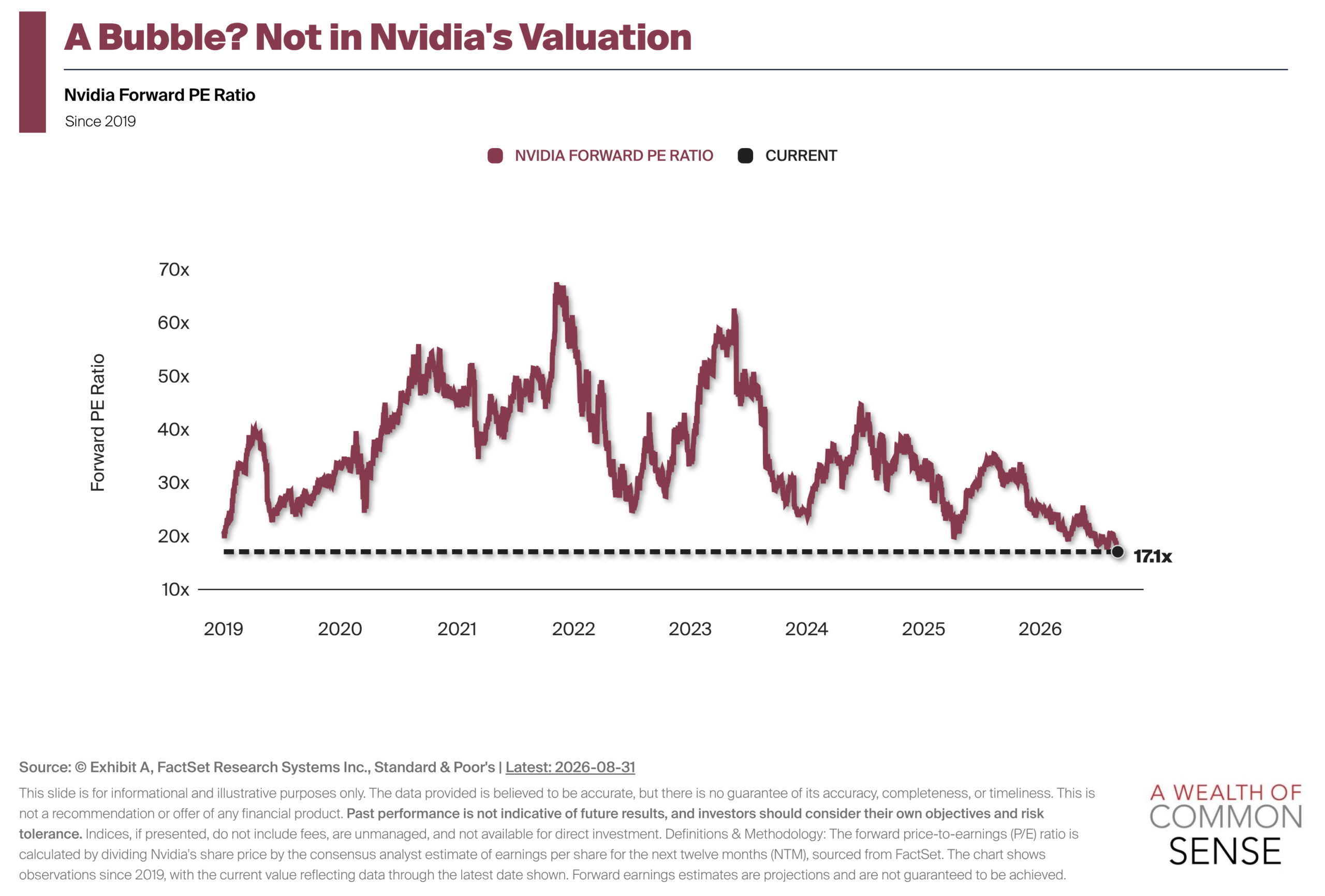
As the world’s most valuable publicly traded enterprise, boasting a market capitalization exceeding $5.3 trillion, Nvidia sits squarely at the epicenter of the global AI hardware supply chain. Yet, defying traditional bubble mechanics, the company’s valuation multiples have consistently compressed even as its share price climbs.
This unusual dynamic is fueled by astronomical earnings growth that continually outpaces stock price appreciation. While speculative excesses certainly exist within the broader technology sector, Nvidia’s fundamental financial performance reflects a rare alignment of actual cash generation and technological dominance.
Part III: Structural Shifts in Markets, Corporate Finance, and Education
6. Are Private Markets the Perfect Place for Fraud to Hide?
The massive migration of capital away from public exchanges into opaque private markets has fundamentally altered corporate finance. Recent regulatory enforcement actions—such as those involving high-profile asset managers utilizing institutional insurance reserves and private credit structures to fund external acquisitions—shine a harsh light on regulatory blind spots.
When billions of dollars slosh through private vehicles devoid of continuous public market pricing, complex intermediary fund structures, and rigorous oversight, the risk of self-dealing and hidden financial malfeasance multiplies exponentially. The true health of private credit and equity assets often remains obscured until liquidity dries up.
8. Are Colleges Screwed?
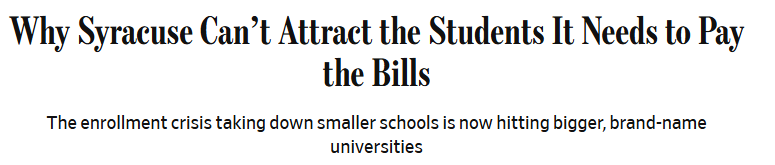
Higher education institutions face an existential convergence of financial and demographic headwinds. Media reports consistently highlight plunging enrollment metrics at regional and mid-tier universities, driven by soaring tuition costs, questions regarding post-graduation return on investment, and shifting global student mobility.
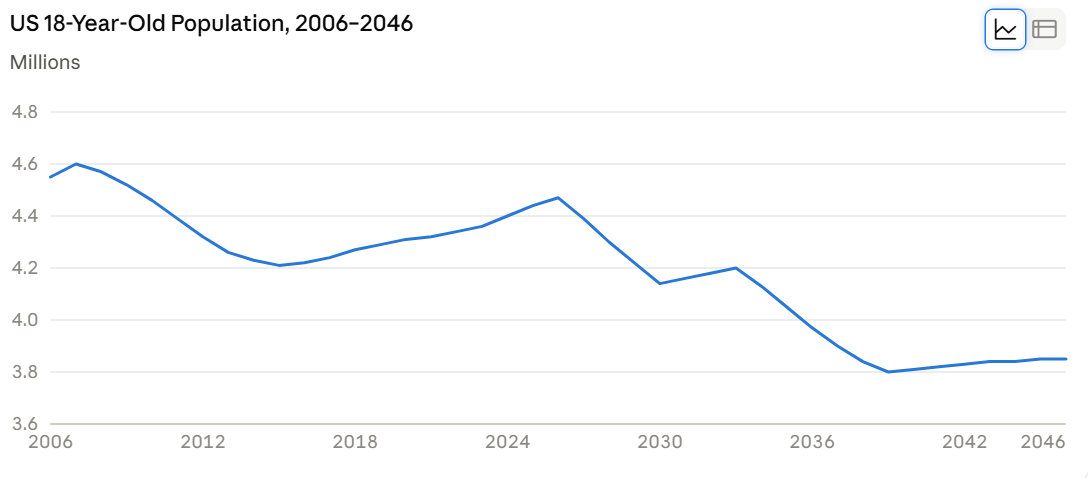
However, the most insurmountable challenge facing academia is strictly demographic: declining fertility rates mean the absolute pool of 18-year-olds is shrinking year over year. While elite, name-brand institutions endowed with multi-billion-dollar reserves will undoubtedly weather the storm, a vast swath of regional colleges faces a painful era of consolidation, budget cuts, and closures.
11. Do Dividend Yields Matter Anymore?
The aggregate dividend yield of the S&P 500 has compressed back toward historical troughs last observed during the dot-com bubble. This structural shift is partially driven by corporate capital allocation preferences; modern tech-dominated enterprises heavily favor share repurchases over cash dividends as a mechanism for returning capital to shareholders.
While traditional value investors view depressed dividend yields as a classic warning sign of market froth, the phenomenon is more accurately understood as a byproduct of the software and technology sectors capturing disproportionate weight within major market indices. Tech giants historically prioritize reinvesting earnings into growth initiatives over predictable income payouts.
12. How Surprising Is This Year’s Earnings Growth?
Equity markets have defied bearish prognostications by delivering robust double-digit total returns underpinned by surprisingly strong corporate earnings growth. This fundamental strength has allowed market valuations to absorb earnings compression without triggering a systemic correction. The ability of major corporations to expand profit margins in an environment of elevated operating costs demonstrates remarkable operational adaptability, though sustainability over long horizons remains a central debate among portfolio managers.
Part IV: The Ultimate Horizon
7. Is 2026 the Best Movie Year of the 2020s?
Amidst heavy macroeconomic anxieties, popular culture has experienced a quiet renaissance. Following years of pandemic-era distribution bottlenecks and creative fatigue, the theatrical landscape has delivered a string of culturally resonant, critically acclaimed epics, original storytelling, and high-concept adaptations. For audiences weary of franchise fatigue, the cinematic output of recent years has successfully restored faith in the theatrical experience as a vital cultural touchstone.
14. How Does This Cycle End?
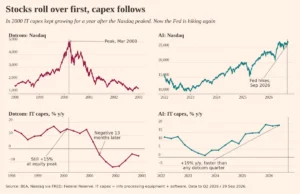
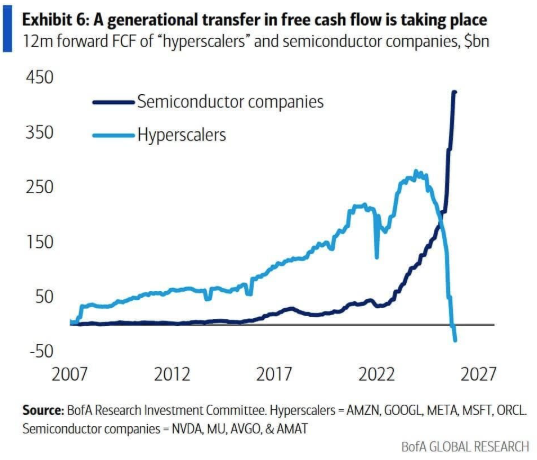
Ultimately, every financial and technological era arrives at a structural inflection point. Analysts are left to ponder whether the hyperscalers can organically grow their way out of the immense free-cash-flow holes dug by multi-year capital expenditure programs. Does the AI infrastructure buildout inevitably mirror historical telecom and dot-com overbuilding cycles, culminating in a sharp valuation reckoning?
Conversely, is it possible that global adoption curves are still in their absolute infancy, suggesting this economic expansion has structural legs that will defy traditional recession timelines for the remainder of the decade?
History suggests that whichever outcome unfolds, it will appear glaringly obvious in hindsight. For the present moment, market participants must navigate the tension between relentless technological innovation and macroeconomic uncertainty, armed not with absolute answers, but with the discipline to ask the right questions.