More Than a Game: How Queer Sports Leagues Are Reclaiming Play and Community
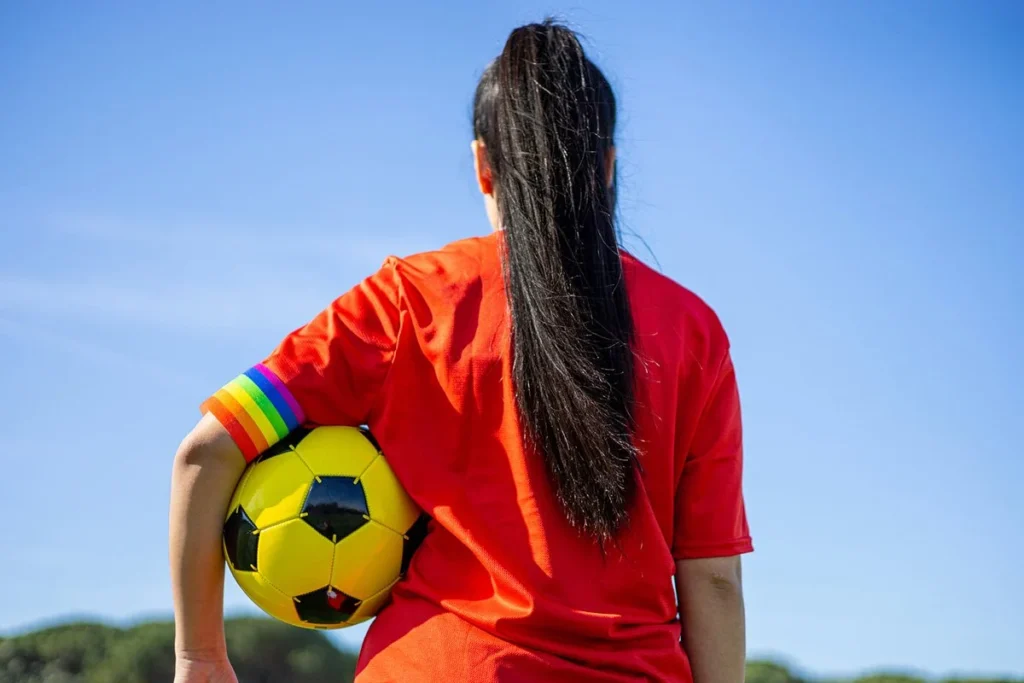
On a sun-drenched afternoon at Dean Playground in Brooklyn, the scene is deceptively simple. Players in vibrant mesh pinnies—pink, green, gray, and blue—sprint across the grass, their laughter punctuating the rhythmic thud of soccer balls hitting cleats. There are no referees barking orders, no high-stakes scoreboards, and no professional scouts in the bleachers. Yet, for the members of the Queer Soccer League (QSL), this weekly ritual is far more than a recreational pastime. It is a vital act of resistance and a sanctuary of belonging.
As the political landscape for LGBTQ+ individuals in the United States grows increasingly fraught, these grassroots athletic initiatives have become essential hubs of community solidarity. From Brooklyn to Manhattan, independent organizers are proving that when marginalized communities reclaim the field, they are doing much more than playing a sport—they are building a future where they can exist, unabashedly and authentically.
The Genesis of a Movement: Chronology of Inclusion
The current explosion of queer-centered athletics in New York City is not a new phenomenon, but it has evolved into a sophisticated network of support.
The roots of this movement can be traced back years, with groups like Dyke Soccer laying the early groundwork for queer-inclusive play in New York. When that league disbanded during the COVID-19 pandemic, the void left behind was palpable. It was into this vacuum that Hannah Kate Kelly stepped. In 2021, Kelly founded the QSL, driven by a simple, profound need: to maintain a queer community in the city that felt sustainable, safe, and celebratory.
Parallel to Kelly’s efforts is the work of Trisha Sommer, who manages Ladies Village Soccer. That organization, founded in 2010 by a group of queer women following a collective World Cup viewing at the iconic lesbian bar Cubbyhole, has served as a fixture in the local scene for over 16 years.
These leagues operate on a shoestring budget, sustained by the tireless labor of organizers who wash uniforms at local laundromats, haul nets and cones to parks, and personally manage attendee lists. This labor, while invisible to the casual observer, is the bedrock of the movement. It ensures that every new player, regardless of their athletic history or experience, is met with an intentional, warm welcome.
The Data: The Growing Chasm in Youth Sports
While these adult leagues provide much-needed respite, they exist against a backdrop of systemic exclusion. As of June 2026, the American Civil Liberties Union (ACLU) has tracked a staggering 530 anti-LGBTQ+ bills across the country. Of these, 31 have already been signed into law. This legislative wave targets everything from healthcare access and gender-affirming identity documentation to the fundamental right of transgender people to use public facilities safely.
The impact on youth sports is particularly alarming. According to the American Psychiatric Association, transgender and nonbinary youth remain the least likely demographic to participate in organized athletics. Only about one-third of all queer youth engage in sports, a stark contrast to their straight peers. The reasons are multifaceted: discriminatory "binary-only" policies, the fear of locker-room harassment, and the pervasive anxiety of being "outed" in an unwelcoming environment.
Data from the Trans Legislation Tracker indicates that the volume of anti-trans legislation in 2025 was nearly seven times higher than in 2021. With over one-third of U.S. states now enforcing bans on trans participation in school sports, the message sent to young athletes is one of exclusion. These laws, often framed as "fairness" initiatives, have in reality become tools for erasure.
Voices from the Field: Official Responses and Personal Testimony
For players like Caitlyn Langille, who joined the QSL just two months ago, the league’s value is immediate and tangible. "It feels beginner-friendly," she says. "They give each other tips about dribbling or trapping the ball. If you’re good, you need to pass it to somebody who’s newer and help them score."
This collaborative ethos is deliberate. By removing the pressure of winning, leagues like QSL and Ladies Village Soccer transform the playing field into a social equalizer. Aaron Horth, a trans player in the QSL, notes the stark difference between this environment and the world at large. "I don’t have any fear or reservations about mentioning I’m trans," Horth explains. "Knowing that trans people are openly welcomed in the league makes me feel comfortable."
The sentiment is echoed by those working at the organizational level. Jordyn Lexton, Director of Development at Athlete Ally—a national nonprofit dedicated to ending anti-LGBTQ+ discrimination in sports—views these leagues as a "Trojan horse" for broader social change.
"We have an opportunity to let sports act as a Trojan horse to help us foster a future version of society that we want to see," Lexton tells NPQ. "We are so divided as a society, but when people put on the same jersey, some of those differences go away." Lexton, who struggled with being closeted during their own athletic career, emphasizes that the nonprofit sector must recognize this "moment of cultural divide" and pivot to create spaces that are explicitly inclusive.
Structural Change: The Role of Nonprofits and Advocacy
The expansion of queer sports is not just happening at the pickup-game level; it is becoming institutionalized through groups like Big Apple Recreational Sports (BARS).
Katie Forman, a commissioner at BARS, has been instrumental in the growth of their Women, Trans, and Non-Binary (WTNB+) divisions. When she first joined the organization, these spaces did not exist. Since 2023, the growth has been exponential. What began as a small initiative has blossomed into leagues for bowling, dodgeball, pickleball, and kickball, drawing hundreds of participants.
This growth is essential for mental health. Research published in the Journal of Psychology in the Schools confirms that sports participation directly correlates to improved self-esteem and reduced anxiety for LGBTQ+ individuals. By providing an environment where gender expression is not a barrier to entry, these organizations are effectively mitigating the psychological toll of external discrimination.
Furthermore, these leagues serve as vital social hubs. The post-game ritual—often moving from the pitch to a local venue like Branded Saloon—is where the real networking happens. It is where acquaintances turn into friends, and where support networks are forged. In an era where many queer people feel isolated, these connections are literal lifelines.
Implications for the Future: A Paradigm Shift
As the United States approaches its 250th anniversary, the question of what constitutes a "vibrant democracy" remains central. The work being done by the QSL, Ladies Village Soccer, and BARS suggests that the answer lies in the local, the grassroots, and the persistent.
These leagues are not merely responding to bad policy; they are creating a blueprint for a more equitable society. By de-emphasizing the hyper-competitive, binary nature of traditional sports, they are teaching participants—and the wider community—that inclusion is a choice, not a constraint.
"Being queer isn’t always a deliberate political statement, but this space feels like a way to fight back," says Emma Davis, a founding member of the QSL.
The implications are clear: when marginalized communities are given the agency to create their own spaces, they don’t just find a place to play. They find a place to breathe. As long as the legislative climate remains hostile, the importance of these "leagues of belonging" will only grow. They provide a vital reminder that regardless of the score, or the legislation, the act of showing up for one another is, in itself, a victory.
For those interested in supporting this movement, the path forward is through the continued investment in local queer-led initiatives and the amplification of advocacy groups like Athlete Ally and the Trevor Project. The game, it seems, is far from over—and for thousands of athletes across the country, the most important matches are the ones where everyone is invited to play.