More Than a Game: How Queer Sports Leagues Are Reclaiming Joy and Building Community
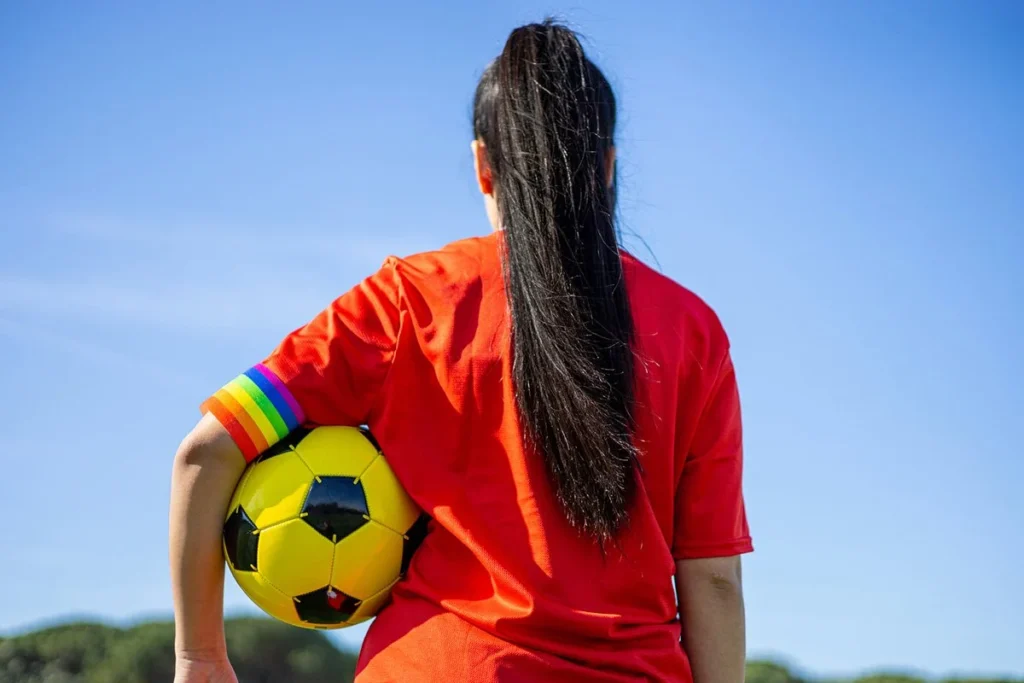
In the heart of Brooklyn’s Prospect Heights, the scene at Dean Playground on a breezy afternoon is deceptively simple. Players clad in mesh pennies—neon pink, forest green, slate gray—weave across the turf with focused intensity. There is no scoreboard, no formal referee, and no obsession with the final tally. Yet, for those on the field, the stakes couldn’t be higher. This is the Queer Soccer League (QSL), a grassroots initiative that serves as a vibrant microcosm of a much larger, nationwide movement to secure belonging, safety, and community for LGBTQ+ individuals through the power of play.
As the political landscape for queer Americans becomes increasingly hostile, these athletic spaces have evolved from mere recreational outlets into vital sanctuaries. By fostering environments where identity is never a barrier to participation, leagues like QSL and organizations like Athlete Ally are effectively using sports as a "Trojan horse" for social change, proving that a soccer ball can be as powerful a tool for liberation as a protest sign.
The Genesis of Belonging: Chronology of a Movement
The story of the Queer Soccer League is one of necessity and persistence. Founded in 2021 by Hannah Kate Kelly, the league was born from a vacuum left by the dissolution of "Dyke Soccer," a legendary NYC institution that collapsed during the isolation of the COVID-19 pandemic. Kelly, recognizing that the physical and social health of the local queer community was fraying, decided to rebuild.
"I didn’t plan on being around this long," Kelly admits. "I knew that as long as I was living in the city, I really wanted to have a queer community. A lot went into making the team sustainable."
The QSL’s growth mirrors a broader historical trend of queer-led athletic organizations. In 2010, Ladies Village Soccer—now a staple of lower Manhattan—was formed by a group of women who, having bonded over the World Cup at the iconic lesbian bar The Cubbyhole, decided to take their passion to the pitch. Trisha Sommer, who eventually took the helm of the league, notes that for many, these spaces are the first places they feel truly "seen."
"Being an athlete has been part of my identity way before I even realized I was a lesbian," Sommer says. Over the last 16 years, the stability of these leagues has provided a consistent anchor for thousands of New Yorkers, creating a legacy of mentorship and friendship that spans generations.
The Data of Disparity: Why Inclusion is a Crisis-Level Need
The rise of independent, community-led sports leagues occurs against a backdrop of unprecedented legislative pushback. According to the American Civil Liberties Union (ACLU), as of June 2026, there are 530 anti-LGBTQ+ bills currently tracked in the United States, with 31 already signed into law. These range from restrictions on gender-affirming healthcare to aggressive bans on bathroom access and the erosion of legal protections for gender identity.
The impact on youth is particularly devastating. Data from the American Psychiatric Association (APA) reveals that transgender and nonbinary youth are the least likely demographic to engage in organized sports, with only about one-third of queer youth participating in team activities compared to their straight, cisgender peers. The barriers are both systemic and psychological: fear of discrimination, binary-enforced locker room policies, and a pervasive lack of support from institutional coaching staff.
The Trans Legislation Tracker notes that in 2025 alone, the number of anti-trans bills was nearly seven times higher than in 2021. With over one-third of U.S. states having already passed legislation restricting trans participation in K-12 and collegiate sports, the "playground" has become one of the most contentious battlegrounds in the American culture war.
Official Perspectives: The Role of Advocacy and Allyship
For those navigating these hostile waters, organizations like Athlete Ally and Big Apple Recreational Sports (BARS) are providing more than just equipment; they are providing political cover and advocacy.
Jordyn Lexton, the Director of Development at Athlete Ally, describes the current climate as a strategic effort to erase queer visibility from public life. "Anti-trans rhetoric is a tool that is being utilized to discriminate against folks," Lexton explains. "Sports has always been a space where you encourage young people to form connections with their peers, yet it remains a place that is not as accepting of queer folk, and in some cases, it is barring them from participation."
Athlete Ally is tackling this at the systemic level, maintaining 32 campus chapters and collaborating with professional leagues like the NBA and WNBA to normalize inclusive employment and participation policies. Their annual "Athlete Activism Summit" serves as a nerve center for coaches, administrators, and students to trade strategies on how to foster inclusivity in environments that were historically built on rigid, gender-normative foundations.
Similarly, BARS has revolutionized the recreational landscape in New York by introducing Women, Trans, and Non-Binary (WTNB+) divisions for sports like pickleball, dodgeball, and kickball. Katie Forman, a commissioner at BARS, notes that the shift is palpable: "Queer sports in the city have really exploded. I’ve seen people’s strong allyship with trans and non-binary players. You can really see them coming together and making sure our spaces are safe and open for our whole community."
Implications: The "Trojan Horse" of Sports
The implications of these leagues extend far beyond the pitch. When an individual joins a team, they are not just learning to pass a ball; they are engaging in a radical act of self-affirmation. For players like Aaron Horth, who plays in the QSL, the league provides a rare respite from the daily vigilance required to exist as a trans person in public.
"I don’t have any fear or reservations about mentioning I’m trans," Horth says. "Knowing that trans people are openly welcomed in the league makes me feel comfortable."
This comfort is not a luxury; it is a mental health necessity. Studies published in the Journal of School Psychology suggest that sports participation significantly improves self-esteem and mitigates the symptoms of depression in LGBTQ+ populations. Yet, the persistent fear of harassment in locker rooms keeps many in the closet. By eliminating the competitive, hyper-masculine focus and replacing it with a focus on mutual aid and social cohesion, these leagues are dismantling the stereotypes that suggest sports are inherently exclusionary.
Lexton believes the potential for sports to shift societal norms is massive. "We have an opportunity to let sports act as a Trojan horse to help us foster a future version of society that we want to see. We are so divided as a society, but when people put on the same jersey, some of those differences go away."
A Future Defined by Play
As the sun sets over Dean Playground, the players gather their bags and head toward Branded Saloon, a local gay bar. The transition from the field to the social space is seamless—an extension of the community they’ve built. For many, these friendships will lead to deeper personal connections, partnerships, and a lifelong support network.
The sustainability of these leagues, however, remains a labor of love. It requires people like Hannah Kate Kelly to wash the pennies at the laundromat, carry the nets, and ensure that every new player feels welcomed with a smile rather than an interrogation. It is a quiet, persistent, and essential form of activism.
"Being queer isn’t always a deliberate political statement, but this space feels like a way to fight back," says Emma Davis, a founding member of the QSL.
As the United States looks toward its 250th anniversary, the narrative of democracy is being rewritten not just in the halls of Congress, but on the grass of neighborhood parks. Through the simple, radical act of showing up, playing, and existing as their authentic selves, queer athletes are building the infrastructure of a more equitable future—one match at a time. In the face of systemic erasure, they have chosen to be visible, they have chosen to be active, and most importantly, they have chosen to play.