Leadership Shakeup at Apple: Vision Pro Chief Paul Meade Departs for OpenAI
By TechCrunch Editorial Staff
Updated: June 27, 2026, 9:45 AM PDT
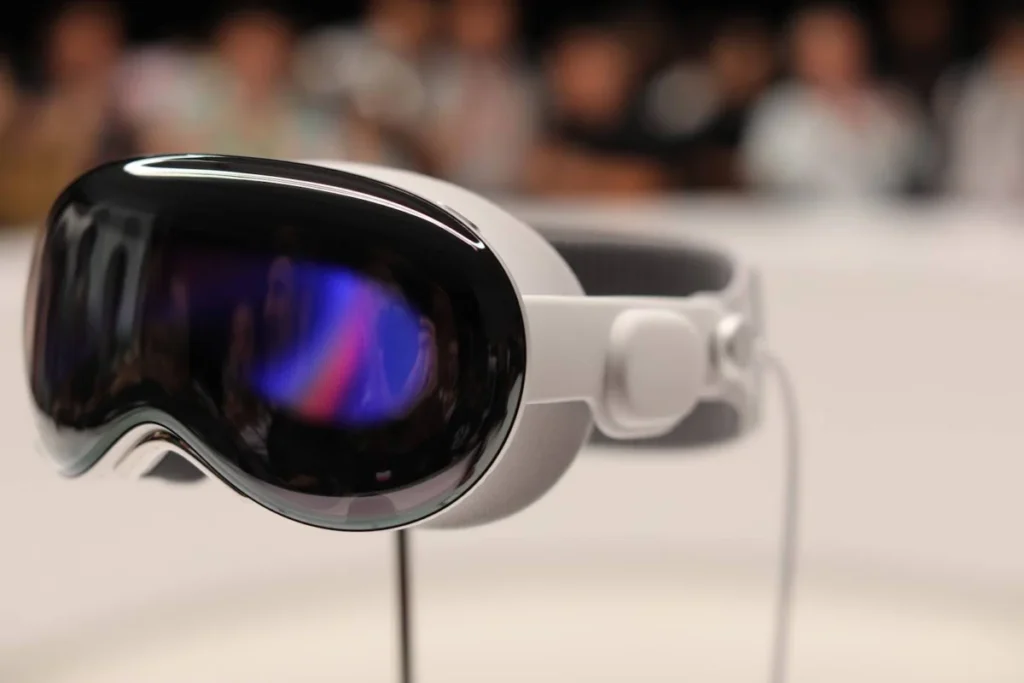
In a significant leadership transition that signals a broader strategic pivot for both Silicon Valley giants, Paul Meade, the Apple vice president spearheading the Vision Pro headset program, has officially departed the company. Meade, a pivotal figure in Apple’s hardware division, is set to join the burgeoning hardware team at OpenAI.
The move, first reported by Bloomberg’s Mark Gurman, comes at a time of intense internal restructuring at Apple as the company prepares for a transition in its highest office. For OpenAI, the acquisition of a veteran Apple hardware lead underscores the company’s aggressive, albeit mysterious, push into the consumer electronics space.
Main Facts: A Strategic Defection
Paul Meade’s tenure at Apple was defined by his stewardship of the company’s ambitious spatial computing initiatives. As the executive in charge of the Vision Pro, Meade sat at the intersection of Apple’s most expensive hardware gamble and its future-facing software ecosystem.
Beyond the headset, Meade held critical responsibility for Apple’s ongoing development of AI-powered smart glasses—a product line widely viewed as the company’s primary answer to the surging dominance of Meta’s wearable ecosystem. His departure is not merely a personnel change; it represents a loss of institutional knowledge regarding Apple’s roadmap for augmented reality (AR) and wearable AI.
For OpenAI, bringing Meade into the fold is a clear play to bridge the gap between their sophisticated large language models and physical hardware. Under the leadership of Sam Altman, OpenAI has made no secret of its desire to build "post-smartphone" devices. By hiring a veteran who understands the rigors of Apple’s design philosophy and supply chain, OpenAI is signaling that it is moving beyond software-only models and toward the creation of a proprietary hardware ecosystem.
The Chronology: A Roadmap of Shifts
The context surrounding Meade’s departure is rooted in a series of strategic pivots that have defined the last 24 months of Apple’s product development:
- Early 2023–2024: Apple launches the Vision Pro with high expectations. Despite positive critical reception for the display technology, the device fails to achieve mass-market penetration due to its high price point and bulky form factor.
- October 2025: Apple officially shelves major hardware overhauls for the Vision Pro. The company pivots resources toward developing lightweight, AI-integrated smart glasses, aiming to counter Meta’s influence in the wearable market.
- April 2026: Reports emerge that Apple is actively testing four distinct designs for its upcoming smart glasses, positioning them as the next major consumer release.
- April 2026: John Ternus is announced as the incoming CEO of Apple, signaling a change in the company’s operational hierarchy.
- June 2026: Paul Meade resigns from his post, citing the changing landscape within the hardware engineering team.
Supporting Data: The Cost of Ambition
The Vision Pro project serves as a case study in the risks of high-end hardware development. While Apple’s internal numbers remain confidential, analysts have long noted that the high cost of production and the niche appeal of the device created a bottleneck for the division.
Apple’s pivot to smart glasses is a calculated move to capture a wider demographic. Industry data suggests that consumers are increasingly looking for wearable technology that is "invisible"—devices that provide AI-assisted insights without the social friction of a full-face headset.
Conversely, OpenAI’s ambition is supported by massive capital investment and a partnership with legendary former Apple Chief Design Officer, Jony Ive. Reports from the fall of 2025 suggested that the collaboration between Ive and OpenAI was struggling to reconcile the "peaceful and calm" user experience promised by Sam Altman with the technical limitations of current battery and sensor technology. Meade’s arrival is likely intended to resolve these engineering bottlenecks.

The "Ternus Effect": Internal Friction
The departure of a high-level executive like Meade is rarely the result of a single factor. Sources close to the company suggest that the transition of leadership from the current administration to John Ternus has caused tremors throughout the hardware division.
As the incoming CEO, Ternus has reportedly initiated a comprehensive shakeup of the hardware engineering department. For several veteran vice presidents, this restructuring has been interpreted as a loss of autonomy. When a company as hierarchical as Apple undergoes a leadership change at the top, the downstream effects often include a shift in priorities, leading to "demotion" narratives that prompt senior talent to explore opportunities elsewhere. Meade’s exit follows this pattern, as he opted to trade the tightening bureaucracy of the post-Tim Cook era for the startup-like agility of OpenAI’s hardware division.
Implications: The Battle for the Post-Smartphone Era
The exit of a key Apple executive to OpenAI highlights a tectonic shift in the tech industry: the battle to define the "next" device after the smartphone.
The OpenAI-Ive Vision
OpenAI’s collaboration with Jony Ive is focused on the philosophy of "calm technology." The goal is to create a device that acts as a digital companion, utilizing real-time AI to assist with daily tasks while remaining unobtrusive. However, the struggle to get the design details right—such as thermals, battery life, and data privacy—remains a hurdle. Meade’s expertise in managing the complex integration of sensors and silicon is exactly the ingredient OpenAI needs to translate Ive’s design aesthetic into a manufacturable reality.
Apple’s Future
Apple remains in a strong position, despite the departure. With the upcoming launch of their AI-powered smart glasses, the company is betting that its ecosystem of services (iCloud, Apple Intelligence, and the App Store) will provide a competitive moat that standalone hardware startups cannot cross. However, the company must now fill the power vacuum left by Meade’s departure at a critical juncture in the development of their wearable roadmap.
The Meta Factor
It is impossible to discuss these moves without acknowledging Meta’s role as the current market leader in consumer-facing AI wearables. With their Ray-Ban smart glasses, Meta has successfully deployed a product that is affordable, fashionable, and useful. Apple’s attempt to catch up relies on the very team Meade helped lead. If the departure of Meade leads to further project delays, Apple risks falling permanently behind in the wearable race.
Official Responses and Next Steps
When contacted for comment, both Apple and OpenAI remained tight-lipped. An Apple spokesperson stated: "We wish Paul the best in his future endeavors and are confident in the strength of our hardware engineering leadership." OpenAI declined to provide specific details regarding Meade’s role, though a representative noted that the company is "actively scaling its hardware team to meet the demands of future AI-integrated products."
For the tech community, the next few months will be telling. Will Apple’s smart glasses launch on schedule in 2027, or will the departure of Meade trigger further delays? And can OpenAI, with its newfound hardware talent, finally move beyond the theoretical and deliver the "peaceful" device Sam Altman has promised?
As the lines between software giants and hardware manufacturers continue to blur, the movement of talent like Paul Meade acts as the primary indicator of where the industry’s center of gravity is moving. For now, all eyes are on the transition at Cupertino and the quiet, high-stakes labs at OpenAI.