IRS Proposes Strict Investment Guardrails for ‘Trump Accounts,’ Limiting Options to Low-Fee U.S. Equity Funds During Childhood Growth Phase
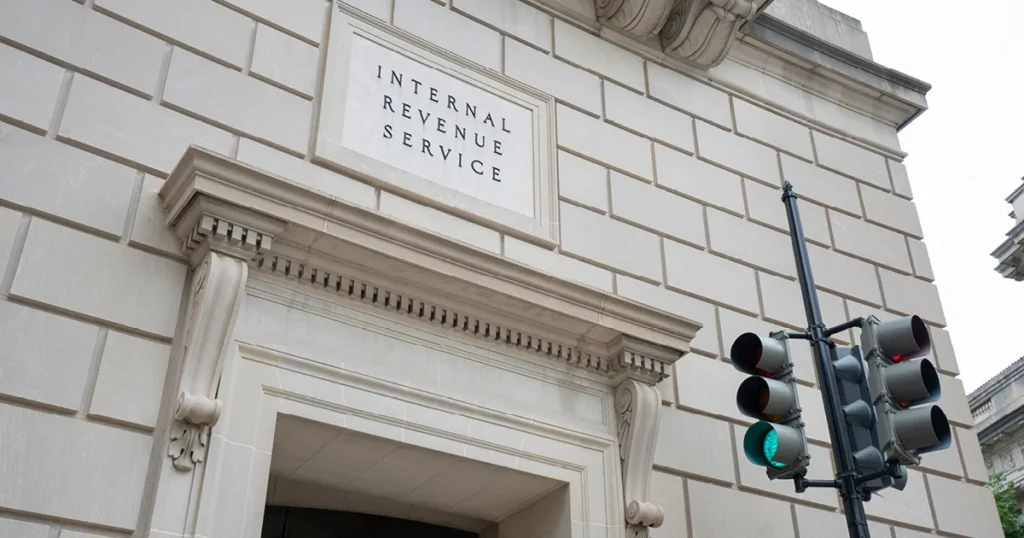
WASHINGTON — In a major regulatory step aimed at shaping the financial futures of millions of American children, the Internal Revenue Service (IRS) and the U.S. Department of the Treasury unveiled comprehensive proposed regulations on Thursday governing "Trump accounts." The newly released framework (CC-00349938-26) significantly restricts investment vehicles during a beneficiary’s formative years, funneling funds into low-fee stock index funds and exchange-traded funds (ETFs) to maximize long-term compounding while minimizing fee erosion.
The proposed rules mark a pivotal milestone in the rollout of Section 530A accounts, a novel class of individual retirement accounts established under federal legislation passed last year. By mandating strict adherence to broad diversification and low-cost equity indexing, federal regulators are seeking to establish a resilient baseline for youth wealth accumulation, safeguarding initial government seed money and private contributions from high-fee products and speculative market volatility.
Main Facts
The core of the Treasury and IRS proposal centers on protecting the growth potential of Trump accounts through stringent asset allocation rules during the beneficiaries’ minority years.
According to the regulatory text, the "growth period" for a Trump account begins the exact day the initial account is established and concludes on December 31 of the calendar year in which the account beneficiary turns 17. Throughout this nearly two-decade window, investments are heavily constrained to ensure capital preservation and steady equity market participation.
Specifically, the proposed regulations restrict eligible investments to mutual funds and ETFs that meet the following strict criteria:
- Index Tracking: The fund must track an equity index composed primarily of U.S. companies, such as the widely benchmarked S&P 500.
- No Leverage: The funds are strictly prohibited from utilizing leverage, derivatives, or other complex financial engineering designed to amplify returns or risk.
- Cost Caps: The annual fees and operating expenses of the chosen fund cannot exceed 0.1% (10 basis points) of the fund’s total asset balance. However, this expense ratio limit does not apply to separate administrative trustee fees charged by financial institutions managing the accounts.
Once the beneficiary turns 18—specifically, after December 31 of the year they turn 17—these restrictive investment guardrails are lifted, allowing account holders to transition into a broader array of asset classes, individual securities, or alternative investment vehicles as permitted under standard individual retirement account (IRA) frameworks.
Chronology
The path toward Thursday’s proposed regulations reflects a carefully paced legislative and regulatory timeline designed to stand up a national savings vehicle for the next generation of Americans:
- Legislative Genesis: The foundation of Trump accounts was laid with the passage of H.R. 1 (Public Law 119-21), colloquially known as the OBBBA. This sweeping legislation introduced Section 530A into the Internal Revenue Code, creating a specialized savings vehicle tailored for eligible children.
- Initial Guidance (Notice 2025-68): Moving swiftly to gauge industry reaction and public sentiment, the Treasury Department and the IRS issued Notice 2025-68, opening a formal dialogue with financial institutions, consumer advocates, and tax professionals regarding how these accounts should be structured, administered, and invested.
- Default Investment Announcement: Prior to the formal rulemaking, the Treasury announced a crucial operational baseline: the State Street SPDR Portfolio S&P 500 ETF (SPYM) was designated as the initial default investment vehicle for Trump accounts, supplemented by four other low-cost index ETFs pre-approved for parents and guardians.
- Proposed Regulations Release (Thursday): The IRS published formal proposed regulations (CC-00349938-26) in the Federal Register, putting meat on the bones of the statutory framework and legally defining the fee caps, asset classes, and timelines governing the growth period.
- Public Comment Window: The IRS has established a public comment period running through October 20, inviting feedback from stakeholders, financial institutions, and the public.
- Effective Date: As drafted, the regulations are slated to apply to taxable years beginning on or after January 1, 2026.
Supporting Data and Program Mechanics
Understanding the economic impact of the new rules requires examining the underlying mechanics of the Trump account initiative, particularly its pilot program structure and default investment framework.
The Federal Pilot Program and Eligibility
Under Section 6434 of the Internal Revenue Code, the federal government has authorized a pilot program designed to jump-start savings for a massive cohort of American youth.
- The $1,000 Seed: Eligible children born after December 31, 2024, and before January 1, 2029, are entitled to a $1,000 initial contribution funded directly by the federal government.
- Eligibility Criteria: To qualify for a Trump account, an individual must have been issued a valid Social Security number and must not have turned 18 before the close of the calendar year in which the election to open the account is made.
- Private Contributions: Beyond the federal seed money, parents, family members, and legal guardians are permitted to make ongoing contributions, subject to annual statutory limits and tax-advantaged growth rules.
Investment Framework and Default Options
The regulatory framework addresses what happens when a parent, guardian, or trustee fails to make an active investment choice. Under the proposed rules, if a beneficiary does not select an eligible investment offered by their financial trustee, the account funds will be automatically deployed during the growth period into a pre-approved, low-cost eligible investment selected by the trustee.
The Treasury has already signaled that funds like the State Street SPDR Portfolio S&P 500 ETF (SPYM)—which feature rock-bottom expense ratios well below the 0.1% ceiling—will serve as models for these default options. By automating low-cost diversification, the government aims to prevent cash drag or high-fee exploitation among families who may lack sophisticated investment knowledge.
Official Responses and Stakeholder Perspectives
The release of the proposed regulations has triggered significant commentary from financial planners, consumer advocates, and policymakers, reflecting a tension between consumer protection and market flexibility.
Treasury officials emphasized in their accompanying news release that the rules are fundamentally designed with the long-term compounding power of money in mind. Over a 17-year childhood growth horizon, even seemingly minor differences in expense ratios can shave thousands of dollars off a portfolio’s ending balance. By capping management fees at 0.1% and restricting accounts to broad-market U.S. equities, regulators believe they are protecting children from the predatory fees historically associated with niche or actively managed mutual funds.
"The goal is straightforward: maximize what stays in the child’s account and minimize what leaks out to Wall Street through unnecessary fees," noted a policy analyst tracking the rollout. "By forcing index-level diversification, the government is ensuring that every child participating in the pilot program rides the broader economic engine of the United States rather than rolling the dice on speculative sectors."
However, industry groups and financial trustees have raised operational questions regarding compliance. While the 0.1% cap applies strictly to fund-level management fees, trustees still must navigate administrative costs, record-keeping expenses, and account maintenance fees. Financial institutions are expected to use the upcoming public comment period—which runs through October 20—to lobby for clarity on how trustee-level fees interact with the strict regulatory language, ensuring that smaller community banks and credit unions are not priced out of offering Trump accounts.
Implications for Families, Taxpayers, and Financial Markets
The implementation of these proposed rules carries profound, long-term implications across multiple sectors of American society.
1. For American Families and Beneficiaries
For parents and guardians, the regulations simplify decision-making. Instead of wading through thousands of mutual funds, ETFs, and complex investment strategies, families can rest assured that any approved default or compliant fund will be low-cost and broadly diversified. Furthermore, because the restrictions sunset when the beneficiary turns 18, the accounts act as a seamless bridge from childhood capital preservation to adult wealth management, handing young adults a mature, diversified portfolio just as they enter college or the workforce.
2. For Financial Institutions and Asset Managers
Asset managers are already locked in a subtle competition to capture Trump account assets. With millions of children potentially entering the pilot program over the next few years, funds that secure designated "default" status or market themselves as fully compliant with the 0.1% expense cap stand to attract massive, sticky inflows of passive capital. Conversely, active managers and high-fee brokerages are effectively locked out of the lucrative childhood growth phase of these accounts.
3. For the Broader Economy and Equity Markets
By channeling hundreds of millions—and potentially billions—of dollars of steady, recurring contributions into broad U.S. equity indexes like the S&P 500, the Trump account framework introduces a permanent, institutional source of demand for American corporate stock. This structural bid supporting large-cap U.S. equities aligns retail savings directly with national economic performance.
Next Steps
As the IRS reviews feedback submitted ahead of the October 20 deadline, financial institutions are encouraged to audit their current product offerings to ensure compliance ahead of the January 1, 2026 effective date. Tax professionals and advisors preparing for the new regime must familiarize themselves with Section 530A nuances, counseling clients on how to maximize the $1,000 federal pilot seed while navigating the rigid boundaries of the childhood growth period.
To submit comments on the proposed regulations or to suggest related coverage, contact Martha Waggoner at [email protected].