High-Stakes Diplomacy: Nvidia CEO Jensen Huang Takes a Live Call from President Trump During All-In Summit
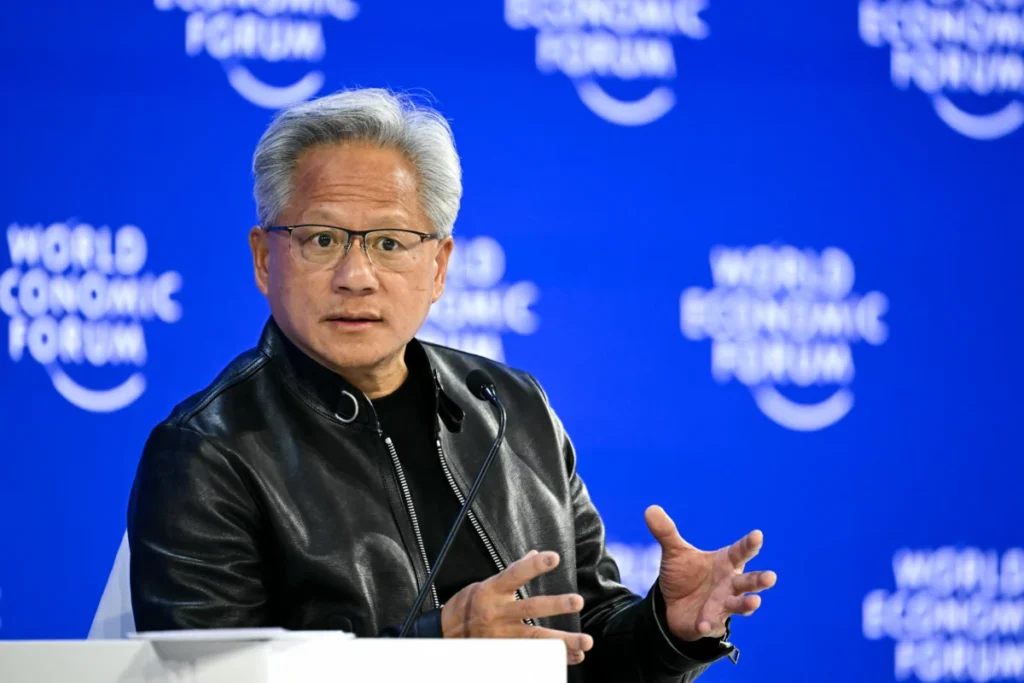
In an unprecedented moment that blurred the lines between private industry strategy and public policy, Nvidia CEO Jensen Huang received a phone call from President Donald Trump while center stage at the All-In Summit in Los Angeles this Monday. The live, impromptu exchange, broadcast to a packed auditorium of tech luminaries and venture capitalists, provided a rare glimpse into the burgeoning alignment between the White House and the architects of the artificial intelligence revolution.
The moment, which sent shockwaves through the tech ecosystem and likely caused immediate heartburn for public relations teams, served as a potent symbol of the current administration’s "pro-growth, pro-AI" mandate. As the nation grapples with a complex landscape of energy demands, environmental regulations, and global competition, the call underscored a singular message: the United States is prioritizing the acceleration of AI infrastructure at almost any cost.
A Chronology of the Exchange
The scene unfolded during a high-profile panel discussion featuring the "besties"—the venture capitalists and podcasters behind the All-In podcast, including Chamath Palihapitiya, Jason Calacanis, and White House advisers David Friedberg and David Sacks.
As the group delved into the increasingly contentious debate regarding the pace of AI development, Huang’s phone signaled an incoming call from the Oval Office. Rather than silencing the device, Huang chose to bridge the gap between his stage and the presidency.
"I’m onstage with the besties," Huang announced into the phone, addressing the President directly.
The ensuing interaction was marked by a blend of informal rapport and stark policy pronouncements. When Huang struggled momentarily to broadcast the audio to the room, the President quipped, "The great thing about life is Jensen can develop the most complex computer chip in the world… but he can’t figure out how to put you on speaker."
Once the audio was patched through, the conversation pivoted immediately to the existential debate currently gripping Silicon Valley: whether the industry should voluntarily slow its progress.
The Battle Over "Slowing Down" AI
The core of the discussion on stage had been the recent call to action by Anthropic CEO Dario Amodei, who has publicly advocated for a more measured pace in AI development to ensure safety and ethical integration. This position has gained traction among other titans of industry, including SpaceX CEO Elon Musk and OpenAI CEO Sam Altman, both of whom have voiced concerns about the rapid, potentially unchecked evolution of frontier models.
President Trump, however, signaled his categorical rejection of such a pause. "They’re just playing right in the hands of a lot of people that don’t want to see it happen," the President stated, referring to the proponents of a slowdown. "That could be political people. It could also be China. And we’re not going to let that happen. It’s a hoax."
Huang, echoing the sentiment of his peers in the room, responded with a firm, "You’re right. We’re not going to let that happen, sir," drawing rapturous applause from the audience.
This exchange highlights a growing ideological rift in the tech world. On one side are the "safety-first" proponents, who argue that the societal risks of super-intelligent systems necessitate a cautious, regulated approach. On the other side—now clearly bolstered by the weight of the federal government—are the "accelerationists," who view any attempt to stifle AI development as a strategic blunder that would cede global dominance to foreign adversaries.
Supporting Data: The Infrastructure Crisis
The President’s rhetoric during the call mirrored recent arguments made by figures like Y Combinator CEO Garry Tan, who has characterized the growing local opposition to data center construction as a form of "international psyop" designed to weaken American economic output.
However, the reality on the ground is more nuanced and deeply rooted in domestic concerns. While the political narrative paints the resistance as a foreign-influenced attempt to sabotage progress, recent data from Gallup suggests that the pushback against the "AI sprawl" is fundamentally grassroots.
According to recent polling, approximately 70% of Americans now oppose the construction of large-scale data centers in their immediate geographic areas. The reasons cited by the public are not conspiratorial; they are pragmatic:
- Environmental Strain: More than 50% of respondents identified the significant drain on local power grids and water resources required for cooling high-performance computing clusters as a primary concern.
- Quality of Life: Roughly 20% of the population cited concerns over cost-of-living increases, infrastructure degradation, and noise pollution associated with the rapid industrialization of their communities.
These statistics represent a significant friction point for Nvidia and its partners. As the company continues to ship the world’s most powerful GPUs, the bottleneck for AI progress is shifting away from silicon capability and toward physical infrastructure. If the federal government is to push for unfettered growth, it will eventually have to reconcile these national-level ambitions with the localized, bottom-up resistance from communities worried about their electricity bills and environmental stability.
Official Responses and Strategic Alliances
The presence of White House advisers David Friedberg and David Sacks on the stage during this conversation is no coincidence. It reflects a deliberate strategy by the Trump administration to integrate tech-sector leaders directly into the policy-making apparatus.
By framing the opposition to data centers as an existential threat to American competitiveness, the administration is attempting to consolidate support for "streamlining" the regulatory process. During the call, the President reaffirmed his commitment to this path: "We have to be a little bit careful… We have to do things and we have to do them prudently, but that doesn’t mean we’re going to stop an industry. So I’m with you all the way. I didn’t even know how you felt about it. I just hoped you felt the same way as me. We’re going to lead."
For Nvidia, this alignment is a massive win. The company has spent years cultivating its position as the "pick and shovel" provider for the AI gold rush. With the U.S. government now acting as an active promoter of the industry’s expansion—rather than a neutral regulator—Nvidia’s path to further market saturation appears significantly clearer.
Long-term Implications: A New Era of Tech Governance
The "speakerphone moment" at the All-In Summit signals a departure from the traditional distance between the executive branch and tech CEOs. We are entering an era of "industrial diplomacy," where the boundaries of corporate strategy and national security are being rewritten in real-time.
1. The Death of the "Neutral" CEO
Jensen Huang’s decision to air the President’s views on stage effectively ends any pretense of neutrality. By nodding to the President’s claim that safety-based slowdowns are a "hoax," Huang has placed Nvidia squarely within the Trump-aligned accelerationist camp. This could have long-term consequences for the company’s relationships with European regulators, who tend to favor a more cautious approach to AI governance.
2. Regulatory Fast-Tracking
The implication of the call is clear: federal support for massive data center projects will likely increase. This could involve the use of federal land, the fast-tracking of environmental impact statements, or the invocation of national security laws to bypass local zoning hurdles. The "psyop" framing used by the President and his allies suggests that local opposition will be increasingly treated as a security issue rather than a local land-use concern.
3. Global Geopolitical Competition
The mention of China as the primary beneficiary of a slowed-down American AI sector is a recurring theme that will dominate the next four years. By tying the success of Nvidia to the national security of the United States, the administration is effectively making Nvidia’s product roadmap a matter of state interest. This will likely lead to further tightening of export controls and a greater push for domestic manufacturing of chips, power components, and cooling infrastructure.
4. The Social Compact
As the federal government pushes to accelerate, the gap between the national interest and the local interest will widen. If the administration continues to dismiss public concerns about data centers as "hoaxes" or "foreign psyops," it risks alienating a broad swath of the electorate. The challenge for companies like Nvidia will be to prove that the immense compute power they are generating is actually providing tangible benefits to the average citizen, rather than just increasing the valuation of a few tech firms.
Conclusion
The impromptu call between President Trump and Jensen Huang was more than just a piece of viral content; it was a manifesto for a new industrial policy. The message sent from the stage in Los Angeles is that the United States is officially "all in" on artificial intelligence.
As the country moves forward, the success of this strategy will depend on whether the government can navigate the growing friction between the high-speed demands of AI developers and the legitimate, practical concerns of the communities that host the infrastructure. For now, however, the alliance between the White House and the leaders of the AI revolution has never been more explicit, and the path forward is set: full speed ahead, regardless of the hurdles.