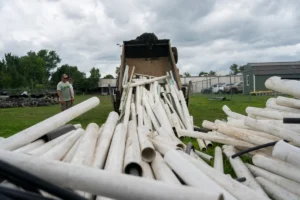
East Texas Counties Band Together to Safeguard Critical Aquifer Reserves

In a significant move to protect the long-term viability of their natural resources, a coalition of more than a dozen East Texas counties has launched a formal campaign to establish a new groundwater conservation district (GCD). This legislative effort is a direct response to rising concerns over unregulated water extraction and the increasing thirst of rapidly growing metropolitan hubs like Dallas.
As of this week, 15 counties have signed resolutions signaling their intent to participate in the formation of the Northeast Texas Groundwater Conservation District. The initiative represents a proactive effort to implement regulatory guardrails, ensuring that the region’s subterranean water supplies are managed sustainably rather than being depleted for external use.
The Push for Regional Stewardship
The momentum for the district gained significant traction on Tuesday when the Gregg County Commissioners Court voted unanimously to approve a resolution joining the regional effort. This vote marks a pivotal early step in a long-term process that will eventually require formal authorization from the Texas Legislature in 2027.
The primary objective is to create a regional authority capable of overseeing drilling permits, setting extraction limits, and monitoring aquifer health. Proponents argue that without such a governing body, the region remains vulnerable to "predatory" water harvesting by larger, more populated areas of the state that are currently grappling with severe water shortages.
Gregg County Judge Bill Stoudt, a vocal proponent of the district, emphasized that the move is not about blocking water access, but about implementing responsible management.
"It’s a matter of being responsible stewards of what Mother Nature has given us," Stoudt said. "We certainly can access it, but we need to make sure there’s proper regulation so it’s not overused and dried up. Some of these groups come in and take water out of East Texas to ship to Dallas or to San Antonio or whatever else and then leave us dry. That’s not right. There’s got to be a better way."
Chronology of the Movement
The current effort to form the Northeast Texas Groundwater Conservation District is the culmination of years of regional anxiety regarding water security.
- Pre-2024: Individual East Texas counties operated with limited coordination, leaving large swaths of the region without any governing body to monitor aquifer levels or regulate large-scale pumping.
- Early 2024: Regional planning groups and local leaders began consulting with legal experts to explore the creation of a multi-county district that would carry enough political weight to withstand external pressure.
- Summer/Fall 2024: A grassroots effort took hold, with Austin-based attorney Brian Sledge retained to draft the necessary legislative framework.
- Tuesday, 2024: Gregg County formally joined the coalition, bringing the count to 15 participating counties.
- 2025–2026: The coalition will finalize the legislative text, conduct public outreach, and build consensus among local state representatives and senators.
- 2027: The proposed bill will be introduced to the Texas Legislature, with the ultimate goal of obtaining approval from both chambers and the Governor.
The "Water-Rich" Target: Why East Texas?
Texas is currently navigating a period of unprecedented growth, and with that growth comes a ravenous demand for municipal water. As major metropolitan areas like Dallas-Fort Worth continue to expand, water planners are looking toward the historically water-rich regions of East Texas to bridge the gap between supply and demand.
The Region C Water Plan, which dictates the long-term water strategy for the Dallas area, has identified specific East Texas counties as prime locations for large-scale water extraction projects. The plan explicitly notes the lack of groundwater conservation districts in certain East Texas counties as a "benefit" for developers.
According to documents within the Region C plan, Dallas Water Utilities (DWU) has eyed the aquifers beneath Smith, Wood, Van Zandt, and Upshur counties as a source for roughly 25,000 acre-feet of water annually—a staggering 8 billion gallons. The plan candidly admits, "With no GCDs in the targeted counties, there are no pumping regulations or limitations and DWU would likely be able to develop the full project amount."
This framing has galvanized local leaders, who feel that their lack of regulation is being weaponized against them. By forming a unified district, these counties hope to close the legal "loophole" that currently makes them an easy target for large-scale water transfers.
Supporting Data: The Scale of the Threat
The disparity between regulated and unregulated regions is stark. In areas like Anderson County, which is already part of the established Neches & Trinity Valleys Groundwater Conservation District, planners are proposing the extraction of 42,000 acre-feet (13.6 billion gallons) of water.
While that district is already reviewing its internal rules to handle such requests, the regulatory structure provides the local board a seat at the table. In counties without a GCD, no such seat exists. The sheer volume of water proposed for transfer—totaling tens of billions of gallons—threatens to lower the water table for local farmers, residential wells, and small municipal water systems, potentially leading to increased costs and diminished water quality.
The Legal and Legislative Path Forward
Attorney Brian Sledge, who is spearheading the legal work for the district, believes the project is well-positioned for success. However, he cautions that the legislative process in Austin is inherently unpredictable.
"These are local bills by nature," Sledge explained. "As long as you have the local senators and state representatives on board, they typically get through the process without running into too many obstacles. But you never know what will happen at the Texas Capitol."
The bill Sledge is currently drafting will be heavily influenced by existing state water law but tailored to the specific hydrogeological needs of Northeast Texas. The goal is to create a district that is robust enough to protect local interests while being legally defensible against challenges from entities seeking to transport water out of the region.
Implications: A New Era of Water Sovereignty
The formation of this district signifies a shift in the political landscape of Texas water policy. Historically, rural counties have struggled to compete with the political and economic might of the "Texas Triangle" cities. By banding together, these 15 East Texas counties are effectively pooling their political capital to assert control over their own future.
If successful, the Northeast Texas Groundwater Conservation District could serve as a model for other regions of the state facing similar threats. It highlights a growing trend of "water sovereignty," where local communities prioritize long-term sustainability over short-term economic gains from water sales.
The Balancing Act
The challenge for the new district will be balancing conservation with regional development. The district will need to establish rules that prevent the "mining" of aquifers—pumping water at a rate faster than it can be replenished—while still allowing for the reasonable development of water for local industry and residential growth.
Critics of such districts often argue that they impede the efficient distribution of resources across the state. However, proponents like Judge Stoudt argue that the current system is fundamentally flawed because it ignores the environmental and social costs of depletion.
"We want to grow, too," said one county official involved in the discussions. "But we want to grow on our own terms, with enough water left over for our children and grandchildren. We aren’t here to be a reservoir for Dallas; we are here to be the stewards of our own homes."
Conclusion
The road to 2027 is long, and the formation of the Northeast Texas Groundwater Conservation District is still in its infancy. With several legislative sessions between now and the goal, the coalition will need to maintain unity, navigate complex water laws, and successfully lobby the Texas Legislature.
As the state continues to heat up and dry out, the battle over groundwater will only intensify. For the residents of East Texas, the message is clear: the time to secure their most precious resource is now, before the pumps start running at a pace that cannot be reversed. The upcoming legislative battle will likely become a bellwether for how Texas handles the competing interests of its urban centers and rural heartlands in an era of water scarcity.