Circle Accelerates Global Expansion with $400 Million Acquisition of Tazapay

By Gabrielle Saulsbery | Banking Dive | Sept. 9, 2026
In a landmark move that signals the deepening convergence between traditional finance and blockchain-based infrastructure, Circle Internet Group announced on Tuesday that it has entered into a definitive agreement to acquire Singapore-based cross-border payments powerhouse Tazapay. The all-stock transaction, valued at approximately $400 million, represents a strategic pivot for Circle, the issuer of the USDC stablecoin, as it seeks to cement its position as the primary architecture for the global internet economy.
The acquisition is not merely a purchase of assets; it is a calculated effort to absorb one of the most sophisticated payment-rail networks currently operating in emerging and developed markets. By bringing Tazapay under its corporate umbrella, Circle is positioning itself to bypass the inefficiencies of legacy banking systems, offering a seamless, high-speed bridge between fiat currencies and digital assets on a global scale.
The Core Transaction: Strategic Consolidation
According to regulatory filings submitted on Tuesday, the deal will see Circle acquire Tazapay through an exchange of stock. While the transaction remains subject to customary closing conditions—most notably the approval of the Monetary Authority of Singapore—the deal is expected to finalize by 2027.
The acquisition provides Circle with immediate, scalable infrastructure. Tazapay brings to the table more than $25 billion in annualized payment volume and a robust network of over 60 banking and fintech partners. Perhaps most significantly, this integration grants Circle access to payment rails across more than 100 markets, with approximately 60% of these already optimized for stablecoin transactions.
Jeremy Allaire, co-founder and CEO of Circle, emphasized that the acquisition is a natural evolution of the two companies’ existing relationship. "Stablecoin settlement is becoming core infrastructure in the global economy," Allaire said in a statement. "Combining USDC with Tazapay’s world-class banking relationships, local payout rails, and institutional customer base will accelerate worldwide USDC adoption."
Chronology: A Relationship Built on Alignment
The acquisition is the culmination of a multi-year strategy that began well before the formal agreement was signed. The partnership between the two firms has been characterized by deep technical and operational integration:
- 2025 – The Foundation: Circle and Tazapay officially entered into a strategic partnership to enhance cross-border payment capabilities. During this period, Tazapay began serving as a key design partner for the Circle Payments Network (CPN).
- 2025 – Series B Investment: Recognizing the strategic value of Tazapay’s infrastructure, Circle led the company’s Series B funding round. This move allowed Circle to gain insight into Tazapay’s operations and foster a "deep alignment" between the two leadership teams.
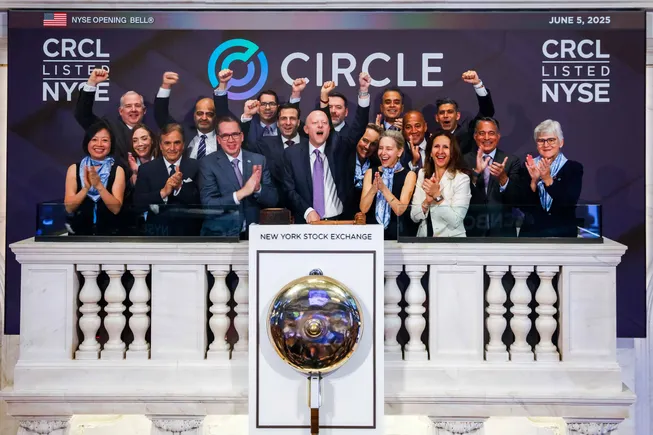
- June 2025 – Circle’s IPO: Circle successfully debuted on the New York Stock Exchange, providing the firm with the capital and public profile to pursue aggressive inorganic growth strategies.
- July 2026 – Regulatory Milestone: The Office of the Comptroller of the Currency (OCC) granted Circle an unconditional green light for its national trust charter, a regulatory "gold star" that bolstered Circle’s legitimacy within the U.S. financial system.
- August 2026 – IP Acquisition: Shortly after securing its charter, Circle acquired a massive patent portfolio from IBM, encompassing over 680 patent families and nearly 1,000 patents, significantly strengthening its intellectual property moat.
- September 2026 – The Acquisition Agreement: Circle formally announces its intent to acquire Tazapay for $400 million in stock.
Implications: Why This Deal Changes the Financial Landscape
The merger of Circle and Tazapay is being viewed by market analysts as a bellwether for the future of digital finance. By combining regulated stablecoin issuance with a pre-existing, compliant fiat-stablecoin bridging network, Circle is effectively building a "one-stop shop" for global commerce.
Streamlining Integration
Analysts at TD Cowen, including Bryan Bergin and David Duka, noted in an investor briefing that the acquisition carries "relatively limited integration risk" due to Tazapay’s previous role as a design partner.
"The deal could streamline integration across CPN and provide [Circle] with greater influence over how those capabilities are deployed as USDC adoption scales," the analysts stated. By controlling the entire stack—from the underlying asset (USDC) to the payment rails (Tazapay)—Circle reduces its reliance on third-party intermediaries, thereby lowering costs and increasing transaction speed for its institutional clients.
Global Market Penetration
Tazapay’s strength lies in its "local" approach to global payments. By working with local banking partners, it allows businesses to collect payments in local currencies and settle in stablecoins (or vice versa) without the friction of the SWIFT network. For Circle, this means access to high-growth emerging markets where traditional banking infrastructure is often fragmented or prohibitively expensive.
Official Responses and Strategic Vision
The acquisition has been framed by both parties as a marriage of convenience and technical necessity.

Rahul Shinghal, co-founder of Tazapay, described the deal as a landmark event in a blog post released shortly after the announcement. "This transaction combines infrastructure that has never been combined at scale," Shinghal wrote. "We are bringing together regulated stablecoin issuance, a global financial platform built for internet speed, and compliant fiat-stablecoin bridging infrastructure anchored in the markets that matter most."
Irfan Ganchi, Circle’s Senior Vice President of Payments, highlighted the geographical necessity of the deal. "Bringing Tazapay into Circle’s fold extends our coverage to move money anywhere stablecoin payments are being adopted globally," Ganchi stated. He emphasized that the acquisition is a critical component of Circle’s broader mission to bring blockchain technology to the core of the financial system.
Supporting Data: The Scale of the Opportunity
To understand the magnitude of this acquisition, one must look at the volume metrics. Tazapay’s $25 billion in annualized payment volume provides Circle with an immediate, massive boost to its throughput capabilities.
Furthermore, the integration of Tazapay’s 100+ market footprint effectively solves one of the biggest hurdles for stablecoin adoption: liquidity and off-ramping. By having direct relationships with local banks, Circle can now facilitate local payouts in regions that previously presented significant regulatory and technical challenges.
This move also complements Circle’s recent patent acquisition. By layering the IBM patent portfolio—which covers fundamental blockchain and distributed ledger technologies—over the existing Tazapay payment rails, Circle is essentially creating a proprietary, protected environment for institutional cross-border settlements.
Looking Ahead: The Regulatory Hurdles
While the market has responded positively to the announcement, the road to closing is not without challenges. The deal must navigate the regulatory scrutiny of the Monetary Authority of Singapore (MAS). Given the sensitivity of cross-border payment flows and the increasing focus on anti-money laundering (AML) and know-your-customer (KYC) standards, regulators are expected to perform a rigorous review.

However, Circle’s recent success in obtaining a national trust charter from the OCC suggests that the company has a strong compliance track record. By proactively aligning with the regulatory expectations of both the U.S. and Singapore, Circle is signaling that it intends to lead the sector not just in technology, but in compliance.
Conclusion
The acquisition of Tazapay is a defining moment for Circle and the broader crypto-asset industry. It marks the transition of stablecoins from speculative digital assets to legitimate, systemic components of the global financial infrastructure. As Circle continues to build out its capabilities, the combination of regulatory approval, intellectual property, and now, a global payment network, positions the firm as the most formidable player in the race to redefine how money moves across borders in the 21st century.
Whether this consolidation will lead to a broader industry trend of "vertical integration" among stablecoin issuers remains to be seen, but one thing is clear: the bridge between the internet and the bank is being paved by Circle, and it is being built at scale.