Bridging the Great Financial Divide: How African Economies Can Leverage US-China Detente and Divergent Interest Rates
By Prasad Ananthakrishnan and Vera Songwe
Published: October 7, 2026
Section: Economics / Global Markets
Introduction and Main Facts
WASHINGTON, DC — In the complex architecture of modern global finance, a historic divergence is quietly unfolding. While borrowing costs denominated in the United States dollar continue to hover near multi-year highs—exerting crushing debt-servicing pressure on developing nations—Chinese domestic interest rates are plumbing unprecedented depths, approaching historic lows.
This widening monetary policy gulf between the world’s two largest economies coincides with a delicate, high-stakes diplomatic thaw between Washington and Beijing. Following Chinese President Xi Jinping’s recent state visit to the United States, both superpowers agreed to a two-month extension of their ongoing bilateral trade truce. While critics note the diplomatic breakthrough yielded few sweeping structural accords, the subtle shift in rhetoric cannot be ignored. Both leaders have explicitly signaled a desire for a more stable, predictable relationship in the lead-up to the Asia-Pacific Economic Cooperation (APEC) summit in Shenzhen this November and the G20 leaders’ summit in Miami this December.
For emerging and developing economies—particularly across the African continent—this confluence of macroeconomic trends presents a generational strategic opening. By capitalizing on the relative stabilization of US-China relations and exploiting the vast disparity in global borrowing costs, African governments can fundamentally reshape their energy and infrastructure financing strategies.
The playbook is straightforward yet ambitious: African nations can partner strategically with the United States on natural gas development while simultaneously collaborating with China on utility-scale solar and advanced battery storage. Crucially, they can leverage these dual partnerships to tap lower-cost Asian capital markets, bypassing traditional, high-interest Western debt structures to finance a balanced, resilient green and transitional energy future.
Chronology of Events: The Path to the US-China Thaw
To understand how African policymakers can navigate this moment, it is essential to trace the diplomatic and economic milestones that have brought the global economy to this juncture over the past twenty-four months:
- Late 2024 – Mid 2025: Persistent inflationary pressures in Western economies force the US Federal Reserve to maintain elevated benchmark interest rates. Concurrently, a sluggish property sector and weak domestic demand prompt the People’s Bank of China (PBOC) to implement aggressive monetary easing, driving Chinese bond yields and borrowing rates toward historic lows.
- January 2026: African finance ministers meeting at the African Union summit voice mounting concerns over foreign debt sustainability. Traditional Eurobond issuances are sidelined due to prohibitively expensive dollar-denominated yields, leading to a severe infrastructure financing drought across Sub-Saharan Africa.
- August 2026: Preparatory working groups from Washington and Beijing quietly resume high-level commercial dialogues to avert a fresh escalation of semiconductor and critical mineral export controls ahead of the autumn summits.
- October 2026: Chinese President Xi Jinping undertakes a landmark state visit to Washington, DC. The diplomatic engagement yields a formal two-month extension of the existing bilateral trade truce, reassuring global markets and calming geopolitical jitters.
- Present (October 2026): Analysts and multilateral financial institutions begin assessing the ripple effects of the US-China stabilization. Emerging market strategists identify the US-China interest rate divergence as a primary arbitrage and investment vehicle for developing regions, setting the stage for strategic realignment in African capital planning.
Supporting Data: The Great Monetary Divergence
The structural viability of this strategy rests entirely on hard macroeconomic data. The financial realities in Washington and Beijing tell a story of two opposing monetary universes.
1. The US Dollar Cost Burden
As of October 2026, despite marginal adjustments by the Federal Reserve, dollar borrowing costs remain stubbornly high. For emerging markets, benchmark sovereign spreads over US Treasuries have widened significantly over the past three years. According to international debt monitors, African nations attempting to access international capital markets through Eurobonds have faced yields ranging anywhere from 8.5% to upwards of 11%—levels that severely constrain fiscal space for health, education, and climate adaptation.
2. China’s Low-Rate Environment
Conversely, the People’s Bank of China has maintained an accommodative monetary stance to stimulate domestic consumption and industrial manufacturing. Benchmark lending rates and domestic bond yields in China have dropped to historic lows, with 10-year Chinese government bond yields hovering significantly below Western equivalents. This excess domestic liquidity, combined with Beijing’s strategic imperative to deploy industrial overcapacity overseas through the Belt and Road Initiative (BRI), means that Chinese capital is exceptionally cheap—if channeled through the right financial vehicles.
3. The Energy Financing Gap
Africa possesses approximately 60% of the world’s best solar resources, yet accounts for a fraction of global clean energy investments. At the same time, newly discovered natural gas reserves across East and West Africa offer a vital transitional fuel to lift millions out of energy poverty and power industrialization. Bridging this gap requires billions in annual capital expenditure—funds that cannot be secured sustainably under high-cost Western dollar debt alone.
Official Responses and Stakeholder Perspectives
The strategic pivot toward dual-track engagement with Washington and Beijing has sparked intense debate among international financial institutions, African policymakers, and geopolitical analysts.
The African Perspective:
African Union trade and finance representatives have increasingly championed a policy of "active non-alignment" and pragmatic economic diplomacy. Speaking on condition of anonymity, a senior advisor to several African finance ministries noted:
"We cannot afford to be caught in the crossfire of a US-China cold war. More importantly, we cannot afford to ignore where the cheap money is. If American technological partnership in gas extraction helps us secure baseline power, and low-cost Chinese capital builds our solar grids, our job is to harmonize those interests for our own development."
The Washington Calculus:
In Washington, policymakers are quietly re-evaluating their approach to Africa in the face of intense Chinese infrastructure dominance. While American officials remain wary of deepening Chinese financial entanglements in the Global South, programs like the Partnership for Global Infrastructure and Investment (PGII) signal a growing recognition that the US must offer competitive, co-existent solutions rather than demanding exclusionary alliances.
Beijing’s Strategic Shift:
Chinese state-owned financial institutions, including the China Development Bank and the Export-Import Bank of China, have pivoted away from massive, risky sovereign mega-loans toward "small yet smart" green energy and digital infrastructure projects. By offering low-interest financing denominated in Yuan or structured through innovative blended finance vehicles, Beijing is positioning itself as the premier developmental partner for the Global South’s green transition.
Implications for African Economies and Global Markets
If African governments successfully execute this dual-sourcing strategy, the implications will ripple far beyond the continent, fundamentally altering global trade, energy security, and international finance.
1. Optimizing the Energy Mix Through Geopolitical Balance
Energy security in Africa requires a nuanced, dual-track approach. Natural gas serves as an indispensable bridge fuel: it provides reliable, dispatchable baseline power required for industrialization, manufacturing, and grid stability. By partnering with US engineering and energy firms—leveraging American technological expertise in liquefied natural gas (LNG) extraction and regulatory frameworks—African nations can monetize domestic gas reserves safely and efficiently.
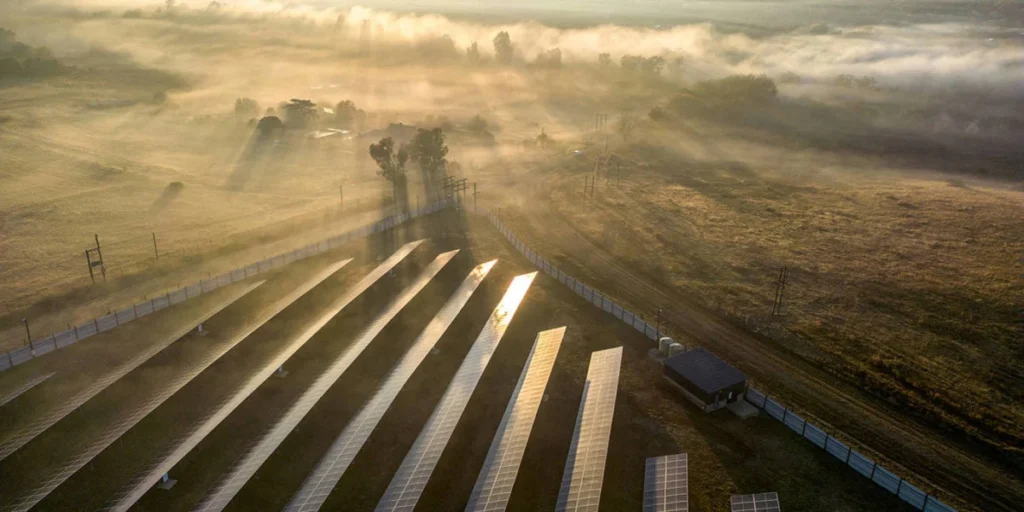
Simultaneously, partnering with Chinese firms on utility-scale solar installations, wind farms, and advanced battery energy storage systems (BESS) allows African utilities to harness the world’s most cost-effective renewable hardware. China dominates the global supply chain for photovoltaic cells and lithium-ion batteries. Utilizing this hardware financed by low-cost Chinese capital dramatically slashes the levelized cost of electricity (LCOE) across the continent.
2. Arbitrage and Capital Diversification
By tapping into low-cost Asian capital markets, African sovereign issuers and corporate entities can reduce their weighted average cost of capital (WACC). Issuing Panda bonds (bonds denominated in Chinese Yuan issued by foreign entities in the Chinese domestic market) or securing syndicated loans from Chinese policy banks allows nations to bypass the punitive interest rates currently demanded by Western-dominated bond markets. This diversification shields African economies from the vagaries of Federal Reserve monetary tightening cycles.
3. Strengthening Multilateral Stability
The willingness of African nations to engage productively with both the US and China serves as a stabilizing force in international relations. It demonstrates to superpowers that the Global South will not be strong-armed into zero-sum geopolitical blocs. Instead, developing nations are establishing a pragmatic framework where great power competition can be channeled into constructive developmental outcomes.
Conclusion
As Presidents Xi Jinping and Joe Biden—alongside other global leaders—prepare for the upcoming diplomatic heavy-lifting at the APEC summit in Shenzhen and the G20 in Miami, the macroeconomic landscape offers a clear directive for the developing world.
The era of relying solely on expensive, dollar-denominated Western debt is facing severe structural limits. By seizing the opportunity presented by the US-China monetary divergence and diplomatic thaw, African governments can chart a sovereign, pragmatic course. Partnering with the US for transitional gas infrastructure, engaging China for cheap solar and storage financing, and aggressively tapping low-cost Asian capital markets will not only power Africa’s industrial future—it will serve as a masterclass in modern, multi-aligned economic statecraft.