Beyond the Strait of Hormuz: How the 2026 Energy Shock is Forging a New Blueprint for Global Resilience
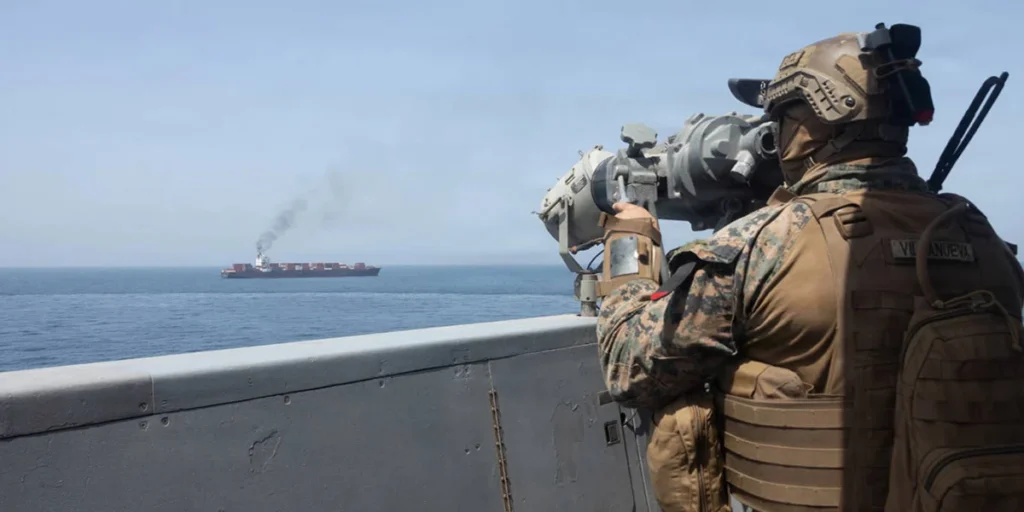
GENEVA / HOUSTON / LISBON — The largest energy-supply shock in modern history has delivered a surprising, high-stakes lesson to the global economy: the interconnected international energy system is remarkably adaptable, yet dangerously brittle at its margins.
When geopolitical hostilities in early 2026 transformed the Strait of Hormuz into a contested theater, roughly one-fifth of global oil supplies and liquefied natural gas (LNG) was instantly thrown into jeopardy. Economists warned of unprecedented price spikes, catastrophic manufacturing halts, and a descent into global stagflation. Yet, worst-case macroeconomic scenarios have been broadly avoided. The saving grace was not the absence of disruption, but years of quiet, unglamorous investments in supply-chain resilience.
Nevertheless, the crisis has exposed a stark geopolitical divide. While advanced economies leveraged sophisticated shock absorbers to weather the storm, emerging markets with constrained financial buffers faced severe fuel shortages, sky-high spot prices, and rolling blackouts. As governments and corporations pick through the wreckage of the Hormuz crisis, the global energy architecture is undergoing a fundamental reassessment. The consensus is clear: energy security in the twenty-first century is no longer about achieving absolute self-sufficiency—an economic impossibility for most nations—but about maximizing "response capacity" when disruption inevitably arrives.
Main Facts
The 2026 energy crisis serves as a massive stress test for global trade routes and energy infrastructure. The core elements defining this historic shock include:
- The Epicenter of the Crisis: The closure and militarization of the Strait of Hormuz choked off approximately 20% of global seaborne oil and LNG traffic, instantly shifting trade routes.
- The Scale of Rerouting: More than one in five barrels of seaborne oil traded globally in the second quarter of 2026 took an entirely different route than it did prior to the crisis, highlighting extraordinary supply-chain agility among international traders and refiners.
- The Global Exposure Trap: Approximately 95% of the world’s population lives in a region that imports at least one major fuel. China imports roughly 70% of its oil, while India imports close to 90%. Furthermore, two-thirds of global energy trade passes through at least one major maritime chokepoint.
- The Asymmetric Impact: Resilience was not distributed evenly. Advanced economies utilized massive strategic petroleum reserves and flexible domestic refineries. Meanwhile, emerging economies like India and Pakistan experienced acute commercial LPG shortages and rolling blackouts stretching deep into the summer and autumn.
- The Strategic Solution: Analysts emphasize that response capacity—short-term buffers like stockpiles, paired with long-term fixes like fuel substitution and diversified suppliers—is the ultimate safeguard against catastrophic economic damage.
Chronology of a Crisis: The 2026 Hormuz Disruption
Phase 1: The Outbreak (February 2026)
The crisis began abruptly in February 2026 with an escalating military conflict involving Iran, which effectively closed the Strait of Hormuz to commercial shipping. Overnight, millions of barrels of Middle Eastern crude and vital LNG shipments were trapped or forced to seek perilous alternative paths. Global energy futures surged within hours, triggering emergency meetings among energy ministers in Geneva, Houston, and Tokyo.
Phase 2: The Immediate Buffer Deployment (March–April 2026)
As spot prices reached alarming heights, major consuming nations activated coordinated emergency protocols.
- The United States, Japan, and Europe authorized massive releases from their strategic petroleum reserves (SPR).
- China not only tapped its state stockpiles but simultaneously leveraged the inherent flexibility built into its vast refining complexes, petrochemical networks, and domestic transport systems to absorb the shock.
- Middle Eastern producers pivoted rapidly. Saudi Arabia and the United Arab Emirates diverted significant volumes of crude through overland pipelines that entirely bypassed the Strait of Hormuz, maintaining baseline exports.
- Global Traders scrambled. Non-Middle Eastern producers ramped up exports, and refiners rearranged supply chains at a historic pace, resulting in over 20% of global seaborne oil taking alternative maritime or overland tracks by Q2 2026.
Phase 3: The Fractured Recovery and Emerging Market Strain (May–August 2026)
While the headline collapse of the global economy was averted, the cracks in the international system began to widen by late spring. Inventories in importing nations faced rapid depletion, and global refining capacity—already operating near historical bottlenecks—remained severely strained.
The crisis morphed into a localized humanitarian and economic crisis for developing nations lacking robust fiscal buffers.
- India suffered months of severe commercial liquefied petroleum gas (LPG) constraints, forcing small businesses and households to curtail usage.
- Pakistan, priced out of hyper-competitive global spot markets for LNG, rejected costly cargoes, resulting in crippling rolling blackouts that paralyzed industrial centers well into late August.
Phase 4: The Strategic Pivot (September 2026 and Beyond)
By the autumn of 2026, policymakers and corporate boards shifted focus from crisis management to structural overhaul. Recognizing that the current shock is merely a harbinger of future volatility, governments across Asia, Europe, and the Americas initiated ambitious plans to expand storage, reconfigure trade pacts, and accelerate domestic energy transition projects.
Supporting Data & Economic Analysis
A comprehensive multi-country analysis of 65 economies conducted in the wake of the crisis sheds light on why headline import dependence can be deeply misleading. Two countries importing identical volumes of crude oil can experience vastly different economic fates during a supply shock, dictated entirely by their domestic response capacity.
The Structural Vulnerability Matrix
- The Net Exporter Paradox: Being a net exporter does not guarantee immunity. For instance, Brazil exports significant volumes of crude oil yet imports roughly 25% of its refined diesel. Similarly, Indonesia exports LNG but relies heavily on imported oil and maintains critically limited storage capacity for refined fuels.
- The Chokepoint Dilemma: The global energy trade is unnervingly concentrated. Two-thirds of all traded energy must navigate at least one major maritime chokepoint, exposing global supply chains to systemic single points of failure.
- The Substitution Potential: According to economic modeling, currently viable low-emissions technologies and domestic renewables could, in theory, structurally displace fuel imports equivalent to 26% to 31% of today’s global oil and gas consumption. However, the realization of this potential remains gated by upfront capital costs, asset turnover rates, and supply-chain constraints for critical minerals.
| Country / Region | Primary Vulnerability | Key Mitigation Strategy Implemented / Proposed |
|---|---|---|
| Pakistan | Extreme spot-market LNG exposure; lack of strategic reserves | Exploring the creation of a national strategic petroleum reserve. |
| Indonesia | Limited refined fuel storage (approx. 25 days) | Targeting an expansion of fuel-storage capacity to 90 days of consumption. |
| India & South Africa | High import dependence and vulnerability to load shedding | Aggressively expanding strategic petroleum reserves and domestic backup capacity. |
| ASEAN Bloc | Regional vulnerability to maritime chokepoint closures | Exploring the establishment of a coordinated regional fuel reserve mechanism. |
Official Responses and Policy Shifts
Governments around the world are no longer waiting for market forces to heal structural vulnerabilities. Recognizing that the "just-in-time" energy model has failed under geopolitical duress, nations are pivoting aggressively toward a "just-in-case" philosophy.
National Initiatives
- Pakistan has formally initiated feasibility studies for a dedicated Strategic Petroleum Reserve (SPR) to insulate its power sector from sudden LNG price spikes.
- Indonesia has launched a multi-billion-dollar infrastructure initiative to scale up its fuel-storage capacity from a dangerously thin 25 days of national consumption to a robust 90-day buffer.
- India and South Africa are accelerating the physical expansion of their national reserves while experimenting with regulatory frameworks to incentivize private-sector inventory holding.
Regional Coalitions and Multilateralism
Realizing that individual developing economies often lack the fiscal space and access to affordable capital required to build massive standalone buffers, policymakers are turning to regional cooperation.
In the wake of the Hormuz crisis, the Association of Southeast Asian Nations (ASEAN) has begun actively exploring the creation of a regional fuel reserve. By pooling reserves, coordinating emergency responses, and interconnecting regional energy grids, participating countries can secure alternative supplies at better rates and share the financial burden of resilience-building.
Implications for Governments and Corporations
The 2026 energy shock has permanently altered the strategic calculus for both public policymakers and private-sector executives.
For Policymakers
Governments must abandon the illusion that free markets alone will protect populations from geopolitical shocks. Policymakers face the complex task of identifying which national vulnerabilities carry the highest risk of catastrophic social and economic damage.
The economic stakes are vividly illustrated by historical precedent: in South Africa, power load-shedding alone reduced GDP growth by an estimated 1 to 3 percentage points in 2022. The aggregate macroeconomic bill for emerging economies caught in the 2026 energy shock is expected to be staggering. Consequently, public investment must be strategically targeted toward areas that buy the maximum resilience per dollar spent—balancing short-term stockpiles with long-term electrification and efficiency gains.
For Corporate Boardrooms
Corporations face parallel vulnerabilities on a microeconomic scale. A modern enterprise’s survival can hinge on a single fuel source, a single chemical feedstock, a single supplier, or a critical port facility.
Forward-looking companies are aggressively conducting end-to-end stress tests of their operational footprints. By evaluating where flexible inputs, multi-sourcing, localized inventory buffers, and energy efficiency justify upfront capital expenditures, businesses are protecting not just their supply chains, but their bottom lines and brand continuity.
Conclusion
The 2026 energy crisis will not be the last chapter of global energy volatility. As geopolitical tensions simmer and climate-induced weather events increasingly threaten physical energy infrastructure, the margin for error is shrinking. Strengthening response capacity—through strategic stockpiles, fuel substitution, and diversified trade linkages—is no longer a luxury item on a government ledger. It is the foundational prerequisite for modern economic survival. Only by making deliberate, sometimes costly choices today can countries and corporations ensure they retain viable options when the next storm breaks.