Beyond the Portfolio: How One Investor Traded the Corporate Grind for Short-Term Rental Mastery
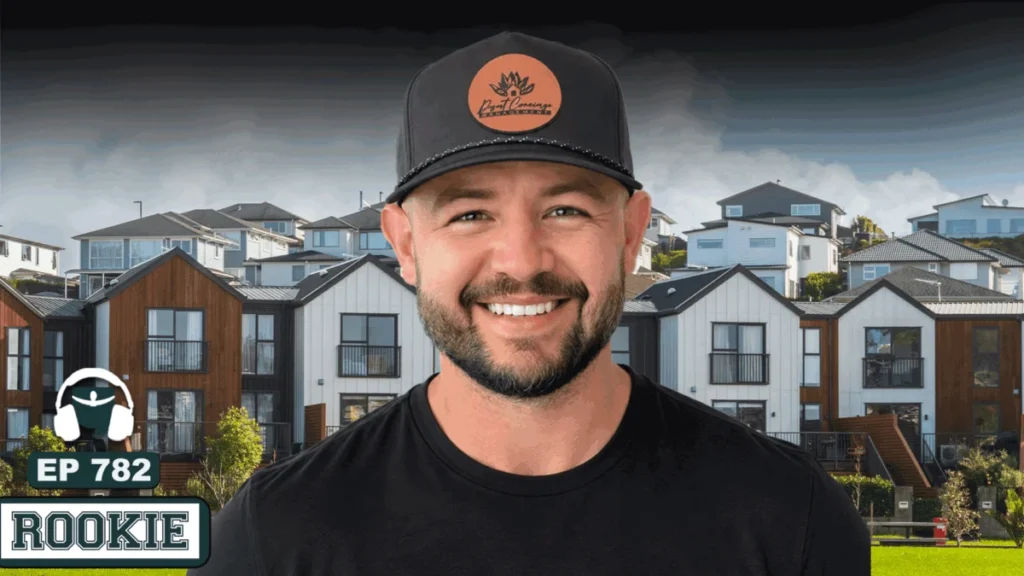
For most aspiring real estate investors, the path to financial freedom is painted with a specific, daunting image: a massive portfolio of dozens of properties, leveraged to the hilt, providing just enough cash flow to eventually submit a resignation letter. This traditional "BRRRR" (Buy, Rehab, Rent, Refinance, Repeat) model is the industry standard, but for Ryan Dumka, it proved to be a distraction from a much faster route.
Dumka, a former manager at Microsoft and the Cheesecake Factory, found himself trapped in a cycle of 14-hour workdays and long commutes. While he was successfully dabbling in short-term rentals (STRs), the goal of scaling a massive personal portfolio felt like it would take years to reach—years he didn’t have to spare while his young daughters were growing up. By shifting his focus from asset ownership to professional STR management, Dumka discovered that the fastest way to replace a corporate salary wasn’t through buying more doors, but through managing them for others.
The Catalyst: A Shift in Perspective
Dumka’s journey into real estate began in 2019, long before the post-pandemic "Airbnb craze." During a July 4th trip to Bullhead City, Arizona, he discovered that a family member was earning significant revenue from a modest, manufactured home on the Colorado River. Despite his initial skepticism—"It’s a double-wide, there’s no way you’re making a killing," he recalls thinking—the numbers told a different story.
After researching the market via platforms like AirDNA and Zillow, Dumka purchased his first STR for $158,000. He treated it as a vacation home, putting 10% down and investing an additional $15,000 into high-end furnishings and electronics. That single property grossed $50,000 in its first year, providing a monthly cash flow of $2,000 to $3,000. It was the "proof of concept" he needed.
Chronology of an Exit
Dumka’s transition from W-2 employee to full-time entrepreneur was not an overnight leap, but a calculated progression:
- 2019: Purchased the first STR in Bullhead City, Arizona, establishing a foundation in hospitality and automated guest systems.
- 2021: Following the loss of his grandfather, a road trip back from Florida provided the clarity to scale. He sold his long-term rental, utilized a 1031 exchange, and acquired a second STR on a local golf course.
- October 2021: Following corporate downsizing at Microsoft and a period of managing 10 properties on the side, Dumka took a three-month severance package. He officially transitioned to full-time entrepreneurship.
- 2023–2025: Partnering with his long-time cleaner, Sarah, Dumka scaled his company, Desert Concierge Management, to 85 properties across three Arizona markets.
- Present: Dumka is currently expanding into the commercial laundry sector, acquiring a facility to verticalize his operations and increase efficiency.
The Economics of "Other People’s Property"
The secret to Dumka’s rapid success was the realization that he didn’t need to own the assets to reap the rewards of the industry. By positioning himself as a professional manager, he eliminated the heavy capital expenditure required for acquisitions while still securing a percentage of the gross revenue.
Scaling Without Ownership
For rookies, Dumka suggests a "guerilla marketing" approach. He advises investors to scour Airbnb for listings with poor photography, low review scores, or vacant calendars. By offering to provide professional staging, photography, or even minor cosmetic upgrades in exchange for a management contract, an aspiring operator can gain immediate credibility.
"If you want to do what I did," Dumka explains, "go to the owner directly. Offer to re-shoot their house for free in exchange for managing the property for a year." This strategy allows the manager to build a track record and a portfolio of "use cases" that can be presented to future clients and real estate agents.
The Role of Strategic Partnerships
Dumka emphasizes that the management business is ultimately a relationship business. He built his reputation by being the "boots on the ground" for out-of-state owners. His team handles the end-to-end guest experience, including smart lock management, digital house manuals, weekly trash removal, and proactive maintenance checks.
One of his most significant operational insights was the integration of a hybrid staff model. His cleaners don’t just scrub floors; they act as property inspectors. They swap propane tanks, change air filters, and report pool maintenance issues to his dedicated pool contractor. This "hybrid" approach ensures that even with 85 properties, the standard of service remains high.
Supporting Data: Operational Efficiency
The numbers behind Desert Concierge Management illustrate the power of this model. Last month, the company generated $650,000 in booking revenue, with approximately $120,000 of that invoiced as management fees.
- Operating Stack: Dumka relies on Hospitable for guest communication and automation, PriceLabs for dynamic pricing, and Microsoft Teams for internal communication.
- Team Composition: The firm operates with four virtual assistants (VAs) providing 24/7 coverage, supplemented by two local teams in Bullhead City and Lake Havasu.
- Margin Control: With a 20% overhead rate for administrative support, the remainder of the revenue is banked for operational growth. Dumka notes the importance of seasonality in the STR business, advising against the urge to splurge during peak months.
Official Stance on Business Ethics and Growth
Throughout his interview on the Real Estate Rookie podcast, Dumka stressed that his growth is fueled by a desire to uplift his partners. He cites the growth of his pool contractor—who went from managing five pools to 175, eventually launching a pool construction business—as a testament to his "win-win" philosophy.
"There’s plenty to go around," Dumka says. "I’m not going to fight with people over nickels and dimes." This mindset extends to his latest venture, a commercial laundromat. Rather than simply viewing it as a profit center, Dumka plans to integrate community outreach, such as offering free laundry days for families in need and creating a dedicated "kids’ corner" stocked with books.
Implications for Future Investors
Dumka’s career trajectory serves as a roadmap for those who feel stifled by the traditional real estate model. His experience suggests several key implications for the modern investor:
- Skillset over Capital: The ability to design, manage, and optimize a space is often more valuable in the current market than the ability to provide a down payment.
- The "Bridge" Strategy: For those in a W-2 role, managing properties for others can serve as the necessary bridge to generate enough cash flow to support a full-time transition, without the risks associated with excessive personal leverage.
- Vertical Integration: By controlling the ancillary services—cleaning, laundry, and maintenance—an operator can protect their margins and improve the guest experience, effectively creating a moat against less-prepared competition.
Defining Freedom
Perhaps the most significant takeaway from Dumka’s journey is the evolution of his definition of "financial freedom." When he first left Microsoft, he imagined freedom as the ability to travel or work from anywhere. Today, his definition is more grounded: it is the ability to wake up with his daughters, make them breakfast, and be present for their daily milestones.
"I wanted to be there with my kids," Dumka says. "I wanted to not miss a lot of those opportunities. That was more the goal for me than the fancy cars."
By trading the pursuit of a massive portfolio for the pursuit of operational excellence, Ryan Dumka has not only replaced his income but has also regained the one asset that no amount of real estate can buy: time. For those watching his progress, the message is clear: if you have even one property running smoothly, you might be closer to your exit than you think. You just need to stop looking at the doors you own and start looking at the systems you can build.