Humanity has always nurtured an enduring romance with storytelling, frequently prioritizing a compelling narrative over cold, hard statistics. In an era saturated with information, algorithmic feeds, and real-time economic data, this behavioral quirk remains as powerful as ever. When individuals evaluate the health of the broader economy, macroeconomic indicators published by federal agencies or central banks often take a back seat to a much more intimate metric: their own personal financial reality.
For the past several years, the prevailing economic narrative has been bleak, particularly for younger generations. The dominant storyline pulsing through social media, news outlets, and dinner table conversations is simple yet devastating: it is practically impossible for young people to buy a home.
On the surface, the narrative writes itself. How could a twenty-something or a young family possibly break into the housing market in the current economic climate? Yet, a deeper dive into demographic data, generational wealth trends, and historical precedent suggests that the doom-scrolling narrative may be vastly overstated. While the hurdles are undeniably real, the resilience, financial literacy, and long-term trajectory of younger generations point to a different, more hopeful reality.
Main Facts: The Anatomy of Modern Housing Affordability
To understand why the "housing lock-out" narrative is so pervasive, one must examine the staggering velocity of change in the American housing market during the early 2020s.
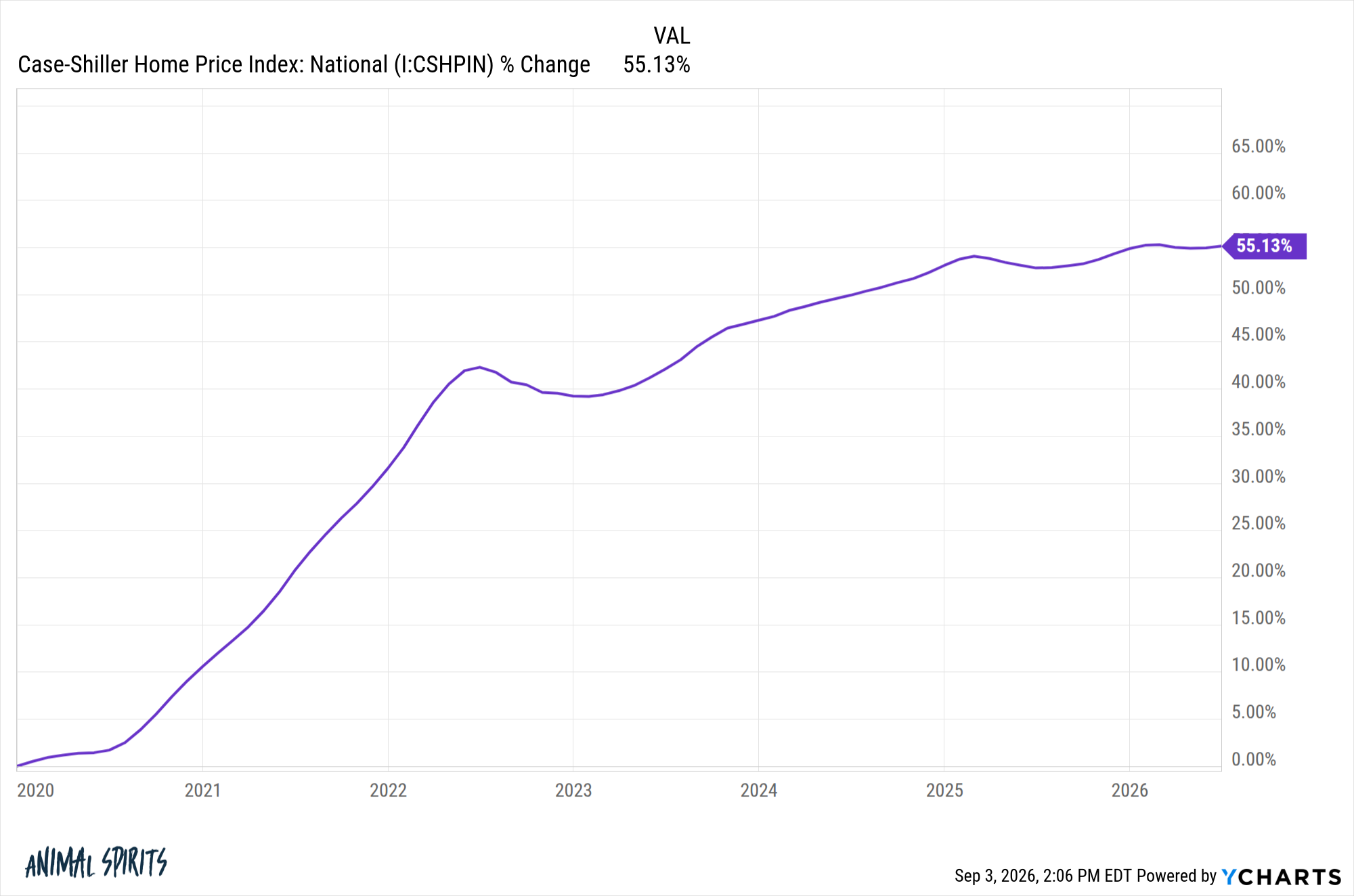
Nationwide home prices surged by nearly 60% during the 2020s alone. What makes this spike particularly jarring is its compression: the vast majority of these unprecedented gains materialized within a condensed span of two to three years, driven by pandemic-era migration patterns, supply chain bottlenecks, and a severe inventory shortage.
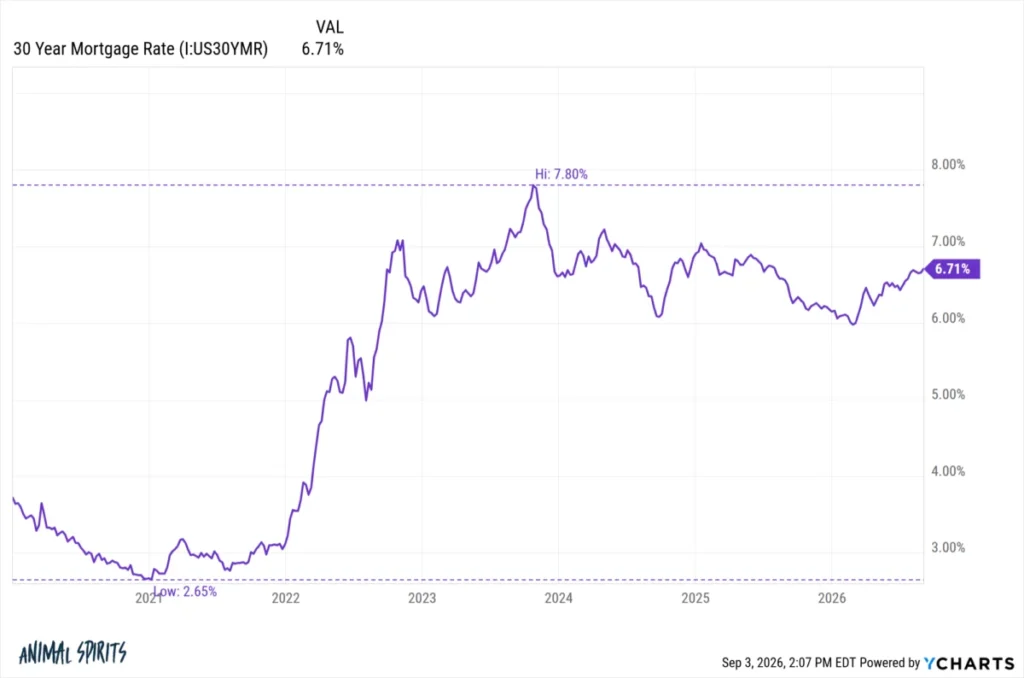
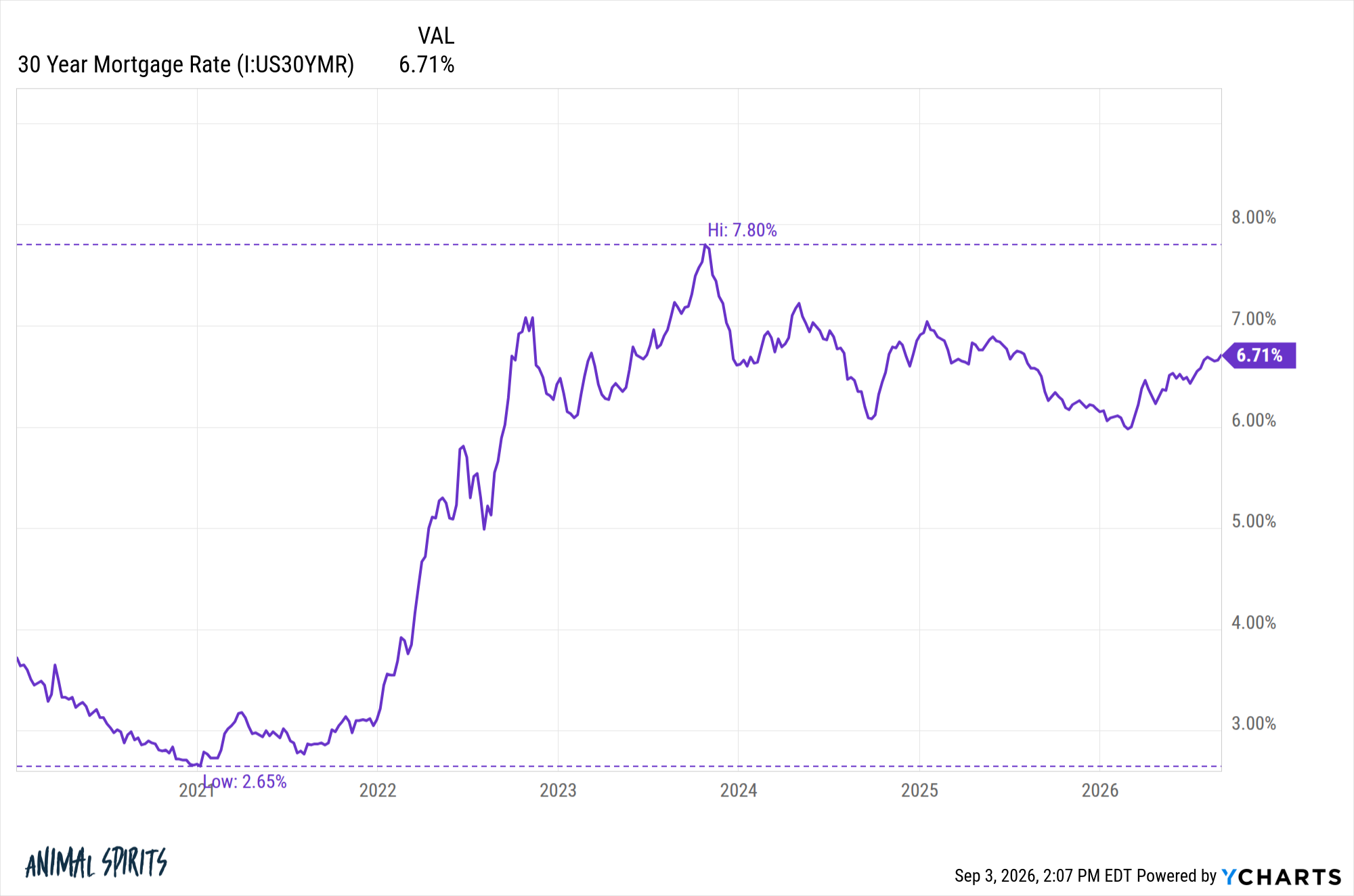
Compounding the problem of soaring home valuations was an equally violent shock to borrowing costs. Mortgage rates—which had hovered comfortably well under 3%—doubled in what felt like the blink of an eye, scaling past the 6% threshold and continuing to exert upward pressure.
For a young buyer, the cascading financial math is punishing. The capital required for an average down payment has skyrocketed. Monthly mortgage payments consume a historically high percentage of median entry-level incomes. Furthermore, ancillary ownership costs have ballooned; home insurance premiums have surged due to climate risks and inflation, while the cost of raw materials and labor has made new construction prohibitively expensive.
Faced with this barrage of negative macroeconomic pressures, it is easy to understand why the public conclusion is that homeownership has become a pipe dream for anyone under thirty, short of receiving a substantial monetary inheritance or family gift.
Chronology: A History of Deferred Adulthood
To properly contextualize the current anxieties surrounding Gen Z and Millennials, it helps to look backward. The behavioral patterns observed in today’s young adults are not entirely unprecedented; they represent an evolution of a delayed-adulthood trend that began more than a decade ago with the Millennial generation.
The Millennial Playbook (2014–2020s)
Back in the mid-2010s, the economic commentary surrounding Millennials mirrored today’s panic over Gen Z. Pundits routinely declared that Millennials were financially crippled, permanently scarred by the Great Recession, drowning in student loan debt, and destined to be a "renting generation" for life.
However, life events for Millennials were merely delayed, not canceled. Fresh out of college, a significant portion of Millennials gravitated toward urban centers, pursued graduate degrees, or prioritized experiential spending and travel. They postponed milestones like marriage and homeownership by five to ten years compared to their Baby Boomer parents.
As Millennials steadily matured into their thirties, the inevitable occurred. They began migrating toward suburban communities or smaller, more affordable metropolitan areas, settling down and purchasing homes in droves. Today, the oldest Millennials are firmly established homeowners.
The Gen Z Reality (2020s–Present)
Fast-forward to the current decade, and Gen Z has inherited an even more volatile economic landscape. Entering the workforce during a period of rampant inflation and peak housing costs, the oldest members of Gen Z—who are currently just 29 years old—faced a uniquely hostile housing market.
Yet, behavioral data indicates they are adapting faster than expected. While Gen Z’s entry into adulthood has similarly been marked by extended education timelines and delayed independent living, their foundational financial habits are remarkably robust.
Supporting Data: What the Numbers Actually Tell Us
When social media narratives clash with empirical data, the data often paints a surprisingly resilient picture. Recent metrics compiled by real estate platforms like Redfin and economic research institutions provide a clearer, more nuanced view of generational homeownership rates over time.
Comparative Homeownership by Age
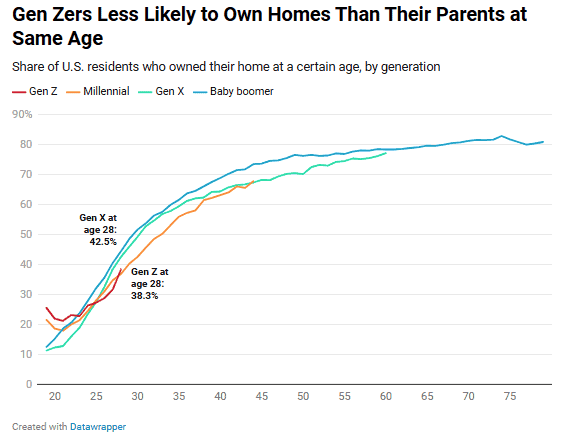
Consider the benchmark age of 28:
Gen Z (2025 data): 38.3% of 28-year-olds owned their homes.
Gen X (at age 28): 42.5% owned their homes.
Baby Boomers (at age 28): 44.4% owned their homes.
While Gen Z’s rate is lower, the delta is far narrower than public perception suggests. Moving up the age ladder to 36-year-old Millennials in 2025, 57.2% owned their homes, compared to 61.2% of Gen Xers and 63.7% of Baby Boomers at that same age. Astonishingly, when measured at identical milestones, Gen Z is currently performing slightly better than Millennials did at the exact same age regarding homeownership acquisition.
Adjusting for Living Arrangements: The HPOP Metric
Critics often point out that traditional homeownership rates only account for individuals who live independently, potentially masking the true number of young adults stuck living with their parents.
To address this blind spot, researchers at the Minneapolis Fed introduced a new metric: the homeowners-to-population ratio (HPOP). By looking at homeownership as a share of the total population rather than just independent households, the HPOP yields a lower baseline.
While the HPOP reveals a slightly wider ownership gap among younger demographics, data analysts emphasize that this gap is largely driven by demographic shifts rather than economic failure. More young people are attending college and pursuing advanced degrees than ever before, naturally pushing back the timeline of traditional milestones like marriage, child-rearing, and home purchases.
Furthermore, young people today are displaying unprecedented financial sophistication. They are entering the stock market earlier, building retirement savings accounts faster, and commanding higher initial wages adjusted for inflation than Millennials, Gen X, or Baby Boomers did at comparable life stages.
Official Responses and Expert Perspectives
Economic analysts and housing market experts are increasingly pushing back against the doomsday narrative, urging a long-term view of demographic and market cycles.
Conor Sen, writing in The Housing Frame, offered a measured perspective on generational housing trajectories. Sen notes that while affordability is undeniably tight today, demographic tailwinds heavily favor younger buyers in the long run.
"The biggest risk to this view is the same risk facing all Americans over the next several years—a significant economic downturn that leads to a surge in unemployment, the kind of outcome that could happen if there’s an artificial intelligence bust," Sen writes. "Otherwise, affordability for Gen Z will get better as they age and the supply picture improves, even if that takes a few years longer than they’d like."
Sen’s analysis underscores a fundamental truth of real estate cycles: markets fluctuate, supply eventually catches up with demand, and generational handoffs occur. As the massive Baby Boomer generation ages, millions of single-family homes will inevitably transition onto the market through downsizing, relocation, or estate sales, injecting much-needed inventory into the system.
Implications: Looking Ahead to the 2030s
The anxiety surrounding Gen Z and housing is understandable, fueled by the immediate shock of soaring prices and double-digit inflation. However, history suggests that economic pessimism regarding youth empowerment is almost always cyclical and shortsighted.
The structural impediments facing Gen Z—high mortgage rates, elevated home prices, and steep insurance costs—are unlikely to vanish overnight. The remainder of the 2020s may continue to present financial friction for first-time buyers trying to crack the code.
Yet, the structural outlook for the 2030s is considerably brighter. Several converging factors will likely normalize the housing market:
Interest Rate Rebalancing: As inflationary pressures cool over the medium term, central banks are anticipated to lower benchmark interest rates, eventually pulling mortgage rates down from their multi-decade highs.
Generational Inventory Transfer: The aging of the Baby Boomer demographic will trigger one of the largest generational wealth and property transfers in modern history, significantly altering supply dynamics.
Accumulated Wealth: Armed with superior early-career savings habits, diversified investment portfolios, and rising wage trajectories, Gen Z possesses the underlying financial machinery necessary to absorb market entry barriers once conditions soften.
When economic historians look back from the vantage point of 2040, today’s widespread panic over Gen Z’s permanent exclusion from the property ladder will likely look misplaced. Just as Millennials weathered economic storms and eventually claimed their stake in the American dream, Gen Z is poised to do the same—just on their own timeline.