Beyond the Bronze: Reclaiming Public Memory through Vietnamese American Art
Public art serves as the visual ledger of a democracy; it signals what a nation chooses to hold in high esteem and, by omission, who it chooses to overlook. Across the United States, the architectural and sculptural landscape is dominated by narratives of military victory, westward expansion, and institutional leadership. Yet, for the millions of Vietnamese Americans—a community defined by the seismic rupture of the 1975 fall of Saigon—these public spaces have long remained silent, creating a profound void in the American civic record.
For the Vietnamese diaspora, identity is lived in the everyday: in the bustling storefronts of Little Saigons, the scent of pho in neighborhood markets, and the quiet resilience of refugee families. However, these lived experiences are rarely translated into the permanent, monumental language of the public square. As the nation approaches the 50th anniversary of the war’s end, a growing movement of artists and community organizers is challenging this absence, arguing that public art is not merely decorative, but an essential component of an honest, inclusive democracy.
The Architecture of Absence: Why Public Memory Matters
The United States is home to a vast network of war memorials, most notably Maya Lin’s Vietnam Veterans Memorial in Washington, D.C. While the memorial is a landmark of profound significance, its existence underscores a complex tension: public memory often crystallizes around the loss of military personnel while ignoring the displacement of the civilians who survived the conflict.
For many Vietnamese Americans, the Vietnam War was not a historical event with a definitive end date; it was the beginning of a multigenerational journey involving reeducation camps, perilous sea crossings, and the arduous process of rebuilding lives in a foreign land. When public memory is restricted to American military sacrifice, the "unfinished" nature of the war—its lasting impact on families and the resilience of the refugee experience—is effectively erased from the national consciousness.
This absence is not just a matter of representation; it is a matter of civic belonging. When a city, through its monuments, refuses to acknowledge the history of its refugee populations, it implicitly suggests that these communities are "guests" rather than foundational members of the civic fabric.
Chronology of a Movement: From Grassroots to Public Square
The shift toward reclaiming public space has been a slow, deliberate process, often led by the 1.5-generation—those who arrived as children or were born shortly after their parents’ migration.
- 1975: The end of the Vietnam War triggers a mass exodus, with approximately 125,000 Vietnamese refugees evacuated to the United States.
- 1990s–2010s: Vietnamese refugee communities coalesce in urban centers like Dorchester (Boston), Clarendon (Virginia), and San Jose (California). These areas develop into "Little Saigons," becoming hubs of mutual aid and cultural preservation.
- 2021: Boston’s Fields Corner is officially designated as the "Boston Little Saigon Cultural District," providing a formal administrative framework for cultural advocacy.
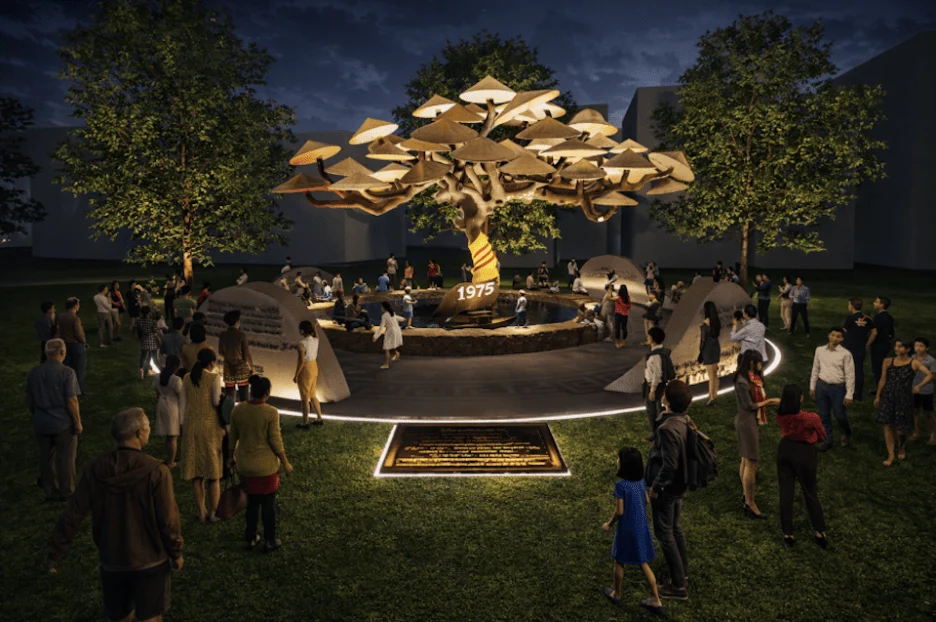
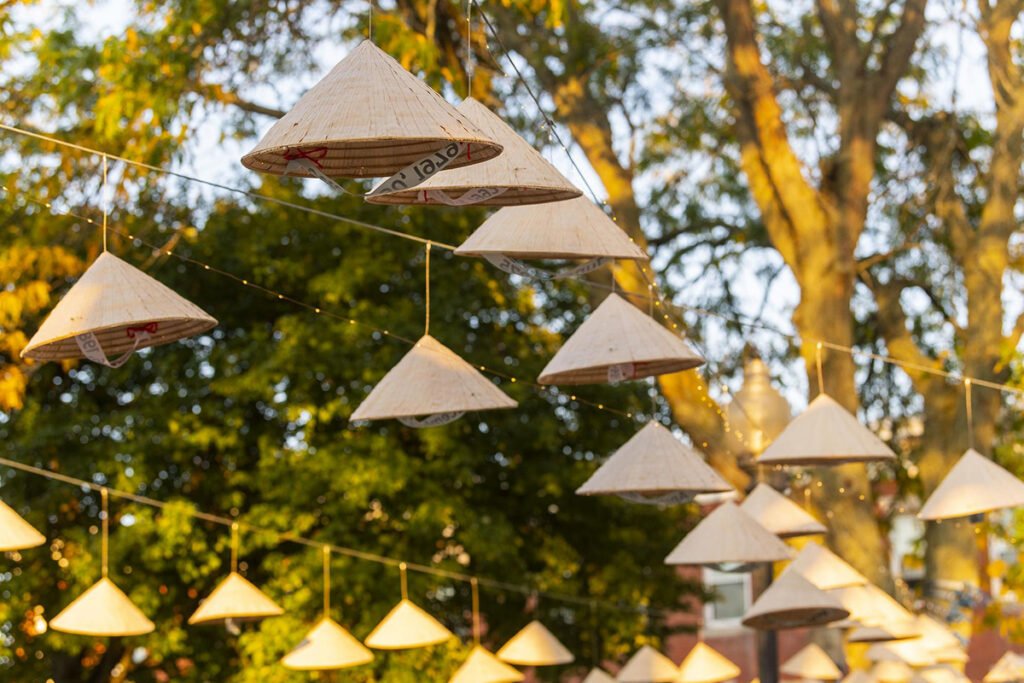
- 2025: The installation of "Journey of Light: A 1975 Memory Field" in Boston’s Town Field Park marks a significant turning point. Using illuminated nón lá (traditional conical hats) and bilingual storytelling, the temporary exhibit provided a visceral, public space for refugees to witness their own history.
- Present Day: Ongoing advocacy efforts, led by artists like Ngoc-Tran Vu, are currently pushing for the transition from temporary installations to permanent, city-sanctioned memorials that honor the diaspora experience.
Supporting Data: The Scale of the Diaspora
The push for permanent recognition is backed by the sheer scale of the Vietnamese American presence in the United States today. According to the U.S. Census and demographic research:
- Population Growth: Approximately 2.2 million people in the U.S. identify as Vietnamese, either alone or in combination with other ethnicities.
- Civic Engagement: More than 1.3 million Vietnamese American adults are currently eligible to vote, representing a significant, active, and increasingly vocal political bloc.
- Historical Context: The 1975 evacuation was only the first wave. Subsequent decades saw thousands more arrive through humanitarian programs, ensuring that the history of displacement remains a living memory rather than a distant one.
This demographic reality creates a mandate for local governments: as these communities continue to shape the economic and social life of their cities, their histories must be formally integrated into the urban landscape.
Case Studies: Where Memory Takes Root
The movement to memorialize the refugee experience is not confined to one city. Across the country, unique efforts are proving that public art can bridge the gap between trauma and community building.
The Clarendon Experience
In Clarendon, Virginia, the dissolution of a once-vibrant Little Saigon due to urban development led to a profound sense of loss. Artist Khánh H. Lê’s project, Voices from Little Saigon of Clarendon, utilized oral histories, sculpture, and imagery to document the lost storefronts. By installing art that mimicked the past, the project served as a "ghost monument"—a way to acknowledge that while the physical buildings may be gone, the community’s contribution to the city’s history remains.
The San Jose Model
San Jose, California, offers a different, perhaps more permanent model. The Vietnamese Heritage Garden and the Vietnamese American Service Center incorporate cultural landscape design, such as representations of Ha Long Bay and traditional terraced rice fields. These sites function as more than just parks; they are centers for "culturally competent care." By blending memorialization with functional public services, these spaces demonstrate that a monument can be a place of healing, not just reflection.
Official Responses and Civic Challenges
Despite the artistic success of these projects, the road to permanence is fraught with bureaucratic hurdles. Securing public land access requires years of negotiation, design review, and, most importantly, "shared political will."
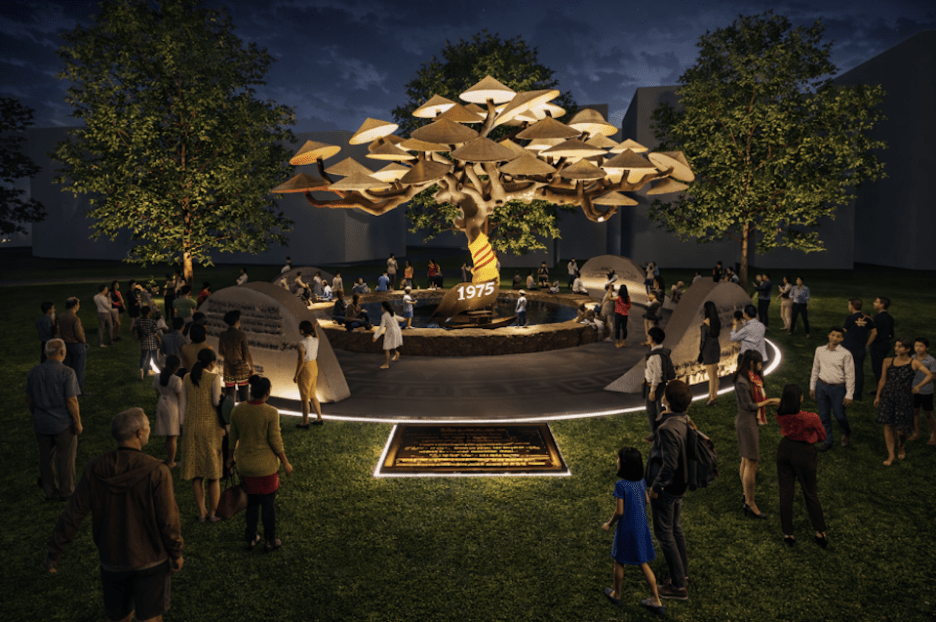
City officials are often hesitant to approve monuments that deal with "controversial" or "trauma-centered" histories. However, proponents argue that the role of public art is not to provide comfort, but to provide accuracy. In Boston, the advocacy team behind the "1975" memorial has had to work closely with local government to demonstrate that a memorial to refugees is a testament to the city’s own growth and evolution. The argument is increasingly gaining traction: by honoring the refugee experience, a city demonstrates that it is a place where "uprooted" people can successfully "re-root."
The Implications: What Democracy Loses Without Memory
The implications of ignoring these histories are twofold. First, the public loses the opportunity to learn from the "wisdom of survival." The Vietnamese refugee story is a masterclass in civic courage—how to navigate trauma, maintain linguistic and cultural ties, and contribute to a new society while honoring the old.
Second, the failure to create permanent space for these narratives perpetuates a "whitewashed" version of history. When a neighborhood’s history is defined solely by its architecture and corporate history, rather than the people who rebuilt it, the democracy becomes less honest.
Conclusion: Toward a More Complete Civic Landscape
Public art is not a luxury; it is a diagnostic tool for a democracy. If we look at the monuments in our public squares, we see what we value. If we see only military figures, we value conquest. If we see memorials to refugees, we value resilience, migration, and the capacity for renewal.
The work of artists like Ngoc-Tran Vu and organizations advocating for the "1975: A Vietnamese Diaspora Memorial" is essentially an act of civic strengthening. By insisting that their stories be etched into the stone and light of our public spaces, they are helping the United States see itself more clearly. A democracy worthy of its name must make room for the communities that have kept memory alive even when public institutions could not. By integrating these stories into the permanent civic record, we do more than honor the past—we create a more inclusive, resilient, and honest foundation for the future.