Anthropic Scales Up: Why a FinTech Pioneer is the Key to Solving AI’s Biggest Bottleneck
By PYMNTS
July 14, 2026
In the high-stakes theater of the artificial intelligence arms race, the battlefield has shifted. While 2023 and 2024 were defined by the pursuit of parameter counts and model reasoning capabilities, the year 2026 is being defined by a singular, crushing constraint: compute.
Anthropic, the San Francisco-based AI lab known for its focus on safety and constitutional AI, has made a tactical maneuver that signals a significant pivot in its corporate strategy. On July 13, it was confirmed that Tom Blomfield, the co-founder and former CEO of the digital banking unicorn Monzo, has joined the company to bolster its compute team. Blomfield, a veteran of the highly regulated and capital-intensive FinTech sector, is stepping away from his role as a general partner at Y Combinator to tackle one of the most complex operational challenges in the modern technology landscape.
The Strategic Shift: Moving from Research to Infrastructure
For many industry observers, the hiring of a banking executive by an AI lab initially appeared incongruous. However, the move is a masterclass in recognizing that the "AI problem" has officially graduated from a purely scientific pursuit to a massive industrial engineering and logistics challenge.
As AI models grow in complexity, the demand for hardware—specifically specialized chips like Google’s Tensor Processing Units (TPUs) and next-generation GPUs—has reached astronomical levels. Anthropic is no longer simply writing code; it is managing a supply chain that rivals the complexity of global financial markets.
Gail Weiner, founder of the U.K.-based AI Trust Architect, articulated the logic behind this unconventional hire. "People see ‘FinTech’ and assume it’s a mismatch," Weiner noted. "But look at what compute actually is at Anthropic now: commitments to a million Google TPUs, multiple gigawatts of capacity coming online, and deals worth tens of billions of dollars. That stopped being a purely technical problem some time ago. It is a commercial and operational problem."
Blomfield’s experience in building a regulated bank from the ground up—where reliability, trust, and massive-scale data integrity were not merely features but existential requirements—makes him uniquely qualified to oversee the logistical architecture of Anthropic’s compute expansion.
Chronology of an Aggressive Talent Acquisition Strategy
Anthropic’s recent hiring spree is not an isolated event but part of a calculated effort to build an "all-star" team capable of challenging incumbents like OpenAI and Google DeepMind. The company has systematically poached talent from the very organizations it competes against.
- Early 2026: Anthropic intensified its recruitment efforts, targeting infrastructure leaders from major cloud providers and research labs.
- April 2026: The company secured Eric Boyd, a seasoned Microsoft executive, to lead its infrastructure team. Boyd’s arrival signaled a shift toward enterprise-grade stability and large-scale cloud orchestration.
- May–June 2026: Anthropic successfully recruited Andrej Karpathy, the former head of AI at Tesla and a founding member of OpenAI. Karpathy joined the pretraining team, focusing on the research and development of future iterations of the Claude model family.
- July 2026: The hiring of Tom Blomfield marks the latest phase in this expansion, focusing on the "commercial plumbing" required to keep these massive models operational.
The Compute Crunch: Why Logistics Matter
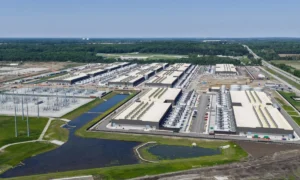
The primary driver behind these hires is the "compute bottleneck." To train frontier-level models, labs require thousands of chips running in parallel for months. The procurement of these chips is not just a procurement order; it involves multi-billion dollar contracts, the negotiation of energy rights, the management of data center cooling infrastructure, and the mitigation of geopolitical risks regarding semiconductor manufacturing.
When Anthropic commits to a "million TPU" deployment, they are not just buying hardware; they are entering into long-term, high-risk operational partnerships. Blomfield’s expertise in navigating regulatory frameworks and managing the capital-heavy requirements of banking is directly applicable to this new reality. If a bank fails due to downtime, it loses its license; if an AI lab fails to secure compute, it loses its competitive edge in the global market.
Supporting Data: The Value of Claude in the Enterprise
Anthropic’s push for talent is supported by the rapid adoption of its flagship product, Claude. According to recent PYMNTS Intelligence data, Claude has cemented its status as a core productivity tool for the modern worker.
In a comprehensive study of AI usage patterns, 81% of workers who utilize Claude reported that the tool is either "essential to their job" or "substantially improves their productivity." This figure outpaces major competitors, including Perplexity, Meta AI, Microsoft Copilot, Google Gemini, and OpenAI’s ChatGPT.
This high level of utility has created a "virtuous cycle" for Anthropic: the more users rely on Claude, the more pressure there is to expand its capabilities. This pressure, in turn, necessitates the development of "agentic" experiences—AI that doesn’t just answer questions, but performs tasks.
Expanding the Agentic Experience: Claude Cowork
Last week, Anthropic signaled its commitment to this "agentic" future with the launch of Claude Cowork for mobile and web. The tool, currently in beta for Max plan members, is designed to handle multi-step, asynchronous work that extends beyond the standard desktop session.
"Everyone asks AI for answers. Handing it the work is different, and people keep giving Claude bigger jobs," the company stated in a recent blog post. "Work like that doesn’t fit in one sitting. It accumulates overnight, between meetings, on the train. Until today, Cowork lived on your laptop, so the work stopped when you stepped away. Now it doesn’t."
This shift toward mobile-first, continuous AI workflows places an even greater burden on the infrastructure team. If Claude is to function as a persistent agent, it must be available with 99.999% uptime—a level of reliability that, once again, mirrors the requirements of global financial institutions.
Implications for the Future of AI
The appointment of a FinTech CEO to an AI compute team serves as a bellwether for the industry at large. It suggests that the "Wild West" era of AI development is giving way to an era of industrial discipline.
1. Professionalization of AI Operations
The industry is moving away from a model where research labs are run primarily by academics and software engineers. Future-proof labs will require Chief Operating Officers, supply chain experts, and financial architects who can manage the massive capital expenditures required to keep the "AI engine" running.
2. The Infrastructure War
As models become more commoditized, the differentiator will increasingly be "compute availability." Companies that can secure the most energy and the most silicon, and distribute it with the greatest efficiency, will dominate. Anthropic’s recruitment of Boyd and now Blomfield suggests they are positioning themselves to win this infrastructure war.
3. The "Bank-Grade" Requirement
As AI becomes embedded in the workflows of legal, medical, and financial institutions, the models themselves must meet the same rigorous standards as the sectors they serve. Blomfield’s background in building Monzo—a bank built on a culture of security, auditability, and trust—positions Anthropic to lead in the enterprise sector, where "moving fast and breaking things" is a liability rather than a strategy.
Conclusion
The hiring of Tom Blomfield is a clear signal that Anthropic has matured beyond its origins as a pure-play research lab. By integrating leaders who understand how to navigate massive, complex, and highly regulated operational landscapes, Anthropic is building the foundation necessary to sustain the next generation of AI.
As the competition intensifies, the companies that thrive will not necessarily be the ones with the smartest models, but the ones with the most reliable, efficient, and well-managed infrastructure. In the race to build the world’s most powerful intelligence, Anthropic is betting that the key to the future is not just better code, but better logistics.