Navigating the Future: A Comprehensive Guide to the Best Retirement Planning Software
Planning for retirement is perhaps the most significant financial undertaking an individual will face. It is a long-term journey that transitions from a phase of aggressive accumulation to one of strategic preservation and sustainable spending. In this landscape, retirement calculators and comprehensive planning software have become essential navigational tools. Whether you are decades away from leaving the workforce or are currently standing on the precipice of your golden years, these digital instruments help translate complex variables into actionable financial roadmaps.
However, not all calculators are created equal. Because each platform utilizes distinct mathematical models, assumptions regarding market performance, and data processing methodologies, the results can vary wildly from one tool to the next. A seminal study investigating five popular retirement planning platforms revealed stark discrepancies in outcomes, prompting financial experts to issue a clear warning: do not rely on a single source. Instead, utilize multiple programs to cross-reference your findings before committing to a final action plan.
The Evolution of Retirement Planning: From Calculators to Software
In the early days of personal finance, retirement planning was relegated to static, high-level calculators. These simple tools asked for your current age, desired retirement age, current savings, and expected annual return, providing a rough estimate of your financial readiness. While helpful for a "back-of-the-envelope" calculation, they often failed to account for the nuanced realities of modern life—such as tax brackets, Social Security optimization, healthcare costs, and the volatility of market sequences.
Modern "Retirement Planning Software" represents a quantum leap forward. Unlike their predecessors, these platforms are dynamic environments. They allow users to link live financial accounts, model complex "what-if" scenarios, and account for specific tax strategies like Roth conversions. They treat your financial life as a living organism rather than a static spreadsheet.
Understanding the Methodologies
When choosing a tool, it is important to understand the engine under the hood. Most high-quality planners utilize one of two primary methods:
- Monte Carlo Simulations: This approach runs thousands of potential market scenarios based on historical data to determine the statistical probability of your plan’s success. It provides a range of outcomes rather than a single definitive answer, which is often more useful for risk-averse planning.
- Consumption Smoothing: Popularized by economic models like those used in Maxifi, this method focuses on how much you can spend annually while maintaining a consistent standard of living throughout your retirement, adjusting for inflation and life expectancy.
Top-Tier Retirement Planning Tools: An Expert Review
Having spent years testing, auditing, and utilizing various financial planning tools, I have curated a selection of the most reliable and feature-rich options currently available.
1. Empower: The Premier Free Solution
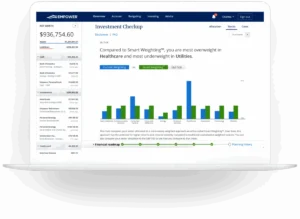
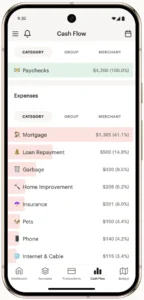
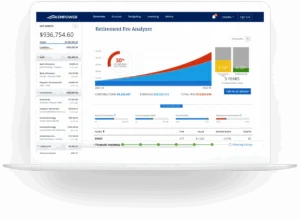
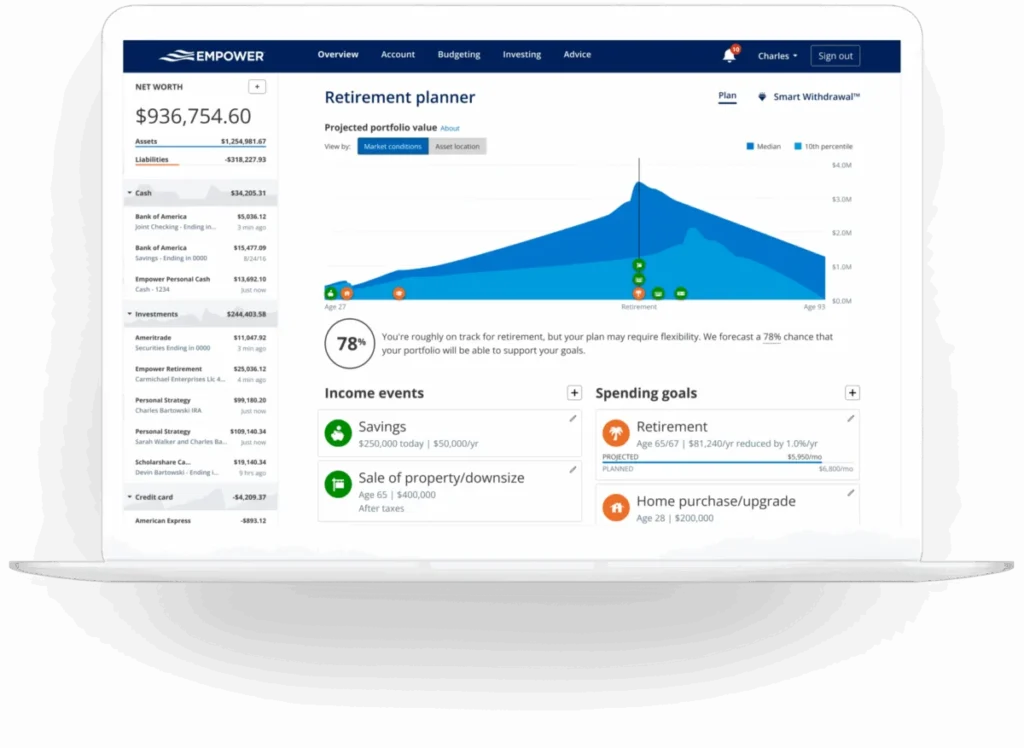
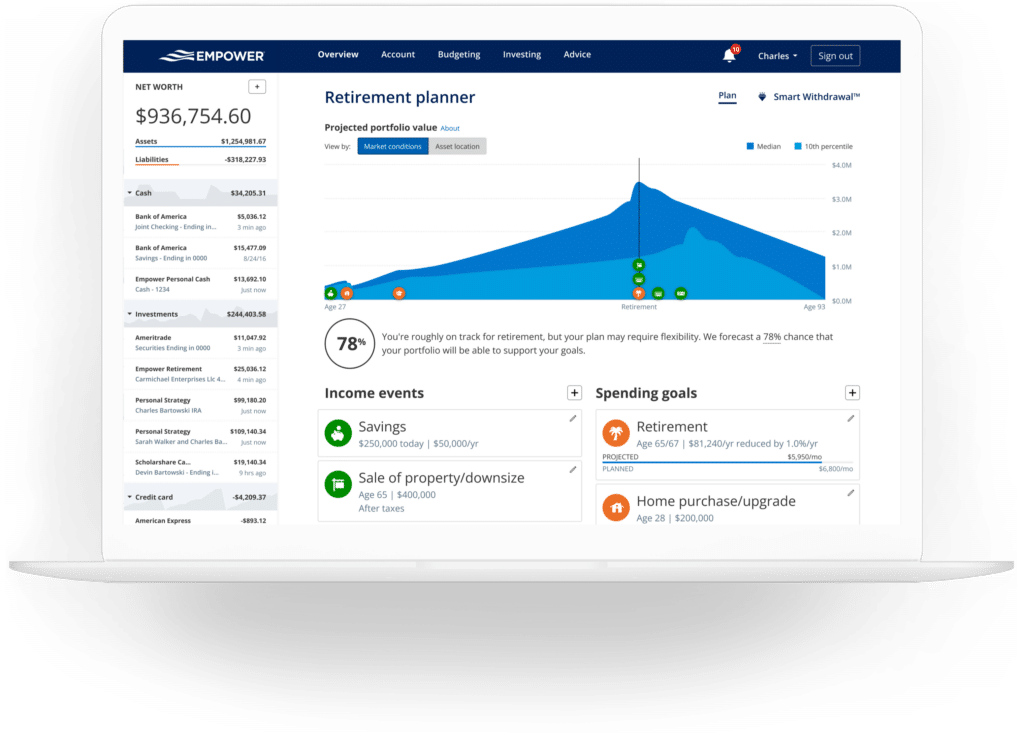
For those seeking a robust, user-friendly, and cost-free experience, Empower’s Retirement Planner remains the industry gold standard. Its greatest strength lies in its integration; by securely connecting your 401(k), IRA, and brokerage accounts, Empower imports your real-time data to create a baseline for your retirement readiness.
- Key Functionality: It allows for the creation of multiple, side-by-side scenarios. You can easily adjust variables—such as retiring at 62 versus 67, or modeling a sudden influx of cash from a real estate sale—to see how each impacts your "success score."
- Best For: Individuals who want a high-level, data-backed view of their trajectory without the barrier of a subscription fee. It is particularly effective for those still in the growth phase, more than five years out from retirement.
2. Boldin (Formerly New Retirement): The Comprehensive Powerhouse
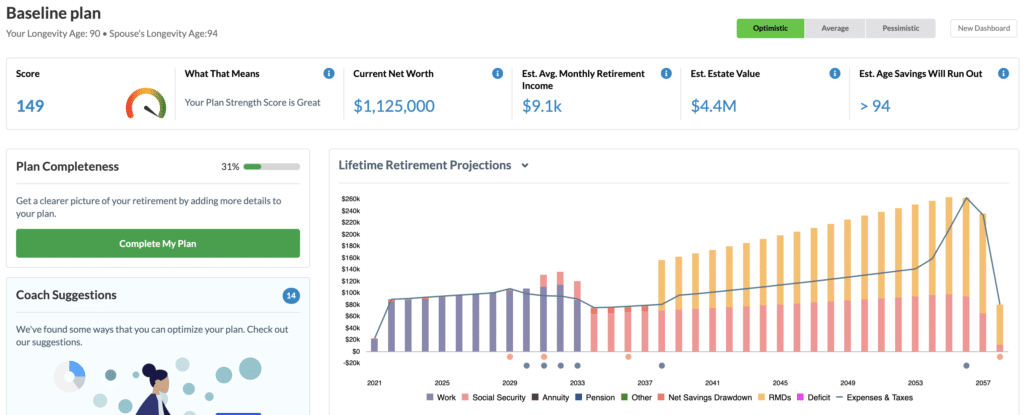
If you are approaching the transition to retirement and require granular control over your financial variables, Boldin is the superior choice. While it offers a free version, its "PlannerPlus" subscription unlocks the ability to model almost every conceivable retirement expense.
- Deep Customization: Boldin shines in its ability to handle complex tax planning, including Roth IRA conversions and Medicare premium estimates. It caters to the user who wants to be in the weeds of their finances, offering a detailed dashboard that can be updated as often as one’s circumstances change.
- The "Semi-Retired" Advantage: Having utilized this tool extensively during my own shift into semi-retirement, I have found its ability to model part-time income streams alongside Social Security and pension payouts to be unmatched. It provides a level of clarity that is essential for those balancing multiple income sources.
3. ProjectionLab: The Best for Visualization and "What-If" Analysis
ProjectionLab has rapidly become a favorite for its intuitive user interface and sophisticated visual feedback. It is perhaps the most "fun" tool to use, making the often-daunting task of financial modeling feel more like a strategic game.
- Scenario Modeling: The platform’s "what-if" engine is best-in-class. It allows you to visualize how different withdrawal strategies—such as the 4% Rule versus Variable Percentage Withdrawal (VPW)—will impact your portfolio over 30+ years.
- Technical Sophistication: ProjectionLab excels in its tax analysis. It understands the nuances of different account types (Traditional vs. Roth 401k, HSA, taxable brokerage) and ensures that your projections are tax-aware, which is a critical oversight in many lesser tools.
4. Maxifi: The Economist’s Choice
For those who prefer a model built on rigid economic theory, Maxifi provides a unique perspective. It is designed around the principle of "consumption smoothing." Rather than asking you to set an arbitrary savings goal, it calculates the maximum amount you can spend each year while ensuring you don’t run out of money.
- The Learning Curve: It is important to note that Maxifi is the most complex tool on this list. It is less about "user experience" and more about "economic accuracy." It is ideal for users who are comfortable with sophisticated, data-heavy interfaces and who want to optimize their lifetime spending capacity.
Supporting Data: Why Multiple Tools Matter
In a recent industry analysis, the output of five major platforms was compared against the same set of user inputs. The variance was significant. One tool suggested a 92% probability of success, while another, using slightly different assumptions about inflation and tax drag, suggested 84%.
This data confirms that the "input equals output" rule is fragile. Small tweaks in your expected rate of return or your assumed tax rate can shift your retirement date by years. By using at least two different platforms, you can identify these outliers. If both Empower and ProjectionLab agree your plan is solid, you can proceed with confidence. If they disagree, you have identified a blind spot in your planning that warrants further investigation.
Implications for Your Financial Strategy
The primary implication of using these tools is the transition from guessing to managing. Retirement is not a destination you reach and then stop planning; it is a dynamic phase of life that requires constant adjustment.
- Iterative Planning: Treat your retirement plan as a "living document." Revisit your chosen software every six months or whenever you experience a major life event (e.g., a job change, a market downturn, or a change in health status).
- Tax Sensitivity: As you move into the distribution phase, taxes will become your largest expense. Prioritize tools like Boldin or ProjectionLab that offer sophisticated tax-planning features.
- The Human Element: Remember that software is only as good as the data you feed it. These tools cannot predict black swan events, sudden medical expenses, or radical changes in government policy. They are tools for decision support, not substitutes for a holistic financial strategy.
Conclusion
The democratization of financial planning tools has empowered millions of individuals to take control of their future. Whether you lean toward the ease of Empower, the comprehensive nature of Boldin, or the visual brilliance of ProjectionLab, the most important step is simply to start. By utilizing multiple platforms to cross-check your assumptions, you can build a more resilient, tax-efficient, and sustainable retirement plan.
While the software may be sophisticated, the objective remains simple: to create a future where your money works as hard as you did to earn it. Embrace the technology, run the scenarios, and secure your peace of mind.