Beyond Panic: WTO Chief Ngozi Okonjo-Iweala Charts a Strategic Path for Europe’s Economic Reinvention
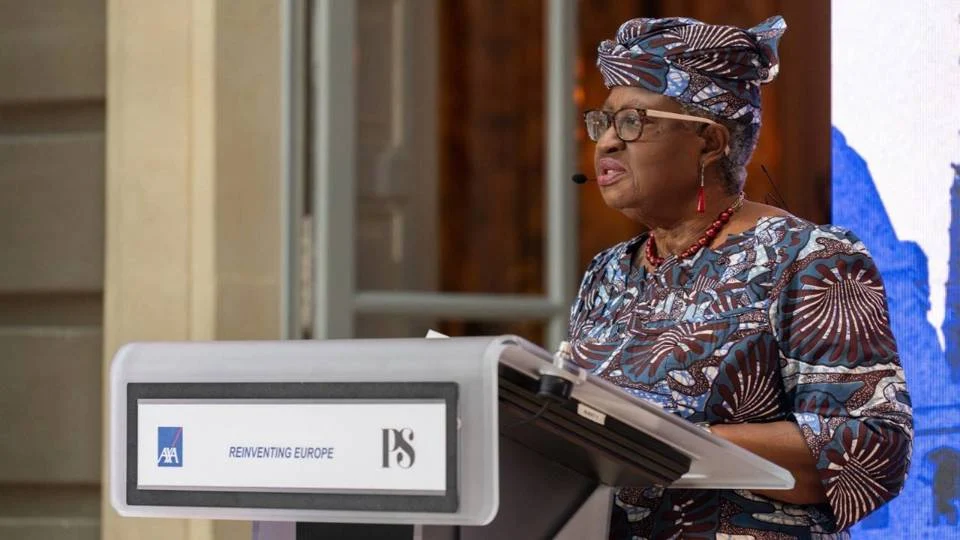
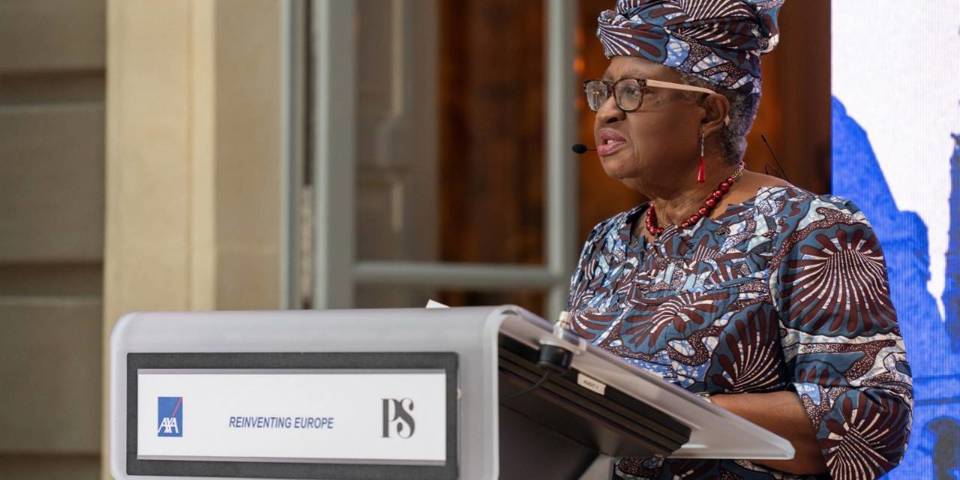
BRUSSELS / GENEVA — In an era dominated by geopolitical fragmentation, supply-chain weaponization, and hand-wringing over lagging technological competitiveness, World Trade Organization (WTO) Director-General Ngozi Okonjo-Iweala has delivered a sharp, timely reality check to European policymakers. Delivering the closing keynote address at a high-profile policy event exploring the theme "Reinventing Europe," Okonjo-Iweala urged leaders to discard narratives of terminal decline and panic, arguing instead for a strategic approach that builds upon Europe’s formidable, yet frequently underappreciated, structural strengths.
While acknowledging that the European economy faces severe external pressures—ranging from the aggressive industrial subsidies of the United States and China to the green transition and lingering energy shocks—the WTO chief cautioned against throwing the baby out with the bathwater. True reinvention, she argued, does not begin by dismantling what already works. Rather, it requires a clear-eyed assessment of Europe’s enduring status as a global trade superpower, a scientific research titan, and a beacon of regulatory and institutional stability.
As European capitals grapple with how to revitalize their economies without succumbing to defensive protectionism, Okonjo-Iweala’s remarks offer a blueprint for a measured, outward-looking revival. Central to her thesis is a call for Europe to look beyond its immediate neighbors and forge deeper economic integration with emerging powerhouses, most notably across the African continent.
Main Facts: The Core Arguments of the Keynote
The central thesis of Okonjo-Iweala’s address rests on a paradox: while Europe frequently measures its economic vitality against the hyper-scalable domestic tech monopolies of the United States and the state-directed manufacturing juggernauts of China, it consistently overlooks its own unique value propositions.
- Resilience of the Global Trading System: Contrary to widespread declarations that globalization is dead, the multilateral trading system has demonstrated remarkable shock absorption. Despite the disruptions of the COVID-19 pandemic, Russia’s war in Ukraine, and escalating trade restrictions, global commerce has continued to grow, proving far more durable than critics predicted.
- Europe’s Hidden Superpower Status: Europe may lack a Silicon Valley or a Shenzhen capable of dominating consumer-facing digital ecosystems, but it remains a dominant force in high-value manufacturing, precision engineering, advanced chemicals, and global services. Furthermore, European institutions continue to lead the world in scientific research output and patent quality.
- The Danger of Policy Panic: European competitiveness debates are frequently hijacked by a sense of existential dread. Okonjo-Iweala warned that panic-driven policymaking often leads to reactionary protectionism, regulatory fragmentation, and inefficient subsidies that distort markets rather than foster genuine innovation.
- The African Horizon: To secure long-term growth and supply-chain diversification, Europe must look southward. Africa represents the world’s youngest demographic, a rapidly expanding digital consumer base, and an indispensable reservoir of critical raw materials necessary for the green and digital transitions.
Chronology: The Evolution of Europe’s Competitiveness Debate
To understand the weight of Okonjo-Iweala’s intervention, it is necessary to trace how Europe’s economic anxiety has evolved over the past decade, culminating in the current push for sweeping structural reform.
[2015–2019] Rise of Strategic Autonomy
   │
   ├─► EU confronts post-financial crisis stagnation.
   ├─► U.S.-China trade tensions expose European vulnerabilities.
   └─► Initial discussions begin regarding "strategic autonomy" in supply chains.

[2020–2022] Shocks and Scarcity
   │
   ├─► COVID-19 pandemic exposes over-reliance on single-source medical and tech imports.
   ├─► 2022 Russian invasion of Europe triggers an unprecedented energy crisis.
   └─► U.S. passes the Inflation Reduction Act (IRA), sparking fears of European deindustrialization.

[2023–2024] The Draghi Diagnosis
   │
   ├─► Mario Draghi is commissioned to write a comprehensive report on European competitiveness.
   ├─► Reports highlight a massive annual investment gap (estimated at €800 billion).
   └─► Calls grow louder for unified capital markets and streamlined regulations.

[2025–2026] The "Reinventing Europe" Phase
   │
   ├─► Policymakers debate the balance between state intervention and open markets.
   ├─► WTO data shows trade resilience despite geopolitical fragmentation.
   └─► Ngozi Okonjo-Iweala delivers her landmark keynote, urging partnership over panic.
Throughout this timeline, European policymakers have oscillated between two distinct impulses: the desire to wall off the single market to protect domestic industries, and the recognition that Europe’s prosperity has historically depended on open, rules-based international trade. Okonjo-Iweala’s address firmly anchors her perspective in the latter tradition, warning that building higher walls will ultimately impoverish the continent.
Supporting Data: The Economic Realities of EU Trade and Competitiveness
To ground her arguments, analysts examining the broader economic landscape highlight several key metrics defining Europe’s current standing in the global economy.
1. Global Trade Share and Openness
Despite trade tensions, the European Union remains the world’s largest trading bloc in goods and services combined. Intra-EU trade accounts for a massive share of member states’ economic activity, but the EU as a single entity commands roughly 15% of total global merchandise trade. Its trade-to-GDP ratio is significantly higher than that of the United States, underscoring that globalization is not a peripheral concern for Europe—it is its lifeblood.
2. The Innovation Disconnect
The core of Europe’s anxiety is not trade volume, but productivity growth and technological adoption. According to data from the OECD and Eurozone economic monitors:
- R&D Expenditure: While the EU has set ambitious targets under its Horizon Europe programs, total R&D spending hovers around 2.3% of GDP, lagging behind the U.S. (approx. 3.5%) and South Korea (approx. 4.8%).
- Venture Capital: European venture capital investments remain fractionally smaller than those in North America, often forcing high-growth European startups to relocate to the U.S. for scaling capital.
3. The Demographic and Economic Complementarity with Africa
Okonjo-Iweala’s emphasis on Europe-Africa ties is supported by stark demographic and geographic data:
- Demographics: By 2050, Africa’s population is projected to reach 2.5 billion, with over 60% under the age of 25. Meanwhile, Europe’s population is aging rapidly, creating acute labor shortages across multiple sectors.
- Natural Resources: Africa holds approximately 30% of the world’s mineral reserves crucial for renewable energy technologies, including cobalt, lithium, manganese, and platinum-group metals. Currently, much of these resources are exported raw, representing a massive missed opportunity for value-addition partnerships with European industrial hubs.
Official Responses and Stakeholder Reactions
The WTO chief’s keynote has generated widespread discussion among trade diplomats, business leaders, and European Union officials, revealing a nuanced spectrum of reactions to her diagnosis.
European Commission Perspectives
Brussels insiders generally welcomed Okonjo-Iweala’s defense of the multilateral trading system, especially at a time when the WTO’s Appellate Body remains paralyzed due to ongoing blockades in the appointment of judges. A senior European Commission trade official, speaking on condition of anonymity, noted:
"Dr. Okonjo-Iweala is entirely correct to point out that we must not act from panic. At the same time, Europe cannot afford pure complacency. Our single market needs deeper integration—particularly in capital markets and energy—if we are to match the speed of our global competitors. Partnering with Africa is not merely an act of solidarity; it is an economic imperative for our own long-term security."
Business and Industrial Leaders
Representatives from European manufacturing and logistics sectors echoed the WTO Director-General’s warnings against inward-looking policies. Industrial federations pointed out that European supply chains are so deeply integrated into global networks that decoupling or severe "nearshoring" would trigger catastrophic cost increases for consumers and manufacturers alike.
However, some industry voices argued that Okonjo-Iweala underplays the immediate threat posed by heavily subsidized foreign competitors. "While we agree that Europe must build on its strengths, our companies are currently competing on an uneven playing field," stated a spokesperson for a major European industrial association. "Without strategic defensive tools, keeping our doors wide open while others subsidize their way to dominance is a recipe for hollowing out our industrial base."
Global South and Development Advocates
Development economists and diplomats from emerging markets praised Okonjo-Iweala’s focus on the Global South, viewing it as a necessary correctives to Eurocentric debates on competitiveness. By reframing Africa not as a target for aid, but as an equal economic partner and a vibrant market of the future, the keynote challenged traditional power dynamics in international trade diplomacy.
Implications: What Okonjo-Iweala’s Vision Means for Europe’s Future
The implications of Ngozi Okonjo-Iweala’s address extend far beyond the conference room. If European policymakers take her insights to heart, several strategic shifts can be expected in the coming years:
- A Shift from Defensive Protectionism to Targeted Competitiveness: Instead of erecting blunt tariff walls or engaging in a self-defeating subsidy war with the U.S. and China, Europe is likely to focus its energies on internal structural reforms—such as completing the Capital Markets Union, reducing administrative red tape for small and medium-sized enterprises (SMEs), and supercharging green innovation.
- Revitalization of Euro-African Economic Diplomacy: Future trade agreements between the EU and African nations are expected to move beyond traditional "aid-for-trade" frameworks. Emphasis will shift toward co-investment in local manufacturing, infrastructure development, and secure, sustainable supply chains for critical raw materials.
- Renewed Commitment to Multilateralism: Even as regional trade blocs proliferate, Europe will likely double down on its diplomatic and financial support for the WTO and reformed multilateral institutions. As Okonjo-Iweala emphasized, smaller and medium-sized economies—which include every European nation—rely fundamentally on predictable, rules-based global trade to protect themselves against the raw exercise of geopolitical power by superpowers.
- Balancing Resilience with Openness: Europe’s pursuit of "strategic autonomy" will be recalibrated. Rather than striving for impossible autarky (self-sufficiency), European strategy will increasingly emphasize "friend-shoring" and diversification—building deep, reliable partnerships with trusted allies across the globe, with a special emphasis on the developing world.
Conclusion
Ngozi Okonjo-Iweala’s intervention at the "Reinventing Europe" event serves as a vital corrective to the doom-laden rhetoric that frequently paralyzes European policymaking. By reminding leaders of their continent’s inherent institutional depth, scientific excellence, and trade prowess, she has offered a message of strategic confidence.
Europe does not need to reinvent the wheel, nor does it need to abandon its open trading values out of fear. By replacing panic with measured reform, and by looking outward to forge dynamic partnerships with regions like Africa, Europe can secure its prosperity and influence in the twenty-first century global economy.