Zcash Developers Chart a Course to Quantum Resistance as Broader Crypto Enters "Bunker Mode"
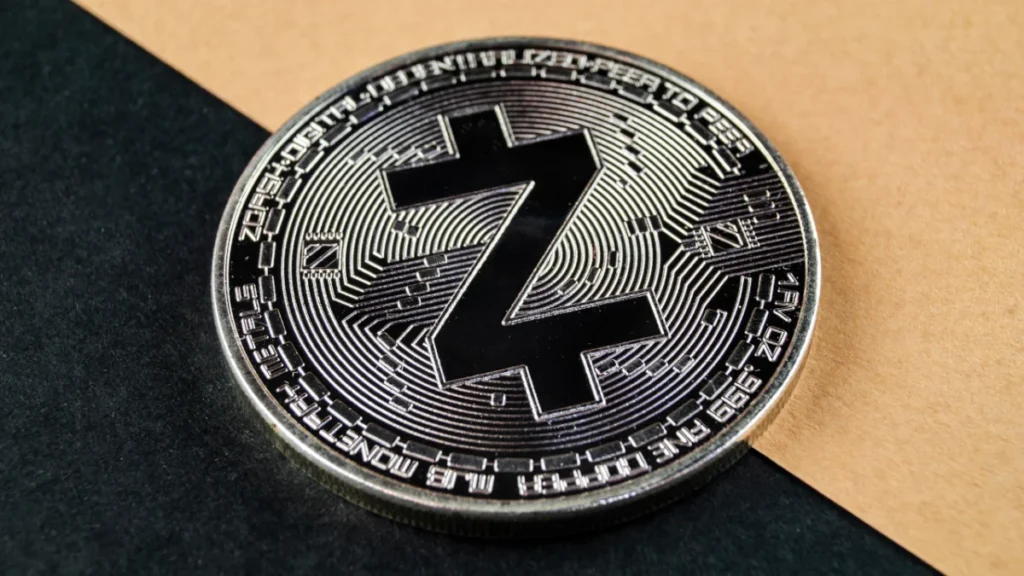
While a significant portion of the broader cryptocurrency industry grapples with panic, debate, and a defensive "bunker mode" mindset regarding potential cryptographic vulnerabilities, one dedicated Zcash development team claims to have a definitive roadmap in place.
Zakura, a specialized team building Zcash full nodes, has announced that it expects post-quantum signature opcodes to land on the Zcash network as early as January. This integration represents a major step forward in shielding the privacy-focused blockchain against the rapidly approaching horizon of quantum computing and advanced artificial intelligence breakthroughs.
The initiative comes at a turbulent time for digital assets. Recent warnings from prominent figures—including Ethereum Foundation researcher Justin Drake and Ethereum co-founder Vitalik Buterin—have underscored a terrifying prospect: that algorithmic breakthroughs driven by AI could dismantle standard blockchain encryption far sooner than previously anticipated. While other layer-1 ecosystems scramble to assess the damage and debate the viability of basic defensive measures, Zakura’s engineering blueprint demonstrates that proactive, quantum-safe architectures are not a distant pipe dream, but an achievable reality today.
Main Facts: The Zakura Blueprint and Quantum-Safe Architecture
At the heart of Zakura’s upcoming rollout is a strategic plan detailed in an engineering post by developer Roman Akhtariev. The primary goal of the initiative is to establish "full post-quantum safe transparent pools with hash-based signatures."
To understand the significance of this development, one must look at how Zcash handles transactions. Zcash natively supports two distinct payment types:
- Shielded Transactions: Highly private transfers that cloak the sender, recipient, and transferred amount using advanced zero-knowledge proofs.
- Transparent Transactions: Publicly visible payments that operate similarly to standard transactions on Bitcoin or Ethereum.
In Zcash’s transparent ecosystem, a transparent address (taddr) contains a hash of a public key. This public key remains hidden on-chain until the owner actually spends funds from the address, at which point the key is revealed.
Zakura’s newly proposed defense mechanism combines two distinct layers of security:
- Address Rotation: Wallets automatically rotate to a fresh, unused address after every single transaction, ensuring that public keys are never exposed to potential long-term threats.
- Hash-Based Signatures (WOTS): The integration of Winternitz One-Time Signatures (WOTS) or similar hash-based backup signatures. Unlike traditional elliptic-curve cryptography (such as ECDSA), which relies on mathematical problems that quantum algorithms or advanced AI math solvers could theoretically crack, hash-based schemes are widely considered secure against quantum attacks.
However, address rotation introduces a severe usability and privacy paradox. When a standard wallet queries a central server to check balances across multiple rotating addresses, that server can easily correlate the data and deduce that all the addresses belong to a single user—effectively destroying user privacy.
To solve this, Zakura relies on Private Information Retrieval (PIR). PIR is an advanced cryptographic primitive that allows a wallet to fetch specific records from a database without ever revealing to the server which records are being requested. This feature is actively rolling out in the Vizor wallet, where users can already test the functionality by toggling "private queries" in their settings.
Chronology: The Escalating Panic and the Race Against Time
The timeline leading up to Zakura’s announcement highlights an accelerating sense of urgency across the cryptocurrency sector:
- Late 2024–Early 2026: Zcash experiences a renewed wave of technical and institutional momentum. The network rolls out major upgrades designed to make private payments up to three times faster, while traditional financial markets show rising interest, marked by Europe’s first Zcash ETP and proposed U.S. ETFs backed by high-profile investors like the Winklevoss twins.
- Early October 2026: Ethereum Foundation researcher Justin Drake sends shockwaves through the crypto ecosystem during a public appearance and subsequent statements. Drake urges cryptocurrency holders to calmly move their funds to fresh, unspent addresses, warning that AI-driven math could break the ECDSA signatures securing Bitcoin and Ethereum before physical quantum computers fully materialize—citing a worst-case timeline of "months, not years."
- Mid-October 2026: The broader crypto community reacts with widespread anxiety to Drake’s warnings. Ethereum co-founder Vitalik Buterin steps into the fray, publicly stating that he believes it is "plausible" for AI-driven advancements in mathematics to break traditional blockchain encryption within the next two years.
- October 8, 2026: Zakura pushes back against the prevailing doom-and-gloom narrative. In a public statement on X (formerly Twitter), the development team writes: "Here’s our plan for quantum-safe, unlinkable, rotating taddrs. Possible with Zcash, today. While others are worrying about the viability of rotating transparent addresses, we’re already solving linkability." Zakura formally announces that post-quantum signature opcodes are slated to arrive on Zcash in January.
Supporting Data: The Threat of AI-Accelerated Cryptanalysis
The anxiety permeating the crypto space is not rooted in unfounded science fiction; it is based on rapid advancements in machine learning and quantum information science.
For over a decade, computer scientists have predicted that large-scale quantum computers would eventually break the elliptic-curve digital signature algorithm (ECDSA) and RSA encryption—the cryptographic backbones securing trillions of dollars in Bitcoin, Ethereum, and legacy financial infrastructure. Because building a fault-tolerant quantum computer requires overcoming immense hardware hurdles, the industry generally assumed it had another decade or more to prepare migration strategies.
However, the variable that changed the equation is artificial intelligence. AI-driven mathematical modeling and automated theorem provers are beginning to uncover algorithmic shortcuts that reduce the complexity of solving hard mathematical problems. Justin Drake’s warning highlights that an AI model doesn’t necessarily need a 1,000-qubit quantum processor to dismantle legacy cryptography; an advanced AI could potentially discover classical mathematical shortcuts that trivialize elliptic-curve discrete logarithms far ahead of hardware milestones.
This reality makes initiatives like Zakura’s transparent, hash-based signature framework critical. Hash-based signatures rely strictly on the security properties of cryptographic hash functions (like SHA-256 or similar constructions). Even the most powerful quantum algorithms (such as Grover’s algorithm) only offer a quadratic speedup against hash functions, meaning they can be easily mitigated simply by doubling the output size of the hash.
Official Responses and Industry Reactions
The divergence in how different blockchain communities are handling the quantum threat has exposed stark differences in governance and agility.
Justin Drake and the Ethereum Ecosystem
Justin Drake’s urgent advisory to migrate funds prompted intense debates across Ethereum and Bitcoin forums. While researchers understand the theoretical necessity of migrating to quantum-resistant standards (such as Starknet-backed or lattice-based signatures), executing a network-wide migration on chains with hundreds of billions of dollars in legacy accounts is a logistical nightmare. The immediate public reaction was characterized by confusion, skepticism, and fear of sudden forced hard forks.
Vitalik Buterin’s Pragmatic View
Weighing in on the mounting crisis, Vitalik Buterin adopted a measured, pragmatic tone. While acknowledging that an AI-driven cryptographic breakdown within two years is "plausible," Buterin emphasized that the Ethereum ecosystem has already laid out long-term roadmap items—such as Verkle trees and post-quantum account abstraction transitions—though acknowledging that an accelerated timeline would severely stress-test developer bandwidth.
Zakura and the Zcash Developer Community
In contrast to the reactive panic seen elsewhere, Zcash developers have leaned into modular execution. Zakura’s public stance emphasizes that Zcash’s underlying architecture is uniquely suited to absorb these upgrades. By focusing first on transparent pools (taddrs) via low-level opcodes, the team is establishing a functional sandbox.
It is worth noting, however, that Zakura’s current roadmap strictly targets Zcash’s transparent side, and the initial engineering posts have not yet detailed how or when these opcodes will be officially activated across the broader decentralized consensus network or integrated directly into Zcash’s native shielded pools.
Implications: What This Means for Privacy Coins and the Wider Crypto Market
The proactive stance taken by Zakura carries profound implications for the future of digital assets, particularly for privacy-centric networks.
- A New Standard for Privacy and Security: If Zakura successfully launches post-quantum signature opcodes in January and proves that PIR can effectively mask rotating address patterns, it will establish a groundbreaking blueprint for combining absolute network privacy with quantum resilience.
- Institutional Confidence: Zcash has recently experienced a wave of institutional validation, highlighted by European exchange-traded products (ETPs) and proposed U.S. exchange-traded funds spearheaded by high-profile figures like the Winklevoss twins. Demonstrating that the network is actively solving existential threats like quantum and AI-driven cryptanalysis could significantly bolster investor confidence amid macroeconomic and technological uncertainty.
- Pressure on Legacy Blockchains: As smaller, agile teams like Zakura demonstrate real-world solutions "today," mounting pressure will fall on larger layer-1 giants like Bitcoin and Ethereum. While Bitcoin moves notoriously slowly due to its decentralized consensus model, and Ethereum navigates complex multi-layer roadmaps, the narrative that "privacy coins are moving faster on core survival issues" could shift developer talent and user capital.
Conclusion
The crypto industry is at a historic crossroads. As the shadow of AI-accelerated cryptanalysis looms larger over traditional digital signatures, the era of passive security assumptions is officially over. While much of the market remains paralyzed in "bunker mode" debating theoretical worst-case scenarios, Zakura’s upcoming January rollout proves that the tools to build a post-quantum future are already within reach—provided developers have the foresight and technical agility to deploy them.