The Great Private Market Illusion: Why Public Equities Still Reign Supreme in the Age of Unicorns
September 24, 2026
By Ben Carlson
Main Facts
In contemporary financial discourse, a prevailing narrative has taken root among tech-savvy investors: public equities are losing their luster. The argument posits that because modern companies choose to remain private for much longer, the most lucrative phases of hyper-growth—and the accompanying wealth creation—are captured exclusively by venture capitalists, private equity funds, and early-stage insiders.
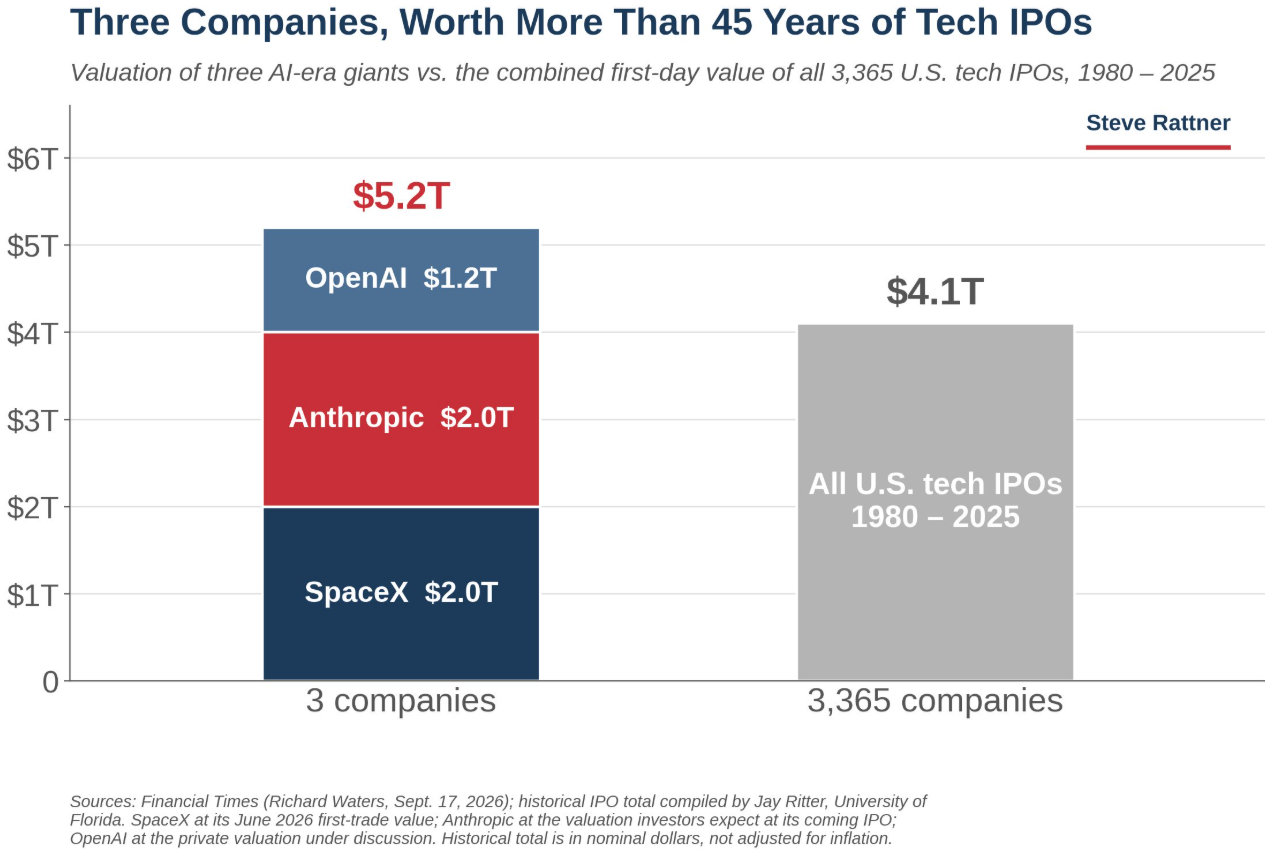
Proponents of this view point to a fundamental shift in market mechanics. Decades ago, iconic technology giants like Amazon went public relatively early in their life cycles, allowing everyday retail investors to participate in their explosive ascent. Today, massive enterprises such as SpaceX, OpenAI, and Anthropic have commanded staggering valuations in the private market—with SpaceX executing a monumental IPO at nearly a $2 trillion valuation, and others projected to breach the trillion-dollar threshold upon eventual public entry.
With more than 1,800 "unicorns" (privately held startups valued at $1 billion or more) currently commanding a collective $9.2 trillion globally, critics argue that traditional public index funds and exchange-traded funds (ETFs) are effectively bypassing the true engines of modern economic innovation.
However, a deeper empirical analysis challenges this conventional wisdom. Despite the migration of capital into private domains, public equity markets have not only survived but thrived, delivering historic returns that rival or exceed the realized gains of most private venture portfolios.
Chronology of a Market Shift
To understand how the boundary between private and public markets evolved, it is necessary to examine the historical timeline of corporate fundraising and liquidity.
- The 1990s—The Early-IPO Era: Companies prioritized public listings early in their operational maturity. In 1997, Amazon completed its initial public offering with a modest market capitalization of approximately $440 million. Public market investors shared directly in the company’s foundational scaling phase.
- The 2000s to 2010s—The Rise of Private Liquidity: Following the dot-com bubble and the implementation of regulatory changes like the Sarbanes-Oxley Act, regulatory burdens and the proliferation of private capital pools changed corporate calculus. Institutional investors, flush with cash, began funding startups well into their maturity phases, reducing the immediate necessity of public listings.
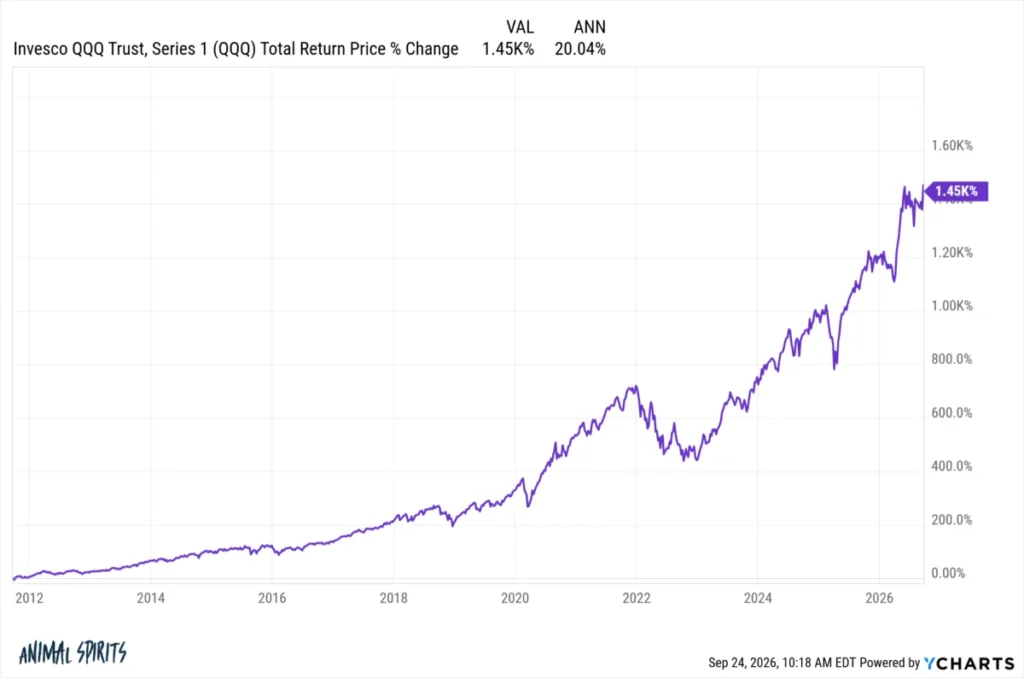
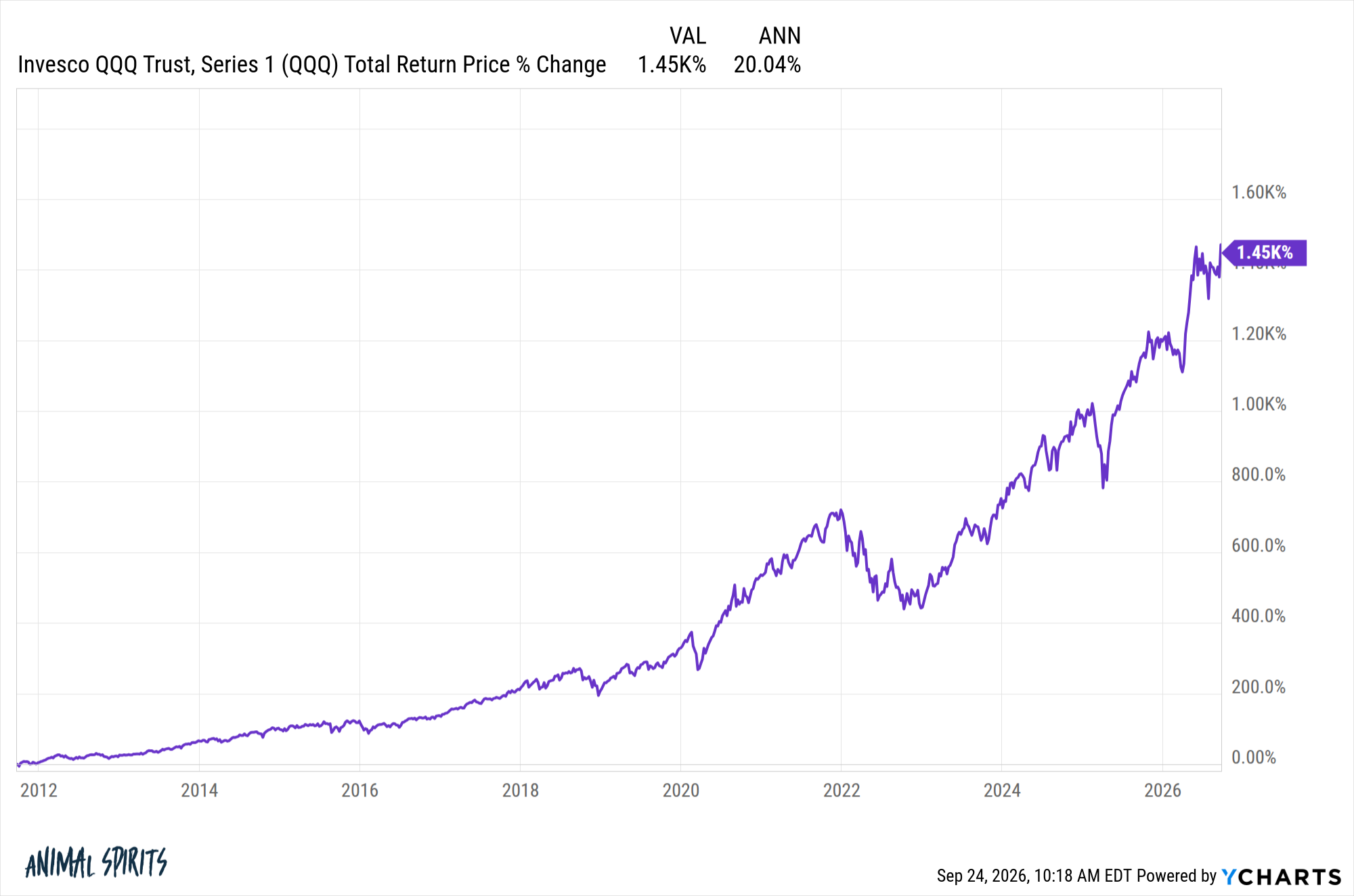
- The 2010s to 2020s—The Tech Bull Market: Even as unicorns stayed private longer, the Nasdaq 100 embarked on one of the most ferocious bull runs in financial history. Over a recent 15-year stretch, the index compounded at an annualized rate of roughly 20%, generating monumental wealth for passive public index investors.
- The Mid-2020s—Megafirms and Private Conglomerates: Mega-cap technology giants—frequently referred to as the "Magnificent Seven"—increasingly utilized their immense cash reserves to absorb emerging competitors before they reached public markets. Notable acquisitions, alongside strategic cross-investments in foundational AI labs like OpenAI and Anthropic, effectively bridged the gap between private innovation and public shareholder portfolios.
Supporting Data: Public Resilience vs. Private Reality
The anxiety surrounding missed opportunities in private markets often ignores the harsh mathematical realities of startup investing and the surprising resilience of public indices.
1. The Myth of Mass Outperformance
While venture capital folklore is dominated by stories of early backers turning modest stakes into fortunes, the asset class operates strictly under a "power law." Bureau of Labor Statistics (BLS) data indicates that nearly half of all new businesses fail within five years, and roughly two-thirds vanish within a decade. Studies focusing specifically on tech startups reveal an even more sobering distribution: the vast majority return little to no capital, with only a minuscule fraction generating venture-scale returns.
2. The Power of Public Indexing
Consider the performance of the Nasdaq 100 over the past decade and a half. Compounding at 20% annually, it outperformed the vast majority of institutional venture capital funds over the same period. Furthermore, individual public equities delivered outliers that matched or exceeded private market legends. Nvidia, for instance, surged nearly 14,000% over a ten-year window. While private firms may occasionally boast higher percentage gains, access to those deals has historically been restricted to an elite tier of institutional allocators and accredited insiders.
3. The Corporate Consolidation Filter
Rather than being entirely disconnected from private innovation, public markets frequently ingest it through mergers and acquisitions. Over the past two decades, the largest public tech firms have executed upwards of 700 acquisitions. When a disruptive technology or agile competitor emerges in the private sphere, it is frequently absorbed into a publicly traded conglomerate—such as Nvidia’s acquisition of Hugging Face—allowing public shareholders to indirectly own those innovations.
Official Perspectives and Industry Responses
Financial planners, asset managers, and market commentators remain deeply divided on how individual investors should construct portfolios in an era dominated by mega-unicorns.
- The Tech-Centric Retail View: Many tech employees and retail investors argue that passive indexing is increasingly an "old-world" strategy. They contend that holding low-cost index funds misses out on the foundational value creation that now occurs behind closed doors before public listings take place.
- The Institutional Realist Perspective: Wealth managers and traditional index advocates (such as adherents of the Boglehead philosophy) caution against chasing private market hype. They emphasize that private valuations are frequently inflated by captive capital cycles, and that post-IPO performance for heavily hyped unicorns is historically underwhelming.
- The Synthesis on Alternative Assets: Industry analysts generally agree that while high-net-worth individuals can allocate a small percentage of speculative capital to venture opportunities, treating private equity as a mandatory core holding misreads the empirical data on risk-adjusted returns.
Implications for Investors and ETFs
The ongoing debate over private versus public markets carries profound implications for the future of investment strategy, portfolio construction, and financial products.
1. The Reality of Speculative Alternatives
Investors tempted to bypass public equities in search of private-market unicorn status must recognize the probabilistic nature of venture capital. Such investments function less like traditional asset allocations and more like calculated lottery tickets. For the average investor, the liquidity, transparency, and diversification offered by public ETFs vastly outweigh the uncertain alpha of private startup investing.
2. Evolution of Exchange-Traded Funds (ETFs)
As companies delay their public market debuts, index providers and ETF issuers are continually forced to adapt. Emerging fund structures are exploring ways to incorporate elements of private equity or provide exposure to late-stage private companies prior to their public float. However, regulatory hurdles, liquidity constraints, and valuation transparency remain significant roadblocks for mainstream retail products.
3. Strategic Takeaways
The narrative that public market investors are locked out of modern economic growth is fundamentally overstated. While the corporate lifecycle has shifted, public indices continue to capture the ultimate monetization of technological revolutions—whether through the blistering organic growth of firms like Nvidia or the strategic acquisitions executed by mega-cap industry leaders. For everyday investors, maintaining discipline within low-cost public equities remains the most reliable path to long-term wealth accumulation.