Anatomy of a Non-Bubble: Why the 2020s Housing Market Defied Crash Predictions
Main Facts
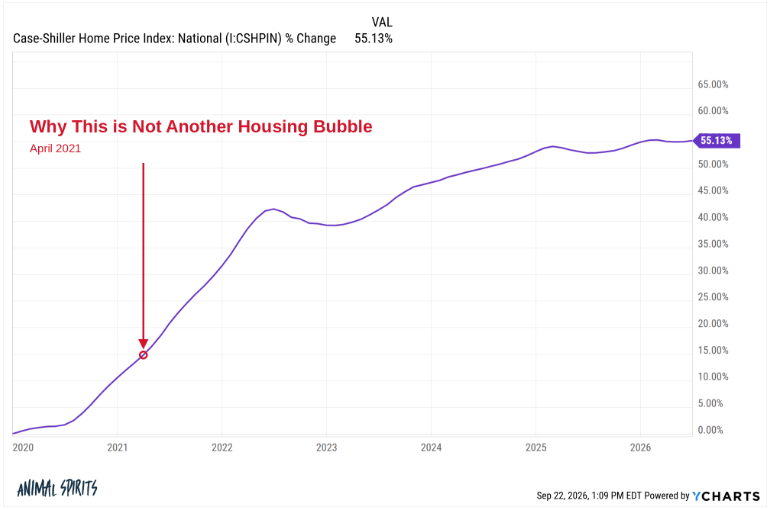
In the spring of 2021, when the Case-Shiller National Home Price Index had already climbed 16% in total for the decade, a contrarian argument began to circulate across financial blogs: despite the rapid acceleration of property values, the American housing market was not experiencing a speculative bubble. Skeptics scoffed at the notion, pointing to historic price spikes as definitive proof of an impending crash.
Fast forward to the present: nationwide housing prices have surged an additional 33% since that 2021 forecast, marking a cumulative jump of more than 55% for the decade. Yet, contrary to apocalyptic predictions of a 2008-style collapse, the market has steadfastly refused to crash.
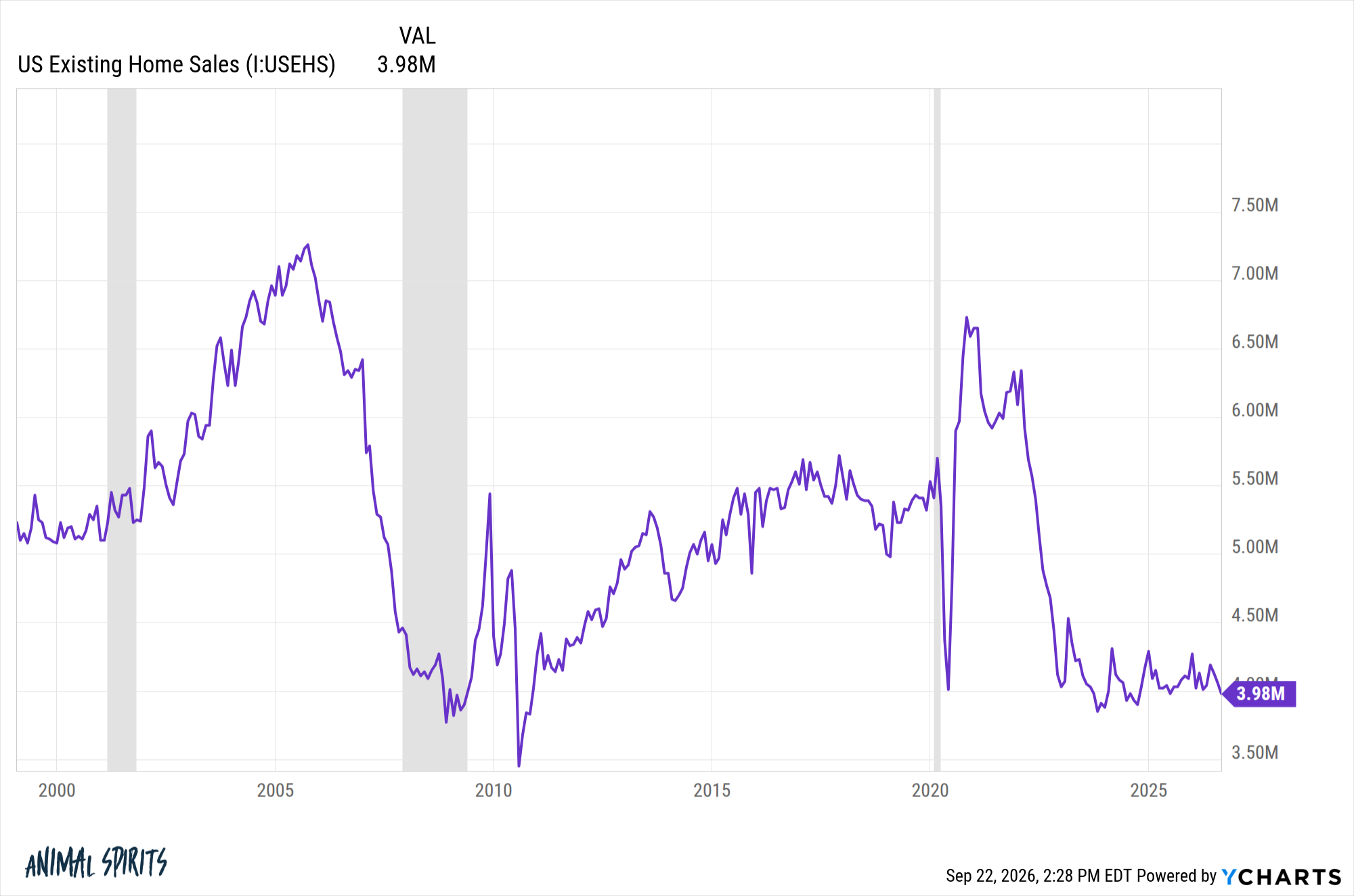
Instead of a speculative frenzy fueled by loose lending standards, subprime mortgages, and overbuilt suburbs, the 2020s real estate landscape was defined by disciplined borrowing, structural undersupply, and a demographic wave of prime-age homebuyers. While transaction volume plummeted into a multi-year "housing recession," home values held firm, resulting in one of the most substantial accumulations of household equity in modern financial history.
Chronology
To understand how the modern real estate market reached this milestone without imploding, it is necessary to examine the timeline of events that shaped the decade:
- 2020–2021 (The Pandemic Acceleration): Lockdowns, remote work shifts, and low interest rates triggered an unprecedented demand for housing. In 2021, home price growth reached double digits, sparking widespread public anxiety and intense Google search traffic regarding a potential housing bubble.
- Late 2021–2022 (The Rate Shock): Driven by historic inflation, the Federal Reserve intervened, and mortgage rates dramatically shifted from near 3% to 6% seemingly overnight. This abrupt policy change instantly froze speculative ambitions—such as plans to snowball rental property portfolios—and locked existing homeowners into place.
- 2022–2025 (The Activity Drought / Housing Recession): While prices refused to drop significantly, existing home sales plummeted to depths matching the worst months of the 2008 financial crisis. The market entered a prolonged transaction freeze, characterized by low inventory and paralyzed buyers and sellers.
- Present Day (Record Equity Buffers): Home prices have notched a cumulative 55%+ gain for the decade. Roughly 40% of all American homeowners now own their properties free and clear of a mortgage, leaving the broader housing sector insulated against forced liquidations.
Supporting Data
The fundamental differences between the mid-2000s housing bubble and the dynamics of the 2020s are starkly illustrated by economic indicators:
1. Housing Starts and Inventory
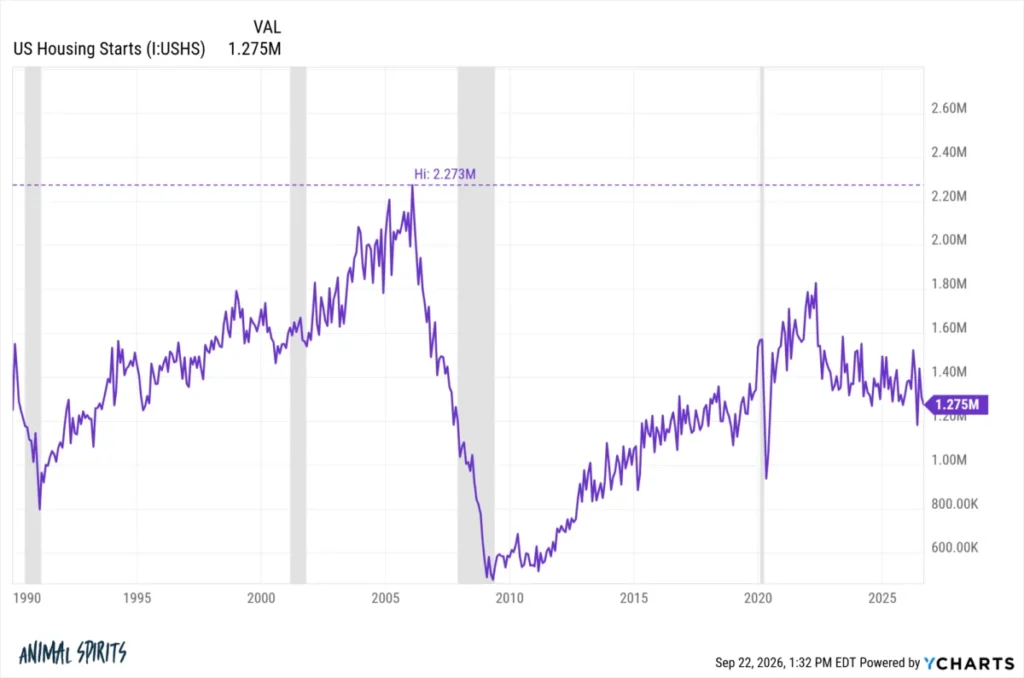
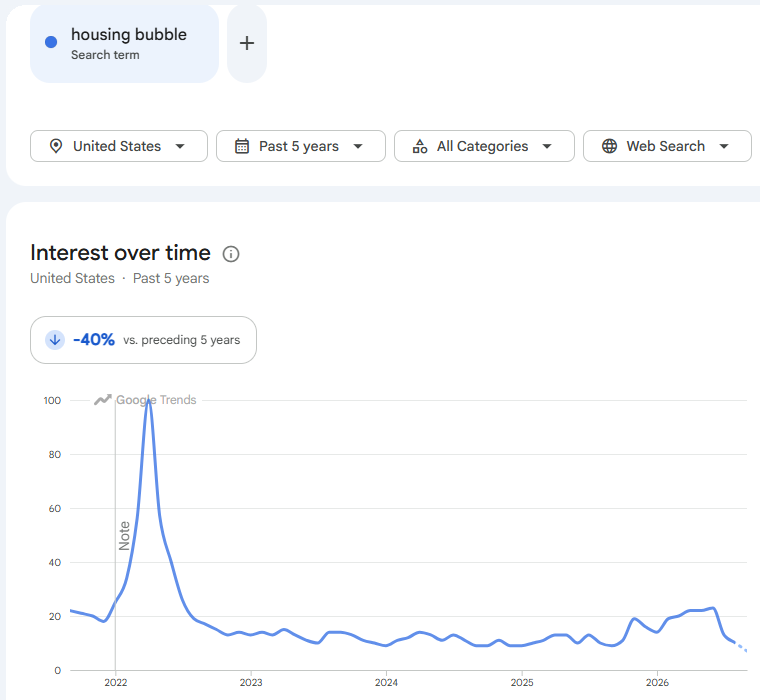
During the mid-2000s bubble, the United States was flooded with new construction. Developers overbuilt massively, creating a massive inventory glut that ultimately crashed prices when demand evaporated. In contrast, U.S. housing starts during the 2020s never approached those historical peaks, even with a national population that has grown by more than 40 million people. Without overbuilding, supply remained structurally tight.
2. Mortgage Rates and Refinancing
In the run-up to 2021, millions of homeowners secured long-term stability by refinancing their mortgages at 3% or lower. Because housing represents the largest single budgetary line item for most households, locking in these ultra-low monthly payments served as an effective inflation hedge. Consequently, homeowners heavily resisted selling and surrendering their advantageous rates.
3. Demographics and Equity
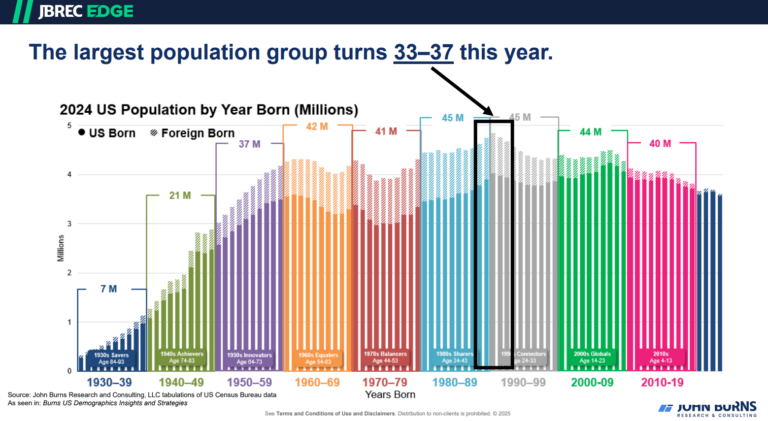
Demographics played a starring role in market resilience. The largest single age cohort in the United States currently falls within the 33-to-37 age bracket—prime homebuying years. Furthermore, approximately 40% of all American homeowners hold no mortgage debt whatsoever. This structural foundation ensured a steady pool of organic demand alongside a massive safety cushion of home equity, driving national net worth to historic highs.
Official Responses and Market Commentary
When unprecedented financial events unfold, analysts, economists, and commentators divide sharply. Throughout the early 2020s, bear-market prognosticators routinely pointed to rapid price appreciation as an undeniable symptom of an impending market crash. Every double-digit year-over-year gain was framed as systemic risk.
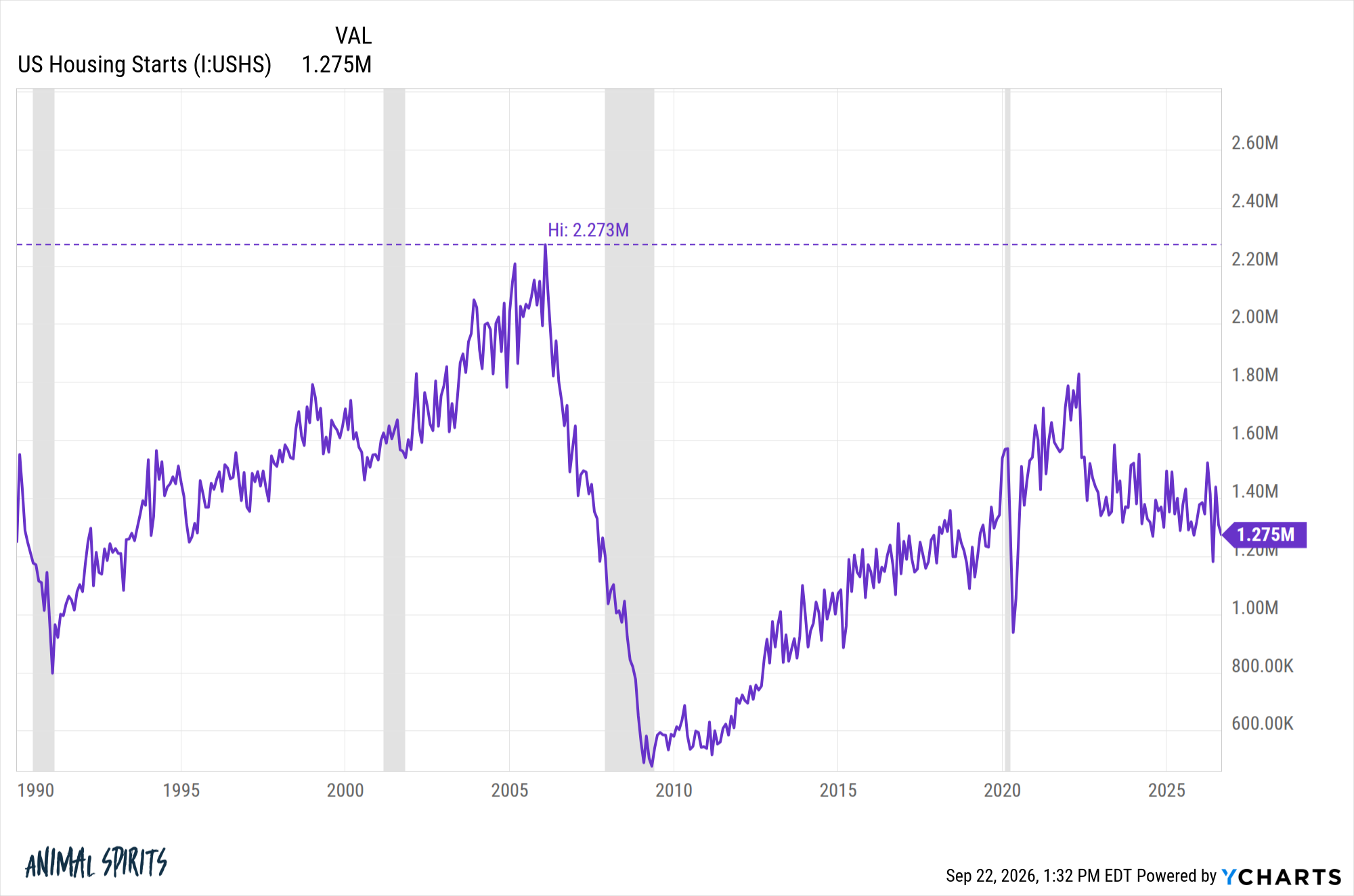
Financial analysts who pushed back against the "bubble" narrative emphasized that a rise in price is not synonymous with a bubble. A true bubble requires excessive speculation, reckless lending standards, and an oversupply of inventory—none of which characterized the mainstream market of the 2020s.
Industry experts have since acknowledged that while the market experienced an abnormal, pandemic-induced surge in valuations, the lack of structural vulnerabilities prevented a catastrophic unwind. Instead, the market experienced a transactional recession rather than a valuation crash, leaving economists to re-evaluate how modern supply-and-demand fundamentals interact with shifting interest rates.
Implications
The divergence between the 2000s and the 2020s housing cycles carries profound implications for the future of American personal finance, wealth distribution, and monetary policy.
1. The Death of the Easy-Flip Era
The 2000s cultivated a culture of aggressive speculation—house flipping fueled by teaser rates, minimal down payments, and predatory lending. The 2020s proved that stricter lending standards can effectively inoculate the financial system against systemic contagion, even when asset prices soar. The rapid normalization of interest rates in 2022 served as a severe governor on amateur speculators, ensuring that leverage remained controlled.
2. Wealth Generation and the Equity Cushion
Because prices climbed without a subsequent crash, American homeowners are currently sitting on historic levels of accumulated home equity. Even if local markets face localized corrections or economic headwinds, this vast equity cushion acts as a macroeconomic shock absorber, protecting consumers from widespread defaults and foreclosures akin to the Great Recession.
3. Affordability and the Lock-In Effect
The legacy of the 2020s housing market is a double-edged sword. While current homeowners enjoy fortified balance sheets and low fixed payments, prospective first-time buyers face a uniquely challenging environment. Elevated prices combined with higher mortgage rates have created an affordability crisis, locking many aspiring buyers out of the market and suppressing overall mobility.
Ultimately, the 2020s housing market dismantled the lazy assumption that rapid price growth always equals a bubble. By maintaining sound lending practices, avoiding a construction glut, and benefiting from a favorable demographic wave, the American housing sector survived an extraordinary economic shock—leaving behind a transformed landscape of record-high equity and persistent structural scarcity.
Disclaimer: This content is provided for informational purposes only and should not be relied upon as professional, legal, business, or tax advice. Past performance is not indicative of future results, and all financial decisions should be made in consultation with qualified independent advisers.