Treasury and IRS Issue Landmark Regulations to Automatically Enroll Millions of Children in Trump Accounts
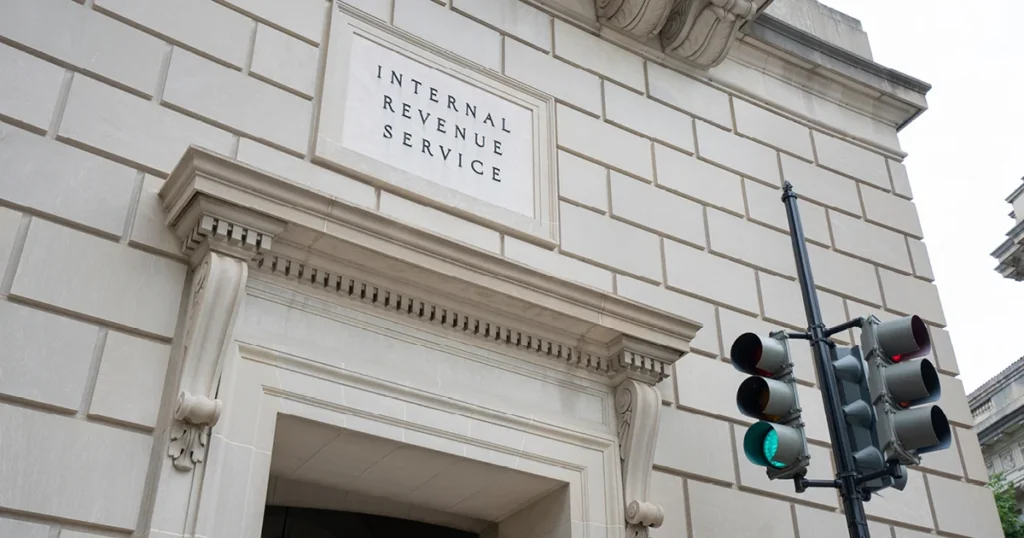
WASHINGTON — In a sweeping regulatory move expected to dramatically reshape the financial landscape for America’s youth, the U.S. Department of the Treasury and the Internal Revenue Service (IRS) issued a comprehensive package of temporary (T.D. 10056) and proposed (CC-00226466-26) regulations on Tuesday. The new rules establish a framework to automatically enroll eligible children into "Trump accounts"—a novel category of individual retirement accounts designed specifically for minors under the landmark legislation known as OBBBA (H.R. 1, P.L. 119-21).
According to Treasury estimates, this administrative breakthrough could skyrocket the number of participating children by more than 60 million in 2026 alone. In total, the rules are projected to directly impact roughly 73 million children spread across an estimated 44 million families nationwide.
The publication of these regulations marks the culmination of months of intense interagency coordination, legal engineering, and pressure from the accounting profession to dismantle administrative bottlenecks that experts warned would otherwise stifle participation in the federal pilot program.
Main Facts
At the core of the newly released guidance is the authorization for the Treasury Department to proactively establish Trump accounts on behalf of eligible children who do not already possess one, and to execute the technical elections required to secure the program’s federally funded contributions.
Under the provisions of H.R. 1, the OBBBA legislation, eligible children are entitled to a $1,000 federal contribution channeled through the Trump account pilot program. However, early assessments by the Treasury and the IRS indicated that relying solely on parents and guardians to voluntarily open accounts would result in sluggish uptake.
To solve this, the newly unveiled regulations introduce several key provisions:
- Automatic Establishment: Treasury is now empowered to open accounts for eligible minors and execute necessary program elections without requiring proactive applications from parents or legal guardians.
- Preservation of Parental Roles: The regulatory framework carefully preserves and continues to recognize a designated "responsible party" who acts on behalf of the child regarding ongoing account management.
- Master Group Trust Architecture: To bypass severe legal and administrative roadblocks—specifically concerning the disclosure of confidential taxpayer information—Treasury devised an innovative master group trust structure that enables seamless automatic enrollment while safeguarding personal data.
- Qualified Stock Contributions: The rules outline explicit guidelines governing qualified stock contributions, opening the door for widespread corporate and philanthropic gifting.
- Philanthropic Inflows: Highlighting the immediate market response, Treasury pointed to a massive $6.25 billion pledge from the Michael and Susan Dell Foundation aimed at qualifying children, with numerous other private donors signaling intentions to follow suit.
Chronology of Events
The journey toward automatic enrollment for Trump accounts has moved at a remarkably rapid pace, driven by legislative mandates and urgent appeals from professional stakeholders.
- Enactment of OBBBA (H.R. 1, P.L. 119-21): Congress established the legal foundation for Trump accounts, introducing the new class of minor retirement accounts and outlining the $1,000 federal seed contribution pilot program.
- Early Implementation Guidance: Initial proposed guidance issued by the Treasury and the IRS struck a cautious tone, assuming that automatic enrollment was legally and administratively unfeasible due to strict federal privacy statutes regarding taxpayer information and the sheer logistical hurdles of reaching tens of millions of households.
- February 2026 (The AICPA Intervention): Recognizing that administrative friction would leave millions of children empty-handed, the American Institute of CPAs (AICPA) formally urged Treasury and the IRS to pivot toward automatic enrollment. The Institute warned that without intervention, unawareness and procedural red tape would disproportionately penalize vulnerable families.
- The Master Group Trust Breakthrough: Behind the scenes, Treasury and IRS technical experts engineered a novel master group trust structure. This legal framework successfully harmonized federal privacy protections with the mandate for mass enrollment, proving that automatic onboarding was indeed achievable.
- Tuesday (Issuance of T.D. 10056 and CC-00226466-26): Treasury and the IRS formally published the temporary and proposed regulations, transforming automatic enrollment from a theoretical aspiration into an operational reality slated for full rollout in 2026.
Supporting Data and Comparative Analysis
The necessity of the new automatic enrollment regulations becomes glaringly apparent when examining historical data from similar public finance and savings initiatives.
The Opt-In Trap vs. Automatic Enrollment
Federal planners closely analyzed participation rates from localized savings experiments, most notably a children’s savings grant program implemented in Maine. Empirical data from the Maine initiative revealed that when participation relied entirely on parents taking affirmative action to open accounts, enrollment plateaued at roughly 50%.
Translating that 50% opt-in rate to a national scale would have meant leaving tens of millions of eligible children without access to the federal $1,000 contribution and subsequent investment growth. By contrast, Treasury models indicate that utilizing automatic enrollment will drive participation rates among eligible children close to 100%, effectively eliminating the participation gap caused by administrative inertia or lack of financial literacy.
Scale of the Program
- Target Demographic: Approximately 73 million children.
- Impacted Households: Roughly 44 million families across the United States.
- Projected 2026 Growth: An increase of more than 60 million active Trump accounts compared to what would have been achieved under a purely voluntary framework.
- Philanthropic Capital Injection: Anchored by the Michael and Susan Dell Foundation’s $6.25 billion pledge, the rules governing qualified stock contributions are anticipated to unlock billions of dollars in annual private-sector and philanthropic funding.
Official Responses and Stakeholder Perspectives
The release of the temporary and proposed regulations drew immediate praise from financial professionals and institutional stakeholders who had campaigned for structural simplification.
The Accounting Profession’s Advocacy
In February, the AICPA submitted formal recommendations to the IRS and Treasury, arguing that an opt-in model would inevitably create equity gaps. Following Tuesday’s announcement, accounting leaders commended the administration for listening to professional guidance.
The AICPA had previously emphasized that automatic enrollment is essential to promote equitable access across diverse socioeconomic backgrounds, ensuring that low- and middle-income families—who might lack access to dedicated financial advisors or be unaware of complex tax provisions—do not miss out on generational wealth-building opportunities.
Treasury and IRS Preamble Insights
In the official preamble accompanying the temporary regulations (T.D. 10056), regulatory authors underscored the deliberate policy choices designed to maximize capital inflows and broad-based participation:
"The major areas of discretion in the temporary regulations require the Secretary to create Trump accounts for eligible children, allow contributions to approved classes to receive the same treatment as contributions to qualified classes, and allow general funding contributions to be made with stock of publicly traded domestic corporations," the preamble stated.
"All of these decisions increase the appeal of funding contributions to classes of Trump account beneficiaries and are expected to result in billions of additional dollars per year in general funding contributions, which will be allocated across the Trump accounts of tens of millions of children."
By permitting general funding contributions to be executed via stock in publicly traded domestic corporations, the IRS and Treasury have created a streamlined conduit for corporate philanthropy, tech sector contributions, and institutional giving.
Implications for Families, Markets, and Operations
The structural shift to automatic enrollment carries profound implications across multiple sectors, ranging from household financial security to corporate governance and IRS administration.
Operational and Administrative Realities
For the IRS and financial institutions tasked with custodial duties, the regulations resolve a complex web of operational questions. The guidance lays out explicit rules for:
- Account administration and custodian responsibilities.
- Step-by-step automatic enrollment procedures that respect data privacy laws.
- Approved qualified investment options suitable for minor-held retirement vehicles.
- The mechanics of accepting and distributing qualified stock contributions.
- The exact scope of the Treasury Department’s temporary custodial role during account creation.
Financial and Generational Wealth Impacts
For America’s families, the initiative transforms the concept of minor savings accounts from an exclusive financial product into a universal public benefit. With a guaranteed federal seed contribution of $1,000—coupled with the potential for billions in pooled philanthropic donations like the Dell Foundation’s historic contribution—millions of children will enter adulthood with a foundational nest egg. Compounded over a timeline spanning nearly two decades until retirement age, these early automatic investments possess the potential to significantly alter long-term economic mobility.
Furthermore, the integration of stock contributions offers publicly traded corporations a tax-advantaged method to execute corporate social responsibility (CSR) initiatives. Companies can now allocate blocks of stock directly into broad beneficiary classes, aligning corporate equity performance with the financial well-being of the next generation.
Conclusion
As the Treasury and IRS move forward with implementing T.D. 10056 and reviewing public comments on the proposed rules, the stage is set for the largest automated expansion of minor asset-building accounts in U.S. history. By successfully navigating the legal and administrative hurdles that once seemed insurmountable, regulators have paved the way for over 60 million children to secure their financial footing in 2026 and beyond.
To comment on this developing story or to suggest further coverage, contact Martha Waggoner at [email protected].