The Perils of Financial Forecasting: Why McKinsey, Billionaires, and Market Gurus Keep Getting the Future Wrong
Main Facts: The Illusion of Long-Term Certainty
In the complex and often anxiety-inducing world of personal finance and institutional investing, predictions are a commodity in perpetual high demand. Investors, eager to secure their financial futures, constantly look to economic oracles—consulting giants, legendary hedge fund managers, and macroeconomic forecasters—for guidance on where the market is heading. Yet, history consistently demonstrates that the most dire warnings and meticulously modeled long-term forecasts are frequently proven spectacularly wrong.
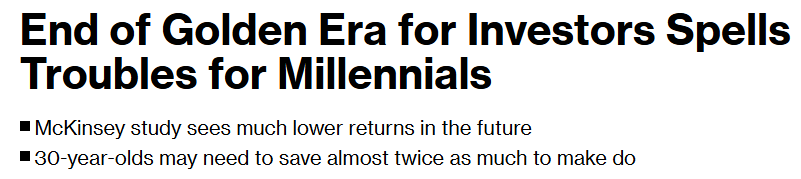
Consider a stark example from the spring of 2016. McKinsey & Co., one of the world’s most prestigious management consulting firms, released a chilling research report that sent shockwaves through the financial media. The thesis of the report was straightforward, deeply unsettling, and heavily publicized by outlets like Bloomberg: Turning 30 just got a lot scarier.
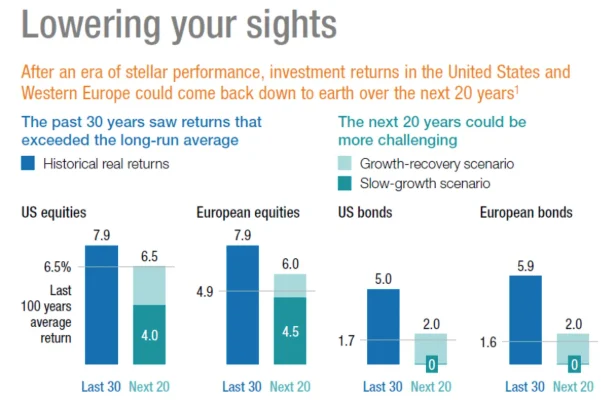
According to McKinsey’s models, the financial world was facing a catastrophic structural collapse in investment returns. The report argued that younger generations would need to work an agonizing seven years longer—or save almost twice as much of their income—just to accumulate the same retirement nest egg as their parents’ generation. The rationale? The preceding thirty years (spanning roughly 1985 to 2015) had been an anomalous "golden era" defined by falling inflation, plummeting interest rates, swelling corporate profit margins, and expanding price-earnings ratios. Because these tailwinds were unlikely to repeat themselves, McKinsey warned investors of all ages to resign themselves to a bleak, low-return future.
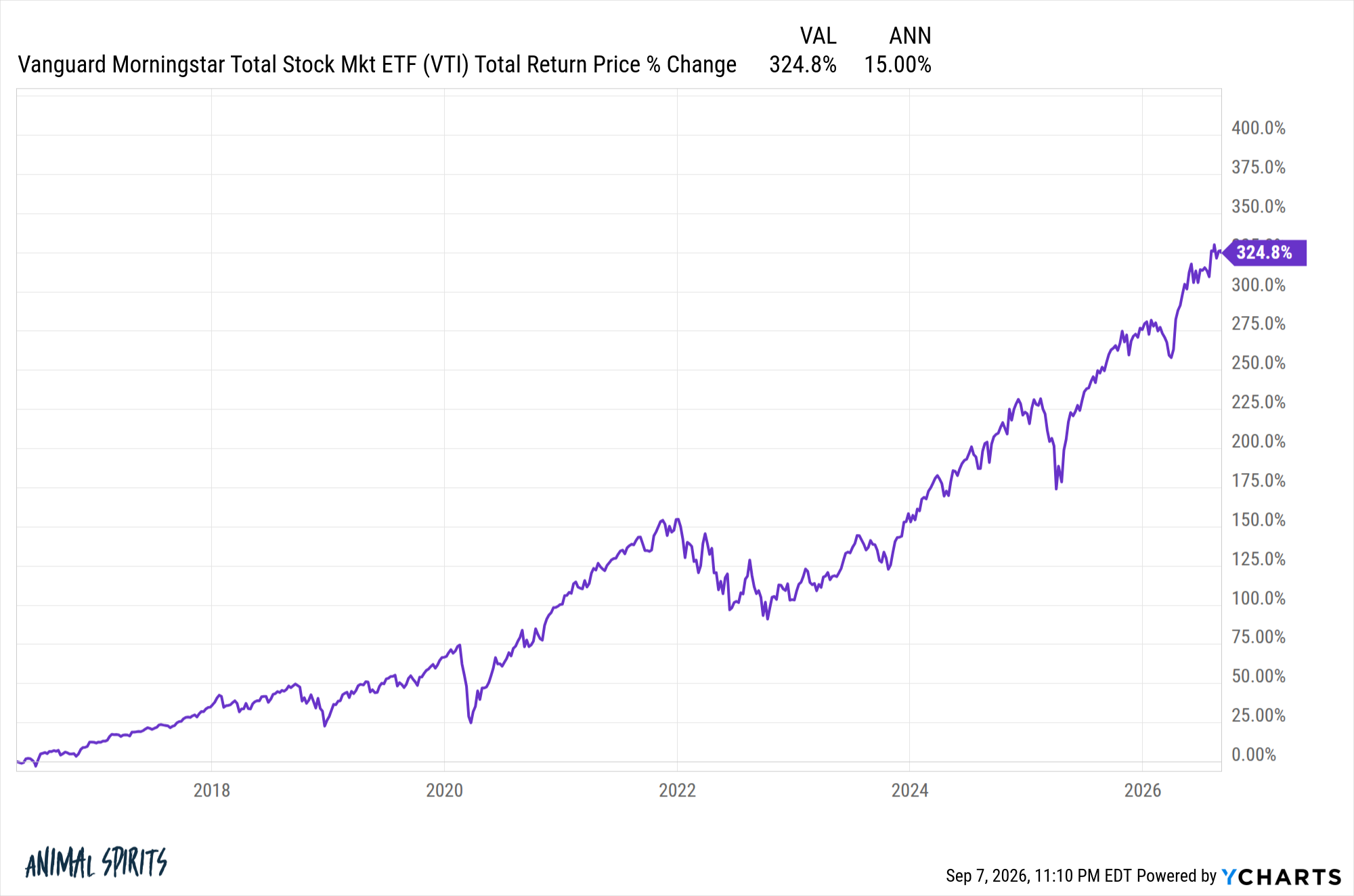
Fast-forward to the present day. We are now past the halfway point of McKinsey’s 20-year forecast horizon. Far from entering a stagnant wasteland of diminished gains, the U.S. stock market has surged. Broad market indexes like the Vanguard Total Stock Market Index Fund (VTI) have climbed well over 300% in total, compounding at an annual rate of roughly 15%. Even when accounting for a post-pandemic spike in inflation that averaged roughly 3.3% annually over a ten-year stretch, investors have enjoyed real (inflation-adjusted) annual returns of approximately 11.7%.
This real return actually outpaces the legendary "Golden Era" that McKinsey claimed could never be replicated. Even European equities, frequently dismissed as laggards in the global economic landscape, managed to post gains approaching 10% per year since McKinsey published its warning. (While McKinsey’s warnings on fixed income proved somewhat more accurate—bonds largely lagged inflation with meager returns averaging around 1.5% annually—the overarching narrative of broad generational doom for equities was entirely off the mark.)
The McKinsey report is not an isolated anomaly. It is part of a long-standing tradition of institutional pessimism, where elite forecasters project current anxieties onto an unknowable future, only to be upended by human ingenuity, adaptability, and economic resilience.
Chronology: A History of Terrifying—and Wrong—Market Predictions
To truly understand the limits of financial forecasting, one must look at a timeline of major market warnings issued by some of the brightest minds in finance, and examine how the market behaved immediately afterward.
May 2010: Seth Klarman’s Deepest Fear
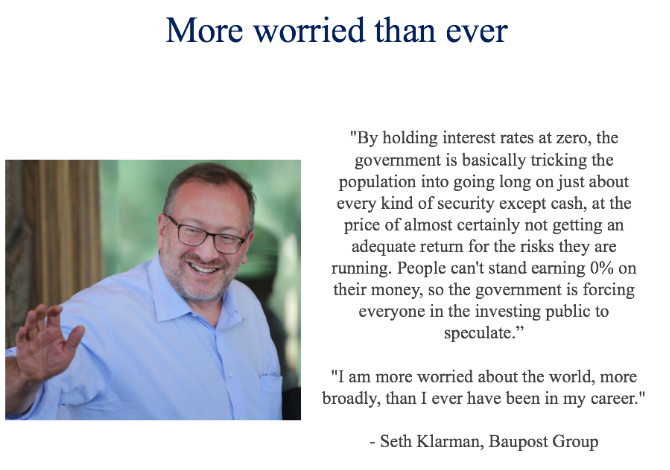
In the wake of the 2008 global financial crisis, market sentiment was fragile. In May 2010, billionaire value investor Seth Klarman told The Wall Street Journal that he was "more worried than ever before in his career." He pointed to sweeping systemic risks, government intervention, and unsustainable market structures.
- The Reality: Investors who panicked and exited the market based on Klarman’s fears missed out on an extraordinary bull run. Since those remarks, U.S. stocks have skyrocketed by more than 800%, compounding at nearly 15% per year.
April 2016: The McKinsey & Co. "Golden Era" Warning
McKinsey published its widely cited report warning that younger investors faced a severe collapse in asset returns, necessitating drastic lifestyle and savings adjustments to achieve financial security.
- The Reality: Over the subsequent decade, the U.S. stock market delivered some of its strongest historical real returns, blowing past the consultancy’s conservative growth models.
May 2020: Stanley Druckenmiller’s Historic Pessimism
As the global economy reeled from the initial shock of the COVID-19 pandemic, legendary investor Stanley Druckenmiller took to the virtual stage at The Economic Club of New York. He delivered a stark assessment, declaring: "The risk-reward for equity is maybe as bad as I’ve seen it in my career."
- The Reality: Rather than tumbling into a permanent depression, the stock market embarked on a massive, liquidity-fueled rally. From the exact moment of Druckenmiller’s warning, the stock market surged nearly 200%, compounding at an astonishing annual rate of nearly 18%.
2022–2023: The Consensus Recession Call
When inflation spiked to multi-decade highs in 2022, prompting the Federal Reserve to aggressively hike interest rates, Wall Street consensus declared that a severe economic recession was an absolute foregone conclusion. Yield curves inverted, leading economic indicators flashed red, and pundits warned of impending doom.
- The Reality: The anticipated deep recession never materialized. Driven by robust consumer spending, technological advancements, and corporate adaptation, the U.S. economy continued to expand, confounding the predictors once again.
Supporting Data: The Anatomy of Market Outperformance
The persistent failure of macroeconomic forecasting highlights a fundamental mismatch between mathematical modeling and dynamic, complex financial systems. Financial models are inherently linear; they take historical inputs, extrapolate trends, and project them forward. Human systems, however, are non-linear. They adapt, innovate, and shock the consensus.
The Power of Equities Over Decades
The chart data tracking the post-2016 U.S. stock market underscores the danger of sitting on the sidelines due to macro-level dread.
| Period / Forecast | Predictor | Stated Concern | Actual Market Outcome |
|---|---|---|---|
| May 2010 | Seth Klarman | Unprecedented systemic risk | U.S. stocks up >800% (~15% annualized) |
| April 2016 | McKinsey & Co. | End of the "Golden Era," low returns | Real returns outpaced the prior 30-year average (~11.7% real) |
| May 2020 | Stan Druckenmiller | Worst risk-reward ratio in history | Equities up ~200% (~18% annualized) |
| 2022–2023 | Wall Street Consensus | Inevitable post-inflation recession | Economic growth continued; recession avoided |
While fixed-income investors did indeed suffer through a difficult decade of low yields—culminating in the Bloomberg Aggregate Bond Index returning a paltry 1.5% annually and losing significant ground to inflation—equity investors who stayed the course were handsomely rewarded.
The data proves a vital lesson: asset classes evolve. When traditional growth engines stutter, new sectors (such as the technology and artificial intelligence booms of the late 2010s and 2020s) step in to drive corporate earnings higher.
Official Responses and Institutional Perspectives
When confronted with the historical inaccuracy of their long-term forecasts, institutional forecasters typically retreat to the language of risk management and probabilistic modeling.
Representatives from major economic consultancies and financial institutions often defend their past reports by arguing that forecasts are not intended to be prophetic countdowns, but rather analytical tools designed to highlight structural vulnerabilities. From an institutional perspective, warning clients about potential headwinds—such as high public debt, aging demographics, or geopolitical fragmentation—is a fiduciary duty intended to encourage prudent savings behavior rather than market timing.
However, critics within the independent financial advisory space argue that these institutional warnings frequently cross the line from healthy caution into paralyzing fear-mongering. When a firm like McKinsey publishes a study stating that 30-year-olds must work seven extra years, the real-world consequence is often behavioral damage: everyday investors paralyzed by hopelessness, opting out of the equity markets entirely, or hoarding cash in low-yielding accounts that are guaranteed to lose purchasing power to inflation over the long haul.
Furthermore, legendary investors like Howard Marks of Oaktree Capital have frequently noted in their memos that macro forecasts are essentially useless for investment decision-making. As Marks often points out, you cannot build a superior, repeatable investment strategy on the back of someone else’s macroeconomic guesses, because macroeconomic variables are too numerous, too interconnected, and fundamentally unpredictable.
Implications: Embracing the Power of "I Don’t Know"
The overarching takeaway from decades of flawed prophecies is both liberating and humbling: nobody knows what is coming next.
This truth applies equally to retail investors scrolling through financial news, Wall Street analysts managing billions in capital, and billionaire hedge fund managers appearing on financial television networks.
To navigate an inherently uncertain financial landscape, investors must adopt a posture of epistemic humility. Admitting ignorance is not a sign of weakness or a lack of preparation; rather, it is the cornerstone of sound risk management.
The Five Pillars of Financial Uncertainty
- The Timing of Market Cycles: I don’t know when the current bull market will peak, correct, or transition into a bear market. Attempting to time these shifts usually destroys more wealth than weathering the downturns.
- Technological Disruptions: I don’t know if emerging technologies like artificial intelligence will usher in a utopian era of hyper-productivity or a dystopian landscape of widespread labor displacement.
- Macroeconomic Trajectories: I don’t know whether the broader economy will experience a multi-year expansion or stumble into an unexpected recession next quarter.
- Corporate and Sector Shifts: I don’t know if massive capital expenditure cycles (such as the recent corporate binges on AI infrastructure) will yield historic returns for tech hyperscalers or result in a speculative crash.
- Cultural and Micro-level Trends: I don’t know whether individual projects—ranging from high-stakes corporate product launches to Hollywood blockbusters—will flop catastrophically or achieve historic, culture-shifting success.
Conclusion: Risk vs. Opportunity
Life and investing would undoubtedly be much simpler if an infallible council of soothsayers existed to map out the decades ahead. But that certainty is an illusion.
The inherent uncertainty of markets is precisely what creates both risk and opportunity. The greatest risk facing modern investors is not the volatility of the stock market itself, but rather the false belief that a guru, consultant, or algorithmic model can consistently predict the future.
By accepting that the future is fundamentally unknowable, investors can stop chasing elusive market timing strategies and instead focus on what they can actually control: maintaining a diversified portfolio, keeping costs low, matching their investments to their personal time horizons, and remembering that sometimes, the three most powerful words in finance are simply: I don’t know.