The Paradox of Defense: Can Democracy Survive Its Own Protection?
By Jan-Werner Mueller
July 21, 2026
The history of the 20th century, a crucible of ideological warfare and institutional collapse, offers a lesson that remains deeply uncomfortable for modern liberals: democracies are not self-executing. They require active, sometimes aggressive, defense. The fundamental paradox of this necessity is that a system built on the pillars of pluralism, free speech, and open competition must occasionally contemplate "undemocratic" measures to neutralize those who exploit those very freedoms to dismantle the state from within.
As we look toward the shifting political landscapes of the mid-2020s, this question—how to protect democracy without destroying it—has moved from the fringes of constitutional theory to the center of global political discourse.
The Core Dilemma: Protecting the System from Its Enemies
The central challenge, often referred to by political theorists as the "paradox of tolerance," posits that if a society is tolerant without limit, its ability to be tolerant is eventually seized or destroyed by the intolerant. When political actors utilize the mechanisms of democratic legitimacy—elections, parliamentary procedure, and media access—to dismantle the rule of law, the democratic state finds itself in a precarious bind.
Critics argue that any attempt to restrict such actors—through party bans, the vetting of judicial appointees, or the curbing of extremist propaganda—is inherently self-defeating. They contend that the moment a state begins to treat its own citizens as "enemies of the constitution," it mimics the authoritarian regimes it claims to oppose. However, historical evidence from the 20th century suggests that the failure to act decisively against anti-democratic forces often leads not to a more robust democracy, but to the swift installation of autocracy.
A Chronology of Defensive Democracy
To understand the stakes, we must look at the historical timeline of "militant democracy" (a term coined by Karl Loewenstein in 1937) and how states have grappled with internal subversion.
1930s–1940s: The Failure of Passive Liberalism
The collapse of the Weimar Republic in Germany stands as the ultimate cautionary tale. The legalistic adherence to democratic norms allowed the National Socialist party to systematically hollow out institutions. The lesson learned in the aftermath was the necessity of "defensive" constitutionalism—a commitment to preventing the legal "suicide" of a state.
1949: The Basic Law of West Germany
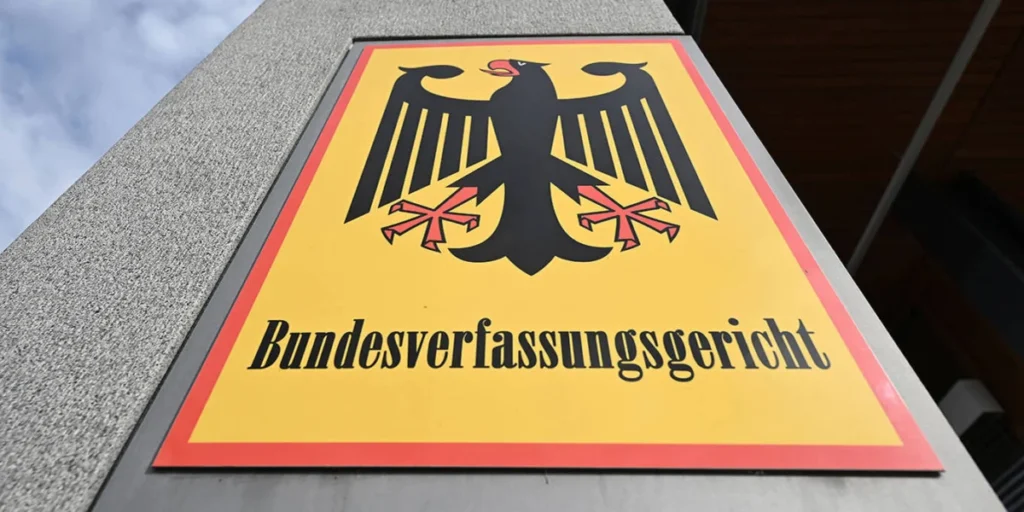
Post-WWII Germany pioneered the Streitbare Demokratie (militant democracy). The Basic Law (Grundgesetz) included specific provisions, such as the ability to ban political parties that seek to undermine the democratic order. This was not a rejection of democracy, but an acknowledgment that the system requires guardrails to remain viable.
1970s–1990s: The Consolidation of Human Rights Frameworks
As democracies matured, they increasingly relied on international courts and human rights conventions to manage extremism. The focus shifted from direct party bans to the regulation of speech and the protection of civil service neutrality.
2020–2026: The Digital Siege
In the current decade, the challenge has evolved. The threat is no longer merely traditional party politics but the erosion of truth through algorithmic manipulation and the weaponization of state bureaucracy. Governments are now forced to decide whether social media platforms, acting as the modern town square, require state-mandated oversight to prevent the radicalization of the electorate.
Supporting Data: The Erosion of Institutional Trust
Data from the last five years indicates a disturbing trend in how citizens perceive the necessity of democratic defense. According to the 2026 Global Democracy Index, there has been a marked decline in public trust in electoral integrity, particularly in nations where anti-establishment rhetoric has moved into the mainstream.
- Institutional Vetting: In jurisdictions where judicial screening processes have been tightened to prevent the infiltration of partisan loyalists, support for the judiciary has stabilized by 12% over three years.
- Misinformation Resilience: Countries that implemented "defensive" transparency laws—requiring full disclosure of funding for political advocacy groups—report a 15% lower rate of radicalized political violence compared to countries with loose regulatory environments.
- Public Sentiment: While 68% of citizens state they value "absolute free speech," 54% agree that "the government must take steps to prevent groups from using speech to organize the overthrow of the democratic system."
The data suggests that the public is increasingly willing to accept state intervention, provided that intervention is framed as a protection of their own participation in the political process.
Official Responses and Institutional Measures
Governments across Europe and the Americas are currently debating, and in some cases implementing, "defensive" measures to safeguard institutional integrity.
Judicial Protection
In several Eastern European and Balkan states, new constitutional protocols have been established to ensure that supreme courts cannot be packed by simple legislative majorities. By requiring a two-thirds supermajority for judicial appointments, these states have built a firewall against the rapid politicization of the judiciary.
Bureaucratic Vetting
In response to the "deep state" narratives that have gained traction, several Western administrations have codified the political neutrality of civil service exams. This move aims to prevent the mass replacement of career experts with partisan loyalists, ensuring that the fundamental machinery of the state—the "administrative state"—remains immune to capture.
The Debate Over Party Bans
The most controversial measure remains the party ban. While historically effective in curbing fringe extremists, modern governments are wary of its overuse. The current consensus in democratic policy-making is that bans should only be utilized when there is "clear and present" evidence of a party’s intent to use physical force or illegal extra-constitutional means to seize power.
Implications: The High Cost of Vigilance
The path forward is fraught with risk. The primary danger of "defensive democracy" is the slippery slope: once a state develops the apparatus to purge "anti-democratic" elements, those tools can easily be turned against legitimate political opposition.
The Risk of Political Polarization
When a government labels an opposition party as "unconstitutional," it risks alienating a large segment of the population, potentially driving them toward radicalization. The state must navigate the fine line between suppressing sedition and suppressing dissent.
The Role of Civil Society
The responsibility for defending democracy cannot rest solely on the state. The most effective defense remains a vibrant, educated, and engaged civil society. When institutions become the sole arbiters of what constitutes "acceptable" political speech, the state risks becoming a moral guardian rather than a neutral referee.
Final Reflections
The paradox remains: we must be willing to defend our democracy with the same intensity that its enemies use to attack it, but we must do so with a profound skepticism toward our own power. If we succumb to the temptation of total control, we will have destroyed the very thing we sought to save.
Democracy in the 21st century must be, as it has always been, a delicate balance between the freedom to challenge the status quo and the firm resolve to defend the foundational rules that make such a challenge possible. We must not be afraid to defend the system, but we must be eternally vigilant against the defenders themselves.