The Dark Forest of AI: Why the World’s Most Promising Labs Are Choosing Silence Over Revenue
By Russell Brandom
September 18, 2026
In the high-stakes ecosystem of artificial intelligence, there is a currency more valuable than compute, more sought-after than talent, and more elusive than profitability: mystery.
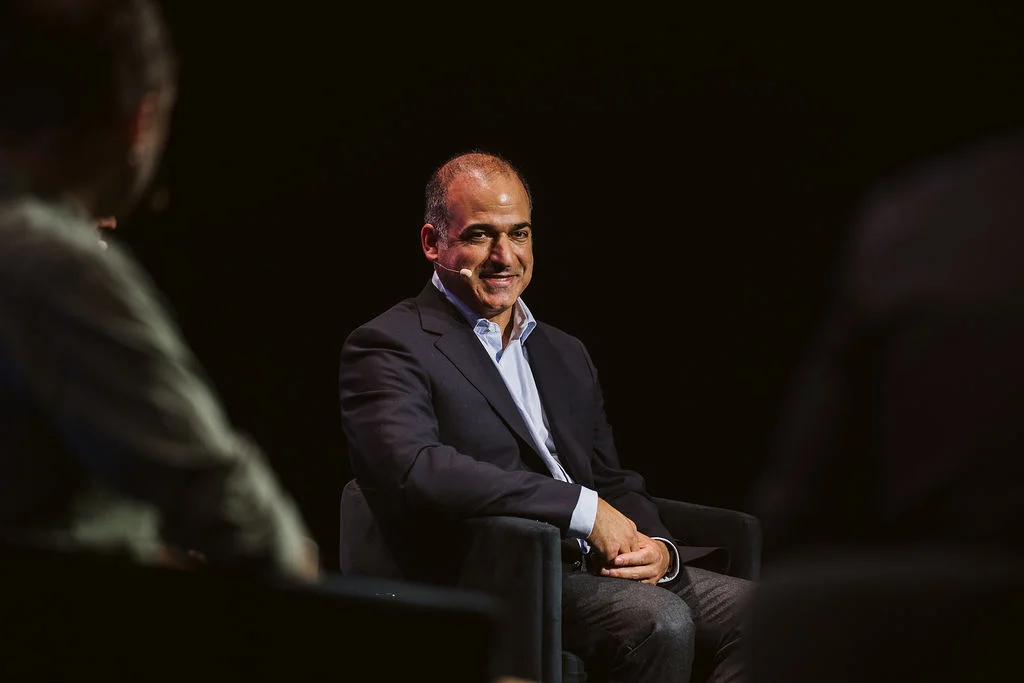
As I moderated a panel on the future of world models at this year’s All In conference, it became clear that we are witnessing a peculiar phenomenon in the upper echelons of Silicon Valley research. The industry’s heavyweights—most notably Yann LeCun’s AMI Labs and Fei-Fei Li’s World Labs—have accumulated staggering amounts of venture capital and industry buzz. Yet, when evaluated against traditional metrics of commercial viability, they rank remarkably low.
They are not selling products; they are constructing universes. But as these labs refine their "spatial intelligence," a strategic silence has descended over the sector. In a landscape where transparency is usually the bedrock of investor relations, these companies are playing a game of information asymmetry, opting for the tactical ambiguity of a "dark forest."
The Genesis of Spatial Intelligence
To understand why these labs are so cagey, one must first understand what a "world model" actually is. Unlike Large Language Models (LLMs), which map the statistical relationships between words, world models aim to map the physical and spatial logic of reality.
At their core, world models are about automating spatial intelligence. The implications are vast. A sophisticated world model could serve as the "brain" for a humanoid robot navigating a chaotic warehouse, the engine behind a next-generation photorealistic video game, or the backbone of a self-driving system that doesn’t just see the road, but understands the intent of the pedestrian crossing it.
The potential for commercialization is limitless. However, the path from "simulated world" to "revenue-generating product" remains shrouded in fog.
Chronology of a Quiet Revolution
The past eighteen months have seen an explosion of interest in this sub-sector of AI.
- Early 2025: The "World Model" concept gains significant traction in academic circles as a successor to transformer-based text generation.
- Mid-2025: High-profile exits from established tech giants lead to the formation of independent labs, including AMI Labs and World Labs.
- Late 2025: Significant fundraising rounds are announced. Valuations soar despite a near-total absence of public-facing software or hardware integration.
- Q1 2026: Initial demos of World Labs’ "Marble" platform emerge, showcasing impressive, explorable 3D environments.
- Present Day: The "Silence Phase." Labs move into deep research and development, effectively closing their doors to outside scrutiny regarding product roadmaps.
The Fog of Development: Official Responses
The frustration of not knowing where this technology is heading is shared by observers, investors, and even the companies’ own supply chains. During our panel, I attempted to press Michael Rabbat, a co-founder of AMI Labs and the company’s VP of World Models, on their specific commercial focus.
His response was emblematic of the industry’s current posture: "We’ll talk about it when we’re ready to talk about it."
When followed up via email, Rabbat remained firm: "We’re still in a research and building phase, so we’re not talking publicly about any product plans or timeline."
This reticence is not isolated to AMI. World Labs, despite having the most mature platform in the space, uses its "Marble" product largely to showcase capabilities—building CGI effects or game environments—rather than to offer a scalable enterprise tool. Even companies supplying the essential data that fuels these models are left in the dark.
Alex de Vigan, CEO of Physicl—a firm providing the specialized data required for world-model training—admits he is flying blind. "I know our data is being used, but I don’t know for what," de Vigan told me on the sidelines of the conference. "I wish they would tell us more. We could build more useful data if we knew what they were working on."
The Versatility Trap
Why keep the world guessing? The answer lies in the sheer, overwhelming versatility of the technology.
A world model is not a single-use tool. It is a foundational capability. AMI Labs has already publicly explored applications in manufacturing, biomedicine, robotics, and medical software through its Nabia partnership.
If a company like AMI were to signal a definitive move into, for example, humanoid robotics, it would immediately draw a target on its back. The market for robotics is not a vacuum; it is occupied by established incumbents and well-funded peers. By keeping their focus broad and their ultimate intent hidden, these labs avoid being pigeonholed and, more importantly, avoid triggering a direct defensive response from competitors.
The Dark Forest Hypothesis
In Cixin Liu’s The Three-Body Problem trilogy, the "Dark Forest" theory posits that in a universe of limited resources, the safest position is to remain completely undetectable. Any civilization that reveals its location risks being destroyed by a more powerful entity.
While the stakes in AI are economic rather than existential, the strategic logic holds. In the current "easy money" environment, the barrier to entry is low. If a lab reveals a breakthrough product, it instantly alerts the giants—OpenAI, Anthropic, Google, and Meta—to the viability of that specific niche.
By remaining silent, these labs are buying time. They are building in the shadows, hoping to reach a point of "technological maturity" where they can launch a product so robust that it effectively captures the market before competitors have the chance to pivot.
Implications: The High Cost of Secrecy
The silence is not without its costs. For suppliers like Physicl, the lack of transparency leads to inefficiencies. If the model architects would collaborate more closely with data providers, the resulting models would likely be more accurate, faster to train, and more robust.
Furthermore, there is a risk of a "balkanized" innovation landscape. When companies refuse to share their direction, they essentially build in silos, duplicating efforts and wasting the very capital that is currently so freely provided.
Yet, for the founders of these labs, the math is simple. The pressure to generate revenue is currently non-existent because the venture capital spigot is still running wide open. As long as the funding continues, there is no incentive to subject themselves to the harsh scrutiny of the public market.
The Road Ahead
We are currently in a transition period for world models. The initial "gee-whiz" phase—where companies could simply show off a cool video of a generated room and command a billion-dollar valuation—is coming to an end. Eventually, the bill will come due. Investors will demand to see a path to recurring revenue.
When that happens, the dark forest will clear. Some labs will emerge with products that change the face of robotics, healthcare, and digital entertainment. Others, unable to pivot from "research mode" to "product mode," will likely fade into obscurity, their intellectual property absorbed by larger entities.
For now, the secrecy remains a shield. Whether that shield is protecting a genuine technological revolution or merely masking a lack of commercial focus remains the great, unanswered question of the 2026 AI cycle.
As we look toward the next year, the test for these labs will be simple: Can they move from demonstrating what they can do to proving what they will do? Until then, we are all just observers in the woods, waiting for the first sign of what is really being built in the dark.
Russell Brandom has been covering the tech industry since 2012, with a focus on platform policy and emerging technologies. He previously worked at The Verge and Rest of World, and has written for Wired, The Awl and MIT’s Technology Review. He can be reached at [email protected] or on Signal at 412-401-5489.