The Great Unraveling: Navigating the End of the American Century
By Joschka Fischer
July 20, 2026
The world as we have known it since the fall of the Berlin Wall—and indeed, since the conclusion of the Second World War—is undergoing a profound and irreversible transformation. The era defined by American hegemony, characterized by a US monopoly on military projection, economic primacy, and the export of liberal democratic values, has effectively concluded. In its wake, we find ourselves in a volatile landscape of multipolar rivalry, where the "rules-based international order" has been superseded by a raw, unvarnished competition for influence.
The End of the Pax Americana
For decades, the global order rested upon the assumption that the United States would remain the indispensable arbiter of international affairs. This stability provided the bedrock for European prosperity and the expansion of global trade networks. However, that foundation has eroded.
We are no longer operating within a system governed by codified international laws and institutional consensus. Instead, the global stage has shifted toward a reality defined exclusively by the accumulation of economic, technological, and military leverage. This is not merely a diplomatic realignment; it is a fundamental restructuring of how power is exercised on a planetary scale. As this transition unfolds, Europe—long the primary beneficiary of American security guarantees—finds itself exposed to a level of turbulence and uncertainty that has not been witnessed in the post-Cold War era.
Chronology of the Shift: From Unipolarity to Multipolarity
To understand the current volatility, one must trace the incremental decline of the post-1945 architecture.
- 1991–2001: The Zenith of Unipolarity: Following the collapse of the Soviet Union, the United States stood as the world’s sole superpower. This period was marked by the rapid expansion of NATO and the European Union, underpinned by a belief in the "End of History."
- 2001–2008: The Strategic Overstretch: The Global War on Terror diverted immense American resources, both financial and political, toward the Middle East. Simultaneously, the 2008 financial crisis exposed the vulnerabilities of the Western economic model and signaled the beginning of a loss of trust in US-led financial institutions.
- 2012–2020: The Rise of Strategic Rivalry: The pivot toward Asia began under the Obama administration, acknowledging that the rise of China was no longer a speculative future but a present reality. The subsequent populist movements in the West further fractured the domestic consensus required to maintain a globalist foreign policy.
- 2022–2026: The Fracture: The invasion of Ukraine and the subsequent economic decoupling from Russia served as a catalyst, forcing nations to choose sides. The emergence of the Global South as an independent bloc, alongside China’s rapid technological militarization, has solidified the end of the unipolar era.
Supporting Data: The Rising Dragon
The shift in the global balance of power is perhaps most visible in the trajectory of the People’s Republic of China. While many Western observers remained anchored in the belief that China would eventually liberalize its economy and politics, Beijing pursued a different path: the integration of state capitalism with aggressive technological dominance.
Technological and Military Indicators
Recent intelligence assessments indicate that China’s investment in military modernization has outpaced US projections by nearly 30% over the last five years.
- AI and Quantum Computing: China now files more patents in critical AI sectors than the United States, creating a "technological moat" that challenges Western reliance on legacy systems.
- Naval Expansion: The People’s Liberation Army Navy (PLAN) now possesses the largest fleet by ship count in the world, specifically designed to challenge the US Navy’s dominance in the Indo-Pacific.
- Economic Diplomacy: The Belt and Road Initiative (BRI) has transitioned from an infrastructure project into a sophisticated tool for geopolitical alignment, securing critical mineral supply chains that are vital for the global green energy transition.
Official Responses: A Fragmented Global Reaction
The international community is currently grappling with how to adjust to this new reality. The responses from major global actors reflect a deep sense of disorientation.
Washington’s Realignment
In Washington, the response has been a shift toward "hard-nosed realism." Policymakers have moved away from the rhetoric of human rights-based diplomacy toward a strategy of containment and "de-risking." This involves heavy subsidies for domestic high-tech manufacturing and the creation of restrictive trade blocs, effectively moving the world away from the integrated global market of the 2010s.
The European Dilemma
Europe remains caught in the crossfire. For years, the European project relied on the "triad" of American security, Russian energy, and Chinese markets. With the first two pillars severely weakened and the third becoming a source of strategic vulnerability, the European Union is struggling to define a "strategic autonomy" that is both credible and achievable without causing a complete rupture in the transatlantic relationship.
The Global South’s Agency
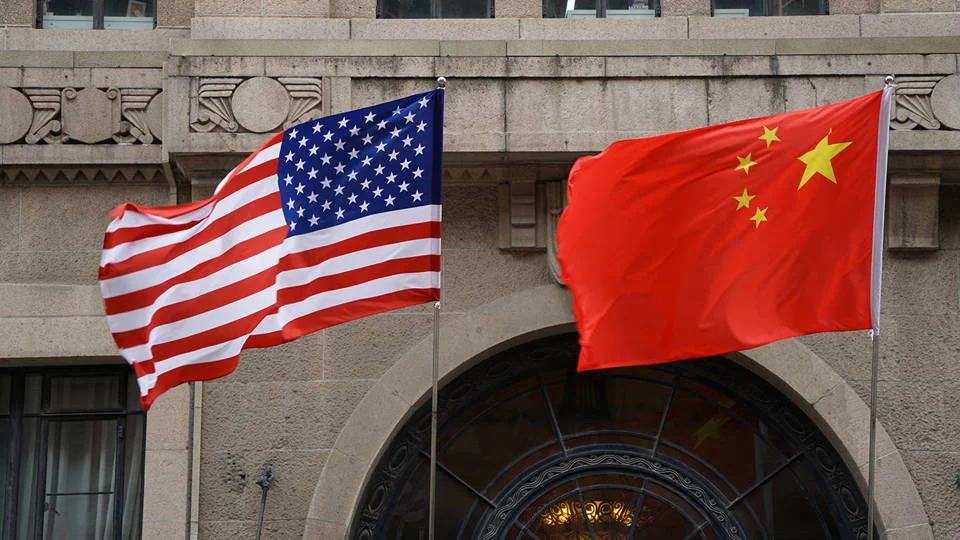
Perhaps the most significant development is the refusal of the Global South to act as mere pawns in a new US-China Cold War. Nations such as India, Brazil, and Indonesia are pursuing "multi-alignment" strategies, engaging with both Washington and Beijing to extract the best economic outcomes for their own populations. This effectively breaks the binary logic of the 20th-century geopolitical system.
Implications for the Near Future
The implications of this transition are stark. We are entering a decade that will be defined by three primary vectors of instability:
1. The Weaponization of Interdependence
In the era of globalization, economic interconnectedness was viewed as a deterrent to war. Today, it is a weapon. The use of financial sanctions, export controls on semiconductors, and the blocking of data flows has turned the mechanisms of global trade into instruments of statecraft. Businesses and governments must now operate in a world where supply chain efficiency is secondary to national security.
2. The Return of Great Power Conflict
With the collapse of the "rules-based order," the risk of miscalculation is at its highest point since the Cuban Missile Crisis. Without the safety net of international institutions like the UN or the WTO, which have been increasingly paralyzed by vetoes and partisan deadlock, the world lacks a reliable forum for conflict resolution. We are left with direct, high-stakes negotiations between leaders, where the margin for error is razor-thin.
3. The Crisis of Democracy
The geopolitical shift is not happening in a vacuum. The decline of American hegemony has emboldened autocracies, providing them with a compelling alternative model of governance. For Western democracies, the challenge is no longer just about defending borders; it is about proving that democratic systems can still deliver prosperity and stability in a high-pressure, competitive world.
Conclusion: The Task Ahead
The era of American hegemony was a historical anomaly—a period of relative peace and prosperity that allowed the world to dream of a universal, borderless future. That dream has been replaced by the cold reality of power dynamics.
The future will not be determined by the strength of international laws, but by the resilience of societies and the strategic foresight of their leaders. We must accept that the world has become more turbulent, more dangerous, and less predictable. For Europe and the rest of the world, the goal is no longer to return to the past, but to survive the transition to this new, multipolar reality.
We are not merely witnessing a change in leadership; we are witnessing the end of the post-war world and the beginning of a new, harder, and more competitive age. The question is not whether the order will change, but whether we have the collective capacity to prevent that change from descending into widespread conflict. The time for complacency has passed; the time for strategic realism has begun.