From the Carnation Revolution to the Global Stage: Portugal’s Half-Century of Transformation
By Jeffrey Frankel
July 20, 2026
Fifty-two years have passed since Portugal began its arduous transition from a stagnant, isolationist military dictatorship to a vibrant, integrated member of the European Union and the eurozone. It is a journey that has seen the nation emerge as the world’s seventh-safest country, a beacon of stability in an increasingly volatile global landscape.
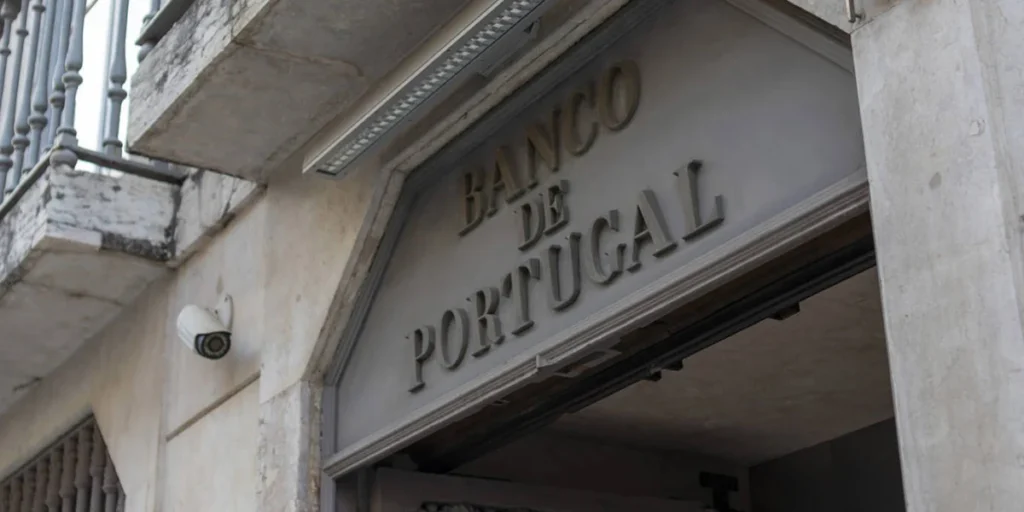
As I look back on my time in Lisbon during the summer of 1976, working for the Banco de Portugal alongside four fellow MIT graduate students—including the future Nobel laureate Paul Krugman—the contrast between the Portugal of then and the Portugal of today is nothing short of profound. However, this progress is not lived in a vacuum. In an era where the rules-based global order faces systematic dismantling under the influence of figures like Donald Trump, the reflection on Portugal’s democratic success serves as both a testament to human resilience and a cautionary tale regarding the fragility of international cooperation.
The Chronology of a Modern Nation
To understand Portugal’s trajectory, one must appreciate the intensity of the period immediately following the 1974 Carnation Revolution.
1974–1976: The Crucible of Democracy
In April 1974, the Estado Novo regime, which had stifled Portugal for decades, collapsed in a bloodless coup. By the summer of 1976, the nation was in a state of feverish reconstruction. As young economists arriving from the halls of MIT, my colleagues and I witnessed a country attempting to reinvent its economic identity. The atmosphere was thick with the uncertainty of post-colonial readjustment and the hope of newfound civil liberties.
1986: Accession to the European Community
The decisive pivot for Portugal occurred in 1986, when it officially joined the European Economic Community (EEC). This was the catalyst that forced the modernization of its institutions, the liberalization of its markets, and the integration of its labor force into the broader European framework.
1999–2002: Monetary Integration
The adoption of the euro marked the final seal on Portugal’s commitment to European integration. Despite the painful austerity measures required following the 2008 financial crisis, the country’s adherence to the eurozone helped anchor its fiscal policy, ultimately leading to the diversified, service-oriented economy we see today.
Supporting Data: A Nation Reborn
Portugal’s evolution is not merely a matter of historical narrative; it is backed by empirical success. According to the 2026 Global Peace Index, Portugal consistently ranks among the top ten most peaceful countries in the world, currently sitting at number seven.
Economic Resilience Indicators
- GDP Growth: Since joining the EU, Portugal has seen a steady transition from an agrarian-heavy economy to one defined by tourism, technology, and renewable energy.
- Institutional Stability: The transition from a centralized military state to a parliamentary republic has resulted in one of the most stable political climates in Southern Europe.
- Foreign Direct Investment (FDI): Post-2015, Portugal has become a primary hub for digital nomads and tech startups, with Lisbon hosting the Web Summit, signaling a shift toward a knowledge-based economy.
Compared to the economic stagnation of the mid-1970s, where inflation was rampant and currency instability was the norm, modern Portugal operates under the fiscal discipline of the European Central Bank, providing a predictable environment for investors and citizens alike.
Geopolitical Implications: The Shadow of Populism
While Portugal’s internal trajectory has been a success story, the external environment is darkening. The current global order—defined by the World Trade Organization, NATO, and the United Nations—is under sustained assault.
The political ethos represented by Donald Trump’s influence on the American electorate, characterized by transactional diplomacy and the rejection of multilateral agreements, poses a systemic threat. For a country like Portugal, which relies heavily on the stability of the EU-US trade corridor, the erosion of these norms is not merely a political nuisance; it is an economic existential risk.
The Erosion of Multilateralism
Trump’s "America First" doctrine—and its global imitators—threatens the very foundations that allowed Portugal to thrive. If the rules-based order is dismantled, smaller nations lose the protection of international law. Portugal, having spent 50 years building itself into a collaborative European partner, finds its prosperity linked to the health of the transatlantic alliance. Should that alliance be fractured, the cost of capital, the security of supply chains, and the efficacy of environmental policy will all be jeopardized.
Official Responses and Strategic Outlook
European leaders, including Portuguese Prime Ministers of the last decade, have consistently argued for "strategic autonomy." The consensus among Brussels-based policymakers is that Europe can no longer assume that the United States will remain a reliable guarantor of global security.
"We are witnessing a shift from a world of rules to a world of power," remarked one senior EU official recently. This sentiment echoes the apprehension felt in Lisbon. Portugal’s official stance has been to deepen its engagement with the EU to compensate for the volatility of its Atlantic partner. By strengthening the single market and investing in green energy independence, Portugal is attempting to build a firewall against the potential fallout of American isolationism.
Reflections: Lessons from 1976
Returning to the memories Paul Krugman and I share of that summer in Lisbon, one realizes that the "miracle" of Portugal was never a miracle at all. It was the result of consistent, grinding institutional work. It was the decision to trade the comfort of an autocrat’s certainty for the messy, complex, and rewarding process of democratic debate.
The geopolitical climate of 2026 feels, in some ways, as precarious as the summer of 1976. However, the difference is that Portugal now possesses the tools of a modern state. It has robust central banking, a commitment to international law, and a society that values the hard-won peace of the last half-century.
The Conclusion for the Global Order
The destruction of the rules-based order will not reverse Portugal’s internal progress overnight, but it will certainly constrain its future. Whether it is the disruption of trade, the destabilization of NATO, or the rise of neo-nationalism, the actions of global superpowers have a ripple effect that touches every corner of the globe.
As I look at the data and reflect on the history of the last 50 years, the conclusion is clear: progress is not an inevitable vector. It is a fragile achievement that requires constant maintenance. The world would do well to look at Portugal’s transformation—from a closed, repressive society to an open, secure, and prosperous democracy—as a blueprint for what is possible when a nation chooses to integrate with the world rather than withdraw from it.
The threat posed by the dismantling of global norms is not just a threat to the United States; it is a threat to the entire international community. We are all, in a sense, in the position of 1976 Portugal: standing at a crossroads, choosing whether to lean into the challenges of a complex, interconnected world or to retreat into the dangerous, lonely comfort of nationalistic isolation. History suggests that the former is the only path that leads to lasting peace and prosperity.