A Strategic Divorce: Michael Angelakis Returns as Comcast Orchestrates Major NBCUniversal Spin-Off
By Grace Noto | Published June 30, 2026
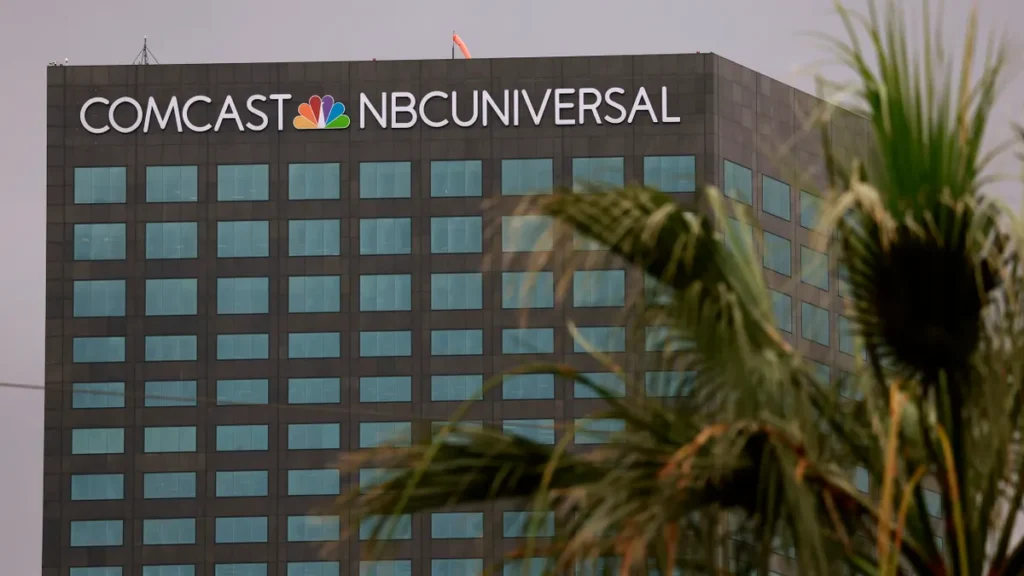
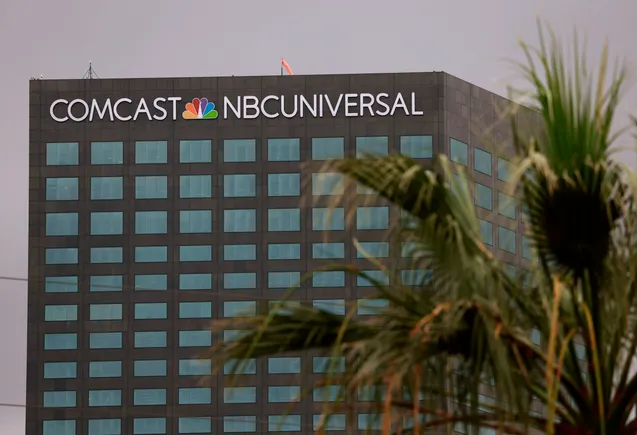
In a move that signals a seismic shift in the media and telecommunications landscape, Comcast Corporation has announced a definitive plan to unwind its 15-year merger with NBCUniversal. As the company prepares to split into two distinct, publicly traded entities, it has turned to a familiar face to steer the ship: industry veteran and former CFO Michael Angelakis, who will return to the company to assume the role of Chief Executive Officer.
The decision to separate the two powerhouses—a marriage that once defined the era of media consolidation—marks the end of a long-standing corporate strategy and the beginning of a new chapter aimed at agility in an increasingly fragmented digital marketplace.
The Return of a Architect: Michael Angelakis
The appointment of Michael Angelakis is being viewed by Wall Street as a "stabilizing return to roots." Angelakis, who previously served as Comcast’s CFO for nine years starting in 2006, was a central figure during the company’s formative growth period. His departure in 2015 to found Atairos, an independent strategic investment firm, left a void in the executive suite that many analysts suggest is now being filled to manage the complexities of a corporate divorce.
During his tenure at Atairos, Angelakis refined his expertise in capital allocation and strategic growth, serving as CEO and executive chairman. His background, which includes board seats at heavyweights like American Express, Exxon Mobil, and Lucky Strike, provides the specific financial acumen required to navigate the intricacies of a high-stakes corporate separation.
"As our widely admired former CFO, Michael’s deep knowledge of the business and passion for technology—combined with the leadership of Steve Croney, Jason Armstrong, and the entire Comcast management team—will serve us well as we continue to take bold actions in today’s competitive environment," Comcast Chairman and CEO Brian Roberts said in a statement.
Angelakis is expected to join the company immediately as a strategic advisor before assuming the CEO mantle full-time once the separation process is finalized.
A Chronology of Consolidation and Uncoupling
The story of Comcast and NBCUniversal is one of the most significant narratives in modern American business history.
- 2011–2013: The Mega-Merger. Comcast moved to acquire a majority stake in NBCUniversal from General Electric in 2011, eventually completing the full acquisition in 2013. The transaction, valued at approximately $40 billion at the time, was designed to create a vertically integrated giant capable of controlling both the pipes (internet and cable) and the content (NBC, Universal Pictures, and cable networks like USA and Bravo).
- 2015: Leadership Transition. Michael Angelakis stepped down as CFO, marking the end of a successful financial era for the combined entity.
- 2020–2025: The Streaming Pivot. The rise of Netflix, Disney+, and other streaming platforms placed immense pressure on traditional media models. While NBCUniversal launched Peacock, the costs associated with content production and platform development began to weigh heavily on Comcast’s balance sheet.
- 2026: The Strategic Reversal. Following a series of disappointing quarterly results, Comcast leadership concluded that the synergies once promised by the merger were being outweighed by the operational friction of managing a diverse conglomerate.
Supporting Data: The Economic Reality
The decision to spin off NBCUniversal did not occur in a vacuum; it was driven by stark financial headwinds. In its Q1 2026 earnings report, Comcast painted a picture of a company struggling to reconcile its massive media obligations with its core connectivity business.
The media segment, which houses the NBCUniversal portfolio, reported a $432 million loss in adjusted EBITDA for the quarter ended March 31, despite a 60% revenue surge to $7.3 billion. This suggests that while the content business is generating significant top-line figures, the associated programming and production costs are ballooning beyond sustainable levels.

Furthermore, overall company performance has faltered. Comcast reported a 31% slump in adjusted net income for the first quarter of 2026, totaling $2.9 billion compared to $4.1 billion in the same period of 2025. Earnings per share (EPS) saw a sharp decline of nearly 33%, dropping to $0.60. Investors are now looking toward the upcoming Q2 earnings call, scheduled for July 23, for more granular detail on how the spin-off will impact debt allocation and dividend policies.
Official Responses and Strategic Rationale
In its official statement, Comcast management emphasized that the separation is not a retreat, but an evolution. The company’s leadership asserts that both entities will be "better positioned to pursue their own strategic priorities, invest for growth and create long-term shareholder value as independent entities."
The plan is designed to be shareholder-friendly, with investors set to receive equal shares in both the standalone Comcast (the connectivity business) and the new, independent NBCUniversal. By decoupling the two, the companies hope to achieve:
- Increased Focus: Allowing the connectivity side to focus on fiber, broadband, and wireless infrastructure without the distraction of entertainment production.
- Strategic Autonomy: Enabling NBCUniversal to seek partnerships or mergers that were previously restricted by its association with a cable provider.
- Valuation Clarity: Allowing the market to accurately price the two businesses according to their respective industry metrics (telecommunications versus media).
Implications: The Future of Media
The implications of this move are widespread. For the telecommunications industry, it confirms that the "triple play" strategy—voice, video, and internet—has reached its limit. As consumers "cut the cord" at record rates, the benefit of owning content to bundle with cable subscriptions has diminished.
For the entertainment industry, an independent NBCUniversal becomes one of the most intriguing assets on the market. Without the financial backing of a massive ISP, NBCUniversal may be forced to become more selective with its spending, potentially leading to a wave of content consolidation or divestitures of smaller cable assets.

Furthermore, the appointment of Michael Angelakis suggests that the transition will be focused on "lean" management. Angelakis has long been an advocate for disciplined capital allocation, and his leadership style will likely prioritize margin expansion over the aggressive content spending wars that have defined the past five years.
The Road Ahead
As the industry prepares for the July 23 earnings report, the focus will shift to how the two companies intend to navigate the regulatory hurdles of the spin-off. Analysts remain cautiously optimistic, noting that while the move is risky, the current structure was clearly failing to deliver the returns expected by the market.
"The era of the massive, all-encompassing media conglomerate is fading," said one industry analyst. "Comcast is essentially admitting that the landscape has changed so fundamentally that the best way to move forward is to look back—by bringing back the leadership that understands the company’s core strengths and empowering the two entities to fight their own battles."
As Comcast prepares to shed its media skin, the business world will be watching to see if Angelakis can replicate the stability he provided in the late 2000s in a world that is vastly more complex, digital, and competitive than the one he left behind in 2015.