The Human-Machine Synthesis: Inside KPMG’s Strategic Alliance with Anthropic
In a move that signals a seismic shift in how professional services firms integrate artificial intelligence, KPMG has officially entered into a global alliance with AI powerhouse Anthropic. This partnership, which follows closely on the heels of Anthropic’s launch of its new suite of financial agents, marks a definitive pivot for the "Big Four" accounting firm. By embedding Anthropic’s "Claude" technology into its proprietary digital gateway, KPMG is not merely automating routine tasks; it is fundamentally reimagining the delivery of tax, legal, and private equity services.
For clients—ranging from multinational corporations to institutional investors—the alliance promises a new era of efficiency. However, for KPMG, it represents a calculated gamble on a "human-in-the-loop" philosophy, ensuring that as AI scales, the expertise and ethical oversight of human professionals remain the bedrock of the firm’s value proposition.
The Genesis of the Alliance: A Strategic Convergence
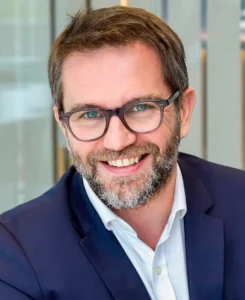
The partnership was solidified in a series of discussions that culminated in a May announcement, designating KPMG as Anthropic’s "preferred consultant." For David Neuenhaus, the recently appointed global sector head of asset management at KPMG, the alliance is more than a standard vendor-client agreement; it is a "step change" in how the firm interacts with its technology stack.
Neuenhaus, a 15-year veteran of the firm with deep expertise in international tax and M&A, notes that the atmosphere in boardrooms has shifted perceptibly. "Every meeting we had with clients pre-Anthropic was, ‘Let’s talk about your tech, let’s talk about AI,’" he reflects. "Now, we’re getting specific calls from the market to discuss this platform specifically."
The collaboration aims to integrate Claude into the KPMG digital gateway, the firm’s primary global platform for client service. By leveraging Anthropic’s advanced large language models (LLMs), KPMG intends to streamline complex workflows, particularly in the high-stakes environment of private equity, where the speed and accuracy of post-acquisition value creation are paramount.
Chronology: From Early Adoption to Global Integration
KPMG’s journey into the AI landscape did not begin with Anthropic. The firm has been a long-standing adopter of machine learning and data analytics. To understand the significance of this alliance, one must look at the firm’s broader digital transformation roadmap:
- Pre-2023: KPMG establishes its digital gateway, an internal platform designed to provide a unified, secure interface for global tax and legal clients.
- Early 2024: Anthropic accelerates its product roadmap, moving beyond general-purpose chatbots toward specialized "financial agents" capable of handling complex data analysis.
- May 2024: KPMG and Anthropic formalize their global alliance. Anthropic names KPMG as its preferred consultant, recognizing the firm’s deep industry knowledge and operational footprint.
- Mid-2024 to Present: The integration phase begins. KPMG begins deploying Claude-powered tools to assist in quarter-close efficiencies, cash management, and EBITDA-driven value creation for private equity clients.
The decision to partner with Anthropic, despite KPMG’s existing internal AI development capabilities, was driven by a search for "best-in-class" synergy. As Neuenhaus explains, the firm recognized that its core competency lies in industry knowledge and operational strategy, not in foundational AI model development.
Supporting Data and Technical Implementation
The integration of Claude is not an "off-the-shelf" deployment. It involves a sophisticated layering of KPMG’s proprietary data infrastructure with Anthropic’s AI capabilities.
Driving Value in Private Equity
In the private equity sector, the utility of the partnership is focused on the post-acquisition phase. Operating partners often struggle with the "data glut" inherent in managing a portfolio of diverse assets. By deploying Claude, KPMG is assisting these firms in:
- EBITDA Optimization: Identifying operational inefficiencies across portfolio companies in real-time.
- Cash Flow Management: Automating the monitoring of liquidity metrics to prevent capital crunches.
- Quarter-Close Acceleration: Reducing the time-to-report by automating data reconciliation and compliance checks.
The "Human-in-the-Loop" Mandate
A recurring theme in the partnership is the emphasis on the "human-in-the-loop" model. In an era of "hallucinating" AI models, the legal and tax sectors require near-zero tolerance for error. KPMG’s implementation mandates that Claude acts as a force multiplier for the consultant, rather than a replacement. The AI handles the heavy lifting of data aggregation and initial synthesis, but the final judgment—the "human layer"—remains mandatory.
Official Perspectives: The Philosophy of Partnership
During a recent interview, David Neuenhaus clarified the internal culture that led to the partnership. When asked why the firm would look externally for AI expertise after years of internal development, he was emphatic: "We’re not a technology development company. We don’t do what Anthropic does."
Neuenhaus highlights that the "cultural fit" was as important as the technical specs. Anthropic’s research-heavy, safety-conscious approach to AI development aligned with KPMG’s risk-averse, professional service standards. "We found particular synergy with Anthropic in our human-first, human-in-the-loop view of how you use and deploy AI," he noted.
This is not a "pencils down" moment for KPMG’s internal technologists. Instead, the firm views the alliance as a way to focus its own internal R&D on specific, high-value industry applications, while relying on Anthropic to provide the foundational "intelligence" layer.
Implications for the Professional Services Industry
The alliance between KPMG and Anthropic carries significant implications for the future of the Big Four and the broader consulting landscape.
1. The Death of the Generalist Consultant?
As AI agents become more adept at routine tasks, the role of the entry-level consultant is rapidly evolving. If a "financial agent" can handle basic tax compliance or financial data reconciliation, junior staff must pivot toward higher-level synthesis and client relationship management. The KPMG-Anthropic partnership suggests that the firm of the future will be leaner, more automated, and hyper-specialized.
2. The Data Security Frontier
One of the most pressing questions for any CISO or CFO engaging with third-party AI is the security of proprietary information. Neuenhaus acknowledges that the "mindful march" toward AI adoption is guided by rigorous testing. The digital gateway, which currently serves government agencies, remains the "rock solid" foundation of the firm’s data strategy. By wrapping Anthropic’s models within this audited, secure environment, KPMG aims to provide the peace of mind that corporate leaders demand before trusting an LLM with sensitive financial data.
3. A New Competitive Moat
For KPMG, the alliance provides a competitive advantage in a crowded market. By being the "preferred consultant" for a leading AI firm, KPMG gains early access to cutting-edge features and a voice in the development of future financial agents. This allows them to offer clients solutions that are not just state-of-the-art, but bespoke to the nuances of global asset management.
Conclusion: The Path Forward
The partnership between KPMG and Anthropic represents the next stage of corporate AI evolution: the shift from experimental "chat" to operational "agency." As firms move from asking "Can we use AI?" to "How do we integrate AI at the core of our business?", the KPMG-Anthropic model offers a blueprint for success.
For the clients of KPMG, the value is clear: increased efficiency, better data-driven insights, and the ability to navigate complex financial landscapes with greater speed. For the industry, the alliance proves that in the age of artificial intelligence, the most successful firms will be those that master the delicate balance between the raw power of the machine and the discerning, ethical judgment of the human expert. As David Neuenhaus and his colleagues continue to roll out these tools globally, the industry will be watching closely to see if this "step change" lives up to its promise of redefining the very nature of professional service.