Chamath Palihapitiya Returns to the Operating Helm: 8090 Labs Secures $135M Series A
By TechCrunch Staff
June 29, 2026
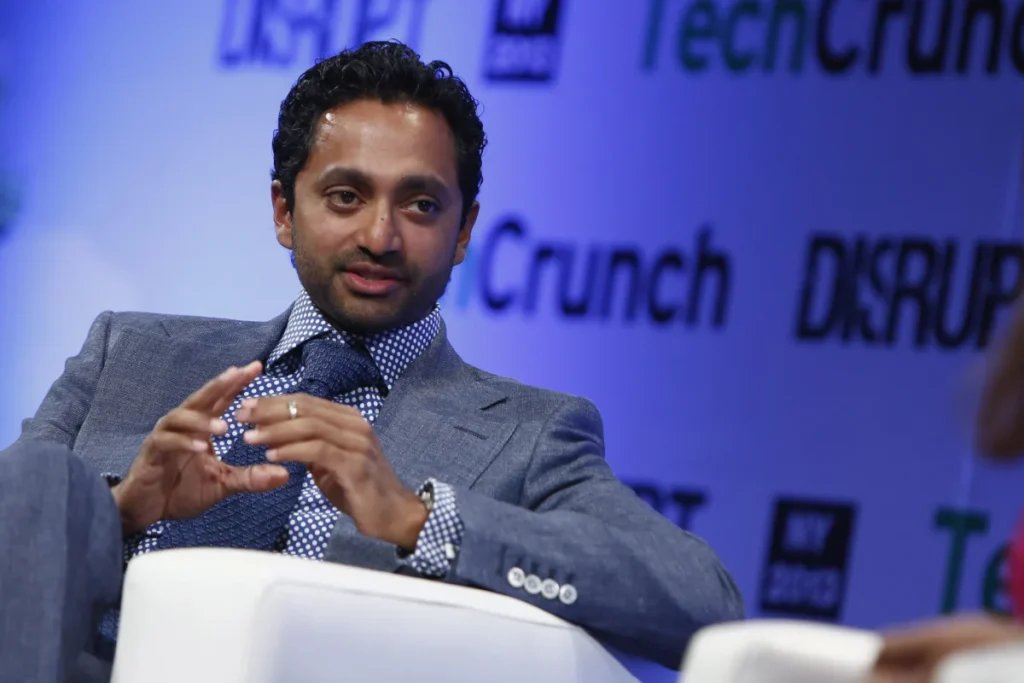
In a move that has sent ripples through Silicon Valley, venture capital titan Chamath Palihapitiya has officially stepped out of the boardroom and into the CEO’s office. Palihapitiya, the high-profile founder of Social Capital and co-host of the influential All-In podcast, announced on Monday that his AI-focused startup, 8090 Labs, has successfully closed a $135 million Series A funding round.
The infusion of capital, led by Salesforce Ventures, marks a significant pivot in the career of one of tech’s most outspoken investors. By moving from a passive investment role to an active operational capacity, Palihapitiya is signaling a deep conviction in the next phase of the artificial intelligence revolution—specifically, the transition from AI experimentation to enterprise-grade software engineering.
The Core Facts: A Heavyweight Syndicate
The $135 million round is a testament to the pull Palihapitiya exerts within the technology ecosystem. The funding attracted a "who’s who" of Silicon Valley power players, underscoring the perceived potential of 8090 Labs.
Joining Salesforce Ventures in the round were Jeffrey Katzenberg’s WndrCo and David Sacks’ Craft Ventures. Perhaps more notably, the round saw an unprecedented level of support from Palihapitiya’s inner circle. His fellow All-In co-hosts—David Friedberg of The Production Board and Jason Calacanis of Launch—participated, signaling a rare "all-hands" investment from the podcast’s core group.
The cap table is further bolstered by strategic angel investors, including Palo Alto Networks CEO Nikesh Arora and Quora CEO Adam D’Angelo. This combination of institutional capital and high-level industry expertise provides 8090 Labs with not only the necessary runway to scale, but also an unparalleled network of potential enterprise customers and technical advisors.
A Chronology of Ambition: From Concept to Scale
To understand the significance of this funding, one must look at the rapid trajectory of 8090 Labs:
- January 2024: Palihapitiya quietly founds 8090 Labs. Initially positioned as a venture-backed research and development house, the company aims to tackle the "last mile" problem in AI coding: the gap between impressive demos and reliable, secure, production-ready enterprise software.
- 2024–2025: The company operates in stealth, iterating on its flagship product, "Software Factory." During this period, the team focuses on building the necessary guardrails—audit trails, security compliance, and codebase integration—that large corporations demand before adopting autonomous coding agents.
- June 29, 2026: 8090 Labs emerges from its quiet phase with a massive $135 million war chest. Simultaneously, Palihapitiya announces his transition from board member to full-time CEO, signaling that the product has reached a level of maturity that requires his direct leadership.
Software Factory: Solving the "Vibe-Coding" Problem
The central premise of 8090 Labs is the belief that the current generation of AI coding tools is stuck in a "vibe-coding" loop—capable of generating clever snippets but failing to deliver maintainable, high-integrity production systems.
"Software Factory" is designed to change this paradigm. Unlike general-purpose LLM interfaces, 8090 Labs provides a structured environment where AI agents can operate within the constraints of a corporate codebase. By integrating with existing CI/CD pipelines, the platform ensures that every line of AI-generated code is audited, tested, and compliant with enterprise security standards.
The product addresses the "black box" nature of AI. In a corporate environment, where a single bug in a core banking system or infrastructure layer can lead to millions in losses, "trust" is the primary barrier to AI adoption. 8090 Labs claims its platform provides the necessary visibility, allowing human engineers to remain in control while the AI handles the heavy lifting of boilerplate, refactoring, and feature implementation.
The "All In" Philosophy: A Return to Roots
For Palihapitiya, this transition is deeply personal. In a statement posted to X (formerly Twitter) shortly after the announcement, he drew direct parallels between the current AI boom and the early days of social media, a sector he helped define during his tenure as an early executive at Facebook.

"Since I left Facebook, I was waiting for a moment like this to return to a full-time operating role," Palihapitiya wrote. "I am convinced that what we are building now is even more important than the rise of the social web, so there was no decision to make except to be all in."
This sentiment reflects a broader trend among seasoned venture capitalists who are finding that the pace of AI development is too fast to observe from the sidelines. By becoming an operator, Palihapitiya is acknowledging that the current opportunity in AI requires the speed and decisiveness that only a CEO can provide.
Implications for the Enterprise AI Landscape
The sheer size of the Series A round—$135 million—suggests that the market for enterprise coding agents is reaching a fever pitch. Investors are betting that 8090 Labs will be one of the few winners in a crowded field of AI startups.
1. The Consolidation of Talent
With this funding, 8090 Labs is expected to be a dominant force in the talent market. The ability to offer competitive compensation, combined with the lure of working directly under a high-profile figure like Palihapitiya, will likely allow the startup to poach top-tier software engineers and AI researchers from established giants like Google, Meta, and OpenAI.
2. The Shift Toward "Production-Grade" AI
The success of this funding round highlights a shift in market sentiment. The venture capital community is moving away from funding "wrapper" companies—startups that simply build a UI over existing models—and toward companies that provide deep, structural value in the enterprise stack. 8090 Labs is positioning itself as an infrastructure play, not a novelty, which is a defensive moat against the rapid commoditization of large language models.
3. A Challenge to Legacy DevTools
By focusing on corporate programming teams, 8090 Labs is directly competing with established players in the developer tools space. Companies like GitHub (with Copilot) and GitLab will likely view 8090 Labs as a formidable new entrant. The company’s emphasis on "audit trails" and "compliance" suggests it is targeting the most lucrative, risk-averse segment of the market: the Fortune 500.
Looking Ahead: The Challenges
Despite the excitement surrounding the announcement, the road ahead is fraught with challenges. The AI coding space is highly competitive, with deep-pocketed incumbents iterating at breakneck speed. Furthermore, the transition from investor to operator is notoriously difficult; the skills required to identify a winning company are fundamentally different from those required to lead one through the daily grind of product-market fit, organizational growth, and customer acquisition.
However, the presence of Salesforce Ventures as a lead investor suggests a clear path to distribution. If 8090 Labs can leverage the Salesforce ecosystem to reach its massive client base, it may gain the foothold it needs to become a standard-bearer in the enterprise AI space.
As Palihapitiya takes the helm, the tech industry will be watching closely. Whether this move proves to be a masterstroke of timing or an overreach remains to be seen. What is certain, however, is that 8090 Labs has moved from the periphery to the center of the AI conversation, and the pressure is now on to deliver on the high expectations set by its valuation and its founder’s public commitment.
For now, the message from the 8090 Labs headquarters is clear: the era of prototyping is over, and the era of production-ready AI engineering has officially begun.