Balancing Innovation and Integrity: JPMorgan Chase Outlines Vision for U.S. Digital Asset Regulation
By PYMNTS
June 29, 2026
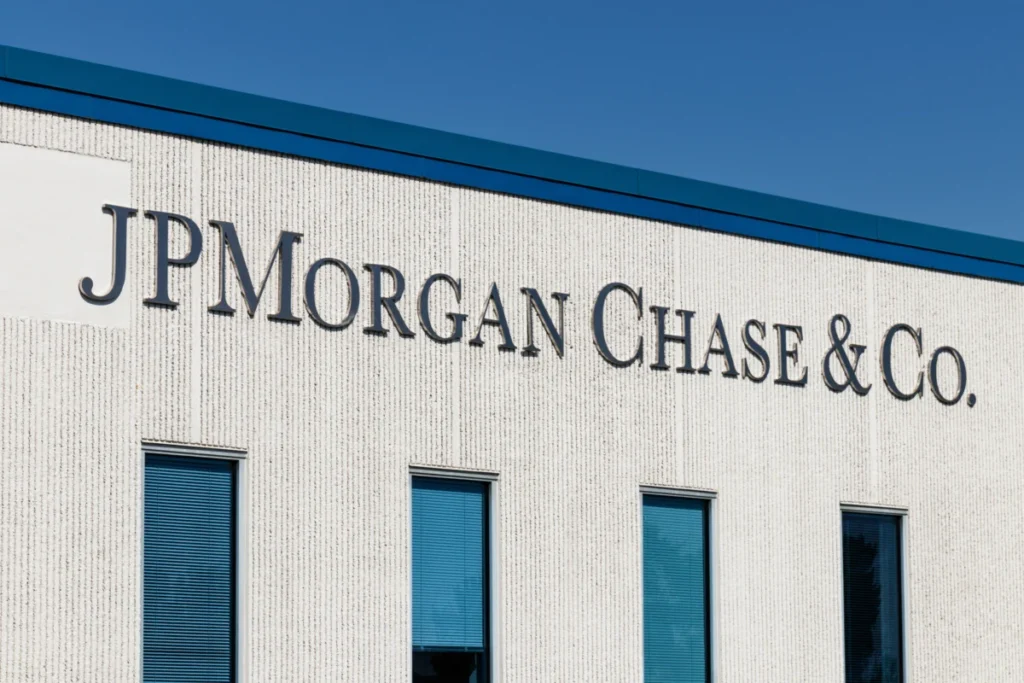
As the United States stands at a regulatory crossroads regarding the future of digital assets, financial heavyweights are intensifying their calls for a robust, risk-managed framework. In a formal position paper published Monday, June 29, 2026, JPMorgan Chase, the nation’s largest bank, urged federal lawmakers to prioritize durable safeguards that align emerging blockchain-based financial systems with the rigorous standards of traditional banking.
The call to action, authored by Umar Farooq, global co-head of J.P. Morgan Payments, and Peter Muriungi, CEO of Digital Assets and Blockchain Solutions, underscores a growing consensus among institutional players: for digital assets to achieve mass-market adoption and systemic integration, they must be built on a foundation of trust that matches the decades-old protections afforded to conventional consumers and investors.
The Case for Guardrails: Modernizing Finance Without Compromise
The core argument presented by Farooq and Muriungi centers on the dual nature of digital assets. While the authors acknowledge that blockchain technology can significantly reduce friction in global payments, shorten settlement cycles, and unlock efficiencies that modernize aging financial infrastructure, they warn that these benefits could be hollow if oversight remains fragmented.
"A framework that fails to close these gaps risks recreating the very vulnerabilities financial regulation is designed to prevent," the authors wrote. They emphasize that in both market structure and payment processing, investors expect digital asset offerings to function with the same transparency and security as traditional methods. If digital assets are relegated to "lightly supervised channels," they argue, the result will be a weakening of the very safeguards meant to protect the broader financial ecosystem.
JPMorgan Chase has positioned itself as a blueprint for this integration. By highlighting their internal initiatives—specifically Kinexys by J.P. Morgan and the JPM Coin deposit token—the bank argues that it has successfully demonstrated that blockchain technology can thrive within a highly regulated, risk-managed environment.
Chronology: The Road to the CLARITY Act
The timing of JPMorgan’s intervention is critical, occurring as Congress enters the final, high-stakes phase of negotiations regarding the CLARITY Act. This landmark cryptocurrency legislation is intended to provide the comprehensive legal certainty the industry has craved for years.
The legislative journey has been fraught with complexity:
- Early 2026: Momentum builds in the Senate to draft a bipartisan consensus bill aimed at defining the jurisdictional boundaries between the Securities and Exchange Commission (SEC) and the Commodity Futures Trading Commission (CFTC).
- May 29, 2026: JPMorgan CEO Jamie Dimon provides a stark public reminder of the bank’s stance during a corporate address, stating, "If crypto companies are going to take deposits like a bank, they should be regulated like a bank and follow the same rules as a bank."
- June 25, 2026: Reports surface that time is running out for the CLARITY Act. Senate negotiators remain deadlocked on several contentious issues, including the governance of stablecoin yields, potential conflict-of-interest restrictions regarding presidential involvement in digital assets, and the filling of key vacancies at the SEC and CFTC.
- June 29, 2026: JPMorgan Chase publishes its formal guidance, effectively lobbying for a regulatory model that prevents "regulatory arbitrage"—where firms seek jurisdictions or business models that bypass traditional consumer protections.
Supporting Data: The Institutional Push for Uniformity
The debate is not merely academic; it concerns the potential for billions of dollars in transaction volume to shift from legacy rails to decentralized ones. Data from recent market assessments suggest that while blockchain efficiency could save the financial sector hundreds of billions in operational costs annually, the lack of a federal framework is the primary deterrent for institutional adoption.
The concerns cited by JPMorgan’s leadership focus on three primary pillars of financial stability:
- Consumer Protection: Ensuring that users of digital assets have the same recourse as retail bank customers in the event of fraud or technical failure.
- Illicit Finance: Creating a seamless reporting and monitoring structure that prevents bad actors from utilizing digital assets for money laundering or terrorism financing.
- Market Integrity: Preventing market manipulation, which has historically been a criticism of the less-regulated corners of the cryptocurrency exchange market.
Official Responses and Political Friction
The legislative impasse in Washington reflects a fundamental divide in philosophy. Pro-crypto advocates often argue that overly aggressive regulation will stifle innovation, pushing the U.S. behind international competitors like the European Union or Singapore, which have moved faster to implement frameworks like MiCA (Markets in Crypto-Assets).
Conversely, traditional banking advocates, represented by leaders like Jamie Dimon, maintain that the "move fast and break things" ethos of Silicon Valley is incompatible with the safety requirements of the global financial system. The stalemate over the CLARITY Act highlights the difficulty of creating a "one-size-fits-all" policy. Senators are currently debating how to manage the transition for existing stablecoin issuers, who argue that they provide essential liquidity, while regulators worry that these assets represent a shadow banking risk if they are not backed by high-quality, liquid assets equivalent to bank reserves.
Furthermore, the issue of political optics—specifically, potential restrictions on the executive branch’s ability to interact with or profit from digital assets—has introduced a level of partisan volatility that has complicated the technical aspects of the bill.
Implications: The Future of Financial Infrastructure
The implications of the current legislative stalemate are profound. Should the CLARITY Act fail to pass, or should it be watered down to appease conflicting factions, the U.S. risks a fragmented regulatory environment where states take the lead, resulting in a "patchwork" of rules that increase compliance costs and stifle innovation.
JPMorgan’s recent messaging serves as a strategic warning: if the U.S. fails to establish a clear, stringent, and balanced framework, the industry will not necessarily stop, but it will grow in the shadows, creating systemic risks that could eventually force a much more painful regulatory intervention during a future market crisis.
"The goal should not be simply to move fast, but to build a system that Americans can trust," Farooq and Muriungi concluded. "One that allows innovation to thrive without putting consumers, markets, or the broader economy at risk."
As the clock ticks toward the end of the current legislative window, the message from the banking sector is clear: the integration of digital assets into the mainstream economy is inevitable, but its success depends entirely on the quality of the guardrails constructed today. Whether Congress can bridge the gap between innovation-first proponents and stability-first regulators remains the defining question for the U.S. financial system in 2026.
Key Takeaways for Stakeholders:
- Regulatory Parity: The financial industry is moving toward a standard where "same activity, same risk, same regulation" is the baseline expectation for digital assets.
- Institutional Adoption: Large-scale institutional adoption of blockchain remains contingent on clear federal mandates that satisfy AML (Anti-Money Laundering) and KYC (Know Your Customer) requirements.
- Legislative Urgency: The CLARITY Act represents the best opportunity for a comprehensive federal framework, but its success is hampered by issues ranging from political conflict-of-interest concerns to jurisdictional turf wars between the SEC and CFTC.
- The Role of Stablecoins: The regulation of stablecoin yields and reserves remains the most contentious technical hurdle in current negotiations.