Supreme Court Protects Fed Independence: Ruling Blocks Presidential Removal of Lisa Cook
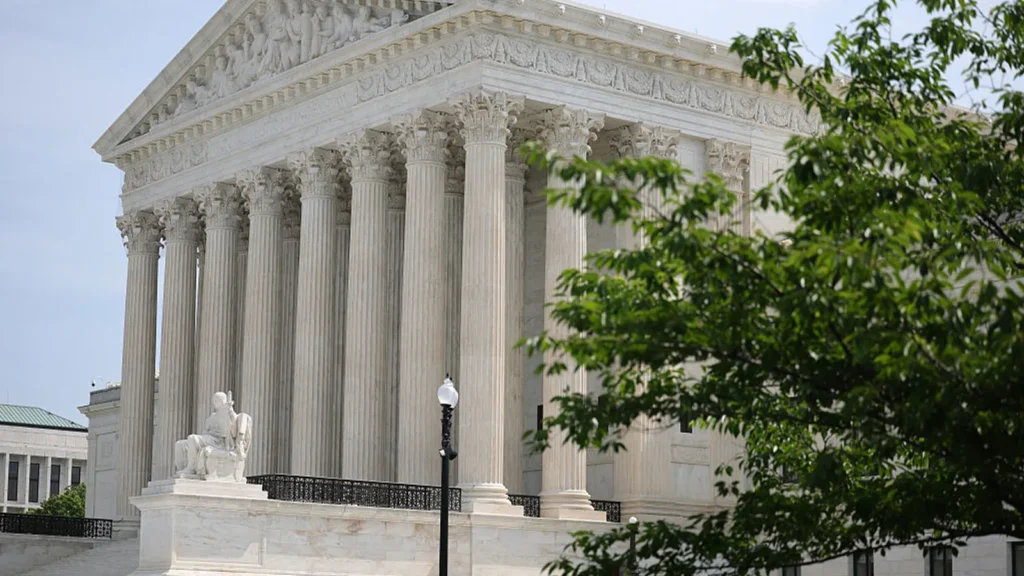
In a landmark decision that reaffirms the structural separation between the White House and the nation’s monetary policy apparatus, the U.S. Supreme Court ruled on Monday that Federal Reserve Governor Lisa Cook cannot be summarily removed from her post. The 5-4 ruling serves as a definitive rebuke to attempts by the Trump administration to exert executive control over the central bank, effectively shielding Fed officials from politically motivated terminations.
The Court’s majority opinion, authored by Chief Justice John Roberts and joined by Justice Brett Kavanaugh and the court’s three liberal justices, held that the “for-cause” protection afforded to Federal Reserve governors is a vital safeguard against political interference. By invalidating the administration’s attempt to categorize the removal as a standard executive act, the Court has reinforced the historical, statutory independence that has defined the Federal Reserve’s role in the global economy for over a century.
The Core Ruling: A Shield for Monetary Policy
At the heart of the dispute was the interpretation of the Federal Reserve Act and the degree of authority the President holds over the Board of Governors. President Donald Trump had sought to remove Cook last August, citing allegations of mortgage fraud brought forward by Federal Housing Finance Agency (FHFA) Director Bill Pulte.
The Supreme Court’s decision was unequivocal: "Acceptance of the Government’s position would in effect transform the Federal Reserve’s for-cause protection into at-will employment—an interpretive leap out of step with the statute Congress enacted and our Nation’s tradition of central banking protected from political interference."
The Court emphasized that while the President maintains the authority to remove officials for legitimate "cause," that power is not absolute. The justices clarified that the definition of "cause" must be interpreted in light of the Fed’s unique, apolitical status. "The Federal Reserve operates at a deliberate remove from the ordinary political process," the opinion stated. "Not only the fact of independence but also the appearance of independence is key to the Federal Reserve’s design."
Chronology of a Constitutional Confrontation
The legal battle unfolded over several months, escalating from a political ultimatum into a constitutional crisis regarding the limits of executive power.
- August 2024: President Trump issued a letter to Governor Lisa Cook, leveling accusations of "deceitful and potentially criminal conduct" regarding past financial matters. The President demanded her immediate resignation, citing allegations raised by FHFA Director Bill Pulte.
- Late August 2024: Recognizing the threat to the independence of the Board of Governors, Cook filed a lawsuit challenging the legality of the removal.
- September 2024: A federal district court ruled in favor of Cook, blocking the administration’s efforts to remove her and expressing concern over the lack of due process.
- October 2024: The appellate court upheld the district court’s decision, agreeing that the administration had failed to establish "cause" and had violated fundamental procedural fairness.
- January 2025: The Supreme Court heard oral arguments, where justices across the ideological spectrum displayed skepticism toward the administration’s broad interpretation of executive power.
- March 2025: The Supreme Court issued its final ruling, cementing the protection of Fed governors and dismissing the administration’s claims as insufficient.
The Pretext of "Cause" and Due Process
A central pillar of the Court’s ruling was the lack of procedural due process afforded to Governor Cook. The justices noted that the administration had moved to fire a high-ranking official without providing her a meaningful opportunity to address the accusations or present a defense.
The Court held that even if the President were to pursue a legitimate removal, the process must adhere to constitutional and statutory standards. "At minimum, Cook was entitled to some explanation of the evidence at issue, some avenue for a response, and a deadline by which a response would be due," Chief Justice Roberts wrote.
The legal team representing Cook argued—and the Court seemingly agreed—that the mortgage fraud allegations were merely a "pretext" for the President’s desire to install a more "congenial" governor who would support his preferred interest rate policies. The Court noted that without strict judicial oversight, any minor or historical "misstep" could be used as a weapon to purge the Board of Governors of dissenting voices, a prospect the justices described as "corrosive of the independence that Congress sought to preserve."
Supporting Data and Historical Context
The Federal Reserve’s independence is not merely a preference but a cornerstone of global financial stability. The central bank is tasked with managing the dual mandate of price stability and maximum employment, functions that require a long-term horizon often at odds with the short-term political cycle.
Historical evidence cited by the Court—and supported by briefs filed by former Fed Chairs and Treasury Secretaries—underscores that the Fed’s credibility depends on its immunity to election-year pressures. During the legal proceedings, advocates for the Fed pointed out that if a President could remove governors to force a change in interest rates, the resulting volatility in financial markets would undermine the dollar’s status and the stability of the U.S. banking system.
Notably, the Court’s ruling on the Fed stood in stark contrast to its decision on the same day regarding the Federal Trade Commission (FTC). The Court backed the President’s firing of a Democratic FTC commissioner, highlighting that the Fed’s structure is uniquely shielded by specific legislative protections that other executive agencies may not possess in the same capacity.
Official Responses and Dissenting Voices
The ruling prompted a wide range of reactions within the political and financial spheres. While the majority emphasized the stability of the institution, the dissenting opinions from Justices Clarence Thomas, Samuel Alito, and Amy Coney Barrett suggested that the majority had overstepped in its interpretation of executive removal power.
The dissenters argued that the President, as the head of the Executive Branch, must have sufficient authority to oversee those who manage government agencies. They suggested that the "for-cause" requirement should not be an insurmountable barrier to the President’s ability to ensure the integrity of his appointees.
Conversely, supporters of the ruling praised the Court for maintaining the integrity of the central bank. Economists and institutionalists noted that the ruling effectively "de-risks" the Federal Reserve from the immediate whims of the Oval Office, providing a sense of certainty to global investors who rely on the Fed’s data-driven approach to inflation and economic growth.
Implications for the Future of Central Banking
The immediate implication of the ruling is that Governor Lisa Cook will continue her term on the Board of Governors. More broadly, the decision establishes a high threshold for any future administration seeking to remove a Federal Reserve official.
The ruling serves as a warning against the "weaponization" of agency oversight. By asserting that the courts must "independently interpret the statute and effectuate the will of Congress," the Supreme Court has signaled that it will not act as a rubber stamp for executive overreach when that overreach threatens established, independent institutions.
As the nation moves forward, the "special arrangement sanctioned by history" mentioned by the Court remains intact. The Federal Reserve enters the next fiscal cycle with its independence bolstered, not just by statute, but by a definitive Supreme Court mandate that prevents the politicization of the interest rate setting process.
For the administration, the ruling represents a significant political setback, particularly as it pertains to their ongoing interactions with other Fed leadership, including former Chair Jerome Powell. While Powell’s term as chair has concluded, his continued presence on the Board of Governors, coupled with the Court’s protection of his colleagues, suggests that the administration will find limited avenues for further intervention in the central bank’s operations.
Ultimately, the Court’s decision is a victory for the principle of institutional independence. It ensures that the Federal Reserve remains, as Congress intended, a technical and apolitical steward of the American economy, insulated from the turbulent winds of political partisanship.