Unpacking the Paradoxes: Four Crucial Questions Shaping the 2026 Global Economy
Posted: July 19, 2026
In an era defined by unprecedented challenges and unexpected resilience, renowned financial commentator Ben Carlson recently posed four profound questions that cut to the heart of the contemporary economic landscape. Published on July 19, 2026, Carlson’s analysis delves into persistent paradoxes, from the apparent disappearance of traditional recessions to the perplexing stability of interest rates amidst surging national debt. His observations prompt a deeper examination of the structural shifts and policy responses that are redefining economic cycles and market behavior.
Carlson’s central inquiries are: Why do recessions seem to be a relic of the past? How has a troubled housing market avoided triggering a broader economic downturn? Why have interest rates remained relatively subdued despite high inflation and colossal government debt? And finally, are we witnessing a return to economic normalcy after a tumultuous half-decade? These questions not only reflect the prevailing sentiment among economists and investors but also underscore a potential paradigm shift in how we understand and manage global economic forces.
The Elusive Recession: A New Economic Reality?
Main Facts:
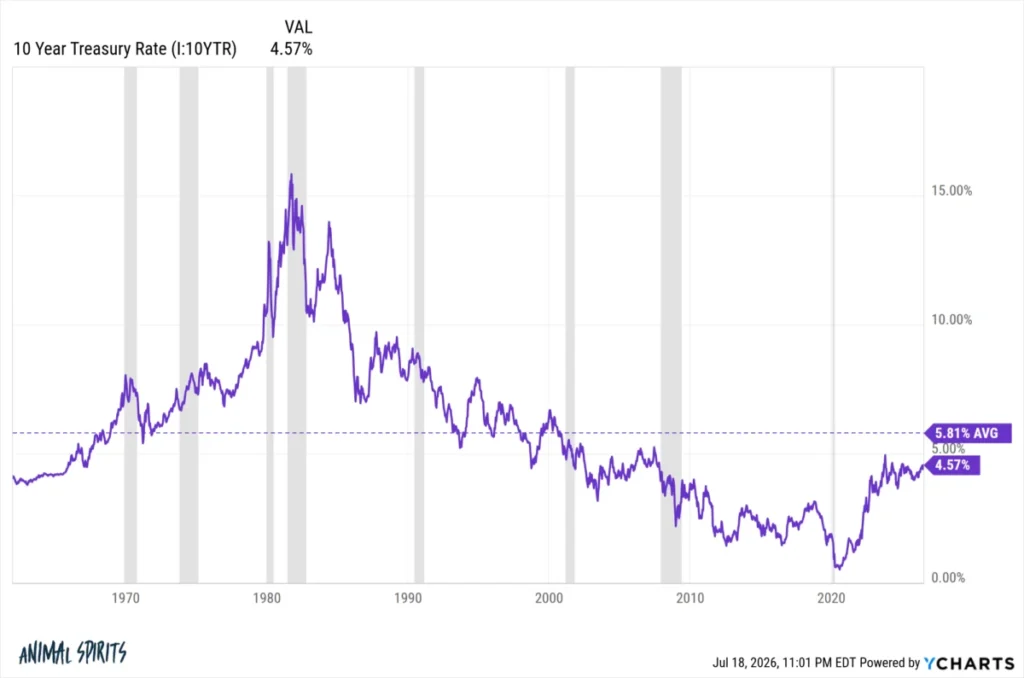
Ben Carlson opens with a striking observation: traditional, prolonged recessions appear to be a vanishing act in the modern U.S. economy. Drawing on historical data from the National Bureau of Economic Research (NBER), which tracks U.S. expansions and contractions back to the 1850s, he highlights a stark trend: recessions are now "fewer and far between than they used to be." Specifically, Carlson points out the remarkable fact that the U.S. has experienced only one recession in the past 17 years, a brief two-month contraction that notably lacked a credit cycle component. This stands in stark contrast to the frequent and often severe downturns of previous centuries.
Chronology and Supporting Data:
Historical NBER data reveals a dramatic shift. The 19th and early 20th centuries were characterized by frequent, often deep, and relatively short economic contractions. The average length of an economic expansion has significantly increased over time, while the frequency of recessions has declined. For instance, the period from 1854 to 1919 saw 22 business cycles, with an average expansion of 27 months and an average contraction of 21 months. Fast forward to the post-World War II era, and particularly the last few decades, the landscape has changed dramatically. The "Great Moderation" period, roughly from the mid-1980s to 2007, was already noted for reduced volatility in economic cycles. The trend has seemingly accelerated since, culminating in the single, pandemic-induced two-month recession of 2020. This particular downturn, while sharp, was unprecedented in its brevity and its origin, being an external shock rather than a culmination of internal economic imbalances.
Official Responses and Economic Theories:
Several factors are cited for this newfound stability. Carlson attributes it to a U.S. economy that is "far bigger, more mature and diversified," with technology playing an increasingly dominant role and a larger proportion of the workforce in the service sector. Unlike manufacturing, which can experience sharp, inventory-driven cycles, the service sector tends to be more resilient to sudden shocks. Furthermore, corporations are described as "better run and more efficient," benefiting from improved risk management, diversified revenue streams, and global supply chains that, despite recent disruptions, generally offer flexibility.
Crucially, "policy makers are quicker to respond when disruptions do occur." This points to the enhanced role of central banks and governments. Post-Great Depression and particularly after the 2008 financial crisis, monetary policy tools have been refined, and fiscal stabilizers (like unemployment benefits and targeted stimulus) have become more robust and swiftly deployed. The Federal Reserve, for example, has demonstrated an increased willingness and ability to intervene decisively to prevent economic crises from spiraling, often employing unconventional measures like quantitative easing and forward guidance. The rapid and massive fiscal response to the 2020 pandemic is a prime example of this accelerated policymaker agility.
Implications:
While fewer recessions might seem like an unalloyed good, Carlson poses a pertinent question: "less frequent recessions hasn’t taken risk out of financial markets. There have still been bear markets. They’ve just been relatively short-lived." This suggests a decoupling of economic stability from market volatility. The implication is that financial markets, driven by sentiment, leverage, and technological trading, can still experience significant downturns even if the underlying economy remains robust. A key concern for the future is whether investors, unaccustomed to prolonged economic contractions, might exhibit "bigger reactions" when the next significant downturn eventually hits. This "recession amnesia" could lead to amplified market panic, even if the economic fundamentals are sounder than in the past, posing a new challenge for policymakers attempting to manage expectations and stabilize markets.
The Housing Market Conundrum: A Recession That Never Was?
Main Facts:
The second major paradox identified by Carlson concerns the U.S. housing market. Historically, housing activity, which constitutes nearly 20% of U.S. GDP, has been a primary driver of economic cycles since World War II. Yet, despite a significant slump in existing home sales — a "crash," as Carlson describes it — the broader economy has not tipped into a recession. This situation is particularly puzzling given that mortgage rates have been "stuck above 6% for 3+ years," leading to some of the worst housing affordability metrics on record.
Chronology and Supporting Data:
The traditional economic model links housing market health directly to economic vitality. Surging interest rates typically cool demand, reduce sales, and can depress prices, leading to a contraction in construction, real estate services, and related industries (furniture, appliances, etc.). This slowdown, in turn, impacts consumer confidence and spending, potentially triggering a wider recession. The period leading up to the 2008 financial crisis serves as a stark reminder of housing’s potential to destabilize the entire economy.
However, the current situation, extending into 2026, defies this historical pattern. Existing home sales have indeed plummeted, reflecting the twin pressures of high rates and elevated prices that make homeownership unattainable for many. Yet, the anticipated domino effect on the broader economy has largely been absent. Carlson posits several mitigating factors: "housing prices never crashed," which is a crucial distinction from 2008. While price appreciation has slowed or even seen modest pullbacks in some areas, a widespread collapse has been averted. Furthermore, "a lot of people locked in 3% mortgage rates" during the ultra-low rate environment of the early 2020s. This has created a significant cohort of homeowners with extremely affordable housing costs, shielding them from the current rate shock.
Official Responses and Economic Theories:
The resilience of the U.S. labor market is another critical factor. Carlson notes that "the unemployment rate has been below 5% for almost 5 years." A robust job market ensures that most homeowners can continue to meet their mortgage obligations, preventing a wave of foreclosures that could otherwise trigger a price collapse. The "wealth effect" also plays a role: even if new purchases are stalled, existing homeowners often feel wealthier due to their accumulated equity, which can support other forms of consumer spending.
Policymakers, particularly the Federal Reserve, have been navigating a delicate balance. While high interest rates were a deliberate tool to combat inflation, there was an implicit hope that the housing market, while cooling, would not collapse. The "rate lock-in effect," where homeowners with low rates are reluctant to sell and buy a new home at much higher rates, has contributed to low inventory, which paradoxically helps support existing home prices by limiting supply. This structural aspect, combined with strong employment and accumulated equity, has created a buffer.
Implications:
The core question remains: "But how long can this last?" The current equilibrium, where a struggling housing transaction market coexists with a relatively stable broader economy, is unusual. If high mortgage rates persist indefinitely, or if the labor market eventually weakens, the housing market’s resilience could be tested. A prolonged period of low transaction volume could eventually impact ancillary industries and economic growth more broadly. Moreover, the lack of affordability poses long-term social and economic challenges, potentially exacerbating wealth inequality and limiting geographic mobility. The current situation represents a significant test case for the theory that housing is the economy, suggesting that under certain conditions, a robust labor market and locked-in low rates can decouple housing transaction activity from broader economic stability, at least for a time.
The Enigma of Interest Rates: Defying the Debt Crisis Narrative
Main Facts:
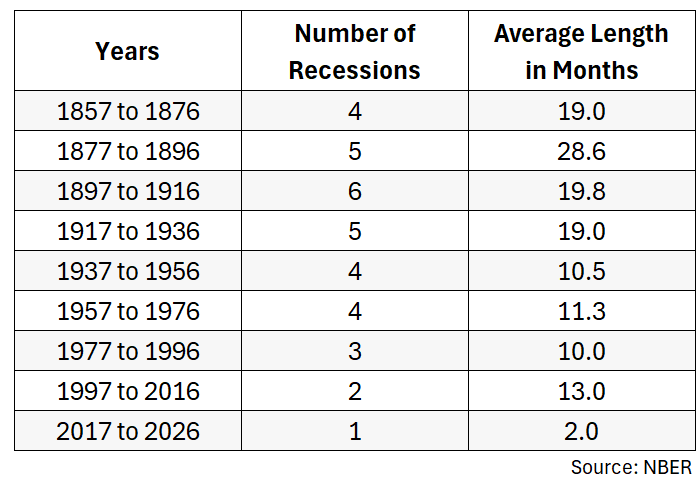
Carlson’s third question directly challenges a widely held economic fear: "Why aren’t rates higher?" He highlights the seemingly contradictory situation where U.S. inflation remains "much higher than it was last decade," government debts are "astronomically high," and fiscal deficits show no sign of abating. Government debt to GDP is near historical highs, comparable only to levels seen during World War II. Despite these indicators, which traditionally would point to surging borrowing costs, 10-year Treasury yields are "well below the average of the past 65 years or so."
Chronology and Supporting Data:
For decades, conventional economic wisdom has linked high government debt and persistent deficits to rising interest rates. The argument is that increased government borrowing competes with private sector borrowing for available capital, driving up demand for funds and thus their price (interest rates). Furthermore, high debt can raise concerns about a government’s ability to repay, leading investors to demand a higher premium to hold its bonds. The post-WWII period, for example, saw rates fluctuate, but they often reacted to inflationary pressures and fiscal expansions.
Carlson provides a visual cue (implied by the original article’s image of 10-year Treasury yields) that current yields, while higher than the near-zero rates of the post-Great Financial Crisis (GFC) era, are still moderate when viewed through a longer historical lens. Many who express alarm about current rates are anchoring their expectations to the abnormally low rates of the 2010s. Carlson argues that "today’s government bond yields are what I would consider normal (if there is such a thing in markets)." This perspective reframes the current rate environment not as excessively low, but rather as a return to a more typical range after an exceptional period of ultra-low rates.
Official Responses and Economic Theories:
The disconnect between high debt and moderate rates requires a deeper explanation. One theory is the "global savings glut," where an excess of savings, particularly from aging populations and export-oriented economies, creates a sustained demand for safe assets like U.S. Treasuries, pushing down their yields. Another factor is the U.S. dollar’s role as the world’s primary reserve currency and the unparalleled liquidity and safety of the Treasury market, making U.S. government debt a default choice for institutional investors and central banks worldwide.
Central bank policies also play a role. While the Federal Reserve has raised rates to combat inflation, it also signals its commitment to financial stability, which reassures bond investors. The concept of "financial repression," where central banks effectively keep rates lower than they might otherwise be to reduce the burden of government debt, has also been debated. Those who predict a government debt crisis, Carlson notes, "should probably have an answer for this one." Their models often fail to account for these structural demands for U.S. sovereign debt and the unique position of the U.S. in the global financial system. Modern Monetary Theory (MMT) also posits that a sovereign currency issuer with its own central bank faces no solvency risk in its own currency, thus interest rates are not dictated by the level of debt in the same way.
Implications:
The persistence of moderate rates despite high debt has profound implications. It allows governments to service their debt at a lower cost, potentially enabling continued fiscal spending on infrastructure, social programs, or defense without immediately triggering a funding crisis. However, it also removes a key market discipline on fiscal profligacy. If the market isn’t punishing high debt with higher rates, there’s less political incentive to curb spending or raise taxes. The long-term risk, though not manifesting in current rates, remains: if global demand for U.S. Treasuries were to wane, or if inflation were to become permanently embedded, the "normal" rates of today could indeed surge, making the debt burden unsustainable. For now, the market seems to be signaling confidence in the U.S. government’s ability to manage its finances, even if the numbers appear alarming on paper.
The Quest for Normalcy: Navigating the 2020s Rollercoaster
Main Facts:
The final question from Ben Carlson encapsulates the prevailing sentiment of economic exhaustion: "Is this a normal economy finally?" The 2020s have been an extraordinary period, characterized by a relentless barrage of shocks. As Carlson lists, "the economy has weathered a pandemic, supply chain shocks, a hot labor market, 9% inflation, a rate hiking cycle, tariffs, energy shocks and multiple wars." This "constant state of flux" has left many yearning for a period of stability and predictability. Carlson muses whether the current situation represents a "normalization."
Chronology and Supporting Data:
The timeline of the 2020s is indeed a chronicle of unprecedented disruptions. It began with the COVID-19 pandemic in early 2020, which triggered the sharpest, albeit shortest, recession in modern history, alongside massive fiscal and monetary interventions. This was followed by severe global supply chain disruptions, fueled by lockdowns and a sudden shift in consumer demand from services to goods. The rebound led to a "hot labor market" and eventually, by 2021-2022, inflation reaching 9%, levels not seen in decades. This necessitated an aggressive "rate hiking cycle" by central banks worldwide. Geopolitical tensions escalated, with the Russia-Ukraine war in early 2022 triggering "energy shocks" and further supply chain stresses. The decade also saw ongoing trade "tariffs" and regional conflicts, contributing to a sense of global instability.
Amidst this maelstrom, the economy has demonstrated surprising resilience, absorbing these shocks without a complete collapse. This resilience itself raises questions about the definition of "normal." Carlson’s parenthetical note about stock market returns ("OK, 10% for the year would feel more ‘normal’ in terms of long-run averages. However, the average gain in an up year is 21% so we’re right on track.") suggests that even market performance, while strong in upturns, is measured against a backdrop of heightened volatility and uncertainty.
Official Responses and Economic Theories:
The concept of "normalization" for policymakers typically involves a return to stable inflation around target levels (e.g., 2%), full employment, and a more predictable growth trajectory without excessive fiscal or monetary stimulus. Central banks have actively sought to "normalize" interest rates and their balance sheets after years of unconventional policies. Governments, too, aim for more sustainable fiscal paths, though political realities often complicate this.
However, many economists argue that the world has entered a "new normal" where higher levels of volatility and frequent, unpredictable shocks are to be expected. Factors such as climate change, ongoing geopolitical fragmentation, rapid technological advancement (including AI), and demographic shifts are seen as creating persistent sources of disruption. The idea of returning to the relatively calm and predictable pre-2020 environment might be anachronistic. Instead, the "normal" might be an economy that is more adaptive, resilient, and capable of absorbing shocks, rather than one free from them.
Implications:
Carlson’s concluding thought, "It probably won’t last," reflects a cautious realism. While a period of relative calm would be welcomed, the structural forces and ongoing global challenges suggest that sustained "normalcy" as traditionally understood might be elusive. The implications for individuals, businesses, and governments are profound. It necessitates a continuous state of preparedness, agility, and robust risk management. Investors might need to recalibrate their expectations for market stability, while policymakers must develop even more sophisticated tools to manage an economy that is constantly adapting to new, often unforeseen, challenges. The 2020s have proven that the global economy is capable of enduring immense pressure, but the cost of that resilience is often a heightened state of vigilance and an acceptance of an ever-evolving definition of what constitutes "normal."
Conclusion: Navigating the Uncharted Waters of 2026
Ben Carlson’s four questions serve as a vital compass for understanding the complex economic terrain of 2026. They highlight a contemporary economy that defies conventional wisdom, characterized by surprising resilience in the face of persistent challenges. The apparent decline in traditional recessions, the housing market’s decoupled stability, and the muted response of interest rates to monumental debt levels all point to structural shifts and policy adaptations that warrant careful scrutiny.
While the yearning for "normalcy" is palpable after a tumultuous half-decade, the very definition of economic stability is being redefined. The ability of the U.S. economy to absorb a cascade of shocks throughout the 2020s suggests a greater inherent robustness, perhaps due to diversification, technological integration, and agile policymaking. However, this resilience does not eliminate risk, particularly in financial markets, nor does it resolve underlying concerns about long-term fiscal sustainability or social equity.
As we move further into the decade, these paradoxes will continue to shape investment strategies, government policies, and individual financial decisions. The answers, or lack thereof, to Carlson’s inquiries will dictate whether the current equilibrium represents a sustainable new paradigm or merely a temporary reprieve before the next, perhaps more unpredictable, economic chapter unfolds. The journey through these uncharted economic waters demands continuous analysis, adaptability, and a willingness to challenge established beliefs about how economies truly function in the 21st century.