U.S. House Passes Major TRIA Reauthorization, Extending Terrorism Risk Backstop Through 2034
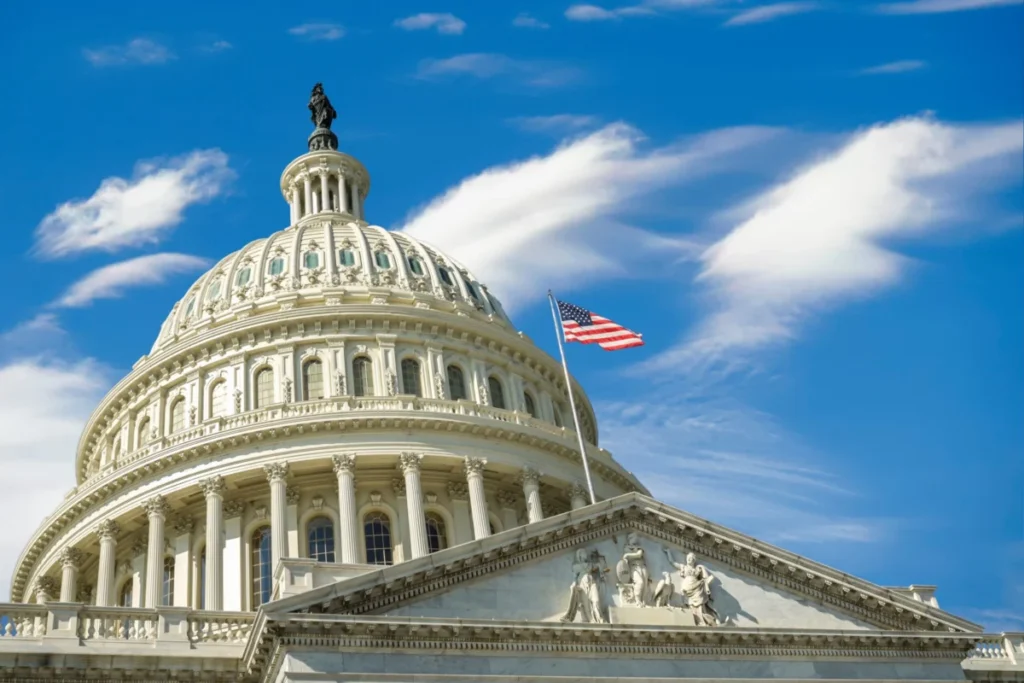
In a decisive move to preserve economic stability and protect critical infrastructure, the U.S. House of Representatives voted overwhelmingly on June 29 to extend the federal terrorism risk insurance backstop for nearly another decade. The legislation, formally titled the TRIA Program Reauthorization Act of 2026 (H.R. 7128), passed with a commanding bipartisan majority of 373-15, signaling a unified congressional intent to preemptively address potential market volatility before the program’s current expiration date in late 2027.
Sponsored by Representative Mike Flood (R-Neb.), the bill aims to sustain the Terrorism Risk Insurance Act (TRIA) framework through December 31, 2034. By providing a federal safety net for commercial property and casualty insurers, the legislation ensures that large-scale development projects—ranging from urban commercial hubs to vital energy infrastructure—continue to be insurable against the unpredictable threat of terrorism.
The Chronology of a Post-9/11 Economic Pillar
The origins of the current program are deeply rooted in the seismic shifts of the global insurance market following the September 11, 2001, terrorist attacks. In the immediate aftermath of the tragedy, commercial insurers were forced to confront an unprecedented and unquantifiable risk, leading many to exclude terrorism coverage from their policies. This "coverage gap" threatened to grind commercial real estate and construction financing to a halt, as lenders require insurance as a condition for financing.
In response, Congress enacted the original Terrorism Risk Insurance Act in 2002. This landmark legislation established a public-private partnership where the federal government provides a backstop for losses arising from certified acts of terrorism, provided that private insurers have fulfilled their obligation to offer such coverage to policyholders.
The program has undergone several cycles of sunsetting and renewal:
- 2002: Initial enactment of TRIA to stabilize the commercial insurance market.
- 2005, 2007, 2015, and 2019: Successive reauthorizations refined the program, gradually increasing the federal government’s threshold for recoupment and the private industry’s retention levels to minimize taxpayer exposure.
- 2026 (Current): The passage of H.R. 7128 marks the most aggressive long-term extension of the program to date, aiming to provide a decade of certainty for developers and insurers alike.
Supporting Data: Why the Backstop Matters
The success of TRIA is often measured not by the claims it pays, but by the economic activity it facilitates. According to industry advocates, the program has been the silent engine behind a quarter-century of urban development.
The Economic Scope
The backstop covers a vast array of assets, including:
- Stadiums and Arenas: High-profile public gathering spaces that are often considered "trophy" targets.
- Energy and Physical Infrastructure: Power plants, electrical grids, and water treatment facilities that are essential to national security.
- Transportation Hubs: Airports, seaports, and transit systems that require high-limit coverage.
- Commercial Real Estate: Large-scale office complexes and manufacturing facilities that anchor regional economies.
Jimi Grande, Senior Vice President of Federal and Political Affairs at the National Association of Mutual Insurance Companies (NAMIC), noted that the program functions at "no cost to the taxpayers" during periods of normalcy. The mechanism relies on private insurers absorbing initial losses before the federal government intervenes, creating a layered approach to risk that incentivizes industry participation while protecting the public treasury.
Official Responses and Industry Advocacy
The House vote was the culmination of months of coordinated lobbying efforts by the nation’s leading insurance trade associations. Prior to the vote, a coalition of influential groups—including the Coalition to Insure Against Terrorism, the Council of Insurance Agents & Brokers, the Independent Insurance Agents & Brokers (the "Big I"), and the Reinsurance Association of America—sent a unified letter to Congress urging swift action.
Preventing Market Uncertainty
The primary argument for early reauthorization is the nature of long-term insurance contracts and construction financing. As Sam Whitfield, Senior Vice President of Federal Government Relations and Political Engagement for the American Property Casualty Insurance Association (APCIA), pointed out, the industry cannot wait until the final hour.
"Insurance contracts can’t operate according to the congressional calendar, and construction projects can’t wait for Congress to act before breaking ground," Whitfield stated. By passing H.R. 7128 in mid-2026, the House has successfully prevented a potential "coverage cliff" that would have emerged as 2027 approached. If the industry had been forced to prepare for a possible expiration of the backstop, premiums would have likely spiked, or coverage would have been restricted, potentially stalling new development projects.
Implications: Refinement and Evolution
While the core of the TRIA program remains unchanged, H.R. 7128 introduces incremental adjustments designed to reflect the shifting landscape of risk and fiscal responsibility. A key feature of the bill is an amendment that increases the minimum threshold for federal intervention.
Starting in 2029, the threshold for losses resulting from a certified act of terrorism—which must currently exceed $5 million in individual losses and $200 million in aggregate industry losses—will see an uptick to $10 million. This change reflects a calculated shift to ensure that the federal government remains a backstop of "last resort," rather than an active participant in managing smaller-scale, manageable insurance events.
The Road to the Senate
Following the House’s decisive 373-15 vote, the focus shifts to the Senate. Industry groups are already calling for the upper chamber to mirror the urgency shown by the House. The goal, as stated by proponents, is to deliver the legislation to the President’s desk before the end of the calendar year.
The political appetite for the bill appears strong. Because TRIA is viewed by lawmakers on both sides of the aisle as a foundational component of economic security, it rarely faces the partisan gridlock that plagues other pieces of legislation. However, the complexity of the federal budget and competing legislative priorities in the Senate mean that advocates are not taking victory for granted.
Assessing the Future Landscape
The long-term extension through 2034 provides a vital sense of permanence to the commercial insurance sector. In an era where the nature of terrorism is evolving—shifting from conventional physical attacks to complex hybrid threats and potential cyber-terrorism—the existence of a stable regulatory framework allows insurers to model and price risk with greater confidence.
However, the debate surrounding TRIA is far from static. As the program enters its third decade, policymakers are increasingly looking at how to bridge the gap between traditional property damage and emerging threats. While H.R. 7128 focuses on the continuation of the existing structure, the period between now and 2034 will likely see further discussions regarding the integration of cyber-risk and the potential for new, more agile response mechanisms.
For now, the House vote serves as a powerful testament to the value of the public-private partnership. By shielding the economy from the volatility of terrorism, the U.S. government has once again opted to prioritize market stability, ensuring that the wheels of commerce continue to turn, regardless of the security challenges that may arise on the horizon.
Conclusion
The passing of H.R. 7128 is a significant legislative achievement that secures a decade of continuity for the U.S. economy. By acting early, the House of Representatives has mitigated the risk of market disruption and reinforced the insurance industry’s capacity to support the nation’s most critical developments. As the bill moves to the Senate, the focus will remain on the necessity of providing a clear, predictable environment for the stakeholders who build, staff, and insure the backbone of the American economy. Through the continued, disciplined application of the TRIA framework, the United States remains committed to a resilient infrastructure capable of withstanding both the known and unknown risks of the 21st century.