Treasury and IRS Issue Landmark Regulations to Automatically Enroll Millions of Children in Trump Accounts
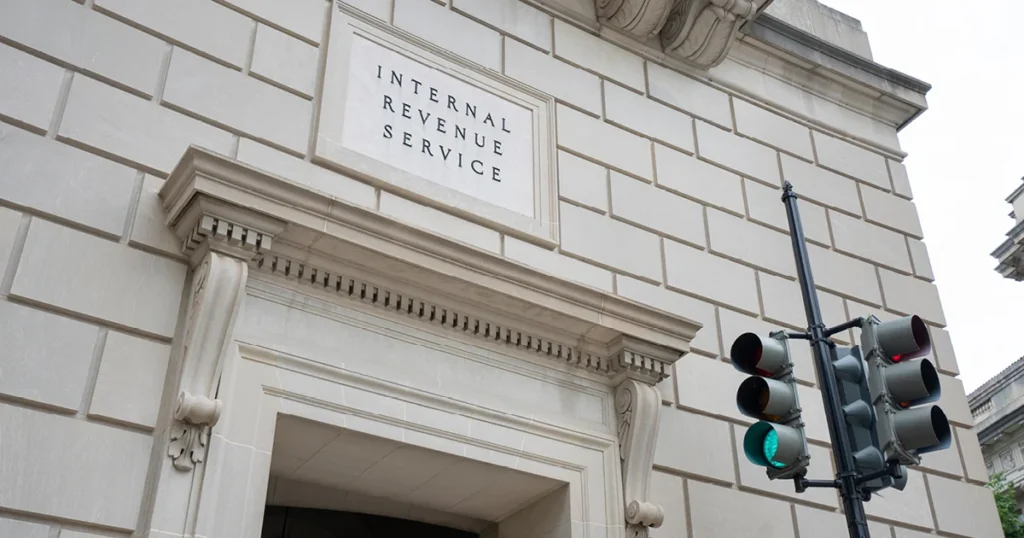
WASHINGTON — In a sweeping regulatory move expected to dramatically reshape the financial landscape for America’s youth, the U.S. Department of the Treasury and the Internal Revenue Service (IRS) have issued temporary (T.D. 10056) and proposed regulations (CC-00226466-26) that pave the way for the automatic enrollment of eligible children into "Trump accounts."
The announcement, released on Tuesday, follows months of intense policy debate and technical problem-solving. By establishing a novel structural workaround to clear previous legal and administrative roadblocks, the federal government aims to bring tens of millions of children into the fold of a newly minted savings vehicle. According to Treasury estimates, the new rules will increase the number of children equipped with Trump accounts by more than 60 million in 2026 alone, directly impacting approximately 73 million children across 44 million families nationwide.
The policy change addresses a long-standing concern among financial professionals, tax experts, and advocacy groups: that voluntary-opt-in models would leave vulnerable or uninformed families behind, resulting in abysmal participation rates. With the stroke of a federal pen, automatic enrollment is projected to bridge that gap, ensuring near-universal participation and unlocking billions of dollars in both public and private philanthropic capital.
Main Facts
At the core of the new regulatory framework is a mechanism that permits the Treasury Department to proactively establish Trump accounts on behalf of eligible children who do not already have them. Furthermore, the agency is authorized to make the necessary administrative elections required to trigger government-funded contributions.
What Are Trump Accounts?
Authorized under H.R. 1, P.L. 119-21—widely known as the OBBBA—Trump accounts represent a completely novel category of individual retirement accounts (IRAs) explicitly tailored for minors. Under the pilot program framework established by the legislation, eligible children are slated to receive a $1,000 federal contribution seed money designed to compound over decades.
Key Operational Pillars of the New Regulations:
- Automatic Establishment: The Treasury can now open accounts directly, eliminating the need for parents or guardians to navigate complex financial paperwork.
- The "Responsible Party" Concept: The regulations preserve the legal framework for a designated "responsible party" to act on the child’s behalf once the account is active.
- Master Group Trust Innovation: To bypass strict federal privacy laws that previously prevented the government from accessing or utilizing taxpayer data for automatic enrollment, the IRS and Treasury engineered a secure master group trust structure. This innovation permits seamless account creation without compromising sensitive personal tax information.
- Qualified Stock Contributions: The guidance lays out explicit rules governing how corporations and philanthropists can make tax-favored stock contributions directly to these accounts, a move expected to inject billions in additional annual funding.
Chronology of Events
The path to automatic enrollment has been a fast-moving policy evolution, driven by legislative victories, administrative roadblocks, and aggressive advocacy from professional accounting bodies.
The Legislative Foundation (Early OBBBA Implementation)
The journey began with the passage of H.R. 1, P.L. 119-21 (OBBBA), which authorized the creation of Trump accounts as a pilot program to encourage early long-term savings and asset-building for American minors. However, initial guidance issued by the Treasury and the IRS struck a cautious tone. At the time, officials assumed that automatic enrollment was legally and administratively unfeasible due to stringent taxpayer privacy laws and logistical hurdles.
The Maine Grant Program Cautionary Tale
Administrators looked to past precedent for guidance, pointing to a state-level grant program in Maine. Data from that initiative demonstrated that when parents were required to take proactive steps to open accounts for their children, participation stagnated at roughly 50%. Federal officials realized that relying on a purely voluntary opt-in system for Trump accounts would result in millions of eligible children missing out on the $1,000 federal contribution simply due to administrative friction, lack of awareness, or behavioral inertia.
The AICPA Intervenes (February 2026)
Recognizing the impending shortfall in participation, the Association of International Certified Professional Accountants (AICPA) stepped into the fray. In February 2026, the AICPA formally urged the Treasury and the IRS to pivot toward automatic enrollment. The organization argued that without automatic mechanisms, marginalized, low-income, or simply uninformed families would be left behind. The AICPA emphasized that automatic enrollment was the only viable path to promote equitable access and strip away procedural barriers.
The Breakthrough and Present Day (Tuesday’s Announcement)
Behind the scenes, Treasury and IRS technologists and attorneys worked to untie the Gordian knot of legal constraints. By designing the master group trust structure, they successfully bypassed disclosure limitations. This breakthrough culminated in Tuesday’s joint release of temporary (T.D. 10056) and proposed (CC-00226466-26) regulations, immediately shifting the national savings landscape from a sluggish opt-in model to an expansive, universal enrollment program.
Supporting Data and Financial Projections
The numbers associated with the new Trump account regulations are staggering, illustrating an unprecedented mobilization of public and private wealth aimed at youth asset-building.
- 73 Million Affected Children: Federal modeling indicates the rules will touch roughly 73 million children residing in 44 million households across the United States.
- 60 Million New Accounts in 2026: The transition from voluntary to automatic enrollment is projected to spike active accounts by over 60 million within the current calendar year. By contrast, a voluntary system likely would have captured only half that number, mirroring the Maine pilot data.
- The Dell Foundation Pledge: Demonstrating the immense appetite of the philanthropic sector for this vehicle, the Michael and Susan Dell Foundation has already committed a landmark $6.25 billion pledge targeted at qualifying children. Treasury officials note that numerous other corporate donors and private foundations have signaled strong interest in following suit.
- Billions in Annual Stock Contributions: By establishing clear, predictable rules for qualified stock contributions, the regulations are expected to unlock billions of dollars annually in general funding. Publicly traded domestic corporations can now contribute shares directly, which will be systematically allocated across the accounts of tens of millions of children.
Official Responses and Stakeholder Reactions
The release of the regulations has drawn widespread praise from financial planners, tax professionals, and policy advocates, though it has also sparked discussions regarding operational execution.
In the preamble to the temporary regulations, Treasury officials underscored the deliberate choices made to maximize participation and funding appeal:
"The major areas of discretion in the temporary regulations require the [Treasury] Secretary to create Trump accounts for eligible children, allow contributions to approved classes to receive the same treatment as contributions to qualified classes, and allow general funding contributions to be made with stock of publicly traded domestic corporations," the preamble stated.
"All of these decisions increase the appeal of funding contributions to classes of Trump account beneficiaries and are expected to result in billions of additional dollars per year in general funding contributions, which will be allocated across the Trump accounts of tens of millions of children."
The AICPA has been a vocal champion of this outcome. Following the rule release, the organization quickly updated its comprehensive resources, including its specialized "FAQs and Insights" portal, to help certified public accountants (CPAs) and tax practitioners advise their clients.
Backing up its February policy stance, the AICPA reiterated that the automated structure successfully eliminates the "awareness gap." By removing the burden from exhausted or busy parents, the federal government has ensured that the intended beneficiaries—America’s children—will actually receive the financial assets legislated by Congress.
Implications for Families, Taxpayers, and Financial Professionals
The shift to automatic enrollment in Trump accounts carries profound implications across multiple facets of American society, economics, and tax administration.
For Families and Children
For millions of families who might otherwise have remained entirely unaware of H.R. 1 or the OBBBA pilot program, this policy represents an unexpected financial windfall. A guaranteed $1,000 federal contribution, compounded over the course of a child’s minority before transitioning into a standard retirement vehicle, provides a foundational financial springboard. Crucially, because the government handles the heavy lifting of account creation via the master group trust, parents are spared administrative headaches, paperwork, and compliance anxiety.
For Corporate Philanthropy and Donors
The integration of qualified stock contributions opens an entirely new avenue for corporate social responsibility (CSR) and institutional giving. Companies can now distribute shares of publicly traded domestic corporations to broad classes of Trump account holders. This not only yields potential tax advantages for the corporate donors but also links the financial success of America’s youth directly to the broader performance of the U.S. stock market. The $6.25 billion commitment from the Michael and Susan Dell Foundation serves as a proof-of-concept, suggesting that large-scale corporate endowments directed at children’s savings could become a permanent fixture of the American economy.
For CPAs and Tax Professionals
Tax practitioners face a new operational environment. Accountants must familiarize themselves with the intricacies of Trump accounts under Section 530A, understanding how these vehicles interact with traditional IRAs, gift taxes, and family wealth planning. With the AICPA updating its guidance resources, CPAs will play a vital role in helping "responsible parties" manage, monitor, and optimize these accounts as children grow. Furthermore, corporate tax specialists will need to master the rules governing qualified stock contributions to advise corporate clients looking to participate in large-scale funding rounds.
Operational and Administrative Challenges
While the use of a master group trust brilliantly solves the taxpayer privacy dilemma, the sheer scale of managing tens of millions of newly minted accounts cannot be understated. Treasury, the IRS, and financial custodians will face immense logistical pressures to ensure data integrity, prevent fraud, and maintain seamless communication channels with designated "responsible parties" as children age into control of their assets.
As 2026 unfolds, the eyes of the financial world will remain fixed on the rollout of the Trump account initiative. What began as a legislative experiment is rapidly transforming into one of the largest asset-building programs in modern U.S. history, fundamentally altering how generations of Americans begin their financial lives.