Tragedy in Central Park: Teenager Dies After Carriage Horse Bolts, Reigniting Fierce Debate Over Industry Future
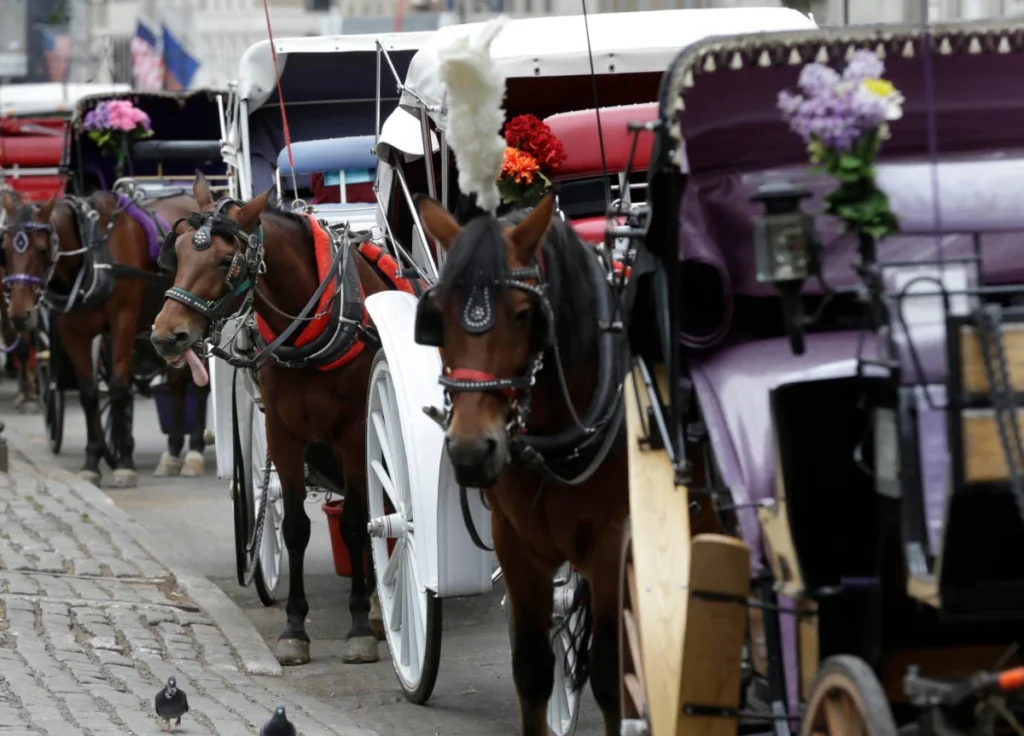
NEW YORK — A picturesque afternoon in Central Park turned into a scene of unimaginable horror this Wednesday, as a carriage horse bolted from its driver, leading to a high-speed accident that claimed the life of an 18-year-old passenger. The fatality, which occurred just before 3:00 p.m., has sent shockwaves through the city and reignited a volatile, decades-long debate over the presence of horse-drawn carriages in one of the world’s most densely populated urban landscapes.
The Incident: A Routine Ride Turns Fatal
The teenager, whose identity has not yet been released pending family notification, was one of four passengers enjoying a carriage ride through the winding paths of Central Park. According to preliminary reports from the New York Police Department (NYPD), the ride took a catastrophic turn when the horse suddenly spooked and bolted, tearing away from the driver’s control.
Eyewitness accounts and video footage captured the harrowing moments as the carriage careened through the park’s busy loop. The momentum of the runaway animal caused the four-wheeled vehicle to sway violently. In a desperate attempt to escape the out-of-control carriage, at least two passengers were seen leaping from the moving cab. The situation escalated when the carriage clipped the wheels of another vehicle in the vicinity, causing it to topple over with lethal force.
First responders arrived to find the 18-year-old in critical condition. Despite being rushed to a nearby hospital, the victim succumbed to their injuries. The three other passengers in the carriage miraculously escaped with only minor injuries, refusing further medical intervention at the scene.
Chronology of a Crisis
The incident did not occur in a vacuum; it follows a string of recent, highly publicized distress signals from the carriage industry.
- Last Week: A horse collapsed and died while in the park, sparking immediate outcry from animal welfare advocates and calls for stricter oversight from park officials.
- Wednesday, 3:00 PM: The fatal accident occurs. Video footage shows the horse sprinting through the park before the carriage collision.
- Wednesday Evening: The Central Park Conservancy and various city officials begin issuing statements, highlighting a growing consensus that the status quo is no longer sustainable.
- Thursday Morning: Calls for a formal, multi-agency investigation gain momentum, with the Transport Workers Union (TWU) expressing an urgent need to examine safety protocols.
Official Responses and Internal Discord
The investigation into the circumstances of the crash has already unearthed a potential breach of safety protocol. Alexander Kemp, administrative vice president of the local chapter of the Transport Workers Union, which represents the carriage industry, confirmed that the driver had dismounted from his post to take a photograph of his passengers—a clear violation of safety regulations.
"The driver was not supposed to be off the carriage," Kemp stated. "We are pushing for a full investigation into what caused the horse to bolt, but we recognize that safety in the park has been a growing concern among many. Improvements need to be made with respect to all vehicles, including e-bicycles, delivery vehicles, pedicabs, and horse-drawn carriages."
Kemp also noted that the horse involved in the incident had been in the park for only six weeks, raising questions about training, acclimation, and the suitability of animals for the high-stress environment of New York City’s streets and parks.
The Central Park Conservancy, the nonprofit entity responsible for the maintenance and operations of the 850-acre landmark, offered a scathing critique of the industry following the news of the teenager’s death.
"A young man came to enjoy our park and lost his life," the Conservancy said in a formal statement. "That is not an acceptable cost of an antiquated industry operating in the middle of one of the most heavily used public spaces in America."
The Conservancy, which formally advocated for a total ban on horse-drawn carriages last summer, has doubled down on its position, arguing that the recent "back-to-back" incidents prove that the carriage trade is fundamentally incompatible with the safety requirements of modern urban life.
The Industry Under Siege: A 150-Year Legacy
The carriage industry in New York City has long occupied a paradoxical space in the public consciousness. To many tourists, the carriages are a "quaint" reminder of a romanticized Gilded Age, a slow-paced respite from the frantic energy of the metropolis. To the hundreds of employees—including drivers, stable hands, and affiliated farmers—it is a vital source of livelihood.
However, the industry has been on the defensive for years. Opponents argue that forcing horses to navigate high-traffic, concrete-heavy environments—often in extreme temperatures—is inherently inhumane. Furthermore, as the city has seen a surge in delivery vehicles, e-bicycles, and pedestrian traffic, the "busy loop" of Central Park has become a chaotic artery where a horse-drawn carriage is increasingly seen as a safety hazard.
The political landscape is equally fractured. While the NYC Council Committee recently rejected a proposed total ban on carriages, the momentum appears to be shifting. The recent fatalities have provided fresh ammunition to activists who argue that the city is prioritizing a tourist attraction over the safety of its citizens.
Implications for Public Policy and Urban Planning
The death of the teenager marks a watershed moment for the City Council. As the city grapples with the fallout, several key policy questions are coming to the forefront:
1. The Question of Regulation vs. Abolition
City officials must now decide whether to implement stricter regulations—such as mandatory safety training, increased frequency of veterinary inspections, and stricter prohibitions on driver behavior—or if the risks inherent to carriage operations are simply too high to manage.
2. The Multi-Modal Conflict
The park is not just a place for carriages; it is a shared space for millions of people. The conflict between high-speed e-bikes, commercial delivery vehicles, and historic, slow-moving carriages is a microcosm of New York’s broader struggle to manage its limited public space. The death of the 18-year-old has highlighted that, in the event of a collision, the carriage is often the most vulnerable party, yet also the most unpredictable one.
3. Economic and Cultural Impact
Proponents of the industry argue that removing the carriages would be an erasure of a cultural institution. They suggest that the problem is not the carriages themselves, but rather the lack of proper management and the failure of individual drivers to follow existing safety protocols. The economic impact on those whose livelihoods depend on the industry—from the stable workers to the tourism operators—remains a significant factor in the political calculus.
Looking Forward: A Call for Transparency
As the NYPD’s Collision Investigation Squad continues its work, the city is bracing for a tense period of debate. The investigation will likely focus on the horse’s history, the specific actions of the driver, and whether the safety measures currently in place were sufficient to prevent such a tragedy.
For the family of the 18-year-old victim, the loss is irreparable. For the city, the event serves as a grim reminder of the friction between New York’s historic past and its high-velocity future. As the Central Park Conservancy and other civic groups renew their calls for an end to the industry, the carriage trade faces its most existential threat in its 150-year history.
Whether this tragedy leads to a complete transformation of the park’s traffic policies or a total ban on the carriage industry remains to be seen. What is clear, however, is that the image of the horse-drawn carriage—once a symbol of New York’s romantic elegance—is now inextricably linked with the image of a park struggling to reconcile its heritage with the safety of those who visit it every day.
This report is based on current findings from the New York Police Department and statements from the Transport Workers Union and the Central Park Conservancy. Further updates will be provided as the investigation progresses.