The Vanishing Roof of the World: Tibet’s Systematic Erasure and the Global Moral Crisis
By Brahma Chellaney
July 10, 2026
The self-immolation of exiled Tibetan activist Lobga Rangzen outside the United Nations headquarters in New York on July 2, 2026, serves as a harrowing indictment of the international community’s collective paralysis. Rangzen’s final act was not a manifestation of personal despair, but a calculated, desperate plea intended to pierce the veil of global indifference surrounding the systematic erasure of Tibetan culture, language, and identity under Chinese rule.
As Beijing accelerates its campaign of forced assimilation, the world is witnessing the slow-motion death of one of Asia’s oldest civilizations. This is not merely a regional human rights concern; it is a fundamental shift in the geopolitical architecture of the Indo-Pacific. By homogenizing Tibet, China is not only stripping away the soul of a people but is also consolidating its control over the "Third Pole," the source of Asia’s greatest river systems, thereby securing unprecedented leverage over the continent’s future.
The Facts: A Cultural Erasure in Progress
For decades, the Chinese Communist Party (CCP) has operated under the guise of "modernization" and "development" to implement what experts describe as a program of cultural genocide. The current phase of this campaign is defined by three primary pillars: linguistic suppression, the erosion of religious practice, and the systematic displacement of traditional nomadic lifestyles.
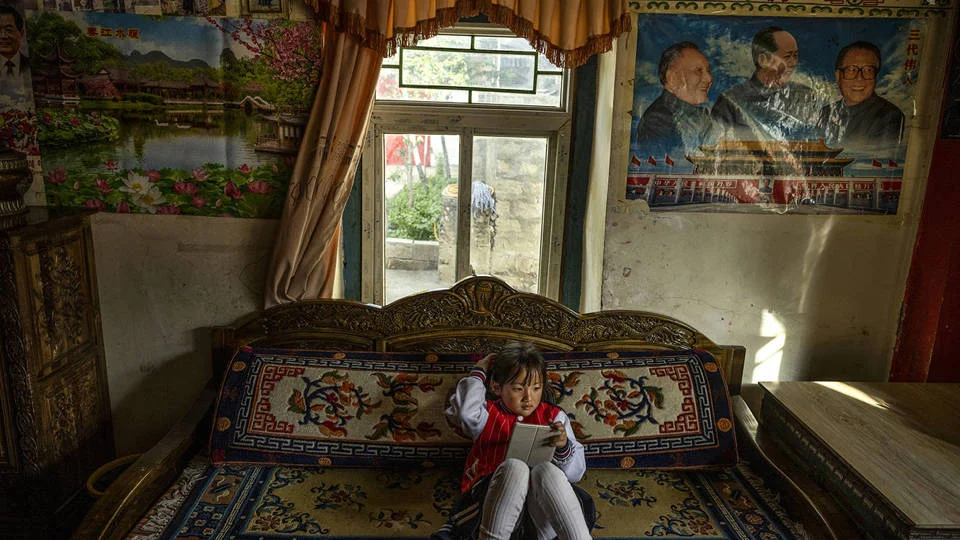
The state-mandated curriculum in Tibet has increasingly marginalized the Tibetan language, replacing it with Mandarin as the primary medium of instruction. Simultaneously, monastic institutions—the historical repositories of Tibetan history and philosophy—have been brought under strict administrative control. Thousands of monks and nuns have been forced into "re-education" programs, while monasteries are increasingly adorned with state propaganda, transforming sites of spiritual contemplation into hubs of ideological indoctrination.
The physical landscape is undergoing a similar transformation. Large-scale infrastructure projects, ostensibly designed to integrate Tibet into the Chinese economic core, have served to facilitate the influx of Han Chinese settlers and the surveillance of local populations. The result is a demographic shift that threatens to render Tibetans a marginalized minority in their own ancestral homeland.
Chronology: The Escalation of Repression
The systematic dismantling of Tibetan autonomy did not happen in a vacuum. It is the culmination of a long-term strategy that has intensified since the early 21st century.
- 2008 – The Lhasa Uprising: Following widespread protests across the Tibetan plateau, Beijing initiated a permanent "security state" model in the region, characterized by ubiquitous surveillance technology and a massive increase in paramilitary personnel.
- 2012 – The Era of Surveillance: China began implementing the "Grid Management" system in Tibet, a granular monitoring framework that allows authorities to track individual movements, religious activities, and social associations in real-time.
- 2018 – The Sinicization Mandate: President Xi Jinping formally called for the "Sinicization of religion," a policy that effectively mandates the subordination of Tibetan Buddhism to the political dictates of the CCP.
- 2023 – The Boarding School Crisis: Human rights organizations documented the forced separation of over one million Tibetan children from their families into state-run boarding schools, where they are isolated from their culture and language.
- 2026 – The UN Incident: The self-immolation of Lobga Rangzen highlights the current impasse. Despite numerous UN reports documenting human rights abuses in the region, the international response has remained confined to symbolic statements and non-binding resolutions.
Supporting Data: The Magnitude of the Crisis
The evidence of this erasure is not anecdotal; it is structural. According to reports from the Tibet Action Institute and various UN special rapporteurs, the scale of state-led intervention in Tibet is unprecedented.
Demographic Displacement
Since 2020, data suggests that over 500,000 rural Tibetans have been transitioned into "labor training" programs. These programs effectively remove nomadic populations from their traditional pastures, placing them in industrial manufacturing or service roles where they are subjected to intensive political training.
Digital Totalitarianism
Tibet has become the testing ground for China’s most invasive surveillance tools. Satellite imagery reveals that the density of security checkpoints and facial recognition cameras in Lhasa far exceeds that of any other region in China, including the high-security zones of Xinjiang.
Environmental Weaponization
Tibet holds the world’s largest reserve of freshwater outside the polar regions. By damming the transboundary rivers—including the Brahmaputra, Mekong, and Indus—China has effectively gained "water hegemony." This allows Beijing to control the water security of billions of people downstream, a strategy that is directly facilitated by the pacification and total control of the Tibetan plateau.
Official Responses: A Diplomatic Vacuum
The international community’s response to the crisis has been characterized by a lack of political will. While the United States and several European nations have passed legislation—such as the Tibet Policy and Support Act—which imposes sanctions on Chinese officials involved in the repression, these measures have yet to deter Beijing.
The UN Dilemma
The United Nations has been notably cautious. While individual rapporteurs have raised alarms regarding the boarding school system, the body as a whole remains gridlocked. China’s status as a permanent member of the Security Council allows it to veto any substantive investigative action, effectively neutralizing the UN’s primary human rights mechanisms.
Beijing’s Narrative
China’s official position remains rigid. The Ministry of Foreign Affairs consistently characterizes any criticism of its Tibetan policies as "interference in domestic affairs." Beijing argues that its presence in Tibet has brought electricity, healthcare, and economic stability to a "feudal" society. This narrative of "benign development" remains the primary diplomatic shield China uses to deflect international scrutiny at global summits.
Implications: A Bolder, More Powerful China
The implications of the international community’s inaction are profound. If China successfully erases the Tibetan identity, it sets a global precedent for how authoritarian regimes can manage "unruly" ethnic peripheries.
The Geopolitical Shift
The consolidation of Tibet allows China to focus its military resources outward. With the Tibetan plateau secured and the population assimilated, the People’s Liberation Army (PLA) has turned the region into a launchpad for strategic maneuvers against India. The militarization of the Himalayan border is a direct result of the total control Beijing now exerts over the Tibetan interior.
The Erosion of Norms
The silence of the international community regarding Tibet erodes the credibility of the global human rights framework. If a civilization can be systematically dismantled without meaningful consequences for the aggressor, then the foundational principles of international law—specifically sovereignty and the right to self-determination—are effectively rendered moot.
The Future of Asia
The "Third Pole" is the heartbeat of Asia. By controlling the environmental and cultural destiny of Tibet, China is securing its future as the unchallenged hegemon of the continent. The loss of Tibetan culture is not just a tragedy for the Tibetan people; it is a loss of the pluralism and diversity that once defined the Asian continent.
Conclusion: The Burden of Silence
Lobga Rangzen’s final act was a scream against the dark. It served as a reminder that behind the sterile language of international diplomacy and the cold metrics of economic development, there is a living, breathing people whose history is being rewritten and whose future is being stolen.
The tragedy of Tibet is that it remains a victim of its own strategic importance. Its environment is too vital to be abandoned, and its location is too sensitive to be ignored. Yet, the world continues to prioritize economic ties with Beijing over the survival of a culture. As we look toward the remainder of the decade, the question is not whether the international community can act to preserve the Tibetan identity, but whether it possesses the moral courage to do so before there is nothing left to save.
Tibet’s erasure is not an inevitability—it is a choice made by those who look away. The memory of Lobga Rangzen demands that we no longer be complicit in that choice.