The Urban Frontline: How Global Cities are Architecting a Resilient, Green Future
In the global struggle against climate change, the narrative is shifting from abstract international accords to the concrete reality of urban centers. While diplomats deliberate in high-level summits, mayors and city planners are translating ambitious climate targets into the tangible language of daily life: cleaner air, lower utility bills, and safer, more resilient neighborhoods. As the world’s population continues to cluster in urban environments, cities have emerged as the primary laboratories for climate innovation—and the new engines of global sustainability.
A burgeoning alliance of international organizations and financial institutions is now moving to supercharge these efforts. By addressing the critical "finance and expertise gap," a new partnership between the Global Covenant of Mayors for Climate & Energy (GCoM), C40, and the European Bank for Reconstruction and Development (EBRD) aims to scale urban climate action from isolated pilot projects to systemic, city-wide transformation.
The Shift Toward Pragmatic Climate Action
For decades, climate policy was viewed through a lens of mitigation—the effort to reduce greenhouse gas (GHG) emissions. However, the modern urban approach is increasingly holistic, marrying mitigation with urgent adaptation.
Mayors are discovering that the most effective climate policies are those that provide immediate "co-benefits." For instance, retrofitting social housing for energy efficiency is not merely an emissions-reduction strategy; it is a poverty-alleviation tool that slashes monthly energy bills for struggling families. Similarly, replacing asphalt-heavy streets with permeable green corridors serves a dual purpose: it mitigates the "urban heat island" effect—a growing threat as temperatures rise—and manages stormwater runoff to prevent localized flooding.
This shift represents a fundamental change in the political economy of climate action. By focusing on quality-of-life improvements, local leaders are successfully building public consensus for projects that might otherwise face resistance.
A Chronology of Urban Climate Leadership
The evolution of city-led climate action has been a decade-long process of scaling, organizing, and professionalizing.
- 2014: The Birth of the Global Covenant of Mayors (GCoM): Formed to provide a unified platform for cities to pledge climate action, GCoM began as a coalition of city networks. It signaled the end of the era where cities operated in isolation, encouraging them to report data on emissions and climate risk.
- 2015–2018: The Rise of C40 and Peer-to-Peer Learning: As cities like Paris, Seoul, and New York began sharing best practices, the "C40" network gained prominence. This era focused on identifying high-impact sectors, such as building standards and public transportation fleets.
- 2019–2021: Bridging the Gap: Recognizing that even the most ambitious cities lacked capital, international bodies, including the World Bank, launched the City Climate Finance Gap Fund. This fund aimed to provide the "early-stage" technical assistance necessary to turn raw project ideas into bankable, investment-ready proposals.
- 2022–2024: The Era of Systemic Scaling: The current period marks a transition toward institutionalized finance. The latest partnership between GCoM, C40, and the EBRD focuses specifically on regions where the "ambition gap"—the distance between what a city wants to do and what it can afford—is at its widest.
Supporting Data: Why Cities Matter
The economic and environmental rationale for urban climate intervention is supported by an overwhelming body of data:
- The Scale of the Network: The Global Covenant of Mayors now spans 14,000 cities across 150 countries, collectively representing over one billion people. This is a demographic and economic footprint larger than most G7 nations.
- Decoupling Growth from Emissions: Many of the world’s most active cities have successfully decoupled economic growth from GHG emissions. By investing in electric public transit and smart-grid energy efficiency, cities like Copenhagen and Singapore have expanded their economies while shrinking their carbon footprints.
- The Cost of Inaction: According to the Intergovernmental Panel on Climate Change (IPCC), urban areas are disproportionately vulnerable to extreme weather. Without systematic adaptation—such as building seawalls, installing cooling systems in public hospitals, and diversifying water supplies—the long-term costs of climate-induced disasters to municipal budgets could reach into the trillions.
- Investment Readiness: The City Climate Finance Gap Fund has already supported over 1,400 cities. The success rate of these projects in attracting private-sector capital suggests that the primary barrier to climate action is not necessarily a lack of money, but a lack of technical expertise in structuring projects to satisfy institutional investors.
Official Responses: Aligning Policy with Action
The collaboration between international development banks and city networks marks a departure from top-down climate governance.
"Mayors are the architects of the future," stated a spokesperson for the GCoM during the recent announcement of the new partnership. "They are on the front lines. They see the heat waves, they manage the infrastructure, and they are held directly accountable by their citizens. Our role is to ensure that their ambition is not stifled by a lack of financial, legal, or technical engineering capacity."
The EBRD, which has historically focused on national infrastructure, has pivoted significantly to support municipal projects. Their rationale is clear: national green transitions will fail if they are not replicated at the city level. By providing credit enhancements and technical assistance, the EBRD is helping to de-risk projects, making them more attractive to private pension funds and green bond investors.
The Implications: A New Model for Global Development
The integration of climate goals into municipal governance has several profound implications for the future of the global economy:
1. The Democratization of Climate Policy
Climate action is becoming decentralized. While national governments often struggle with political gridlock, cities are proving to be more agile. When a city implements a congestion charge or a mandatory building-efficiency standard, the results are immediate. This bottom-up approach creates a "race to the top," where cities compete to attract talent and investment by offering the most sustainable, livable environments.
2. Economic Resilience
Cities that invest in green infrastructure are insulating themselves from the volatility of global energy markets. A city that powers its public transit with local solar or wind energy is less vulnerable to the geopolitical shocks that drive up fossil fuel prices. This is not just environmentalism; it is a core strategy for fiscal stability.
3. The "Bankability" of Green Infrastructure
One of the most significant barriers to urban climate action has been the "bankability" gap. Many cities lack the legal expertise to draft contracts that meet international investment standards. The new partnership’s focus on technical assistance—providing lawyers, financial analysts, and urban planners—is designed to bridge this. By standardizing project development, the partners hope to create a pipeline of "investable" green urban projects that can be replicated globally.
4. Protecting the Most Vulnerable
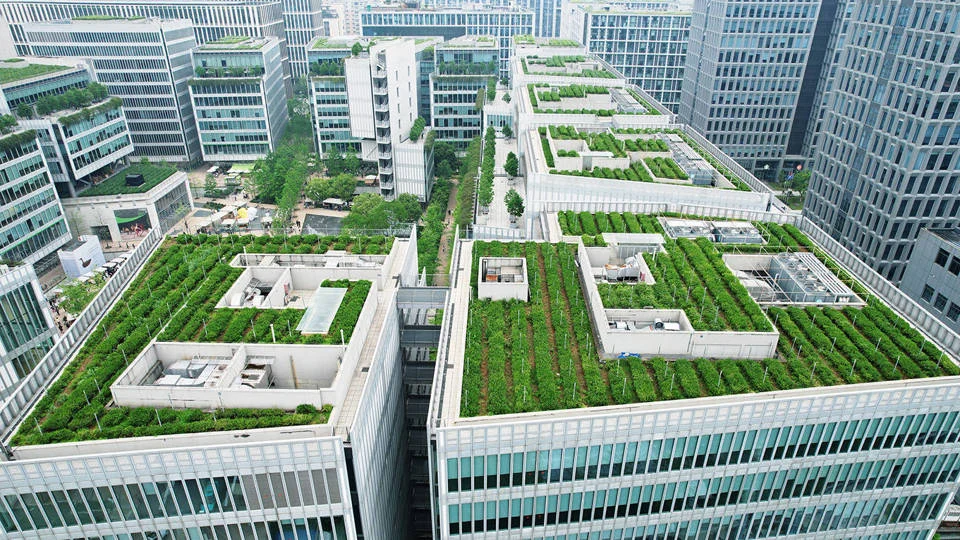
Perhaps the most critical implication of this shift is the focus on equity. Children, the elderly, and lower-income residents are the most susceptible to extreme heat and air pollution. The shift toward adaptation—green roofs, shaded public squares, and improved cooling in social infrastructure—directly addresses the social justice aspects of climate change. It ensures that the transition to a net-zero world does not leave the most marginalized citizens behind.
Conclusion: The Road Ahead
The path to a stable climate is being paved in our streets, our buildings, and our public transport networks. The partnership between GCoM, C40, and the EBRD represents a recognition that the "climate emergency" is, in fact, an "urban opportunity."
As cities continue to take the lead, the lessons learned from these 14,000 municipalities will likely serve as the blueprint for national governments. The message from the urban frontline is clear: climate action is not a burden to be borne, but an opportunity to build more vibrant, healthy, and prosperous communities. With the right financial tools and technical support, the cities of the world are ready to lead the transition, proving that the most effective way to save the planet is to start by improving the lives of those who inhabit its cities.