The Silicon Sovereignty Shift: Z.ai’s GLM-5.2 Challenges the AI Hegemony

In an industry currently defined by the relentless pursuit of "frontier" intelligence and guarded by the iron walls of U.S. export controls, a new disruptor has emerged from Beijing. On June 16, 2026, the lab known as Z.ai released its latest flagship model, GLM-5.2. The release is not merely a technical upgrade; it represents a significant geopolitical statement. By bypassing Western hardware entirely and delivering top-tier performance at a fraction of the cost, Z.ai has sent shockwaves through the global AI market, pushing its corporate valuation to an all-time high.
Main Facts: A New Benchmark for Open Weights
GLM-5.2 arrives as a 744-billion-parameter "Mixture-of-Experts" (MoE) model, boasting a massive 1-million-token context window. For context, this is a fivefold increase over its predecessor, GLM-5.1. Perhaps most significantly, the model is released under an MIT license, ensuring that its weights are essentially permanent, immutable, and immune to potential government-mandated "kill switches" or access restrictions that have become a hallmark of the current era of restrictive AI diplomacy.
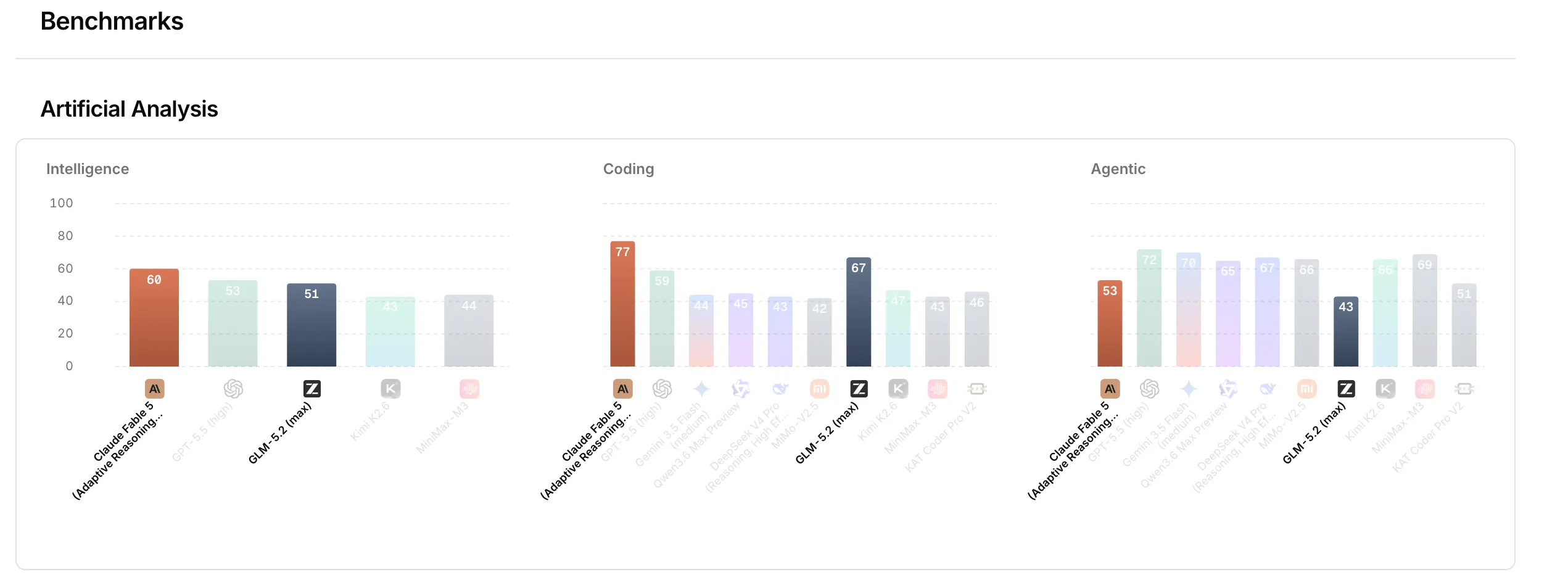
The model’s performance has surprised even its staunchest critics. In head-to-head testing against industry titans like Anthropic’s Claude Opus 4.8 and OpenAI’s GPT-5.5, GLM-5.2 has proven itself to be a legitimate contender for the throne. It is currently ranked as the premier open-source model in the Artificial Analysis Intelligence Index, which aggregates nine distinct performance metrics to establish a general "quality" baseline for large language models.
Chronology: The Road to the Entity List and Beyond
The narrative of Z.ai is inseparable from the escalating U.S.-China technology race. The timeline of its recent rise highlights the resilience of the Beijing-based lab in the face of international sanctions:

- January 2025: Z.ai is officially added to the U.S. Entity List, a designation intended to restrict its access to advanced Western semiconductor technology and software support.
- Early 2026: Reports emerge confirming that Z.ai has successfully pivoted its entire R&D pipeline to indigenous hardware, utilizing Huawei’s Ascend Atlas server architecture to train its models.
- June 2026: The company launches a $1.5 billion war chest, signaling its intent to dominate the open-source ecosystem.
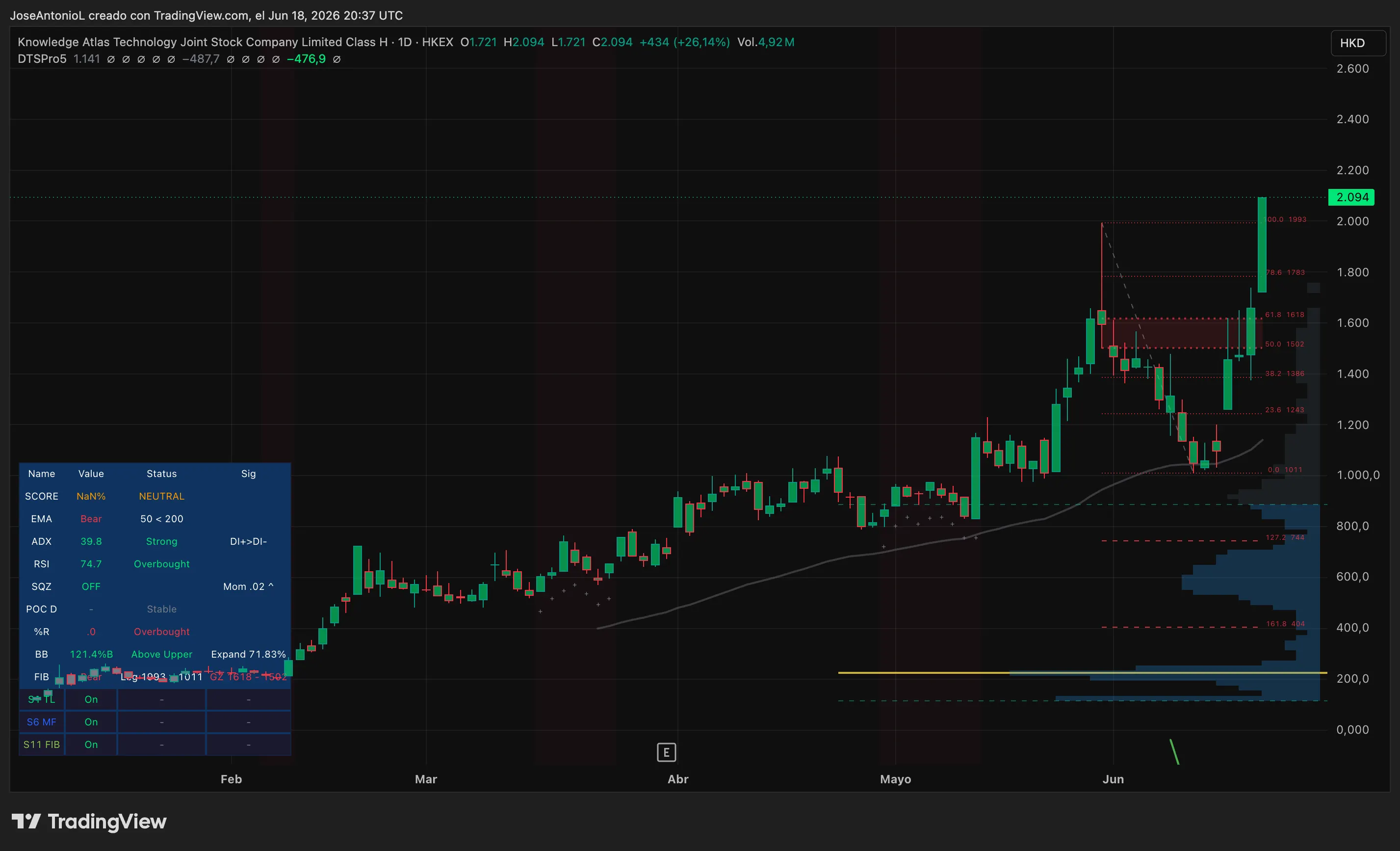
- June 16, 2026: Z.ai drops GLM-5.2. Within 48 hours, the broader market reacted to the news—coupled with the coincidental ban of Anthropic Fable—driving Z.ai’s stock price up 90% and reaching a record market capitalization.
Supporting Data: By the Numbers
The "hype" surrounding GLM-5.2 is backed by rigorous quantitative benchmarking. The model’s performance in technical domains suggests that the gap between open-source models and proprietary closed-source "black boxes" is narrowing rapidly.
The FrontierSWE Benchmark
FrontierSWE evaluates AI agents on their ability to handle open-ended, real-world technical projects, including system optimization and large-scale code architecture. In this arena, GLM-5.2 achieved a dominance rate of 74.4. While this sits just behind Claude Opus 4.8 (75.1), it comfortably edges out GPT-5.5, which clocked in at 72.6.
SWE-Bench Pro
When tested on the autonomous resolution of actual GitHub issues, GLM-5.2 scored a 62.1 pass rate, significantly outperforming GPT-5.5 (58.6) and demonstrating a massive leap over the 58.4 score recorded by its own predecessor, GLM-5.1.
Economic Viability
Perhaps the most startling revelation involves the training cost. Industry analyst Emad Mostaque, founder of Stability AI, has estimated that the total training cost for GLM-5.2 was approximately $25 million—with 80% of that expenditure dedicated to post-training fine-tuning. This is a remarkably lean figure in an industry where training runs for frontier models are frequently estimated in the hundreds of millions, or even billions, of dollars.
The Hardware Pivot: Life Without Nvidia
The most disruptive element of the GLM-5.2 story is the hardware stack. By utilizing Huawei’s Ascend chips, Z.ai has effectively demonstrated that the "bottleneck" of Western sanctions is not the impassable wall that policymakers in Washington hoped it would be.
By training on Huawei’s infrastructure, Z.ai has achieved a level of "silicon sovereignty." This independence means that the model’s development trajectory is no longer susceptible to fluctuations in U.S. trade policy or supply chain interdiction. The model is not only capable of being run in the cloud but, through sophisticated 2-bit GGUF quantizations provided by Unsloth AI, it can be compressed from its massive 1.51TB footprint down to 238GB. While this still requires high-end hardware—specifically a 256GB unified memory setup (such as the M4 Ultra Mac Studio)—it brings near-frontier performance within the reach of high-end workstations and small-scale enterprise data centers.
Implications: A New Economic Order for AI
The emergence of GLM-5.2 poses a series of profound questions for the future of the global AI landscape.
1. The Death of the "Polish" Premium
In testing conducted by researchers, GLM-5.2 displayed a unique capability: output diversity. While it may not always produce the most visually polished UI when tasked with building game mechanics, it excels at generating varied, non-repetitive, and complex game states. This suggests that for agentic workflows—where the goal is functional variety rather than aesthetic perfection—the economic value proposition of GLM-5.2 is currently unmatched.
2. The Price War
With API pricing set at $1.40 per million input tokens and $4.40 per million output tokens, Z.ai is aggressively undercutting the dominant U.S. models. For comparison, Claude Opus 4.8 commands $5 per million input and $25 per million output. This massive price disparity, combined with the MIT license, creates a compelling argument for developers to migrate away from closed, proprietary platforms.
3. The "Hard Task" Gap
It is worth noting that GLM-5.2 is not yet a total replacement for the absolute best models on every task. In "SWE-Marathon" testing, which demands sustained, long-horizon technical problem solving, GLM-5.2 scores a 13.0, while the closed-source industry leaders maintain a score of 26.0. The 13-point gap represents the final frontier: the ability for an AI to maintain perfect, error-free reasoning over hours of complex, multi-stage operations.
Conclusion: A Turning Point
The release of GLM-5.2 is a watershed moment. It serves as a reminder that the global AI race is not just about parameter counts or model architecture; it is about infrastructure, economics, and the ability to operate independently of geopolitical volatility.
For developers, the availability of GLM-5.2 on HuggingFace offers an immediate opportunity to experiment with a powerful, state-of-the-art model that is free from the restrictive "terms of service" and usage policies associated with Western corporate labs. As Z.ai continues to refine its software and its indigenous hardware stack, the industry must grapple with a new reality: the frontier of intelligence is no longer exclusively located in Silicon Valley. Whether this leads to a "balkanized" AI landscape or a more competitive, democratic ecosystem remains to be seen, but one thing is certain—the rules of the game have fundamentally changed.