The Silicon Leverage Loop: How Artificial Intelligence Debt Markets Are Reshaping Global Finance
By Barry Eichengreen
September 10, 2026
HANALEI, HAWAII
Main Facts
The global financial architecture stands at a critical juncture, strikingly reminiscent of the systemic vulnerabilities that preceded the 2007–08 global financial crisis. Just as opaque subprime mortgage-backed securities and runaway debt markets fueled the near-meltdown nearly two decades ago, the modern proliferation of debt tied directly to artificial intelligence (AI) threatens to drive the next major economic shift.
The core issue is not merely the equity valuations of technology giants or the soaring prices of semiconductor manufacturers, but the hidden, highly leveraged debt mechanisms financing the AI revolution.
Today, artificial intelligence dominates both public discourse and private investment strategy. AI-related ventures, infrastructure projects, and speculative startups are largely responsible for the aggressive upward trajectory of the S&P 500 index over the past several years. However, beneath the buoyant equity markets lies a rapidly expanding, under-regulated credit market.
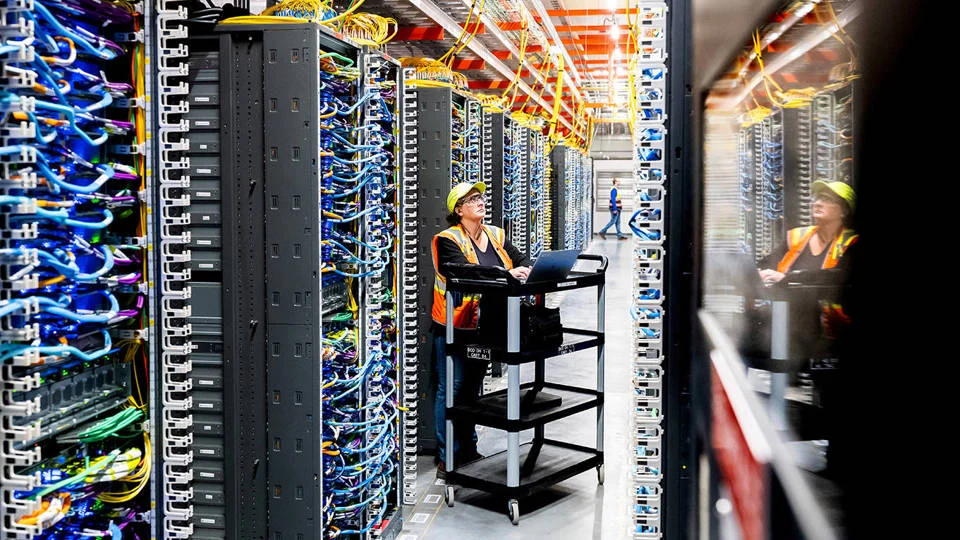
Massive capital expenditures—specifically, the borrowing required to construct, power, and cool hyperscale data centers—have become a major structural contributor to rising global interest rates. In the United States, commercial borrowing for AI infrastructure now directly competes for finite credit pools with a historically deficit-prone federal government.
Despite the systemic importance of these credit flows, regulators, market participants, and economists possess only sparse public information regarding the true scale, interconnectedness, and risk exposure of AI-related debt markets. Financial authorities have thus far failed to demand the transparency needed to map these exposures, leaving the global financial system vulnerable to blind spots eerily similar to those that caught central banks off-guard in 2007.
Chronology: The Evolution of the AI Credit Boom
To understand how the modern AI financing complex reached this precarious state, it is necessary to trace the rapid escalation of capital deployment over the past several years:
- Late 2022 – Early 2023: The public release of generative AI models ignites a global technological gold rush. Initial market reactions focus heavily on software applications, venture capital seed rounds, and equity investments in foundational model developers.
- Late 2023 – Mid 2024: The bottleneck shifts from software to hardware. Demand for specialized graphics processing units (GPUs) skyrockets. Technology conglomerates begin massive capital expenditure (CapEx) programs, self-funding initial phases through record corporate cash flows while quietly establishing credit facilities with private equity and private credit funds.
- Late 2024 – 2025: The scale of infrastructure needs outpaces even the massive balance sheets of big tech firms. Building AI factories—massive data centers requiring gigawatts of dedicated power—demands external financing on an unprecedented scale. Traditional corporate bond issuance, asset-backed securitization of computing hardware, and opaque private credit lending explode.
- Early 2026: AI-related infrastructure borrowing begins to noticeably impact macroeconomic indicators. Sovereign bond yields face upward pressure as corporate debt issuance for data centers crowds out other commercial and public sector borrowers. Regulatory bodies begin holding closed-door sessions regarding systemic risk, but actionable reporting mandates fail to materialize.
- September 2026 (Present): Market analysts draw explicit parallels between the shadow debt structures funding the AI buildout and the collateralized debt obligations (CDOs) of the pre-crisis era. The lack of standardized public disclosures regarding AI debt exposures creates acute pricing uncertainty across global debt markets.
Supporting Data and Market Mechanics
The sheer magnitude of the AI capital expenditure cycle dwarfs previous industrial transitions. To put the current credit expansion into perspective, consider the underlying economic indicators:
- CapEx Concentration: Combined annual capital expenditures by the leading hyperscalers (including Microsoft, Alphabet, Amazon, Meta, and Apple) have surged past historical norms for any single industrial sector, with a disproportionate allocation directed toward AI compute clusters and energy infrastructure.
- Private Credit Growth: A significant portion of the secondary tier of AI infrastructure—specialized cloud providers, regional data center developers, and mid-tier chip-design firms—is financed not through transparent public debt markets, but through the opaque private credit ecosystem. Estimates suggest private credit funds have deployed tens of billions of dollars into leveraged loans collateralized by rapidly depreciating tech assets, such as specialized AI hardware.
- Hardware Depreciation Risk: Unlike traditional real estate or physical infrastructure, AI hardware possesses an aggressive obsolescence cycle. GPUs and specialized tensor processing units (TPUs) face functional depreciation within two to four years. Financing long-term infrastructure with short-to-medium-term debt backed by hyper-volatile, fast-depreciating collateral introduces severe structural asset-liability mismatches.
- The Energy-Credit Nexus: Modern data centers require immense, continuous power loads. Consequently, tech firms are increasingly dipping into project finance markets, issuing green bonds and specialized utility-linked debt to fund dedicated nuclear, natural gas, and renewable energy plants. This intertwines the credit health of the technology sector directly with municipal and regional utility grids.
Official Responses and Regulatory Blind Spots
Regulatory authorities, scarred by the regulatory failures of the 2008 crisis, find themselves once again playing catch-up with financial innovation. However, unlike the post-2008 era—where regulators eventually forced transparency onto derivatives markets via clearinghouses and reporting mandates—the current oversight of AI debt exposure remains fragmented and reactive.
The Federal Reserve and Central Banks
Central bankers have acknowledged in recent policy statements that corporate borrowing for technology infrastructure is placing upward pressure on neutral interest rates ($r^*$). Yet, monetary authorities often treat this as a standard corporate investment boom rather than a specialized credit stability risk. Because much of the borrowing occurs outside traditional commercial banking channels—migrating instead to shadow banks, private equity vehicles, and offshore special purpose vehicles (SPVs)—central bank visibility is severely constrained.
Securities Regulators
The Securities and Exchange Commission (SEC) and international equivalents have faced mounting pressure from institutional investors to establish clearer disclosure guidelines regarding how corporations account for AI-related liabilities, vendor-financing loops, and compute-leasing obligations. Critics argue that current reporting standards allow firms to obscure the true leverage embedded in complex partnerships between cloud providers and AI startups, where tech giants often provide the very capital that startups use to buy their cloud services.
Implications for Global Financial Stability
The systemic implications of opaque AI debt markets extend far beyond the technology sector, threatening broader macroeconomic stability through several key transmission channels:
1. The Circular Financing Trap
A disturbing structural feature of the modern AI ecosystem is "circular financing." Major tech platforms frequently invest equity and extend credit to prominent AI model developers, who in turn use those funds to purchase cloud computing services and hardware from the very same tech platforms. When this ecosystem is lubricated by hidden debt and leveraged credit instruments, any adjustment in projected AI revenue growth could trigger a cascading series of credit downgrades across the supply chain.
2. Contagion to Traditional Credit Portfolios
Institutional investors—including pension funds, insurance companies, and sovereign wealth funds—are heavily exposed to corporate bonds and private credit funds financing the AI boom. If the anticipated monetization of artificial intelligence fails to meet the hyper-optimistic projections currently priced into the market, a wave of credit defaults or corporate restructuring could severely damage institutional balance sheets, affecting ordinary savers and retirees.
3. Macroeconomic Crowding Out
As long as debt markets prioritize the multi-billion-dollar financing needs of AI infrastructure, capital remains scarce and expensive for other vital sectors of the economy, such as traditional manufacturing, small-to-medium enterprises, and residential housing. This structural distortion risks creating a bifurcated economy where high-tech speculation commands subsidized or readily available capital while the real economy struggles under elevated borrowing costs.
4. The Urgent Need for Transparency
History offers a stern warning: the danger of a financial crisis rarely lies in the technology itself, but in the leverage used to finance it. Artificial intelligence is arguably the most transformative general-purpose technology of the 21st century, but its financial architecture is currently built on a foundation of regulatory neglect and informational opacity.
Without immediate, concerted action by global regulators to mandate comprehensive public disclosures of AI-related debt exposures, counterparty risks, and leverage ratios, the financial system risks repeating its most expensive historical mistakes—mistaking technological brilliance for immunity against the laws of economic gravity.