The Robotaxi Reckoning: California’s New Mandate and the Shifting Landscape of Autonomous Mobility
Welcome back to TechCrunch Mobility, your definitive guide to the future of transportation. As artificial intelligence moves from the digital realm into the physical streets of our cities, the friction between innovation and public infrastructure has never been more palpable. This week, we examine a pivotal moment in the robotaxi era: California’s legislative response to the growing pains of driverless technology.
The Main Facts: Accountability on the Horizon
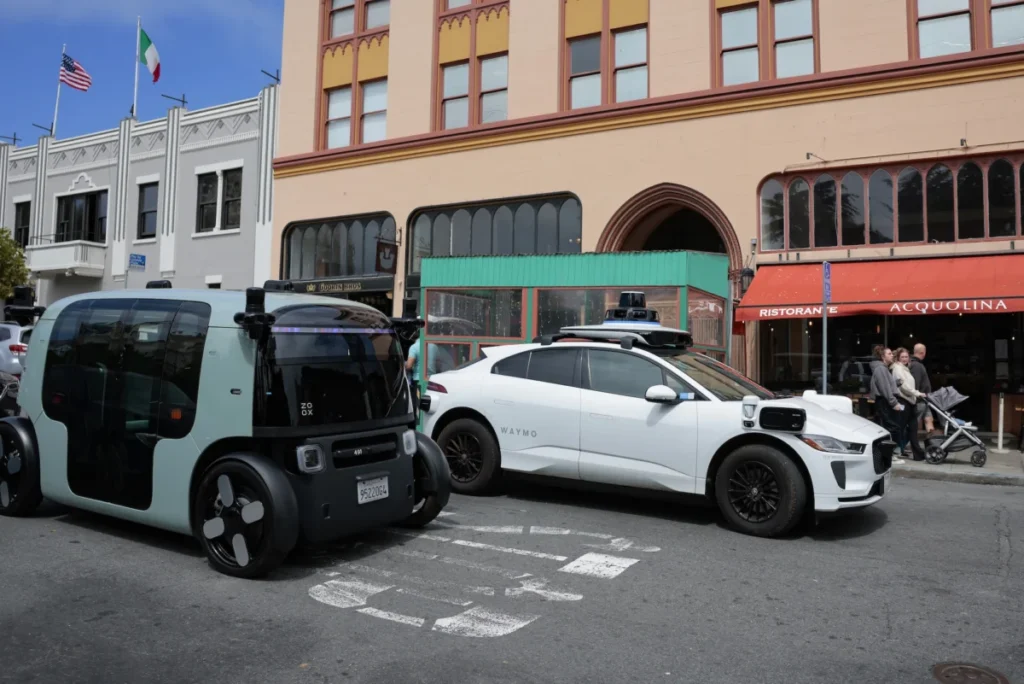
In the bustling urban landscape of San Francisco, the sight of Waymo robotaxis navigating complex intersections is now routine. However, the convenience of autonomous ride-hailing has frequently been overshadowed by reports of operational interference. From obstructing traffic flow to inadvertently driving into active crime scenes and impeding first responders, the deployment of autonomous vehicles (AVs) has sparked a fierce debate over safety and civic responsibility.
To address these mounting concerns, Governor Gavin Newsom signed Senate Bill 1246 into law this week. The legislation establishes a comprehensive regulatory framework for AV operators—including industry titans like Tesla, Waymo, and Zoox—aimed at ensuring that autonomous systems do not jeopardize emergency response times. Under the new rules, companies are required to provide local, on-the-ground support teams to resolve mechanical or software-induced obstacles. Perhaps most significantly, the law institutes financial penalties for operators whose vehicles block police or fire services for more than 30 minutes.
Chronology: A Path to Regulation
The path to Senate Bill 1246 was paved by months of mounting frustration from municipal authorities and public safety advocates.
- Early 2026: Reports of robotaxis stalling in the middle of active emergency zones began appearing with higher frequency, often requiring first responders to manually intervene or navigate around immobilized vehicles.
- Mid-2026: TechCrunch documented several instances where AV companies relied on emergency personnel to relocate their stranded fleets, highlighting a critical gap in remote support capabilities.
- September 2026: Legislators accelerated the drafting of SB 1246, citing the need for state-wide consistency before a second, larger wave of autonomous vehicle expansion hit the market.
- October 2026: Governor Newsom signed the bill into law.
- July 2028: The statutory deadline for the law to take full effect, providing operators a runway to adjust their operational protocols and staffing structures.
Supporting Data: The Cost of Disruption
The necessity for this legislation is backed by a shift in both industry capital and public sector sentiment. The rise of AVs is not occurring in a vacuum; it is being supported by massive infusions of venture capital and corporate credit.
While companies like Tesla have secured $30 billion in new credit lines to scale their "Cybercab" and Optimus robotics divisions, the cost of scaling is not merely financial. It includes the societal cost of data privacy—as evidenced by recent studies from Northeastern University, which found that modern vehicles collect extensive personal data—and the cost of labor disputes. Lyft, for example, recently agreed to a $272.5 million settlement regarding the misclassification of drivers, a reminder that the transition to automation is complicated by the legacy of the gig economy.

In the logistics sector, the pace is equally frantic:
- Harbinger secured a $300 million deal to supply FedEx with 2,000 electric trucks.
- Quartermaster raised $140 million in Series B funding to advance maritime intelligence.
- Kodiak has officially partnered with Ikea to begin driverless deliveries on a 219-mile stretch of Interstate 45, testing the viability of autonomous long-haul logistics.
Official Responses and Regulatory Nuance
The Department of Motor Vehicles (DMV), acting as the primary regulator for California, is currently tasked with the complex work of hammering out the enforcement details. The law mandates that AV developers employ only U.S.-based remote drivers who hold valid domestic licenses—a move intended to ensure that incident response is linguistically and legally synchronized with local authorities.
Furthermore, companies must provide "local incident technicians" who are physically capable of responding to site-specific obstructions. This requirement signals a shift away from the "pure software" approach toward a hybrid model that blends autonomous tech with human boots-on-the-ground support.
Industry reaction has been measured. While companies advocate for the efficiency of their systems, they recognize that the "social license to operate" is fragile. By formalizing these requirements, California is forcing a transition from the "move fast and break things" era of software development to a mature, high-stakes industrial standard.
Implications: Will It Actually Work?
When the law takes effect in July 2028, will it eliminate the chaos? Realistically, it is unlikely to prevent every technical glitch. However, it changes the economics of failure. By attaching monetary penalties and mandatory reporting requirements to every incident, the state is forcing companies to treat "blocking an ambulance" as a high-priority business risk rather than a secondary operational nuisance.
The broader implication is whether California will become the blueprint for the rest of the nation. As states wait to see how the federal government chooses to weigh in on AV regulation, California’s aggressive stance serves as a litmus test. If the law successfully reduces incidents without stifling innovation, other jurisdictions are likely to adopt similar mandates.

The Aurora Factor
The skepticism surrounding the rapid scaling of autonomous fleets remains a hot topic. When Aurora announced its goal of having 30,000 autonomous trucks on the road by 2030, many industry analysts were skeptical. In an interview with CFO David Maday, it became clear that the company is banking on a specific, high-density infrastructure model to achieve this. Whether that goal is "far-fetched" or a visionary roadmap will depend on the very safety and regulatory hurdles that SB 1246 seeks to manage.
Notable Tidbits: Beyond the Robotaxi
- BMW’s EV Strategy: The 2027 3 Series is proof that manufacturers are moving toward platform parity. By offering gas and electric versions of the same vehicle, BMW is testing consumer appetite, with the EV model notably priced $4,400 lower than its internal combustion counterpart.
- Data Privacy: A Northeastern University study of 21 vehicles and 30 apps found that your car is effectively a mobile data harvester, sharing information with firms like Adobe, Meta, and Google.
- SpaceX Milestone: The Starship rocket successfully reached Earth orbit, marking a massive win for the aerospace sector, even if the flight included some dramatic turbulence.
- Rivian’s Record: Despite a recall regarding battery pack fasteners on the new R2 SUV, Rivian has hit record sales, proving that demand for premium EVs remains robust despite manufacturing hiccups.
One More Thing: The Future is Here
As we look toward the future, the conversation is shifting from "what can the technology do?" to "what must the technology prove?"
If you are interested in these questions, join us at Disrupt 2026, TechCrunch’s annual flagship conference in San Francisco. This year, we are hosting high-level panels on "Building AI Systems When Failure Is Not an Option," featuring experts from GM, Shield AI, and Waabi. I will also be sitting down with Rivian CEO RJ Scaringe to discuss the intersection of EVs, robotics, and autonomy.
For our readers, I am offering a 30% discount on tickets to Disrupt using the code mobility30. This is your opportunity to engage with the architects of the future of transportation. Whether it’s the evolution of autonomous trucking or the regulatory hurdles of the robotaxi, the dialogue happens here.
Stay tuned, stay informed, and we’ll see you on the road.
Disclaimer: When you purchase through links in our articles, we may earn a small commission. This doesn’t affect our editorial independence.