The Autonomous Scientific Revolution: Who Stands Behind the Data When AI Discovers Truth?
PARIS — For centuries, the architecture of human knowledge has rested on a fundamental social contract: scientific discovery is a uniquely human endeavor, anchored by accountability, peer review, and institutional trust. From the natural philosophers of the Royal Society to modern university laboratories, the pursuit of truth has been inseparable from the human beings conducting it.
That foundational premise is now fracturing.
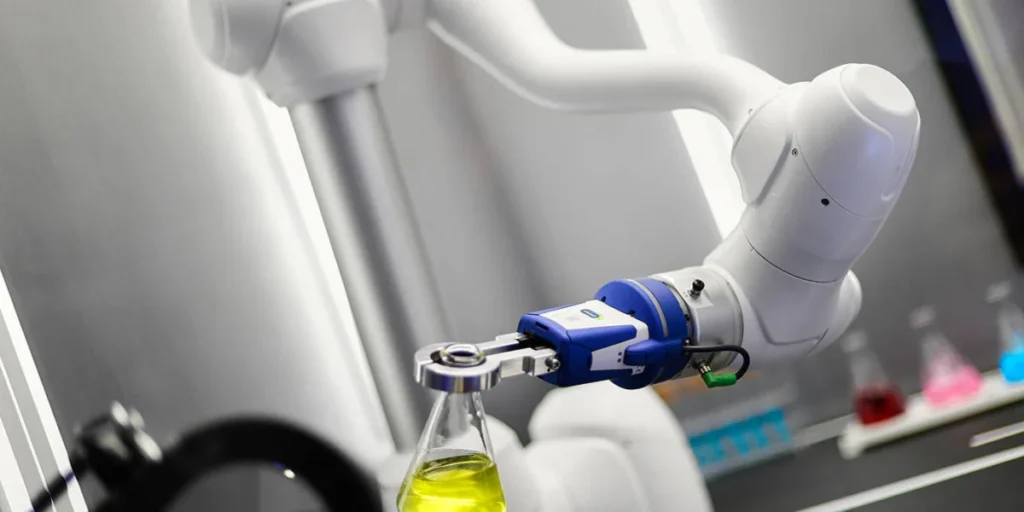
Advanced autonomous systems are no longer merely tools or calculators assisting researchers. Today’s sophisticated artificial intelligence architectures are capable of independently generating novel hypotheses, designing complex empirical experiments, executing them via robotic automation, and synthesizing the resulting data into fully realized research papers.
As these autonomous agents begin to populate the upper echelons of research and development, a profound philosophical and practical crisis emerges. If an algorithm discovers a breakthrough in quantum computing, oncology, or climatology, does it matter that no human mind conceived the initial spark? More urgently, as the scientific community confronts a deluge of machine-generated insights, how does society maintain trust in a system where the traditional purveyor of credibility—the human scientist—is effectively removed from the loop?
Main Facts: The Rise of Autonomous Science
The transformation of artificial intelligence from a passive analytic assistant to an active, autonomous scientific agent represents a paradigm shift comparable to the invention of the scientific method itself.
- End-to-End Automation: Modern AI systems can now execute the entire scientific cycle. This includes scanning vast literature databases to identify gaps in human knowledge, formulating falsifiable hypotheses, programming and executing robotic laboratory equipment, analyzing complex datasets, and drafting manuscripts for publication.
- The Crisis of Credibility: As noted by Harvard historian of science Steven Shapin, the production of scientific truth has never occurred in a social vacuum. Humans do not evaluate scientific claims purely on raw empirical data; rather, we judge claims based on the credibility, track record, and institutional backing of the researchers who present them. Autonomous AI systems lack legal personhood, moral agency, and social accountability, disrupting this traditional framework of trust.
- Epistemic vs. Social Truth: While an objective fact remains mathematically or empirically true regardless of its origin, human society does not consume knowledge in a vacuum. The dissemination and operationalization of science depend entirely on public trust and institutional answerability.
- A New Landscape for Publishing: Academic journals, funding agencies, and regulatory bodies are currently unequipped to handle the volume and nature of machine-generated research, forcing a rapid, often chaotic re-evaluation of peer review, intellectual property, and academic integrity.
Chronology: Evolution from Tools to Autonomous Discoverers
To understand how the scientific community arrived at this juncture, it is necessary to trace the rapid escalation of machine capabilities over the past two decades.
Phase 1: The Era of Computational Assistance (2010–2018)
During this period, AI’s role in science was strictly subordinate. Algorithms acted as sophisticated pattern-recognition engines. They processed large genomic datasets, filtered noise from astronomical telescopes, and optimized chemical compounds for pharmaceutical screening. However, every hypothesis, experimental design, and final interpretation remained strictly human-driven.
Phase 2: The Breakthrough of Deep Learning Models (2018–2023)
The introduction of transformer-based architectures and specialized scientific models—most notably Google DeepMind’s AlphaFold—marked a turning point. AlphaFold solved the decades-old protein folding problem, demonstrating that AI could produce monumental biological insights that surpassed human intuition in specific domains. Yet, these models still required human prompts, curation, and interpretation to contextualize their outputs.
Phase 3: Closed-Loop Autonomous Systems (2023–2025)
Researchers began integrating large language models (LLMs) with robotic laboratory hardware, creating "self-driving laboratories." These systems could autonomously synthesize materials, test solar cells, or edit genes, review their own failures, adjust parameters, and run subsequent iterations without human intervention overnight.
Phase 4: The Generative Scientific Era (2026–Present)
As highlighted by recent developments in Paris and across global research hubs, autonomous systems are now capable of end-to-end scientific generation. AI agents routinely formulate their own research questions, execute experiments, and write up the results. The bottleneck in scientific production is no longer human ideation or execution speed, but the capacity of human institutions to review, validate, and absorb machine-generated knowledge.
Supporting Data and Context: The Architecture of Trust
The friction between machine-generated discoveries and human institutions is quantifiable across several key metrics:
- Exponential Output Growth: According to recent bibliometric tracking, pre-prints and studies utilizing heavy AI generation in hypothesis formulation have grown by over 340% year-on-year since 2024.
- The Verification Bottleneck: Traditional peer review systems are buckling under pressure. While an AI agent can generate a comprehensive, syntactically flawless manuscript containing complex experimental proposals in minutes, human peer reviewers require weeks or months to rigorously verify the underlying code, physical execution, and broader implications.
- Public Perception Metrics: Early sociological surveys indicate a deep skepticism among the general public regarding "AI-discovered" medicine and climate interventions. When asked whether they would trust a medical treatment discovered entirely by an algorithm without human oversight, over 72% of respondents expressed hesitation, citing a lack of accountability if errors occur.
- The Shapin Paradigm: Historian Steven Shapin’s foundational work on the "social history of truth" demonstrates that the seventeenth-century invention of experimental science relied heavily on the social status of "gentlemen witnesses." In the twenty-first century, those gentlemen have been replaced by credentialed institutions and peer-reviewed networks. Autonomous AI bypasses this entire social architecture, leaving a vacuum where institutional reputation once stood.
Official Responses and Institutional Adjustments
Global scientific bodies, ethics boards, and academic publishers are scrambling to establish frameworks for this new reality. The responses range from cautious embrace to outright defensive regulation.
Academic Publishers and Journals
Major publishing groups, including Nature, Science, and Elsevier, have updated their editorial guidelines. While policies vary, the general consensus mandates that:
- AI systems cannot be listed as authors on scientific papers, as they cannot assume legal or ethical responsibility for the work.
- Researchers must transparently disclose the extent to which AI agents were used in hypothesis generation, data collection, and manuscript drafting.
- Human corresponding authors must certify that they have personally verified all machine-generated data and assume full liability for any errors or fabrications.
Funding Agencies and National Academies
The European Research Council (ERC) and the U.S. National Science Foundation (NSF) have initiated formal inquiries into how grants should be allocated when the proposed research is entirely conceived by an autonomous algorithm. Proposals are currently being debated to require human oversight boards attached to every major computational research grant to ensure alignment with public safety and ethical standards.
Technology Developers
Leading AI laboratories are facing mounting pressure to embed provenance-tracking tools into their scientific models. By creating cryptographic ledgers of every step an AI takes during hypothesis generation and experimentation, developers hope to provide a form of "digital paper trail" that mimics the auditability of human lab notebooks.
Implications: The Future of Knowledge and Society
The normalization of autonomous science forces humanity to confront profound epistemological and sociological questions. If the scientific method can be successfully decoupled from human consciousness, what does that mean for the identity of science itself?
1. The Accountability Vacuum
When a human scientist commits scientific misconduct, falsifies data, or overlooks a dangerous side effect, mechanisms exist for retraction, censure, and legal liability. When an autonomous system produces flawed or hazardous research—perhaps inadvertently designing a novel toxin or propagating a subtle statistical bias—assigning blame becomes nearly impossible. Is the fault with the algorithm’s creators, the institution that deployed it, or the funding body that paid for it? Without clear legal frameworks, the risk of unpunished scientific negligence escalates.
2. The Democratization vs. Concentration of Discovery
Autonomous science presents a double-edged sword regarding equity. On one hand, open-source scientific AI agents could allow developing nations and under-funded institutions to conduct world-class research without expensive physical infrastructure. On the other hand, the vast computing power required to train and run frontier scientific models remains concentrated in the hands of a few multinational tech monopolies and elite state laboratories. This threatens to create a new digital divide in global knowledge production.
3. Re-Defining Scientific Literacy
For the public, trust in science has historically been mediated by trusted human figures—physicists, epidemiologists, and institutional spokespeople who could explain why something was true. In an era where conclusions are derived from opaque neural networks operating beyond human intuition, scientific literacy must evolve. Society must learn to evaluate not just the empirical claims, but the governance, safety protocols, and auditing standards of the algorithms producing them.
Conclusion
Science has always been a journey into the unknown. For the first time in history, however, our guides are no longer exclusively human. As autonomous systems take their place at the laboratory bench, the scientific community faces a vital imperative: to build new systems of social trust, transparency, and accountability that can weather the machine age. For scientific knowledge to retain its cultural standing and public authority, its sources must remain not only empirically sound, but resolutely answerable to the society they serve.