The Resilience Blueprint: Mastering Financial Preparedness for Life’s Unpredictable Demands

Life rarely adheres to a neatly balanced spreadsheet. A transmission failure on the morning of a commute, an unexpected medical deductible, or the sudden expiration of a household appliance—these are the "financial friction points" that test the structural integrity of a household budget. When an emergency strikes, the difference between a minor inconvenience and a life-altering crisis is rarely the magnitude of the bill itself; rather, it is the level of proactive financial fortification a person has built.
Financial resilience is not about eliminating risk, as that is an impossible endeavor. Instead, it is about shifting from a reactive stance—where high-interest debt and panic-driven decisions dictate outcomes—to a position of calm, calculated response.
The Anatomy of an Emergency: Why Preparation Matters
Unexpected expenses are the inevitable tax of adulthood. When these costs arise, the immediate emotional response is often one of urgency. This psychological pressure is the greatest enemy of sound financial decision-making. When individuals feel cornered, they are prone to opting for the "fastest" solution—such as predatory payday loans or high-interest credit card debt—rather than the most sustainable one.
Preparation serves as a buffer against this impulse. By building a strategic financial foundation, households gain the luxury of time. This "time-cushion" allows for the comparison of financing options, the negotiation of payment plans, and the utilization of existing resources, effectively lowering the total cost of any given emergency.
Building the Cash Buffer: The Foundation of Security
The emergency fund is the bedrock of fiscal stability. While financial gurus often debate the "perfect" amount to save, the practical reality is that any liquidity is better than none. The primary objective of an emergency fund is not investment growth, but immediate accessibility.
The Strategy of Incremental Growth
Financial planners suggest that building a buffer should not be viewed as a singular, overwhelming hurdle. Instead, it should be treated as a systemic habit.
- Automated Transfers: By treating savings as a non-negotiable monthly bill, individuals can bypass the temptation to spend.
- The "Small-Bucket" Approach: Starting with a modest goal, such as $500 or $1,000, provides a psychological win that encourages further saving.
- Scaling Up: Once a foundational buffer is established, the target should evolve toward covering three to six months of essential living expenses. This duration is widely considered the "gold standard" for weathering major life disruptions, such as a temporary loss of employment.
Radical Transparency: Knowing Where the Money Goes
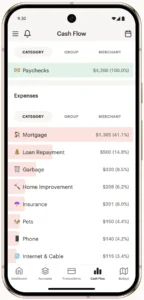
A budget is a diagnostic tool, not a restrictive cage. However, many households fail to realize that their budget is based on "aspirational" spending rather than "actual" spending. To gain control, one must conduct a thorough audit of financial leaks.
Identifying the Silent Drain
Smaller, recurring costs—subscription services, delivery surcharges, and "convenience" retail habits—often act as termites in a financial foundation. They are rarely significant enough to notice in isolation, but in aggregate, they represent thousands of dollars annually that could have been reallocated to an emergency fund.
To correct this, households should adopt a "zero-based" categorization method:
- Fixed Obligations: Rent, mortgage, insurance, and utilities.
- Variable Essentials: Groceries and fuel.
- Debt Service: Minimum payments and aggressive repayment allocations.
- Strategic Savings: Automated allocations for emergencies and long-term goals.
- Flexible Spending: The "discretionary" bucket that must be tightened when the financial climate worsens.
By assigning every dollar a specific purpose before the month begins, households stop wondering where their money went and start directing it toward their priorities.
Strategic Backup Planning: Navigating the Crisis
When an emergency outpaces the available cash in a savings account, it is critical to have a hierarchy of backup resources already identified. The worst time to research a loan or a payment plan is when the pressure of an immediate deadline is looming.
Diversifying Emergency Resources
A robust emergency plan should include a menu of options:
- Institutional Payment Plans: Many medical providers and utility companies offer interest-free or low-interest payment plans if requested early.
- Employer Assistance Programs: Many corporations offer short-term loans or hardship grants that are significantly cheaper than commercial credit.
- Credit Line Utilization: While not a first choice, having a low-interest personal line of credit or a HELOC (Home Equity Line of Credit) ready can act as a bridge. However, these must be treated as emergency "backstops," not as extensions of monthly income.
- External Financing: Products such as those offered by CreditNinja or other specialized lenders can provide fast access to liquidity. However, these must be approached with extreme caution. Before committing, borrowers should calculate the APR, the total cost of borrowing, and how the repayment will impact future monthly budgets.
The Insurance Shield: Protecting Against Catastrophic Loss
Insurance is often treated as an afterthought—an administrative box to check. However, in the context of major life events, it is the primary shield against financial ruin.
The Periodic Coverage Audit
Coverage that was sufficient five years ago may be woefully inadequate today. As life circumstances change—such as marriage, the birth of a child, or significant asset acquisition—insurance policies must be reviewed.
- Health Insurance: Understand your out-of-pocket maximums. A high-deductible plan may save on premiums, but it requires a larger cash reserve to cover the potential deductible gap.
- Disability Insurance: Often overlooked, this is arguably more important than life insurance for working-age adults, as the risk of a temporary illness or injury far outweighs the risk of premature death.
- Property Coverage: Ensure that homeowners or renters insurance covers the replacement cost of items rather than their actual cash value, which depreciates over time.
Removing Weak Spots: The Long-Term Cleanse
Financial vulnerability is often a byproduct of "lifestyle creep." As income rises, so does the weight of debt and high-maintenance obligations. To build true resilience, one must systematically remove the "weak spots" in the balance sheet.
The Debt-Velocity Strategy
High-interest revolving debt (credit cards) acts as a reverse savings account, eroding wealth daily. Prioritizing the elimination of this debt is not just a mathematical necessity; it is a psychological one. Every dollar directed toward interest is a dollar that cannot be used to handle a future emergency.
Furthermore, improving one’s credit score is a long-term strategic investment. A stronger credit score does not just look good on paper; it provides access to lower interest rates and more favorable terms when borrowing becomes unavoidable. It is a form of "financial insurance" that ensures that if you must borrow, the cost of doing so is minimized.
Implications: The Psychology of Financial Confidence
The ultimate goal of financial planning is not just to have money in the bank; it is to attain the psychological state of confidence. When a crisis occurs, the person who has prepared does not experience the same physiological "fight or flight" response as the person who is unprepared.
This sense of agency changes the quality of one’s life. It allows for better sleep, more focused work, and healthier relationships. By moving through the steps of building a cash buffer, auditing expenses, planning for contingencies, and refining insurance coverage, an individual transforms their financial life from a source of stress into a source of stability.
Conclusion: A Continuous Process
Financial preparedness is not a project with a start and end date; it is a continuous, iterative process. It requires regular check-ins with one’s goals and an honest appraisal of the current economic environment.
By acknowledging that emergencies are a statistical certainty rather than a personal failure, households can build the systems necessary to absorb the shocks of life. In the end, the peace of mind that comes from knowing you are prepared is, perhaps, the most valuable asset of all. When the unexpected eventually arrives—as it always does—you will find that you have the tools, the plans, and the resolve to meet it on your own terms.