The Quiet Opportunity: Why 2026 Represents the Best Real Estate Entry Point in a Decade
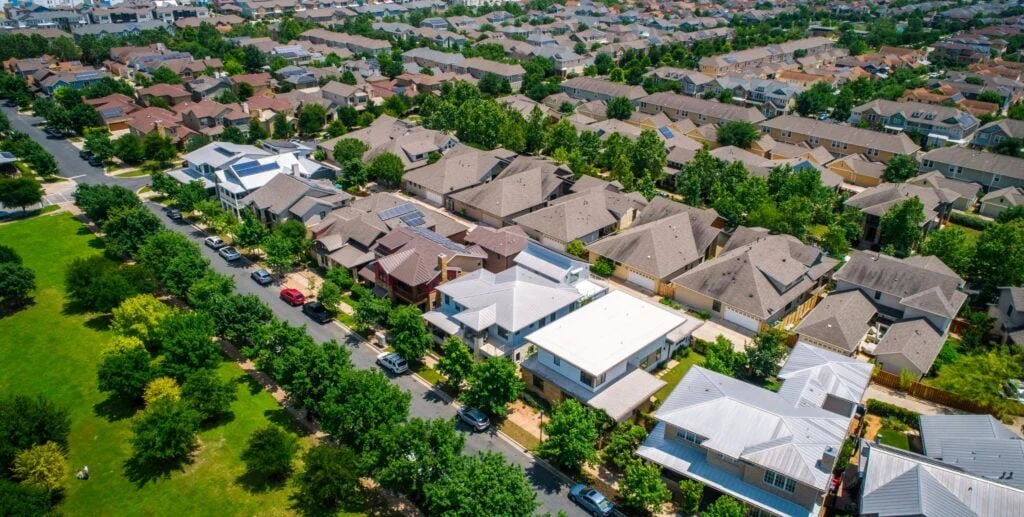
For the past two years, the real estate sector has been defined by a pervasive sense of caution. Following the volatility of 2022, which saw property values tumble by 25% to 30% in the multifamily sector, both active and passive investors have largely retreated to the sidelines. According to recent data from Redfin, retail investor activity—often referred to as the "mom-and-pop" cohort—dipped by 6% late last year, with condo-specific investments seeing a sharper 13% decline.
However, historical market cycles suggest that the very hesitation currently gripping the retail market is precisely what creates generational wealth for those willing to act. While headlines remain dominated by "vibes" and caution, sophisticated institutional players are quietly deploying capital at a historic pace. As we navigate mid-2026, the convergence of stabilizing interest rates, reduced construction pipelines, and corrected asset pricing has created a window of opportunity that seasoned investors are moving quickly to secure.
The Psychology of the Sidelines: Why Retail Investors Miss the Boat
The discrepancy between retail investor behavior and market reality is a well-documented phenomenon. Research from Dalbar, a financial services market research firm, has consistently demonstrated that the average retail investor significantly underperforms the broader market. Over a 20-year window, while the S&P 500 achieved average annual returns of 8.2%, the average retail investor garnered a mere 2.1%.
This massive delta exists because individual investors often prioritize emotional comfort over data-driven analysis. They wait for "all-clear" signals from mainstream media before deploying capital. By the time the headlines turn positive and asset performance becomes universally apparent, the "easy money" phase—characterized by deep discounts and distressed seller motivation—has already evaporated. In real estate, as in equities, waiting for the perfect market conditions usually results in buying at the peak.
A Chronology of the Multifamily Correction
To understand the current opportunity, one must look at the timeline of the post-2022 reset.
- 2022: The Inflection Point: Interest rates and cap rates skyrocketed in tandem, abruptly ending the era of "cheap money." Apartment valuations corrected sharply, dropping by nearly a third in many markets.
- 2023–2024: The Stagnation: Many market observers predicted a swift "V-shaped" recovery. However, persistent inflationary pressures kept the Federal Reserve’s benchmark rates elevated longer than anticipated. Cap rates, which move in lockstep with interest rates, remained high, creating a pricing stalemate.
- 2025: The Distressed Cleanup: Operators who had utilized aggressive, floating-rate debt during the pandemic boom found themselves in a vice grip. Unable to refinance without significant capital injections—which they lacked—many were forced to liquidate assets at steep discounts.
- 2026: The Early Recovery: We are currently in the nascent stages of a sustainable recovery. While prices are no longer in freefall, they remain far below their previous highs, offering a "Goldilocks" environment for new entrants.
Institutional Capital: The Smart Money Moves In
While retail investors are still waiting for a signal, institutional capital is voting with its feet. According to global commercial real estate firm JLL, institutional firms poured $216 billion into apartment buildings, industrial assets, and retail properties in the first quarter of 2026 alone. This represents an 18% increase year-over-year globally, with North American investment surging by a staggering 25%.
Why are these firms moving now? Institutional investors rely on proprietary data models and teams of analysts whose sole mandate is risk mitigation. When these firms increase their exposure, it is rarely a speculative gamble. They recognize that the market has fundamentally re-priced risk. By entering now, they are positioning themselves to capture the upside of a multi-year recovery, utilizing capital structures that are far more resilient than those that crumbled during the 2023 downturn.
The Math of the "New Normal": Why Cap Rates Matter
For the prospective buyer, the high-interest-rate environment is often misunderstood. While it is true that higher rates compress cash flow for those utilizing significant leverage, they also drive up cap rates—the fundamental metric of real estate yield.
Higher cap rates equate to a lower purchase price per dollar of net operating income. As the adage goes, "You marry the property, but date the rate." Investors who acquire high-quality assets at today’s higher cap rates are effectively locking in a superior yield. When interest rates eventually move lower—a trend anticipated by most macro-economists—these investors will benefit from immediate refinancing opportunities, resulting in "supercharged" cash flow and significant appreciation as the asset re-prices to a lower cap rate.
Supply and Demand: The Construction Drought
One of the most compelling indicators for future rent growth is the collapse of the new construction pipeline. During the pandemic, an oversupply of new multifamily units caused a cooling effect on rental rates, particularly in the Sunbelt region.
However, the tide has turned. According to data from the Federal Reserve, housing permits for new apartment construction have plummeted from 761,000 in early 2023 to 491,000 in April 2026—a 35% reduction. Because it takes years for a project to move from permit to certificate of occupancy, this lack of new supply is hitting the market exactly as the economy stabilizes. We are already seeing the effects: national vacancy rates, which peaked in early 2026, are beginning to contract, setting the stage for renewed rent growth.
The Evolution of Underwriting: A Safer Landscape
The carnage of the 2022-2024 period served as a painful but necessary "reset" for the real estate industry. Operators who relied on aggressive pro-formas, excessive floating-rate debt, and speculative rent growth projections have largely been purged from the market.
Today’s underwriting is markedly more conservative. Investors are no longer banking on massive value-add spikes; instead, they are prioritizing properties that demonstrate strong, stable cash flow from day one. For passive investors, this is a sea change. Many syndications are now offering immediate 8% distributions, backed by assets that are already performing well without the need for high-risk, capital-intensive renovations.
Furthermore, the lack of capital availability over the last two years has shifted the power dynamic in favor of the investor. Operators, desperate to close deals, are offering superior terms. We are increasingly seeing preferred returns in the 8% to 10% range, combined with more investor-friendly profit splits (such as 80/20 in favor of the limited partners), compared to the 60/40 splits that were common during the overheated market of 2021.
Strategic Implementation: The Power of Dollar-Cost Averaging
The most successful investors do not attempt to "time" the market. Predicting the exact bottom of a cycle is a fool’s errand. Instead, the most effective strategy remains dollar-cost averaging (DCA).
By committing to a consistent monthly investment—whether it is $2,500 or $5,000—investors can smooth out the volatility of the market. Through co-investing clubs or fractional ownership platforms, investors can gain exposure to a diverse array of assets, including industrial, mobile home parks, and multifamily housing. This broad diversification is the ultimate safeguard against the "shocks" that characterize global markets.
Conclusion: The Path Forward
The narrative that real estate is currently "too risky" is a byproduct of the same cycle that has historically caused retail investors to miss out on the best opportunities. The data paints a different picture: a market that has corrected, a supply pipeline that is drying up, and institutional giants that are aggressively deploying capital.
For those willing to look past the headlines and focus on the fundamentals—cash flow, supply constraints, and conservative underwriting—the current climate offers a rare entry point. The investors who will look back on 2026 as their most successful year are those who ignored the noise, stayed the course, and recognized that the best time to invest is when the market is still catching its breath. By adopting a disciplined, long-term approach, investors can insulate themselves from market turbulence and build a portfolio designed to thrive in the decade to come.