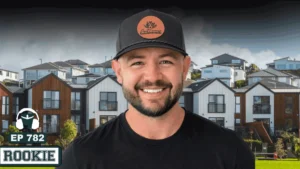
The Quiet Goldmine: How One Investor Built a $6 Million Self-Storage Empire While Working a 9-to-5

In the world of real estate investing, the popular narrative often centers on the glitz and complexity of high-end apartment syndications or the high-turnover grind of residential house flipping. Yet, for Bree Hartman, a former personal trainer and W-2 employee, the path to financial independence was paved with a far more modest asset: the humble self-storage facility.
Hartman’s journey, which recently took center stage on the Real Estate Rookie podcast, serves as a masterclass in identifying overlooked opportunities. By focusing on "mom-and-pop" storage facilities—properties often ignored by institutional investors due to their lack of sophisticated technology or professional management—Hartman has successfully scaled a portfolio worth over $6 million. Her story is a testament to the idea that the best investments aren’t necessarily the ones with the most curb appeal, but the ones with the most operational inefficiency waiting to be corrected.
Main Facts: The "No Toilets, No Tenants" Philosophy
The appeal of self-storage, as Hartman explains, lies in its simplicity. Unlike residential rental properties, which come with the inherent liabilities of habitability—toilets that break, tenants who fall behind on rent, and the midnight emergency calls—self-storage is a B2B and B2C service centered on space rental.
Hartman’s strategy focuses on "third and fourth tier" markets: smaller regions with populations ranging from 5,000 to 150,000. These areas are frequently overlooked by national REITs (Real Estate Investment Trusts), leaving the field wide open for individual investors. By targeting facilities that lack websites, automated gate systems, or professional management, Hartman and her partners have been able to acquire assets at favorable prices, implement modern "tech stacks," and immediately drive up net operating income (NOI).
The core of her success is a five-point market blueprint that ensures demand:
- Market Size: Targeting regions with populations between 5,000 and 150,000.
- Population Growth: Seeking markets with at least marginal growth (even 0.01%), signaling economic vitality.
- Income Levels: Ensuring the local median household income can support rental rates.
- Operational Maturity: Identifying facilities that are "unsophisticated" (e.g., using Facebook as a website or having no digital footprint).
- Supply and Demand: Assessing local competition to ensure the market isn’t oversaturated with aggressive move-in promotions.
A Chronology of Growth: From "Accidental" Landlord to Portfolio Owner
Hartman’s foray into real estate began in a way many investors will find familiar: the "accidental" rental. When she and her husband moved across the street, they decided to rent out their primary residence. The experience was transformative—but not in the way they had hoped. During the COVID-19 pandemic, a service dog caused $7,000 worth of damage to the baseboards, and a 1:00 AM phone call from a distressed tenant served as the catalyst for change.
"I realized that renting houses was going to be just another job," Hartman noted. Searching for a more passive, stable alternative, she stumbled upon self-storage.
Despite being 10 weeks pregnant and working a full-time job as a personal trainer and gym owner, Hartman committed to the new venture. She purchased a ticket to a self-storage conference in Las Vegas, treating the pregnancy as a nine-month deadline to achieve her goal. In 2022, she and two partners acquired their first facility in Louisiana—a $3.1 million, 55,000-square-foot property.
The deal was structured using an SBA 504 loan, which allowed for a 15% down payment. Despite the intense scrutiny and documentation requirements—including life insurance and pledging her home—Hartman successfully navigated the process. She gave birth just 10 weeks after closing on the facility.
Following this initial success, Hartman leveraged her skills as a "deal hunter" to identify a second, smaller facility. This time, she utilized cold-calling techniques to connect with a retiring owner, eventually structuring a seller-financed deal that allowed the owner to retire while providing Hartman with another high-cash-flow asset.
Supporting Data: The Power of Operational Efficiency
The data underpinning Hartman’s success highlights the massive spread between "unsophisticated" management and modern optimization. Many of the facilities she targets are operated by baby boomers who have owned them for decades. Because these owners often rely on manual payment drops and lack digital marketing, their occupancy rates and rental prices are frequently well below market value.
In the case of her first deal, Hartman and her team inherited a facility that was roughly 15-20% below market rates. Within the first eight months, they:
- Implemented a website and digital management tech stack.
- Increased rental prices to match market demand.
- Added 67 RV and boat storage spots to maximize square footage.
- Integrated a cell tower lease into the property revenue.
By the time they reached their third and fourth year of ownership, they had successfully increased rental rates by 67%. This is the "force-appreciation" model: by simply cleaning up operations, they transformed a sleepy asset into a highly profitable, high-value commercial property.
Official Perspectives and Strategic Insight
Throughout the Real Estate Rookie interview, hosts Ashley Kehr and Tony J. Robinson pressed Hartman on the viability of commercial real estate for the average person. The consensus: the barrier to entry is lower than perceived, provided the investor is willing to put in the time.
Hartman’s "Smile and Dial" approach to cold calling is perhaps her most significant contribution to the conversation. She argues that there is a massive competitive advantage in being a "mom with a phone."
"I’m dangerous with a mom and a phone," Hartman joked. She explained that many of these older owners are tired of being badgered by aggressive, young brokers. They are looking for a buyer who will respect the business they built. By calling to ask about their story—"How did you buy your first facility?"—Hartman establishes a rapport that often leads to honest conversations about motivation. Many of these owners are motivated not by the highest price, but by tax mitigation (avoiding capital gains) and consistent monthly income, which makes them prime candidates for seller financing.
Implications for the Future of Investing
The implications of Hartman’s strategy for the broader real estate market are significant. As interest rates remain elevated and institutional capital faces stricter lending environments, the "mom-and-pop" sector offers a unique refuge.
1. The Death of the "Home Run" Mentality
Hartman’s success underscores a vital lesson: stop looking for the "home run" property that needs no work. Instead, seek the "good" deal that you can make great through sweat equity and operational management. Whether it’s adding billboards for extra revenue, partnering with U-Haul for a percentage of truck rentals, or simply installing a website, the value is created by the operator, not just the location.
2. The Rise of Remote Management
Perhaps the most compelling implication of Hartman’s business model is the potential for true, scalable passive income. By employing a "boots on the ground" 1099 contractor for 15 hours a week and utilizing a centralized call center, she can manage her facilities from California while they operate in the South. This architecture allows for a "lifestyle" business where the investor is no longer tied to the location of their assets.
3. A Shift Toward Creative Financing
Hartman’s reliance on seller financing and SBA products highlights a pivot in how deals are getting done. In a tightening credit market, the ability to act as a partner to the seller—offering them the "fishing money" they need for retirement in exchange for favorable terms—is becoming the ultimate competitive advantage.
Conclusion: A Blueprint for the Rookie
Bree Hartman’s trajectory from an overwhelmed, accidental landlord to a $6 million portfolio owner provides a clear, actionable blueprint for any investor willing to look past the mainstream hype. By focusing on the boring, the overlooked, and the operationally inefficient, investors can build substantial wealth while minimizing the day-to-day headaches typically associated with property management.
As Hartman aptly puts it, the goal is simple: find a good asset, fix the operations, and let the cash flow support your life. For those tired of the "toilets and tenants" grind, her path—centered on technology, persistence, and genuine human connection—may be the most effective way to secure a financial future.