The Quantum Leap of Understanding: Why Human Wisdom Endures in the Age of AI
Posted June 29, 2026, by Ben Carlson
Main Facts
In an increasingly data-saturated and AI-driven world, the true measure of expertise is undergoing a profound re-evaluation. The ability to access information has never been easier, thanks to advancements in artificial intelligence and large language models (LLMs). Yet, as information becomes a commodity, the enduring value of deep understanding, critical thinking, and uniquely human qualitative skills shines brighter than ever. This shift is eloquently highlighted by an anecdote often attributed to the legendary physicist Max Planck and popularized by investor Charlie Munger, drawing a crucial distinction between superficial "chauffeur knowledge" and genuine intellectual mastery.
Max Planck, a towering figure in the annals of physics and the progenitor of quantum theory, was celebrated for his profound insights into the fundamental workings of the universe. His groundbreaking work, which earned him the Nobel Prize in Physics in 1918, laid the foundation for modern quantum mechanics. Ironically, this genius, who thrived on the order and precision of the physical sciences, once abandoned the study of economics, deeming it "too hard" due to its inherent messiness and uncertainty. This revelation from one of history’s sharpest minds underscores the complex nature of domains that resist neat, algorithmic solutions.
Charlie Munger, the late Vice Chairman of Berkshire Hathaway and Warren Buffett’s long-time partner, frequently recounted an apocryphal story about Planck and his chauffeur. This tale serves as a powerful metaphor for two distinct types of knowledge: the ability to parrot information versus the capacity for true comprehension and application. As AI systems become adept at generating sophisticated answers and even creative content, the core challenge for professionals across all sectors, particularly in fields like wealth management, will be to demonstrate an understanding that transcends mere information retrieval. The future, it appears, belongs not to those who merely possess data, but to those who can contextualize, interpret, empathize, and innovate with genuine human insight.
Chronology
Max Planck’s Intellectual Journey
Max Planck, born in Kiel, Germany, on April 23, 1858, embarked on an intellectual journey that would irrevocably alter humanity’s understanding of the cosmos. His early life was marked by an exceptional aptitude for mathematics and science, leading him to pursue studies at the Universities of Munich and Berlin. From a relatively young age, Planck developed a keen interest in thermodynamics, a field that seeks to describe the fundamental laws governing energy and entropy. He earned his doctorate at the tender age of 21 in 1879, with a dissertation on the second law of thermodynamics, already signaling his profound engagement with the most challenging problems of his era.
Planck’s academic career blossomed, and he quickly rose through the ranks, eventually becoming a professor at the University of Berlin. His seminal work, however, began to crystallize around the turn of the 20th century. Faced with the perplexing problem of "black-body radiation" – the radiation emitted by a heated object – classical physics models failed to provide accurate predictions. In a moment of inspired desperation, Planck introduced a revolutionary concept in 1900: that energy is not continuous but emitted and absorbed in discrete packets, or "quanta." This radical hypothesis, initially considered a mathematical trick by Planck himself, gave birth to quantum theory. The constant he introduced to describe these energy packets, now famously known as Planck’s constant (h), became a cornerstone of modern physics, underpinning the entire framework of quantum mechanics. His work provided the theoretical basis for understanding atomic and subatomic phenomena, profoundly influencing subsequent generations of physicists, including Albert Einstein, who would build upon Planck’s ideas to develop the theory of relativity. For these monumental contributions, Planck was awarded the Nobel Prize in Physics in 1918, solidifying his legacy as one of the most brilliant scientific minds in history.
A lesser-known aspect of Planck’s intellectual curiosity, yet highly pertinent to our contemporary discussion, was his brief foray into economics. Despite his extraordinary intellectual prowess in physics, Planck famously admitted, "It’s too hard. The best solution you can get is messy and uncertain." This statement from a man who had wrestled with the very fabric of reality speaks volumes. He sought order, precision, and predictable laws, which he found in physics. Economics, with its intricate interplay of human behavior, unpredictable market forces, and inherent qualitative elements, presented a level of complexity and ambiguity that defied his quest for definitive, elegant solutions. His retreat from economics underscores a critical point: not all domains yield to purely quantitative or algorithmic analysis, and some forms of complexity require a different kind of intelligence.
Charlie Munger’s Philosophical Contribution
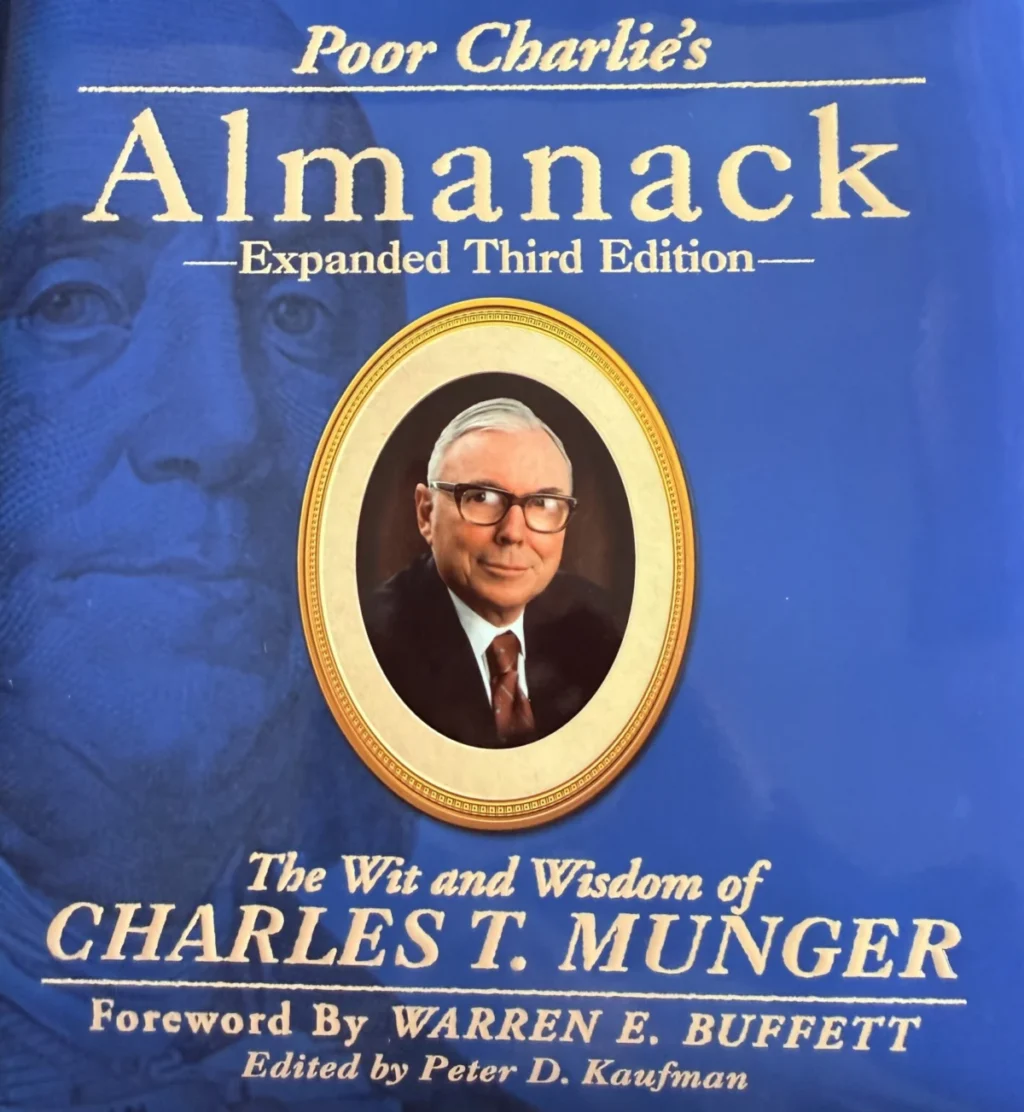
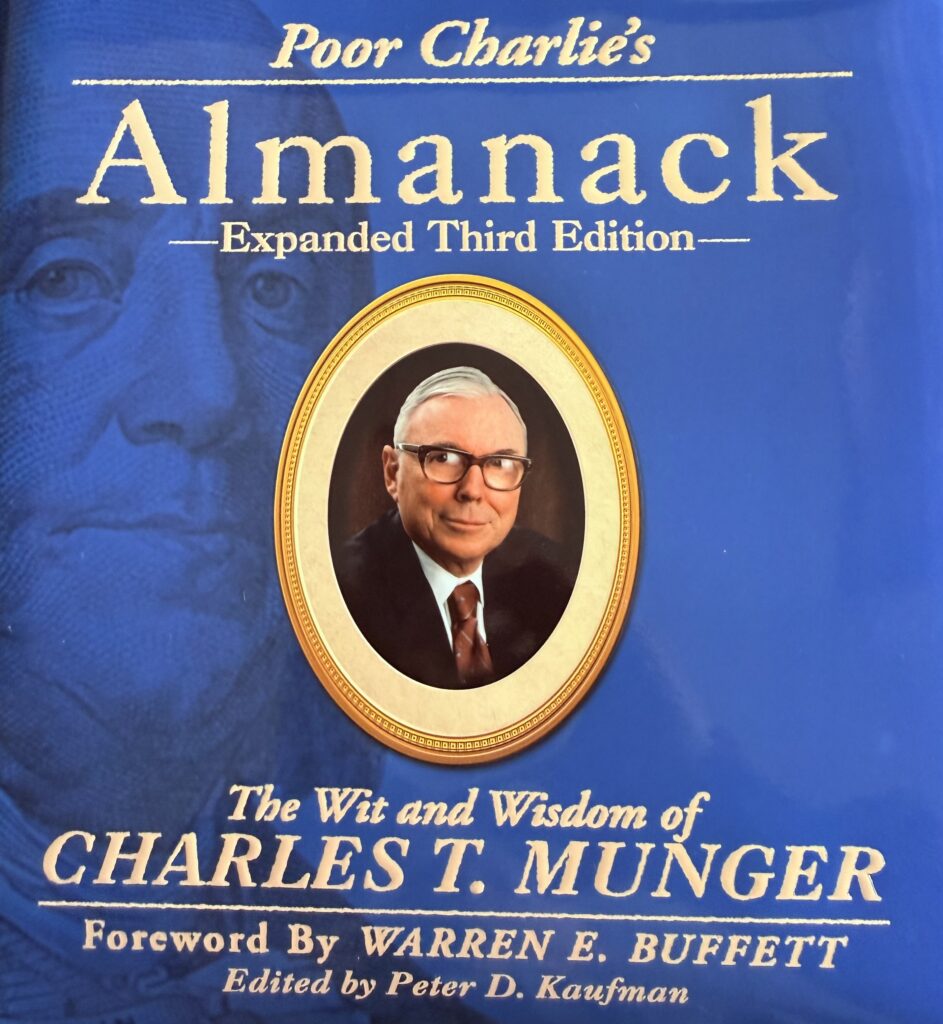
Fast forward to the early 21st century, and the wisdom of Planck’s experience was vividly brought to life by Charlie Munger. Munger, an intellectual giant in his own right, renowned for his multidisciplinary approach to investing and life, frequently shared insights gleaned from history, psychology, and various scientific disciplines. In a notable speech delivered in 2003 to the economics departments at the University of California, Santa Barbara, Munger articulated a powerful distinction between "real knowledge" and what he termed "chauffeur knowledge." This speech, later published in the highly influential compendium Poor Charlie’s Almanack, has resonated deeply with thinkers across various fields.
Munger used the apocryphal Planck chauffeur story to illustrate this critical difference. The tale goes that after winning his Nobel Prize, Professor Planck was in high demand for lectures across Germany. His loyal chauffeur, having driven him to countless engagements, eventually memorized the entire lecture. One day, the chauffeur proposed a switch: he would deliver the lecture while Planck sat disguised in the audience. The chauffeur flawlessly recited the complex physics lecture. At the end, a physicist from the audience posed an exceedingly difficult question. Without missing a beat, the chauffeur, displaying remarkable wit, replied, "Well, I’m surprised that a citizen of an advanced city like Munich is asking so elementary a question, so I’m going to ask my chauffeur to respond."
While the veracity of the story is highly debatable – it is widely considered apocryphal – its didactic power is undeniable. Munger employed it to caution against the illusion of understanding that comes from merely memorizing facts or jargon without true comprehension. The chauffeur could deliver the information, but he lacked the fundamental grasp of physics to engage with a truly novel or challenging inquiry. Planck, on the other hand, possessed the deep, foundational understanding necessary to tackle the unknown, to synthesize, and to innovate. Munger’s point was that in many professions, individuals rise through the ranks by mastering the language and surface-level facts of their field, yet they may lack the genuine, problem-solving intellect that distinguishes true experts. This distinction, Munger argued, is crucial for navigating complex problems in business, investing, and life.
Supporting Data
The AI Revolution: A New Paradigm for Information
The advent of artificial intelligence, particularly large language models (LLMs) like ChatGPT, Google Bard, and Anthropic’s Claude, has ushered in an unprecedented era of information accessibility. These powerful AI systems can generate human-like text, summarize complex documents, translate languages, write code, and answer questions across an astonishing breadth of topics. The data supporting the rapid adoption and capability of AI is overwhelming. According to various tech analyses, AI investment continues to surge, with global spending on AI expected to reach hundreds of billions of dollars in the coming years.
The practical implications are already pervasive. Businesses are leveraging AI to automate customer service, streamline data analysis, and personalize marketing campaigns. Individuals can use AI to draft emails, generate creative content, assist with research, and even provide basic tutoring. This has led to a situation where "information is a commodity" and "answers are ubiquitous," as the original article rightly points out. One can effectively "outsource" vast swathes of knowledge, writing tasks, and even preliminary thinking to AI. This capability fundamentally alters the landscape of professional work, freeing up human capital from repetitive or information-gathering tasks. For instance, a financial analyst might use an LLM to quickly summarize market trends, a lawyer to draft a preliminary legal brief, or a marketer to generate multiple ad copy variations. The sheer volume and speed at which AI can process and present information are staggering, making it an indispensable tool for efficiency.
However, this proliferation of accessible information also presents new challenges. While AI-generated answers can be remarkably sophisticated, they are not infallible. The phenomenon of "hallucination," where AI fabricates information, or the potential for bias embedded in training data, means that critical oversight remains essential. While AI can simulate understanding, its core mechanism is pattern recognition and statistical prediction, not genuine consciousness or lived experience. This inherent limitation underscores the growing need for human verification and discernment.
The Wealth Management Sector as a Case Study
The wealth management industry stands as a prime example of a sector undergoing significant transformation due to AI. Traditionally, financial advisors have played multiple roles: information gatekeepers, complex calculators, strategic planners, and emotional counselors. AI tools are now revolutionizing the first two categories. Advanced algorithms can perform sophisticated portfolio optimization, conduct rapid market analysis, generate personalized financial reports, and even automate rebalancing strategies with a speed and precision far exceeding human capabilities.
Surveys within the financial advisory space indicate a growing adoption of AI tools, with many advisors reporting increased efficiency in administrative tasks, research, and data processing. This translates to more time available for client-facing activities. However, the most significant shift is arguably in the client’s hands. The rise of the "informed client" is a game-changer. Consumers can now upload their portfolio statements to AI-powered platforms for instant analysis and feedback. They can query LLMs about investment strategies, tax implications, or market forecasts, receiving detailed answers in seconds. This means clients are no longer solely reliant on their advisor for basic information or validation. They can "stress test your responses and financial planning techniques," as the article notes, arriving at meetings with pre-formed opinions or counter-arguments derived from AI.
This dynamic transforms the advisor’s role. Raw information and surface-level answers, once a core value proposition, are now "table stakes." Clients expect more than just data; they expect interpretation, personalized context, and reassurance. The data shows that while robo-advisors and AI platforms can manage assets effectively, clients still seek human interaction for complex decision-making, emotional support during market volatility, and guidance through significant life events like retirement planning or estate transfers. This highlights a crucial divergence: AI excels at the quantitative and informational, while human advisors retain supremacy in the qualitative and relational.
Official Responses / Expert Perspectives
Industry Reactions to AI Integration
The initial reaction within many professional fields, including wealth management, to the proliferation of AI has been a mixture of apprehension and excitement. The fundamental question looming over many professionals is: "Will AI replace me?" This fear is not entirely unfounded, as AI’s capacity for automation is indeed displacing roles that are primarily routine, data-driven, or involve predictable information processing. However, a more nuanced and strategic response has begun to emerge from industry leaders and futurists.
Instead of viewing AI as a direct competitor, the prevailing expert perspective now positions AI as a powerful co-pilot or augmentative tool. Financial institutions are investing heavily in AI to enhance their advisors’ capabilities rather than replace them entirely. The focus is shifting towards leveraging AI to handle the "heavy lifting" of data analysis, compliance checks, and report generation, thereby freeing up advisors to concentrate on higher-value activities. Leaders like Jamie Dimon of JPMorgan Chase have emphasized the transformative potential of AI across all aspects of banking, while also acknowledging the ongoing need for human judgment and oversight. The narrative is evolving from job displacement to job transformation, where human-AI collaboration becomes the new standard.
This evolution is driven by the recognition that while AI can mimic human intelligence, it lacks genuine understanding, consciousness, and the capacity for complex emotional reasoning. As such, the definition of "value" an expert brings is being recalibrated. It is no longer about who can recall the most facts or perform the quickest calculations (AI wins here) but about who can synthesize disparate information, exercise ethical judgment, build trust, and navigate the intricate human dimensions of financial decisions.
The Enduring Value of Human Cognition
The insights of Max Planck and Charlie Munger resonate powerfully in this new paradigm. Planck’s frustration with the "messiness" of economics underscores that some domains resist simple, ordered solutions. These are the realms where human cognition – with its capacity for intuition, critical thinking, and nuanced judgment – becomes indispensable. Munger’s concept of "deep understanding" and his advocacy for developing a latticework of mental models highlight that true expertise goes beyond mere recall; it involves the ability to connect disparate ideas, understand underlying principles, and apply knowledge creatively to novel situations.

The unique human capacities that AI currently struggles to replicate authentically include:
- Critical Thinking and Skepticism: The ability to question AI’s output, identify its limitations, and discern its potential biases.
- Ethical Judgment: Navigating moral dilemmas and making decisions that align with human values, which AI, lacking consciousness, cannot genuinely do.
- Emotional Intelligence and Empathy: Understanding and responding to client emotions, building rapport, and providing comfort during times of uncertainty – skills paramount in a client-facing role.
- Creativity and Innovation: Generating truly novel ideas, strategies, or solutions that go beyond existing patterns or data sets.
- Intuition: The ability to make informed judgments in the absence of complete data, often based on years of experience and pattern recognition that transcends explicit rules.
These qualitative skills are the bedrock of human value in an AI-augmented world. They represent the frontier where human professionals will continue to differentiate themselves and provide indispensable services.
Implications
Redefining Expertise and Professional Value
The implications of the AI revolution for professional expertise are profound and far-reaching. The core shift is from a premium on "knowing facts" to a premium on "understanding context." In a world where AI can furnish any fact or generate a coherent response to almost any query, the value lies in the ability to make sense of that information, to provide perspective, and to apply it judiciously. This means that "sense-making" becomes the ultimate skill.
For professionals, particularly in client-centric fields like wealth management, the emphasis must now be on cultivating and demonstrating superior qualitative skills:
- Contextualization: The ability to take AI-generated information and translate it into clear, relatable terms, explaining its relevance to a client’s specific situation, risks, and goals. It’s about speaking in "plain English" and making complex ideas accessible.
- Personalization: Tailoring advice and strategies not just to a client’s financial data, but to their unique life circumstances, values, anxieties, and aspirations. AI can personalize based on data, but only a human can personalize based on empathy and genuine connection.
- Critical Inquiry and Pushback: An advisor must be informed enough to challenge AI outputs when necessary, to identify potential flaws or limitations, and to offer a nuanced, human-informed opinion on where AI’s answers make sense and where they fall short. This requires a deep, rather than superficial, understanding.
- Empathy and Emotional Intelligence: The capacity to connect with clients on a human level, to manage their fears during market downturns, to celebrate their successes, and to guide them through emotionally charged financial decisions. These are inherently human attributes that build trust and loyalty, which AI cannot replicate.
- Creativity: Developing bespoke solutions or innovative strategies that go beyond what an algorithm might suggest, often by blending financial acumen with an understanding of human behavior and market psychology.
These qualitative skills are the true differentiators. They are how professionals can separate themselves from those who rely solely on "chauffeur knowledge," merely regurgitating information without genuine understanding or the capacity for critical, empathetic engagement. The "human touch" is not just a nicety; it is rapidly becoming the ultimate competitive advantage.
Educational and Professional Development Imperatives
The ongoing revolution necessitates a fundamental re-evaluation of educational and professional development paradigms. Rote memorization and the acquisition of surface-level knowledge, while foundational, must be de-emphasized in favor of fostering critical thinking, complex problem-solving, and interpersonal skills. Educational institutions need to evolve curricula to prioritize analytical reasoning, ethical decision-making, and communication skills, preparing future generations for a world where AI handles much of the informational grunt work.
For existing professionals, continuous learning and adaptation are no longer optional but imperative. The danger of relying on "chauffeur knowledge" in an AI-driven world is that shortcuts will lead to obsolescence. If everyone has access to the same powerful AI tools, the competitive edge will come from how one uses those tools, and more importantly, what one brings to the table that AI cannot. This means investing in ongoing education that focuses on qualitative skills, behavioral economics, advanced communication, and ethical considerations.
The call for genuine, informed conversations and deep understanding extends across all domains. Whether in healthcare, law, education, or finance, the future belongs to those who can master the symbiotic relationship between human intelligence and artificial intelligence. It is about understanding where AI excels and where human wisdom remains irreplaceable. Max Planck’s abandonment of economics due to its "messiness" serves as a timeless reminder that some challenges defy purely analytical solutions, demanding a different, more holistic form of intelligence. In an age of unprecedented information, the true quantum leap will be in cultivating and valuing profound human understanding.